
BySarene Leeds|Sep 20, 2018, 6:00 AM EDT
 Add us as a preferred source
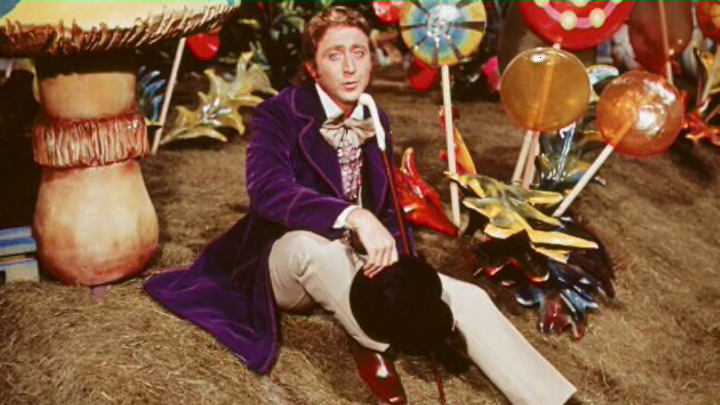
It’s a movie that’s nearly 50 years old, but Willy Wonka & the Chocolate Factory is nowhere near showing its age. A cinematic classic for generations of children, the 1971 film adaptation of Roald Dahl’s 1964 book Charlie and the Chocolate Factory told the fantastical tale of what happens when four spoiled kids (and one good, sweet little child) visit a delectable candy-making factory. The film also turned star Gene Wilder into a cultural icon, thanks to his inimitable portrayal of chocolatier extraordinaire Willy Wonka. Whether you’ve seen Wonka 200 times—or, to quote poor Charlie Bucket, “just two”—we’ve got some sweet facts about the movie that are sure to taste better than an Everlasting Gobstopper.
1. GENE WILDER INSISTED ON DOING WILLY WONKA’S NOW-SIGNATURE LIMP-INTO-A-FORWARD-ROLL—OR ELSE HE WOULDN’T TAKE THE PART.
Gene Wilder, who died in 2016, knew exactly how he wanted to play Willy Wonka from the get-go. As he recounted to Larry King on CNN in 2002, Wilder told Wonka director Mel Stuart he wanted to introduce the character as walking slowly with a cane, then conclude the ruse with an expert somersault. When Stuart asked why Wilder wanted to take this approach, the Young Frankenstein star responded, “Because no one will know from that point on, whether I’m lying or telling the truth,” thus adding the necessary element of mystery to the character. Wilder also told King he wouldn’t accept the role unless this demand was met. Needless to say, Stuart made the right decision.
2. THAT WONKA INTRODUCTION BECAME SO SYNONYMOUS WITH WILDER THAT KATE MCKINNON REENACTED IT AS A TRIBUTE TO THE ACTOR ON SATURDAY NIGHT LIVE.
The 42nd season of Saturday Night Live didn’t premiere until about a month after Gene Wilder’s August 2016 death, but the news was still timely enough for cast member Kate McKinnon to pay a fitting tribute. During the episode’s cold open, McKinnon, playing a pneumonia-battling Hillary Clinton, limped slowly—cane in hand—onto the faux presidential debate stage. But before she could fall over from fatigue, McKinnon then executed a flawless somersault. Both Wonka and Wilder would’ve been proud.
3. DENISE NICKERSON’S FACE WAS STILL TURNING PURPLE EVEN AFTER SHOOTING ENDED.
It’s commonplace for actors to hear some of the most famous lines from their movie repeated back to them via devoted fans. But when it happened to 13-year-old Denise Nickerson, Willy Wonka & the Chocolate Factory hadn’t even hit theaters yet. According to People Magazine, two days after Nickerson, who played gum-chewing brat Violet Beauregarde in the movie, had shot the famous scene in which Violet turns into a blueberry, her face started reverting back to that now-familiar shade of purple. As luck would have it, this embarrassing moment happened when Nickerson was back at school and trying to be a normal kid again. But since the makeup needed another 36 hours to disappear, she ended up hearing friends of hers (unwittingly) paraphrase one of Sam Beauregarde’s lines from the movie: “You’re turning blue!” At least it wasn’t, “Violet! You’re turning violet, Violet!”
4. PARIS THEMMEN LIT UP TWITTER AS A JEOPARDY! CONTESTANT.
Back in March 2018, a gentleman by the name of Paris Themmen competed on the long-running game show Jeopardy!, finishing in second place. Describing himself as an “avid backpacker,” Themmen seemed like another run-of-the-mill trivia expert passing through the Alex Trebek-hosted set. But it wasn’t long before fans took to Twitter in their realization that Themmen had neglected to reveal a tiny detail from his childhood: He portrayed pint-size binge-watcher Mike Teavee in Willy Wonka & the Chocolate Factory when he was 11.
5. PETER OSTRUM BECAME A DAIRY CATTLE VETERINARIAN.

He’ll forever be immortalized as the good-natured blond moppet who won a golden ticket—and an entire chocolate factory—but Hollywood was never in the cards for former child actor Peter Ostrum. Despite Charlie Bucket’s central role to the story, Willy Wonka & the Chocolate Factory was the only movie Ostrum ever made. Although he’ll appear occasionally for Wonka anniversary interviews (he also spoke extensively about Gene Wilder following the actor’s death), Ostrum chose a quiet life for himself, working as a dairy cattle veterinarian in upstate New York.
6. JULIE DAWN COLE AND DENISE NICKERSON WERE RIVALS FOR OSTRUM’S HEART.
That fierce elbowing between Veruca Salt and Violet Beauregarde during the “Pure Imagination” scene (see above clip) may not have been acting after all. Both Julie Dawn Cole—who played the petulant Veruca—and Denise Nickerson have since copped to a crush on co-star Peter Ostrum. “Peter was a hot patootie,” Nickerson told People in 2001. Cole admitted that she and “Denise were competing for [Ostrum’s] attention” in a 2011 interview.
7. WILLY WONKA DOESN’T SHOW UP UNTIL NEARLY 45 MINUTES INTO THE MOVIE.
It’s a rare breed of actor who can completely encapsulate one’s memory of a particular film, especially when it’s almost half over by the time his character appears. Viewers tend to forget that we first have to endure a good 43 minutes of Charlie Bucket character development (and Grandpa Joe’s whining) before Gene Wilder’s Willy Wonka finally tumbles into our hearts. Wilder’s belated entrance also reminds audiences that good things really do come to those who wait.
8. THE FILM’S FIRST SONG, “THE CANDY MAN,” GAVE SAMMY DAVIS, JR. HIS ONLY NUMBER ONE HIT.
But this famously upbeat tune wasn’t without its problems: Actor Aubrey Woods, who played the candy store owner, originally sang “The Candy Man” in the movie’s opening scene. Leslie Bricusse, who co-wrote the song with Anthony Newley, was horrified by this version, telling the New York Post in 2016, “The song was diabolically performed by an actor who couldn’t sing.” Enter Sammy Davis, Jr., whose manager was seeking a song that the Rat Packer could perform for children. Even though Davis wasn’t a fan of the treacly tune, he couldn’t argue with its success; his “Candy Man” cover garnered him his only number one hit back in 1972.
9. GENE WILDER HATED THE CHARLIE AND THE CHOCOLATE FACTORY REMAKE.
Wilder did not mince words when he spoke with Robert Osborne in 2013 about the Tim Burton-directed Charlie and the Chocolate Factory, which was released in 2005. “I think it’s an insult,” Wilder told Osborne, “to do that with Johnny Depp [who played Willy Wonka in this version], who I think is a good actor, and I like him.” But Wilder’s real rancor was reserved for Burton: “I don’t care for that director, and he’s a talented man, but I don’t care for him doing stuff like he did.”
10. THERE IS A LARGE ANTI-GRANDPA JOE MOVEMENT ON THE INTERNET.
In 2004, ostensibly in response to the upcoming Charlie and the Chocolate Factory movie, a website called Say No to Grandpa Joe appeared. It proceeded to underline every single solitary reason why Charlie Bucket’s initially bedridden Grandpa Joe (played by Jack Albertson in the 1971 film) is the absolute worst. A quick refresher: Grandpa Joe spends 20 years refusing to get out of bed while the Bucket family nearly starves to death (and don’t get me started on how Charlie gives his hard-earned cash to Joe so the guy can buy friggin’ tobacco). Then, the second Charlie comes home with a golden ticket in his hand, Joe springs out of bed, does a dance of joy and declares that he’s the lucky winner, not his pitiful grandson. Cut to 2018, and not only is the Say No to Grandpa Joe site still around, but there’s now a nearly 20,000-person strong Facebook group called “The I Hate Grandpa Joe From Willy Wonka and the Chocolate Factory Page.”
11. DIRECTOR MEL STUART’S DAUGHTER PERSUADED HIM TO MAKE WILLY WONKA.
Never ignore the bit players in a film, because they might just be the reason you’re watching it in the first place. Madeline Stuart, whose father, Mel Stuart, directed Willy Wonka & the Chocolate Factory, was the mastermind behind getting the movie made. “[Charlie and the Chocolate Factory] was my favorite book at the time, and I told him this would make a great movie,” Madeline told the Los Angeles Times in 2012. Madeline’s “finder’s fee” came in the form of a small role in Wonka: She played “Madeline Durkin” in the schoolroom scene where Charlie’s obnoxious teacher was conducting the percentages lesson. “Madeline” answered that she opened “about a hundred” Wonka bars during the golden ticket contest.
12. THE MOVIE TITLE WAS CHANGED TO WILLY WONKA & THE CHOCOLATE FACTORY BECAUSE OF A MARKETING STRATEGY.
You thought it was because of Wilder’s sardonic portrayal, didn’t you? Nope. The reason was far more prosaic: The film was financed by Quaker Oats, who, naturally, wanted to use Wonka to advertise their forthcoming line of chocolate bars. The simplest way to forge a tie-in was to change the movie’s title from that of the book (Charlie and the Chocolate Factory) to one that included the name of the product. Since the chocolate bars were named for Willy Wonka—and not Charlie Bucket—the decision was easy.
6 Things Every American Video Store Had in the 1990s
“Be kind, rewind.”
ByChelsea Thatcher|Nov 14, 2026, 5:00 PM EST
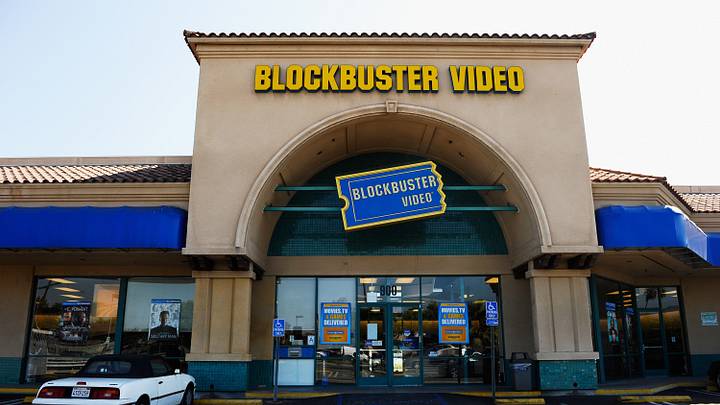
Blockbuster, Hollywood Video, and even small, local video stores were some of the most popular places to be on a Friday night in the 1990s. Whether you wanted to check out a new release, rewatch a classic, or just pick a movie at random, the video stores had it all covered. The trip itself was an enjoyable experience, giving us endorphins that scrolling on streaming services can’t.
Despite minor differences in inventory and store policies, video stores in the ’90s all had a few things in common. It didn’t matter which store you went to; you would find these features at every one of them. That’s what makes this list so nostalgic because whatever video store you frequented, each of these things will trigger those movie night memories.
- Clamshell Cases
- “Be Kind, Rewind” Stickers
- Popcorn and Candy
- Membership Cards
- Late Fees
- Deceptive Shelves
Clamshell Cases
Before DVDs were a thing, VHS tapes were everywhere. There were usually two different types of cases for these tapes: a cardboard sleeve and a plastic “clamshell” case. Video stores in the ’90s had both, but started making their own store-branded clamshell cases. This was to prevent people from forgetting to return the videos or stealing them. The clamshell case became synonymous with video rentals, and in the late 1990s, they even had locking mechanisms to keep the tape inside until someone actually rented it.
“Be Kind, Rewind” Stickers
Another remnant of the time before DVDs is the “Be Kind, Rewind” sticker. Video stores put these stickers on their rental VHS tapes as a reminder to customers to wind the film inside the tape back to the beginning. And before any younger generations ask, we did not do this manually, but had a “Rewind” button on the VCR. Some video stores even charged a fee for tapes brought back without rewinding them. Not rewinding was akin to leaving your shopping cart in the middle of the parking lot.
Popcorn and Candy
At the front of each store, right next to the checkout line, were movie theater-type concessions and snacks. The candy was so tempting to make it a “true” movie night, but our parents rarely gave in. Popcorn was also sold, most often as a packaged, microwaveable bag or tub. That was one thing that put small video stores above the big corporations: freshly popped popcorn. But even without popped popcorn, all video stores seemed to smell of popcorn butter.
Membership Cards
Millennials and Gen X could still have their video store membership card hiding in an old wallet or purse right now. The cards allowed you to earn points and get perks, but most importantly, they were the key to accessing rentals. You couldn’t rent a movie without a membership, and the physical card was the easiest way of proving you had an account. Some stores would look up your account in their system if you didn’t bring your card with you, but it was always best to have it on hand.
Late Fees
Video stores made most of their money not through the rentals themselves, but through the late fees incurred. By 2000, Blockbuster was earning $800 million in late fees, much to the chagrin of its customers. They charged $1 per day for late returns. Hollywood Video had more lenient terms, and small video stores had different policies, but everyone charged late fees as a way of “encouraging” patrons to return the videos.
Deceptive Shelves
There was nothing worse than arriving at the video store with a specific movie in mind, making a beeline for the shelf, getting your hopes up when you saw its case, and then having those hopes dashed when you saw the case was empty. It felt like a cruel joke that the stores would play, taunting customers with the case of a video that should be there, but all copies were already checked out. It was a common feeling though, especially if you were looking for a major hit or new release.
Read More:
feed.