
Mel Blanc, Sylvester Stallone, and NSYNC nearly made the trip to a galaxy far, far away.
ByJake Rossen|Mar 7, 2024, 8:30 AM EST
 Add us as a preferred source
It’s been more than 40 years since George Lucas and director Brian De Palma opened their communal casting sessions for Star Wars and Carrie, pooling their resources in a combined search for actors who could carry either Lucas’s space opera or De Palma’s adaptation of the Stephen King novel.
Obviously, the Lucas cast—led by Mark Hamill, Harrison Ford, and Carrie Fisher—worked out just fine. But those inaugural sessions led to a line of performers in the next decades who either auditioned or were strongly considered for roles across the multi-part franchise. With the eighth feature film, Rogue One, arriving in theaters this week, we’re taking a look at 15 performers who once had a chance at co-starring with a Wookiee.
1. Christopher Walken
Droll, droopy-eyed character actor Christopher Walken first garnered notoriety for 1978’s The Deer Hunter, where he played a psychologically immobilized Vietnam veteran. Prior to that, he was one of several actors who visited with Lucas to read for the part of Han Solo, by some accounts doing so well that at one point Lucas narrowed his choice to between Walken and Ford: Ford, who had been in Lucas’s American Graffiti and was helping feed lines to auditioning actors, got the part.
It wouldn’t be Walken’s only flirtation with sci-fi: Decades later, his name was batted around for the part of James Kirk’s great-great grandfather in a Star Trek prequel film project that never got off the ground.
2. Al Pacino
Already a huge star thanks to a string of 1970s hits including, Serpico, and, Al Pacino apparently had the luxury of being offered the role of Solo without having to audition. “Star Wars was mine for the taking but I didn’t understand the script,” Pacino admitted in 2013.
3. Jodie Foster
Jodie Foster’s role as a teenaged prostitute in Martin Scorsese’s apparently impressed Lucas enough that the 15-year-old actress was brought in to read for the role of Princess Leia. Discounting the awkwardness of any possible flirtation with a 30-something Solo, she was passed up in favor of 19-year-old Carrie Fisher, who had only one movie credit (Shampoo) to her name at the time.
4. Orson Welles
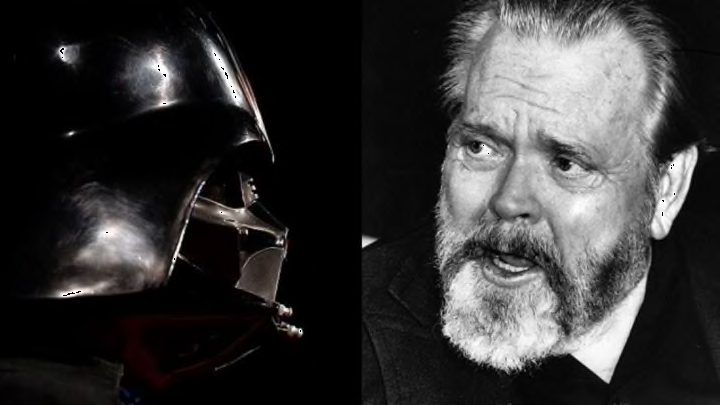
Although Lucas needed a complete cast assembled for the start of principal photography in 1976, he had the comparative luxury of deliberating on how best to personify respirator enthusiast Darth Vader. David Prowse was in the suit on set, but his lines could be dubbed over later. For a time, mercurial director and former radio star Orson Welles was considered. Deciding Welles’s voice was too recognizable, Lucas opted for James Earl Jones instead.
5. Mel Blanc
As with Vader, Lucas was free to mix a physical performer with a voiceover artist for the role of C-3PO. Unlike Vader, he opted to use one man to accomplish it. Anthony Daniels voiced the chirping droid, although animation legend Mel Blanc was considered for a time. It was Blanc who told Lucas that Daniels had a better take on the robot.
6. Robert Englund
Before landing the part of Freddy Krueger in the series, Robert Englund tried his luck at auditions for the role of Han Solo. He didn’t get it, but he did tell his roommate about the space film that was about to start shooting, and that he should try out for a part: Mark Hamill decided he was right and paid Lucas a visit.
7. Jim Henson
After conceiving of a wizened old Jedi who would train Luke Skywalker in the squalid swamps of Dagobah for 1980’s The Empire Strikes Back, George Lucas asked Muppet creator Jim Henson to perform the Yoda puppet for his cameras. “I thought he was the best puppeteer,” Lucas once said. But Henson’s schedule didn’t allow for it, so the job went to a colleague at the Muppet Workshop, Frank Oz, instead.
8. Gary Oldman
The brooding British actor has been in some of the biggest franchises of the past 20 years, including Christopher Nolan’s Batman trilogy and the Harry Potter films. Lucas wanted him to voice General Grievous in 2005’s Episode III: Revenge of the Sith, and Oldman was apparently agreeable—until he found out that Lucas was shooting the movie as a non-union project. In a press release, Oldman’s management company stated that the “snag that made it impossible … is that this film is being made as a non-SAG (Screen Actors Guild) film. George Lucas and gang agreed to hire Gary Oldman if he in fact would become a union buster, and perform work illegally overseas. As a resident of America, and also a member of SAG, out of respect and solidarity with the other members, he could not and would not consider violating his union’s rules.”
9. Sylvester Stallone
During auditions for the original Star Wars, Lucas seemingly had few reservations about who he might consider for the roles. Fatigue, however, would sometimes get to him. At one point, Sylvester Stallone walked into the room and walked right back out after assessing that a tired Lucas wasn’t going to be a receptive audience. “Guys in space don’t have this kind of face,” he said. “I get it.”
10. Leonardo DiCaprio
Leonardo DiCaprio had just come off starring in the then-highest-grossing film in history, Titanic, when George Lucas approached him to a play a young Anakin Skywalker in 2002’s Episode II: Attack of the Clones. He declined. “I just didn’t feel ready to take that dive, at the time,” he said. The actor might have struggled a bit with the decision, since he’s an avowed fan of the series who once auctioned off a toy collection valued at over $100,000. He was even in line at 1 a.m. for the release of Phantom Menace figures in 1999.
11. NSYNC
The 1990s boy band NSYNC is an anomaly on the list, in part because they were more than just considered for small roles in Star Wars—they actually filmed them. Lucas’s daughters were so enamored with the group at the time their father was shooting Attack of the Clones that he invited them to the set to appear as background characters. Justin Timberlake and Lance Bass declined, but Joey Fatone, Chris Kirkpatrick, and JC Chasez showed up for fittings. All three played Jedi Knights during the battle on Geonosis. The parts were cut for reasons unknown, although fan backlash may have played a part; Fantone’s family later insisted he could still be seen during the fight sequence.
12. Michael B. Jordan
In 2013, Creed and Fantastic Four star Michael B. Jordan told press that he had gone on an audition forEpisode VII: The Force Awakens. Jordan had previously worked for Lucas in 2012’s Tuskegee Airmen drama Red Tails, but the creator was not involved in the Disney-produced sequel.
13. Tupac Shakur
Although it hit theaters in 1999, filming on The Phantom Menace began in 1997, with pre-production and auditions taking place in 1996. That’s reportedly when rapper Tupac Shakur pursued the role of Mace Windu, the Jedi Knight role that ultimately went to Samuel L. Jackson.
14. Eddie Redmayne
Eddie Redmayne won an Oscar in 2015 for the Stephen Hawking biopic The Theory of Everything, but that honor didn’t do him much good during auditions for The Force Awakens. Aspiring for the part of Kylo Ren, Redmayne says the production was so secretive that he really had no idea who the character was or how he fit into the story. To compensate, he tried doing a Darth Vader imitation. “That’s a childhood dream crushed,” he told Moviepilot.com earlier this year.
15. Michael Jackson
As the most contentious character in the entire Star Wars saga, bumbling Gungan sidekick Jar Jar Binks has been a mixed blessing for Ahmed Best, the actor cast for his voice and motion-capture work in 1999’s Episode I: The Phantom Menace. According to Best, though, Jar Jar could have been even more infamous. Discussing the role with Vice in 2015, Best said Lucas had taken him to a Michael Jackson concert and told him that Jackson was toying with the idea of playing the alien. “[Lucas] said, ‘Well, Michael wanted to do the part but he wanted to do it in prosthetics and makeup like Thriller. George wanted to do it in CGI. My guess is ultimately Michael Jackson would have been bigger than the movie, and I don’t think he wanted that.”
Related Tags
The Best Fantasy Movie From Every Year in the 2010s
From animated classics to unforgettable live-action adventures.
BySuhaib Adeel|Jun 13, 2026, 6:00 PM EDT
In previous eras, the Fantasy genre was often dominated by sprawling live-action epics. The 2000s were largely defined by massive franchises such as The Lord of the Rings and Harry Potter. The 2010s also had their share of big-budget fantasy blockbusters, but this was also when animation became a highlight of this genre.
A lot (if not all) of the movies on this list showed how animation could create worlds and ideas that would be difficult or impossible to properly realize in any other way. Rather than treating fantasy as pure escapism, many of these films used these imaginative settings to explore themes of grief, memory, identity, and loneliness, with great narrative impact.
Looking back, the 2010s successfully expanded on what fantasy movies could be, and these are the absolute best of them.
- How to Train Your Dragon (2010)
- Harry Potter and the Deathly Hallows – Part 2 (2011)
- Life of Pi (2012)
- The Hobbit: The Desolation of Smaug (2013)
- What We Do in the Shadows (2014)
- Inside Out (2015)
- The Jungle Book (2016)
- The Shape of Water (2017)
- Isle of Dogs (2018)
- The Lighthouse (2019)
How to Train Your Dragon (2010)
How to Train Your Dragon was one of the most cinematic animated films of its time. The story follows Hiccup, a young Viking who grows up in a society that sees dragons as enemies. But things change when he befriends Toothless, a feared dragon who turns out to be very different from what the legends had suggested.
The movie brought on legendary cinematographer Roger Deakins as a visual consultant, and his influence is easy to see all over it.
In addition to creative animation and camera work, the music here gives the movie a nice emotional lift. The result is a fantasy adventure that works equally well as a coming-of-age story and a spectacular piece of visual filmmaking.
Harry Potter and the Deathly Hallows – Part 2 (2011)
Ending such a culturally and narratively massive movie franchise was never going to be an easy feat, but Harry Potter and the Deathly Hallows – Part 2 pulled it off.
Taking place during the final stages of the war against Voldemort, there’s very little downtime here. The story moves from one major confrontation to the next, building toward the Battle of Hogwarts.
What makes the movie work isn’t just the action, though there’s plenty of that. By this point, audiences had spent a decade watching these characters grow up, and the emotional payoff matters as much as the action. The movies became darker and more mature as they went, pretty much “growing up” with their target audience.
Life of Pi (2012)
It’s easy to talk about Life of Pi as a visual achievement because it absolutely is, but the movie would not work if viewers didn’t care about the characters, since there are very few of them.
The story begins as a survival tale. After a shipwreck, young Pi Patel finds himself stranded in the Pacific Ocean aboard a lifeboat with a Bengal tiger named Richard Parker.
The ocean sequences are breathtaking. Some scenes look less like traditional filmmaking and more like moving paintings. Director Ang Lee constantly found new ways to make the ocean feel beautiful, terrifying, and lonely all at the same time.
The tiger was one of the great CGI achievements of the decade. Because filming a real tiger on a small boat was, obviously, impractical and dangerous, the filmmakers relied mostly on digital effects that looked very real.
The Hobbit: The Desolation of Smaug (2013)
The Hobbit trilogy never quite escaped comparisons to The Lord of the Rings, and that’s understandable, but if there’s one entry that comes closest to standing on its own, it’s The Desolation of Smaug.
The movie spends much of its runtime following Bilbo and the dwarves as they move closer to the Lonely Mountain. Along the way, the story introduces some of the trilogy’s strongest storytelling elements. The forests of Mirkwood, the city of Lake-town, and finally Erebor itself all help give the film a stronger sense of adventure and a more lived-in feeling than the first movie.
This is also the point where several supporting characters became more memorable, thanks to more character development. You could tell which dwarf was who a bit more easily than in An Unexpected Journey, the first film in the trilogy.
The new characters were great too. Luke Evans’ Bard brought a grounded, reluctant hero to the story, while Lee Pace’s Thranduil commanded attention whenever he appeared on screen. Even Tauriel, a character created specifically for the films, added another welcome perspective to this world.
What We Do in the Shadows (2014)
There are actually more than a few vampire comedies out there, but very few are as consistently funny as What We Do in the Shadows.
The story is about a documentary crew that follows a group of centuries-old vampires that share a house in modern-day New Zealand. Instead of supernatural battles or gothic horror, the movie is mostly about vampire roommates annoying each other and arguing over the most mundane (but realistic) things.
The mockumentary format is a huge part of why it works, thanks to the fact that it treats ridiculous supernatural situations with complete seriousness.
Inside Out (2015)
Inside Out follows Riley, a young girl struggling with a major move while, inside her mind, Joy, Sadness, Anger, Fear, and Disgust try to help her navigate the transition.
The best part about the movie is how it visualizes abstract concepts, resulting in a pretty imaginative and impressive narrative. Instead of taking a traditional or simple route where happiness solves every problem, the movie focuses on the message that it is perfectly okay to feel sad.
Its funny adventure bits keep kids entertained. But for adults, it might resonate on a different level, making you reflect on your own childhood.
The Jungle Book (2016)
Disney’s live-action remakes have produced mixed results over the years, especially more so this decade, but The Jungle Book remains one of the best examples of how the remakes can work and even elevate the original material.
Most of the environments, animals, and scenery were created digitally, yet the jungle still feels tangible and alive. The scale of the world is convincing enough that it’s easy to forget how much of what you’re seeing didn’t physically exist during filming at all.
The voice cast also helps enormously, thanks to Bill Murray, Ben Kingsley, Idris Elba, Scarlett Johansson, and Christopher Walken, all of whom bring these characters to life very well.
The movie also successfully balances nostalgia with a more mature tone. It still includes those beloved musical moments, but it never feels trapped by them.
The Shape of Water (2017)
The Shape of Water is set during the Cold War and follows the story of Elisa, who discovers a mysterious captive creature being held inside a government laboratory. As their bond grows, the story gradually moves from a thriller into something a bit more romantic.
One of the first things you notice here is the great production design. Every location feels carefully crafted, especially the contrast between Elisa’s apartment above an old movie theater, which has a ton of personality, and the government facility, which feels oppressive in comparison.
It’s also easy to see how the movie is a love letter to classic cinema. At one point, the movie even has a musical sequence that pays homage to old Hollywood movies. Guillermo del Toro also does a bit of genre mixing, moving from fantasy to romance to thriller without ever feeling disjointed or incoherent.
Isle of Dogs (2018)
Wes Anderson’s films, whether animated or live-action, always look very well crafted, but Isle of Dogs might just take the cake as one of his most impressive technical achievements.
The movie is set in a future Japan where dogs have been exiled to a massive garbage island. The story follows a young boy searching for his missing pet.
The craftsmanship is noticeable everywhere. The dogs’ fur moves naturally in the wind while still maintaining that classic handmade stop-motion texture. Every frame is packed with tiny details that you might only pick up on the second or third watch.
The film also does something interesting with language. The dogs speak fluent English, voiced by actors like Bryan Cranston, Edward Norton, and Jeff Goldblum. Most of the human characters, meanwhile, speak Japanese (without subtitles).
Through this, viewers are placed directly into the dogs’ perspective and are forced to piece together information through context or translation. That’s some unique filmmaking.
The Lighthouse (2019)
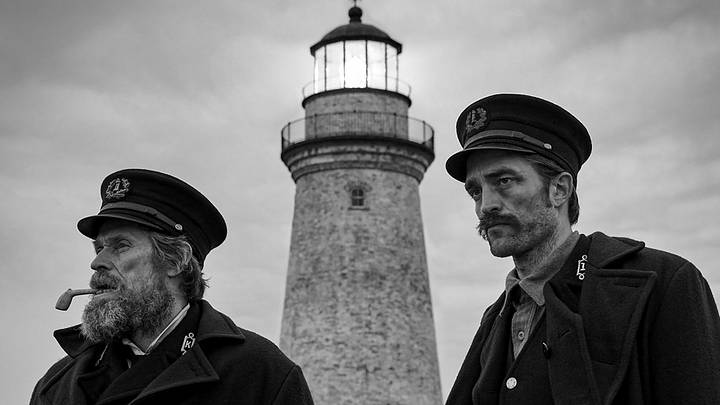
If someone told you a fantasy movie list would end with a film about two men slowly losing their minds inside a lighthouse, you probably wouldn’t believe them. But yes, The Lighthouse feels like something pulled directly from old maritime myths and sailor legends. You can’t expect any less from Robert Eggers.
The movie showcases a black-and-white world where two lighthouse keepers become trapped together on a remote island. At first, the problem seems straightforward enough, but then reality becomes increasingly unstable, with dreams, hallucinations, folklore, and superstition all beginning to bleed into one another.
Since there are pretty much only two actors in the movie, it lives and dies on the performances, and thankfully, Robert Pattinson and Willem Dafoe carry it. Their relationship constantly changes, and watching the dynamic evolve is half the fun.
Read More:
manual