
ByRebecca Pahle|Dec 11, 2021, 8:10 AM EST
 Add us as a preferred source

This year marks the 20th anniversary of the cultural juggernaut that is Peter Jackson’s Lord of the Rings trilogy, which started with the release of The Fellowship of the Ring on December 19, 2001. The movies could have been a lot different, though, and not just because one executive apparently had Hobbit murder on the brain. Here are 11 actors who were almost cast in the blockbuster fantasy series.
1. Stuart Townsend
Technically, Stuart Townsend did make it to J.R.R. Tolkien‘s Middle-earth, in the sense that he was actually cast as Aragorn—and rehearsed and trained for two months—only to be let go the day before filming. According to Rings star Dominic Monaghan, who played Merry:
“We didn’t get a chance to say bye to Stu […] We were all stunned. I didn’t think we could get fired at that point. I thought you were in … but it wasn’t the case. And Sean [Astin] said ‘well, has he left the project or has he been fired?’ And I think they were trying to protect Stuart as much as they could. They just said, ‘We will let Stuart tell you that, but he’s no longer with us.’ We couldn’t contact him. Email was very new at that point. He just disappeared.”
Townsend finally addressed the matter in 2019, saying, “I have no good feelings for those people in charge, I really don’t. The director wanted me and then apparently thought better of it because he really wanted someone 20 years older than me and completely different.”
While Viggo Mortensen famously stepped into the role and speak positively about the experience in the years after, he later admitted that he felt “awkward” about replacing Townsend at the last minute, adding, “I hear he’s a nice guy and I am sorry that happened.”
2. Russell Crowe

A sticking point for Townsend’s version of Aragorn is that he was too youthful to play the grizzled, somewhat world-weary Ranger and future King of Gondor. In need of a new star for the franchise, Jackson turned to fellow New Zealander Russell Crowe. The actor confirmed in an interview with Howard Stern that the deal, had it come to fruition, would have given him 10 percent of backend grosses, i.e. about $100 million. But he was put off by a phone call with Jackson, where he got the impression the director “was forced into talking to me, because there was a moment in time when everyone wanted me in everything.” Crowe continued, “I am talking to him on the phone, it is like, I don’t think he even knows what I have done. I just knew that my instinct was that he had somebody else in mind, which turned out to be Viggo [Mortensen], and he should be allowed to hire the actor who he wants.”
3. Nicolas Cage
The role of Aragorn was also offered to a few more people. One of them—and someone who would have given the series a way different vibe—was the maestro of bonkers, Nicolas Cage. “There were different things going on in my life at the time that precluded me from being able to travel and be away from home for three years,” Cage told Newsweek on turning down the part. “But the thing is about [movies I could have starred in], I can watch them. I can enjoy them as an audience member. I don’t really watch my own movies. And so I genuinely do have the joy of watching these—especially with Lord of the Rings.”
4. Daniel Day-Lewis
The final—but perhaps most enticing—actor who was seriously considered for Aragorn was Daniel Day-Lewis. Unfortunately, the feeling wasn’t mutual on Day-Lewis’s end. Jackson apparently offered him the role on numerous occasions, all of which were soundly rejected. The actor hasn’t spoken about why he rejected the part, but he’s on record about simply being uninterested in ever doing a big-budget blockbuster, no matter who’s in the director’s chair.
“[This is] not meant to belittle those films or the people [who work on them], because there are people that need to do those films and love to do those films—they can be fantastically entertaining for the people who love to see them—but it’s not for me,” the actor said about starring in blockbusters back in 2009. “When I’m working on something, if I’m intrigued by it, I’m never bored. I’m incapable of being bored. If I found myself working on a film and during the course of that work I was bored, because I didn’t really know what the hell I was involved in, I would find that infinitely demoralizing and it might well make me decide to pack my bags.”
5. Sean Connery

Production company New Line Cinema offered Sean Connery between 10 and 15 percent of worldwide box office if he agreed to play the role of Gandalf, an amount that would have netted the actor somewhere between $150 and $225 million. Connery read the script and declined the role on the grounds that he didn’t understand the complicated epic, later saying, “Yeah, well, I never understood it. I read the book, I read the script, I saw the movie. I still don’t understand it. I would be interested in doing something that I don’t fully understand, but not for 18 months.”
6. Uma Thurman
Uma Thurman was offered—and turned down—the role of Éowyn, something she still jokingly considers “one of the worst decisions ever made.” Still, it was understandable: Thurman had just had her first child, and she later told Stephen Colbert on The Late Show that she was “a little housebound” at the time. Referring to the 18-month shoot, Thurman said, “It was a little unknown for me, but it’s really definitely a regret.”
7. Ethan Hawke
In the Lord of the Rings, Éowyn ends up with Faramir, the younger brother of Fellowship member Boromir and eventual ally of Gandalf and the Fellowship. Up for the role of Faramir was Thurman’s then-husband Ethan Hawke. “Ethan was a huge fan of the books and was very keen to be involved,” Jackson recalled. “Uma was less sure and rightly so, because we were revising how we saw Éowyn’s character literally as we went. In the end, Ethan let it go—with some reluctance.”
8. Sylvester McCoy
In casting Bilbo Baggins, Ian Holm had a big leg up due to the fact that Jackson admired his prior performance as Frodo Baggins in a Lord of the Rings radio adaptation. Runner-up for the role was Doctor Who star, Sylvester McCoy. He bears no ill will for being passed over, telling Den of Geek, “To be in the company of Ian Holm was wonderful.” In any case, McCoy made his way into the Tolkienverse years later, when he was cast as Radagast the Brown in The Hobbit: An Unexpected Journey.
9. Christopher Plummer

Add Christopher Plummer to the list of actors who were down for a role in Lord of the Rings … except for that whole “having to be in New Zealand for ages” thing. Plummer was offered the role of Gandalf, but declined, later telling Conan O’Brien, “I don’t know why I turned it down. I thought, maybe, three or four years in New Zealand, [I thought there] are other countries I’d also like to visit before I croak!”
10. Sam Neill
Sam Neill, along with a whole passel of actors, was also considered for the part of Gandalf before it eventually went to Ian McKellen. (Though it’s hard to imagine anyone other than McKellen as Gandalf now, even that casting was touch and go for a bit, due to scheduling conflicts with his role in the X-Men franchise.) New Zealander Neill said in a 2001 interview that Jackson “did offer me a role in Lord of the Rings, but unfortunately, I was unable to do it because I had other commitments. I’m very fond of Peter and I’m very keen to work with him. When he makes Lord of the Rings 7, I’m up for it.”
11. Kevin Conway
Actor Kevin Conway, whose long career in film and TV has included such projects as The Quick and the Dead, The Good Wife, and The Outer Limits, was offered the role of Théoden, but turned it down because of the long production schedule. Though Théoden is “a wonderful part,” he said, “[they] wanted me to go out in January to New Zealand for six weeks, then go home, then go back again for another six weeks, then go home again and then come back again for three months. I said, ‘Whoa!’ The character is in two of the films. It wasn’t worth it. He has a couple of good scenes, but the rest is all battling with armor and stuff. You could have a stuntman do that, which they probably would have done anyway. But I really suffered about it.”
Bonus: Christopher Lee

Yes, Lee did star in the saga, but not in the role he was initially going for. The actor, a Rings superfan who actually met Tolkien, sent word early on in production that he wanted to meet with Jackson about potentially appearing in the series. But he didn’t want to discuss playing Saruman; he had his eyes on Gandalf. Despite Jackson’s insistence that Lee would be perfect for the role of Saruman, the veteran actor insisted that he be able to audition for the part he really wanted, so the director obliged. “After shooting a few takes, he thanked us very graciously before disappearing back into the shadows,” Jackson later told Entertainment Weekly.
The problem is that McKellen was pretty much all but confirmed for Gandalf at the time—and even Lee later admitted that he was probably “too old” for the physical requirements of the role. Lee would eventually accept the part of Gandalf’s morally dubious counterpart.
Additional Sources: Peter Jackson: A Film-Maker’s Journey Peter Jackson: From Prince of Splatter to Lord of the Rings; Anything You Can Imagine: Peter Jackson and the Making of Middle-Earth.
6 Things Every American Video Store Had in the 1990s
“Be kind, rewind.”
ByChelsea Thatcher|Nov 14, 2026, 5:00 PM EST
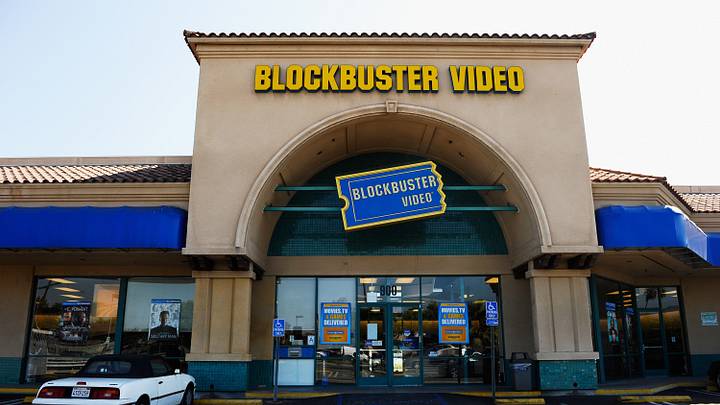
Blockbuster, Hollywood Video, and even small, local video stores were some of the most popular places to be on a Friday night in the 1990s. Whether you wanted to check out a new release, rewatch a classic, or just pick a movie at random, the video stores had it all covered. The trip itself was an enjoyable experience, giving us endorphins that scrolling on streaming services can’t.
Despite minor differences in inventory and store policies, video stores in the ’90s all had a few things in common. It didn’t matter which store you went to; you would find these features at every one of them. That’s what makes this list so nostalgic because whatever video store you frequented, each of these things will trigger those movie night memories.
- Clamshell Cases
- “Be Kind, Rewind” Stickers
- Popcorn and Candy
- Membership Cards
- Late Fees
- Deceptive Shelves
Clamshell Cases
Before DVDs were a thing, VHS tapes were everywhere. There were usually two different types of cases for these tapes: a cardboard sleeve and a plastic “clamshell” case. Video stores in the ’90s had both, but started making their own store-branded clamshell cases. This was to prevent people from forgetting to return the videos or stealing them. The clamshell case became synonymous with video rentals, and in the late 1990s, they even had locking mechanisms to keep the tape inside until someone actually rented it.
“Be Kind, Rewind” Stickers
Another remnant of the time before DVDs is the “Be Kind, Rewind” sticker. Video stores put these stickers on their rental VHS tapes as a reminder to customers to wind the film inside the tape back to the beginning. And before any younger generations ask, we did not do this manually, but had a “Rewind” button on the VCR. Some video stores even charged a fee for tapes brought back without rewinding them. Not rewinding was akin to leaving your shopping cart in the middle of the parking lot.
Popcorn and Candy
At the front of each store, right next to the checkout line, were movie theater-type concessions and snacks. The candy was so tempting to make it a “true” movie night, but our parents rarely gave in. Popcorn was also sold, most often as a packaged, microwaveable bag or tub. That was one thing that put small video stores above the big corporations: freshly popped popcorn. But even without popped popcorn, all video stores seemed to smell of popcorn butter.
Membership Cards
Millennials and Gen X could still have their video store membership card hiding in an old wallet or purse right now. The cards allowed you to earn points and get perks, but most importantly, they were the key to accessing rentals. You couldn’t rent a movie without a membership, and the physical card was the easiest way of proving you had an account. Some stores would look up your account in their system if you didn’t bring your card with you, but it was always best to have it on hand.
Late Fees
Video stores made most of their money not through the rentals themselves, but through the late fees incurred. By 2000, Blockbuster was earning $800 million in late fees, much to the chagrin of its customers. They charged $1 per day for late returns. Hollywood Video had more lenient terms, and small video stores had different policies, but everyone charged late fees as a way of “encouraging” patrons to return the videos.
Deceptive Shelves
There was nothing worse than arriving at the video store with a specific movie in mind, making a beeline for the shelf, getting your hopes up when you saw its case, and then having those hopes dashed when you saw the case was empty. It felt like a cruel joke that the stores would play, taunting customers with the case of a video that should be there, but all copies were already checked out. It was a common feeling though, especially if you were looking for a major hit or new release.
Read More:
feed.