
ByJake Rossen|Mar 11, 2024, 9:17 AM EDT
 Add us as a preferred source
If you’re at the theater this weekend and happen to see the marquee for the Roman epic Ben-Hur, you might think studios are dry on ideas. Of course, some theater-goers might have felt the same way in 1959, when the Charlton Heston-starring Ben-Hur was released: That “original” was a remake of a 1925 silent film, Ben-Hur: A Tale of the Christ, and both had chariot races that wowed audiences of two different generations. Check out some other well-known films that could be classified as three-makes.
1. Night of the Living Dead (2006)
Rather than ask why George Romero’s influential zombie classic has been remade twice, it’s better to wonder why it hasn’t been remade more often. Because the distributor left a copyright symbol off the 1968 original, Romero’s basic premise—the undead chase down a small band of human survivors—can be legally swept up by anyone. Although several independent filmmakers have taken a stab at it, there are only two major theatrical remakes: a 1990 film directed by effects expert Tom Savini, and a 2006 effort titled Night of the Living Dead 3D. While Savini had Romero’s blessing, the most recent version didn’t consult with him. It made just $271,000 in theaters.
2. You’ve Got Mail (1998)
In the 1990s, Tom Hanks could do no wrong—and neither could Meg Ryan. After coupling in the 1993 hit Sleepless in Seattle, they re-teamed for You’ve Got Mail, which was also a hit—as was the movie that inspired it. Producer Julie Durk had caught a television broadcast of 1940’s The Shop Around the Corner, which featured Jimmy Stewart sparring with a business rival without realizing they’re exchanging love letters; Warner Bros. updated it to reflect the email era. But Durk wasn’t the first to have the idea for a remake. Nearly 40 years prior, The Shop Around the Corner had been remade as a musical, In the Good Old Summertime, starring Judy Garland. The New York Times called Garland’s version “wonderfully rich entertainment,” but later declared Hanks had none of Stewart’s “lanky grace or leading man patina.”
3. House of Wax (2005)
Only Chad Michael Murray completists would remember this disappointing horror film about a wax museum that does a good job of preserving everything inside but the young tourists. The movie was a remake of the 1953 version starring Vincent Price, which is held in much higher regard: Price’s version took some cues from a 1933 film, Mystery of the Wax Museum, but added 3D and a novel three-track audio. Mystery of the Wax Museum was filmed using an early version of Technicolor, which needed lights so powerful that they melted the wax props and even seared some of the actors’ eyes.
4. Kiss of Death (1995)
Nicolas Cage turns in one of his typically subtle performances as unhinged gangster Little Junior Brown, leader of a crime ring that entraps reformed criminal Jimmy (David Caruso). The plot was taken from 1947’s Kiss of Death, long hailed a classic by film noir buffs and featuring a classic scene with psychopath Richard Widmark giggling while he pushes an old woman down the stairs. (Trivia note: the stunt person for the woman was Rod Amateau, who later directed 1987’s movie.) 20th Century Fox remade the film as a Western titled The Fiend Who Walked the West in 1958. It’s notable for being one of the last acting roles of future producer Robert Evans’ career.
5. Down to Earth (2001)
Where did co-writers Chris Rock and Louis C.K. get the idea for a comedy about a man who dies young and returns to earth in another body? From Warren Beatty’s 1978 film, Heaven Can Wait, which featured Beatty as a pro quarterback instead of Rock’s comedian character. Where did Beatty get the idea? From Here Comes Mr. Jordan, a 1941 comedy with Robert Montgomery as a boxer who gets a chance at delaying the afterlife. While Beatty likely didn’t solicit advice from Montgomery, Rock said he had lunch with Beatty prior to watching Heaven Can Wait, which he hadn’t yet seen. Beatty, he said, was just “the guy from Dick Tracy.” Both Beatty and Montgomery received Oscar nominations for their performances.
6. The Jazz Singer (1980)
When Neil Diamond decided he wanted to get into the acting business, a remake of 1927’s The Jazz Singer was considered a viable option—even with one dated and offensive element. The original featured Al Jolson as a would-be cantor who goes against his family’s advice to become an entertainer. Notable for being Hollywood’s first synchronized film with dialogue and music on the film strip, it also has scenes of Jolson in blackface, a scene Diamond emulated in his own poorly-reviewed film. Before Diamond, the film was remade with Danny Thomas in 1952; Diamond’s version was only modestly successful in theaters, but the soundtrack sold more than four million copies.
7. The Postman Always Rings Twice (1981)
Jack Nicholson’s fated affair with Jessica Lange played out once before with Lana Turner and John Garfield in the leading roles. Sandwiched between that 1946 feature and Nicholson’s remake was a lesser-known riff, 1953’s Roadhouse Girl, which was made on the cheap. All three are based on James M. Cain’s pulp novel.
8. The Magnificent Seven (2016)
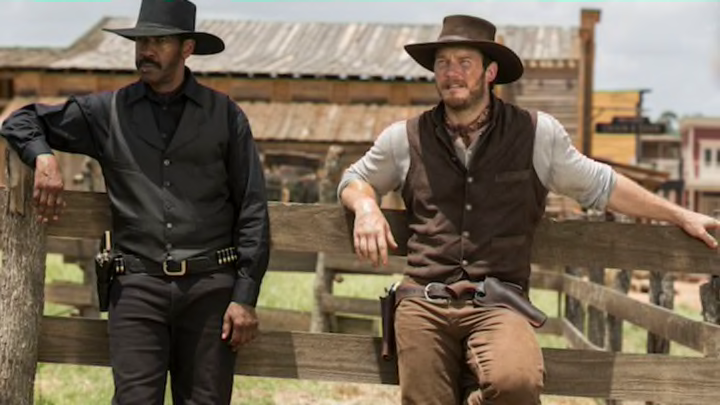
Denzel Washington and Ethan Hawke are set to appear in a remake of the 1960 original later this year. But The Magnificent Seven—about a band of gunfighters hired by a town to protect them from pillagers—didn’t begin life as a Western. The film is an American remake of 1954’s , an Akira Kurosawa epic about a band of samurai in feudal Japan with the same objective. Commenting on the Steve McQueen version, Kurosawa seemed more puzzled than flattered. “The American copy is a disappointment, although entertaining,” he once said. “It is not a version of Seven Samurai. I do not know why they call it that.”
9. The Squaw Man (1931)
Cecil B. DeMille got his start in Hollywood by directing smaller films, including this adaptation of an Edwin Milton Royle stage play about a respected British officer (Warner Baxter) who is blamed for his cousin’s theft of a charity fund. It was previously filmed in 1918 as a silent feature, also directed by DeMille; the director had also made the 1914 original. While the 1931 version took advantage of the “talkie” era, there was another reason he kept returning to the same tale. “I love this story so much that as long as I live I will make it every 10 years,” DeMille once said.
It’s believed DeMille is the only director in the history of film to remake his own work on three separate occasions, but he could’ve stopped at one and still made history: The 1914 film is considered Hollywood’s first full-length feature.
Related Tags
6 Things Every American Video Store Had in the 1990s
“Be kind, rewind.”
ByChelsea Thatcher|Nov 14, 2026, 5:00 PM EST
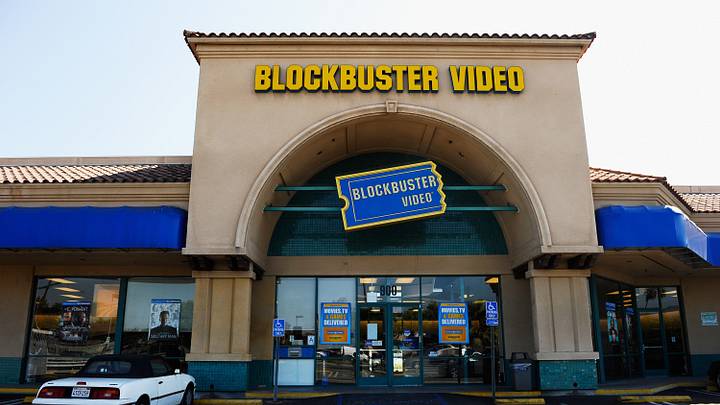
Blockbuster, Hollywood Video, and even small, local video stores were some of the most popular places to be on a Friday night in the 1990s. Whether you wanted to check out a new release, rewatch a classic, or just pick a movie at random, the video stores had it all covered. The trip itself was an enjoyable experience, giving us endorphins that scrolling on streaming services can’t.
Despite minor differences in inventory and store policies, video stores in the ’90s all had a few things in common. It didn’t matter which store you went to; you would find these features at every one of them. That’s what makes this list so nostalgic because whatever video store you frequented, each of these things will trigger those movie night memories.
- Clamshell Cases
- “Be Kind, Rewind” Stickers
- Popcorn and Candy
- Membership Cards
- Late Fees
- Deceptive Shelves
Clamshell Cases
Before DVDs were a thing, VHS tapes were everywhere. There were usually two different types of cases for these tapes: a cardboard sleeve and a plastic “clamshell” case. Video stores in the ’90s had both, but started making their own store-branded clamshell cases. This was to prevent people from forgetting to return the videos or stealing them. The clamshell case became synonymous with video rentals, and in the late 1990s, they even had locking mechanisms to keep the tape inside until someone actually rented it.
“Be Kind, Rewind” Stickers
Another remnant of the time before DVDs is the “Be Kind, Rewind” sticker. Video stores put these stickers on their rental VHS tapes as a reminder to customers to wind the film inside the tape back to the beginning. And before any younger generations ask, we did not do this manually, but had a “Rewind” button on the VCR. Some video stores even charged a fee for tapes brought back without rewinding them. Not rewinding was akin to leaving your shopping cart in the middle of the parking lot.
Popcorn and Candy
At the front of each store, right next to the checkout line, were movie theater-type concessions and snacks. The candy was so tempting to make it a “true” movie night, but our parents rarely gave in. Popcorn was also sold, most often as a packaged, microwaveable bag or tub. That was one thing that put small video stores above the big corporations: freshly popped popcorn. But even without popped popcorn, all video stores seemed to smell of popcorn butter.
Membership Cards
Millennials and Gen X could still have their video store membership card hiding in an old wallet or purse right now. The cards allowed you to earn points and get perks, but most importantly, they were the key to accessing rentals. You couldn’t rent a movie without a membership, and the physical card was the easiest way of proving you had an account. Some stores would look up your account in their system if you didn’t bring your card with you, but it was always best to have it on hand.
Late Fees
Video stores made most of their money not through the rentals themselves, but through the late fees incurred. By 2000, Blockbuster was earning $800 million in late fees, much to the chagrin of its customers. They charged $1 per day for late returns. Hollywood Video had more lenient terms, and small video stores had different policies, but everyone charged late fees as a way of “encouraging” patrons to return the videos.
Deceptive Shelves
There was nothing worse than arriving at the video store with a specific movie in mind, making a beeline for the shelf, getting your hopes up when you saw its case, and then having those hopes dashed when you saw the case was empty. It felt like a cruel joke that the stores would play, taunting customers with the case of a video that should be there, but all copies were already checked out. It was a common feeling though, especially if you were looking for a major hit or new release.
Read More:
•
6 Things Every American Video Store Had in the 1990s
•
20 Things That Were Considered Luxuries in the 1970s
•
75 Holiday Jokes That Are So Funny, You’ll Want to Share Them With Everyone
•
20 One-Hit Wonders From the 1970s You Still Know Every Word To
•