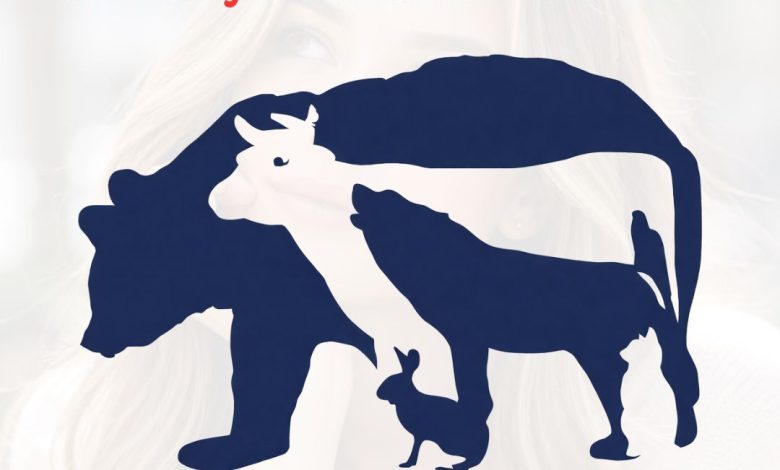
How Many Animals Are Hidden Here?
At first glance, this picture looks like a single large animal silhouette. But it is actually a layered optical illusion that uses overlapping shapes and negative space (the empty areas around and inside shapes) to hide multiple animals in one clean graphic.
The Answer: How Many Animals Are Hidden?
A careful look reveals 6 animals hidden in the design:
- Bear (the largest dark silhouette forming the outer shape)
- Cow (the large white animal inside the bear, with horns and a visible eye)
- Wolf/Dog (the dark animal shape stretching across the cow’s body)
- Rabbit (small dark rabbit near the bottom center)
- Cat (small white cat sitting near the right hind leg area)
- Butterfly (small light shape perched near the cow’s horn)
How the Illusion Works
This image relies on a few simple visual tricks:
- Figure–ground perception: Your brain must decide what is “object” and what is “background.” The picture forces that decision to change as you keep looking.
- Negative space: The cow and cat appear because empty space is treated as a meaningful shape, not just “blank area.”
- Layering and overlap: The wolf/dog is placed across the cow’s body so your brain alternates between seeing one animal and then another.
- Minimal detail, strong outlines: The clean edges make the shapes easy to “lock onto,” one at a time.
A Simple Step-by-Step Way to Spot All 6
- Start with the outermost outline: find the bear first.
- Look inside the bear for the largest white shape: the cow.
- Across the cow’s body, follow the long dark silhouette: the wolf/dog.
- Near the bottom center, spot the small dark animal: the rabbit.
- On the right side near the legs, identify the white seated shape: the cat.
- Finally, check near the cow’s horn for the tiny shape: the butterfly.
Why These “Hidden Animals” Images Are So Popular
- They are quick, visual, and shareable.
- They turn perception into a game: people compare how many they saw and which ones they missed.
- They demonstrate a real cognitive effect: we often notice the biggest shape first, then discover smaller shapes once our brain “switches modes.”
Key Takeaway
This illustration is a compact demonstration of how perception works: with the same lines and spaces, your brain can “flip” between interpretations—until all 6 animals become obvious.