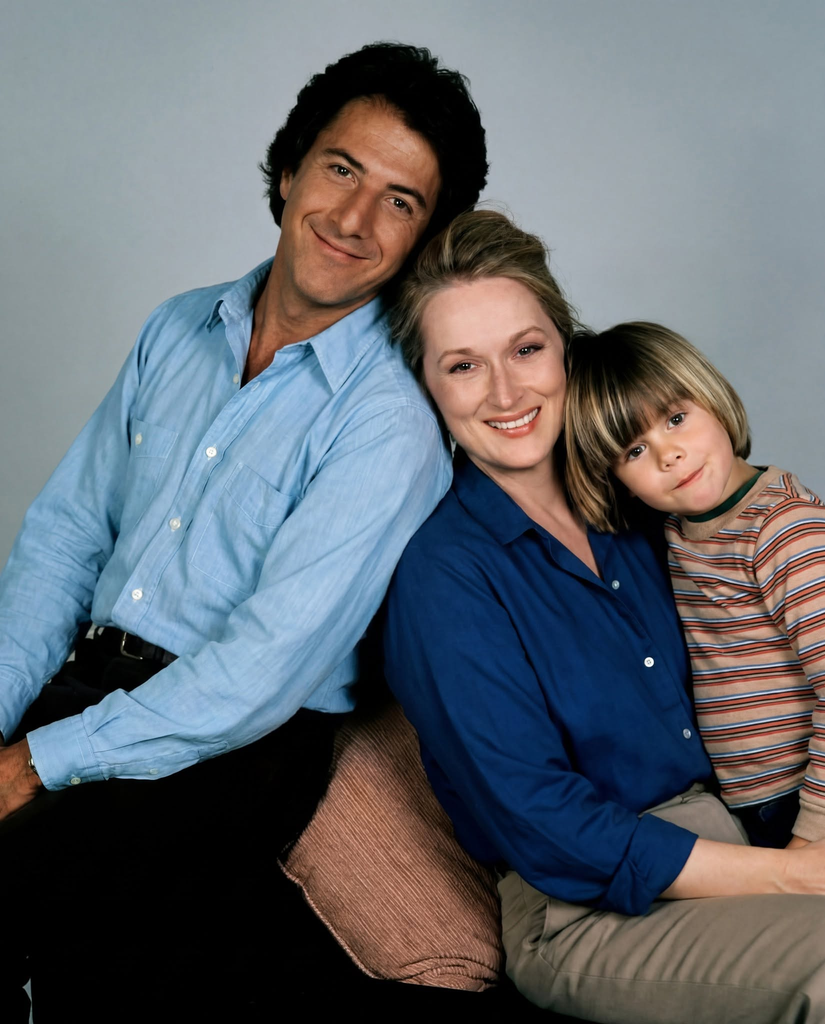

Though he’s often been called one of the greatest actors of his generation, Al Pacino will no doubt be remembered as one of the greatest actors of all time. After making his movie debut opposite Patty Duke in 1969’s Me, Natalie, Pacino would go on to become one of the most seminal figures in the “New Hollywood” movement of the 1970s (the pre-blockbuster era in which the counterculture became the mainstream) with starring roles in The Godfather trilogy, Scarecrow, Serpico, Dog Day Afternoon, Bobby Deerfield, and …And Justice for All.
Though he’s racked up more than 50 credits in his 50-year career, Pacino has also turned down plenty of roles (including several in truly great movies). When asked about his track record for saying no in 2013, Pacino explained, “I’m not a very good judge of what’s good.” Here are 16 roles that could have been.
1. The Gang That Couldn’t Shoot Straight (1971)
Super-producer Robert Evans needed to call in a lot of favors to get Pacino out of the commitment he had made to playing Mario in James Goldstone’s Mafia comedy. The reason for the change of heart? Two days after agreeing to the part, he was offered the role of Michael Corleone. Eventually, Robert De Niro played the part that was meant for Pacino.
2. Lenny (1974)
In 2010, Pacino told Larry King that turning down the title role in Bob Fosse’s Lenny Bruce biopic is one of his biggest regrets. Though he didn’t originally think it was for him, after seeing a comic perform live, “I suddenly saw what I would want to do with this part.” At that point, it was too late—though Pacino calls Dustin Hoffman’s Oscar-nominated performance in the part “amazing.”
3. Star Wars (1977)
For years, rumors have swirled about the many actors who turned down the role of Han Solo, opening the path for Harrison Ford to make it his own. In 2013, Pacino spoke out on why he passed on the part, telling a crowd during a Q&A, “Star Wars was mine for the taking but I didn’t understand the script.”
4. Close Encounters of the Third Kind (1977)
Speaking of classic sci-fi flicks that Pacino declined, Steven Spielberg had a host of actors on his wish list before offering the role to Richard Dreyfuss—Steve McQueen, Dustin Hoffman, Jack Nicholson, Gene Hackman, James Caan, and Pacino among them.
5. Slap Shot (1977)
In Al Pacino, journalist Lawrence Grobel’s extended interview-turned-semi-autobiography of the actor, Pacino cites Slap Shot as a movie he still wishes he had been able to make. “But because George Roy Hill was doing it, I couldn’t do it,” he explained.
“I should have made that movie. That was my kind of character—the hockey player. Paul Newman is a great actor, it’s not a matter of that. I read that script and passed it on to George Roy Hill that I wanted to talk to him about it, and all he said was, ‘Can he ice skate?’ That’s all he was interested in, whether I could ice skate or not. That was a certain kind of comment. He didn’t want to talk about anything else. It was like he was saying, ‘What the hell, it could work with anybody.’ The way in which he responded said to me he wasn’t interested.”
6. Days of Heaven (1978)
In Grobel’s book, Pacino cites Days of Heaven as one of the roles that he was truly conflicted over, saying, “I love Terrence Malick, and I love the picture.” According to Peter Biskind’s Easy Riders, Raging Bulls, Dustin Hoffman also turned down the lead, which eventually became a breakthrough role for Richard Gere.
7. Coming Home (1978)
Alongside Days of Heaven, Pacino also told Grobel that saying no to the lead role in Coming Home (the role that won Jon Voight an Oscar) was a tough call. But he had his reasons. “I was hoping to make Born on the Fourth of July at that time,” he said. “It was too close.”
8. Born on the Fourth of July (1989)
Do the math and it’s pretty obvious that the version of Born on the Fourth of July that Pacino was hoping to make back in the late 1970s was a bit different from the late 1980s film that earned Tom Cruise his first Oscar nomination. Yes, Oliver Stone was still involved, but only as the screenwriter. William Friedkin was set to direct, but when he dropped out, Pacino wanted out, too. “I had an interest in making it with Billy,” Pacino says in Al Pacino. “So, suddenly, Friedkin is out of the picture—now what? I wasn’t going to make that movie.”
9. Kramer vs. Kramer (1979)
Pacino didn’t even have to read the script for Robert Benton’s Oscar-winning divorce drama to know it wasn’t right for him. “There were times in my life when I didn’t even read what was being offered me,” he told Grobel. “Sometimes I can smell something that’s not right for me … I had a feeling it was not for me … I didn’t feel, at this point, it would be useful.” (Dustin Hoffman won his first Oscar playing the role of Ted Kramer.)
10. Apocalypse Now (1979)
After two successful Godfather go-arounds with Francis Ford Coppola, Pacino knew enough about the director’s work habits to know that he would not be a good fit to play Willard (Martin Sheen’s part) in Apocalypse Now. “I know what this is going to be like,” Pacino told Coppola. “You’re going to be up there in a helicopter telling me what to do, and I’m gonna be down there in a swamp for five months.” Pacino balked at the idea of five months of shooting, but the film actually took 16 months to be completed.
11. First Blood (1982)
Based on David Morrell’s 1972 book, and optioned quickly, First Blood is one of those movies that had a number of director-star configurations attached before finally making it into production. Martin Ritt wanted Paul Newman to do it, Sydney Pollack wanted Steve McQueen, and by 1975, Martin Bregman was attached with Pacino to star as John Rambo, when it was a much different movie. “People would have understood the character, but they wouldn’t have had empathy,” original screenwriter David Rabe explained in Douglas Robinson’s book, No Less a Man: Masculist Art in a Feminist Age. “There is a kind of violence that excites an audience and makes them feel that it’s a lot of fun. Mine was not.” Many sources say that Pacino eventually opted out because he wanted Rambo to be more of a “madman.”
12. Beverly Hills Cop (1984)
Before it became a showcase for the comedic stylings of Eddie Murphy, Beverly Hills Cop was a much edgier crime thriller that at different times was offered to Martin Scorsese and David Cronenberg to direct. Plenty of big-name actors besides Pacino turned down the role of Axel Foley, too (Mickey Rourke, Sylvester Stallone, and James Caan apparently among them).
13. Die Hard (1988)
During a freewheeling crowd Q&A in 2013, when confronted with the list of major movies that he turned down, Pacino had only this to say about Bruce Willis’ iconic role in Die Hard: “I gave that boy a career.”
14. Johnny Handsome (1989)
Though Pacino would later go on to work with director Harold Becker in Sea of Love and City Hall, in Grobel’s book, the actor explains that he first met Becker while they were developing Johnny Handsome:
“Harold and I were trying to find a third act, and we couldn’t. The first half of that movie is great. That was my favorite role ever in movies. I loved the whole idea of someone who’s been grotesque-looking and has made a life having to cope with that kind of deformity, to then have it lifted from him, and to have to cope with the world now … I loved the role. Loved it. But once again, one of those roles that just go down the drain if they couldn’t fix the last act. Mickey Rourke did a great job on it, but that didn’t matter; the movie didn’t have the finish.”
15. Snake Eyes (1998)
In 1997, Pacino was set to re-team yet again with his Scarface and Carlito’s Way director Brian De Palma on the Nicolas Cage film Snake Eyes. Until he wasn’t. On July 11, 1997, Variety reported that, “After months of talks between filmmaker Brian De Palma, Paramount execs, and Al Pacino about starring opposite Nicolas Cage in Snake Eyes, Pacino officially has passed. The studio now is eyeing a handful of other actors, including Gary Sinise, to star the action thriller written by David Koepp.” (Sinise did take the part.)
16. Pretty Woman (1990)
Before you try and picture Pacino in the role made famous by Richard Gere, it’s key to remember that Pretty Woman was originally a much darker tale. Still, in 2010, Pacino explained to Larry King that, “Sometimes it’s just not the right role for you and you don’t feel you belong in that part.”
Home/ENTERTAINMENT
Tom Petty’s Favorite (and Least Favorite) Tom Petty Songs
The legend’s top pick from his catalog was not one of his biggest hits.
ByLogan DeLoye|Oct 18, 2026, 2:00 PM EDT
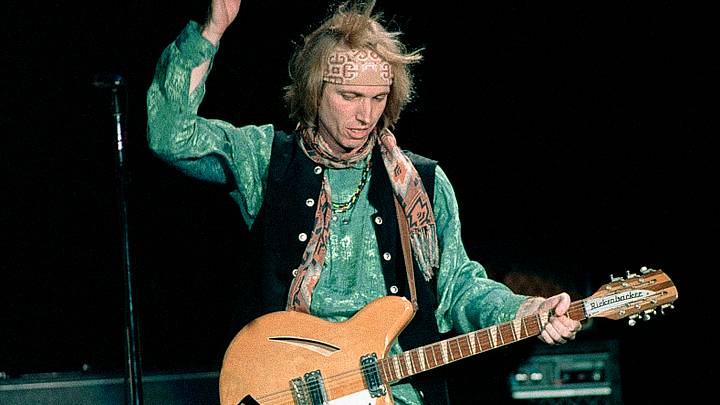
Tom Petty met Elvis Presley when he was just 10 years old, got his first guitar two years later, and the rest is (music) history.
His songwriting was so prolific that millions of listeners found themselves free fallin’, wandering through wildflowers, and dancing with Mary Jane across his catalog. Generations of fans admire the rock ‘n’ roll icon for his talent, collaborative spirit, and his undeniably chill approach to stardom.
Petty rose to fame in 1976 with his debut album, Tom Petty and the Heartbreakers. Throughout his career, he gifted the world 16 studio albums, 13 with his band and three solo projects. His 1981 collaboration with Stevie Nicks landed them near the top of the Billboard charts with “Stop Draggin’ My Heart Around,” four years after his first top 10 hit, “Don’t Do Me Like That.” “Free Fallin’” was the band’s last top 10 hit in 1989.
In the late 1980s, Petty joined the supergroup The Traveling Wilburys alongside Bob Dylan, George Harrison, Jeff Lynne, and Roy Orbison, penning classics like “Handle With Care,” “End of the Line,” “Last Night,” and “Congratulations.”
He was inducted into the Rock and Roll Hall of Fame in 2002 and passed away in 2017 at 66.
The world loves his music, but what were Tom Petty’s favorite (and least favorite) Tom Petty tracks?
“Southern Accents”
In 2002, Petty spoke with the Los Angeles Times about his catalog and named “Southern Accents,” the title track from his 1985 album, as his favorite, citing its connection to his southern roots.
“That may be my favorite among my songs, just in terms of a piece of pure writing. I remember writing it very vividly. It was in the middle of the night, and I was playing it on the piano at home in Encino. I was just singing into my cassette recorder, and suddenly these words came out. I was at the point in my career where I was very much trying to find some new ground. I thought I had used up what I had started with, and I wanted a new direction.”
He also explained how the song tied into his childhood and family life.
“We had lived in California for about 10 years at that point, and I started thinking about growing up in northern Florida, which is a lot different from Miami Beach. It’s close to Georgia, and I came from a real Southern family, and I wanted to address that world. Once I came up with this song, I decided to write an entire album about the theme.”
“Make It Better (Forget About Me)”
Before his passing, Petty sat down with author Paul Zollo for a series of in-depth conversations published in Conversations With Tom Petty in 2020. In one of those chats, Petty was very honest about a song he “hated,” calling it “trash.”
“I hate that song; it’s just trash,” he said, referring to “Make It Better (Forget About Me).” “It was Dave just trying to get me to knock a song out—just write a song for the sake of writing one—and I think that’s what it sounds like to me.”
The track, written in the ‘80s and featured on Southern Accents, only reached number 54 on the Billboard Hot 100.
Read More:
•
8 Hit Songs You Might Not Know Tom Petty Wrote
•
11 Wild Urban Legends Surrounding Popular Songs
Home/ENTERTAINMENT
How Bruce Springsteen Turned One of America’s Darkest Crimes Into a Haunting Classic
Springsteen composed and recorded his celebrated “Nebraska” by himself, in his bedroom.
ByTim Brinkhof|Jul 24, 2026, 7:00 PM EDT
 Add us as a preferred source

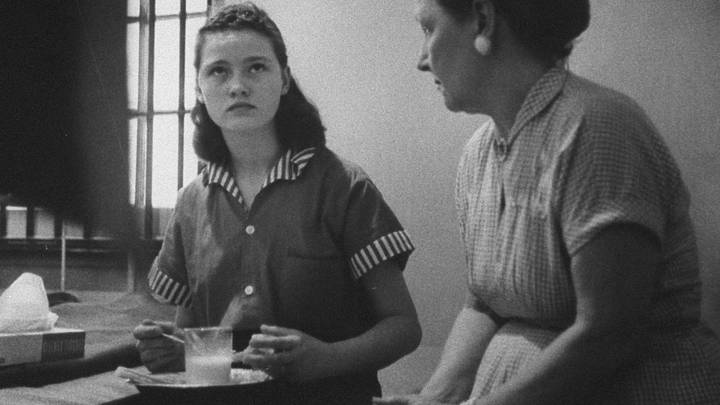
Between January 21 and 29, 1958, a 19-year-old garbageman from Lincoln, Nebraska, called Charles Starkweather went on a killing spree with his 14-year-old girlfriend, Caril Ann Fugate.
Described as a “swaggering good-for-nothing in blue jeans and a black motorcycle jacket” known to yell “go to hell” at strangers, Starkweather killed 11 people—including Fugate’s mother, stepfather, and half-sister—before he was caught and sent to the electric chair.
News of the seemingly random serial killings—a prelude to the likes of Ted Bundy, John Wayne Gacy, and Jeffrey Dahmer—shocked many Americans, including singer-songwriter Bruce Springsteen.
Today, the event is best remembered through the song “Nebraska,” the first in Springsteen’s album of the same name. Though told from Starkweather’s own perspective, it never properly explains his motives—and that’s precisely the point.
How a Murder Spree Inspired a Musical Masterpiece
Though widely regarded as the best album in Springsteen’s long and industrious career—including by Springsteen himself—the singer-songwriter didn’t know if any of its songs would resonate with people. His doubts weren’t unreasonable. Contrary to his previous albums, which were recorded in a studio alongside his E Street band, the songs on “Nebraska” Springsteen recorded by himself, in his bedroom.
Springsteen had tried recording them with his band, but felt that the high production quality didn’t suit their dark, intimate nature. Ultimately, he decided that his own recording—originally intended to be little more than a demo—was superior.
“Nebraska” marked an important turning point in Springsteen’s career. Although dashed dreams and harsh realities had always been a prominent part of his repertoire, this new album sounded much more hopeless.
Unlike with many of the songs on “The River,” Springsteen’s focus was less on celebrating man’s resilience in the face of unyielding hardship, and more on bemoaning the seemingly cruel nature of the universe.
As he sings in the opening song, which is best listened to with the knowledge that Starkweather never gave a proper confession of his crimes: “They wanted to know why I did what I did / Well sir I guess there’s just a meanness in this world.”
Springsteen later claimed that he did not create “Nebraska” with a political agenda in mind, concentrating instead on achieving a particular sound. True or not, his music is often placed in a political context—one that continues to resonate today.
Donald Trump frequently plays Springsteen’s music at his rallies, particularly “Born in the USA.” This he does to the great chagrin of Springsteen himself, who knows better than anyone that his songs do not applaud or criticize American nationalism.
The Album That Almost Stayed a Demo
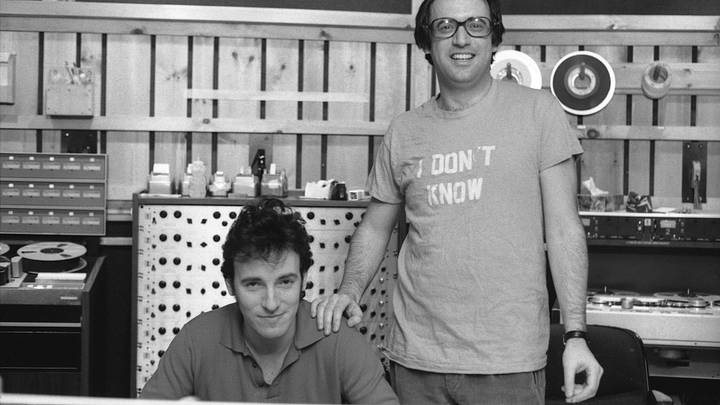
Though certainly a response to current events, “Nebraska” also came into existence because of developments in Springsteen’s own career. Having become a superstar, he wanted to close the gap between him and his fans, and avoid turning into a sellout.
“All popular artists,” Springsteen wrote in his 2016 memoir Born to Run, “get caught between making records and making music.” Once he found himself in this very spot, he chose to make music.
Despite Springsteen’s doubts, “Nebraska” became both a critical and commercial success, topping U.S. and U.K. charts and selling millions of copies. Ultimately, though, it’s remembered for closing that aforementioned gap.
As E Street guitarist Steve van Zandt later said: “An artist could never get closer to his audience than this. Not because it was done with an acoustic guitar, but because he was literally singing for himself.”
More Like This:
•
Quiz: Can You Name the Tom Petty Song From One Lyric?
•
Quiz: Is This a Lyric From “Monster Mash” or “Spooky, Scary Skeletons”?
•
Tom Petty Had a Clear Favorite Among His Own Albums
•
Tom Petty’s Favorite (and Least Favorite) Tom Petty Songs
•
The Biggest Song From Every Year in the 1960s
Home/MUSIC