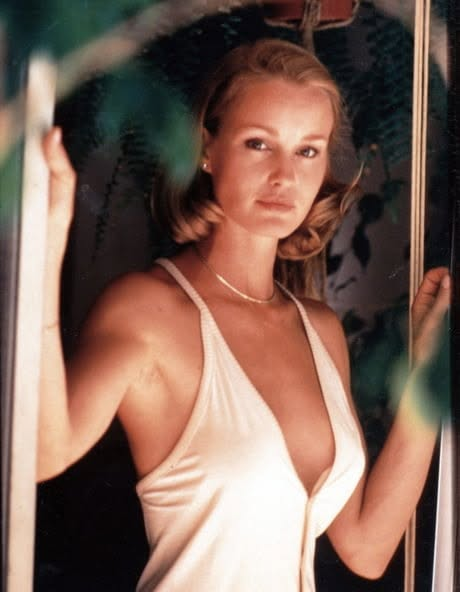
Jessica Lange made a striking entrance into Hollywood in 1976 with her debut role as Dwan in King Kong. The film itself was a lavish, big-budget remake of the 1933 classic, and much of the early attention focused on the spectacle of reviving cinema’s most famous monster.
Yet when the dust settled, it was not Kong who lingered most in the public imagination, but Jessica Lange. From her first appearance, she radiated a rare combination of innocence, glamour, and emotional vulnerability that felt both fresh and timeless.
With her golden hair, statuesque beauty, and expressive eyes, she seemed destined for stardom, but there was also an unmistakable gravity beneath the surface.
Her performance hinted that she was more than just another ingénue in a blockbuster; she was a natural storyteller with the ability to hold the camera’s gaze and translate inner life into something vivid and human.

Though King Kong catapulted her into fame, it did not immediately guarantee her the respect of Hollywood insiders. The film was met with mixed reviews, and some critics dismissed Lange as a model-turned-actress cast only for her looks.
For many in her position, such typecasting could have spelled the end of a career. But Lange had little interest in being defined by her beauty alone. Over the next several years, she quietly studied her craft, choosing roles that challenged her and allowed her to grow.
Her determination to evolve as an actress, rather than simply bask in her sudden celebrity, became one of the defining traits of her career.
The turning point came in 1982 with Tootsie, the sharp, witty comedy directed by Sydney Pollack. Playing Julie Nichols, a soap opera actress who becomes the emotional anchor opposite Dustin Hoffman’s cross-dressing character, Lange delivered a performance of warmth, intelligence, and emotional depth.
Julie was not a caricature of a TV actress, but a woman with dignity, dreams, and vulnerabilities of her own. Lange brought such authenticity to the role that audiences instantly connected with her.
The film was a massive critical and commercial success, and Lange’s performance earned her the Academy Award for Best Supporting Actress. With that golden statue, she silenced her early critics and announced her arrival as one of Hollywood’s most formidable dramatic talents.

What followed was a series of roles that cemented Lange’s reputation as a fearless, risk-taking actress. In Frances (1982), released the same year as Tootsie, she portrayed troubled film star Frances Farmer with raw intensity, charting Farmer’s descent into mental illness and institutional abuse.
The performance was harrowing and uncompromising, and though she did not win the Oscar for it, many critics consider it one of her greatest achievements. A few years later, in Sweet Dreams (1985), she embodied country singer Patsy Cline with such conviction that she seemed to channel the singer’s spirit.
Singing was dubbed, but Lange’s body language, presence, and emotional depth made audiences believe they were watching the real Patsy.
By the 1990s, Lange had become synonymous with powerful performances of women wrestling with inner demons and external pressures.
In Blue Sky (1994), she played Carly Marshall, the volatile wife of a U.S. Army officer, whose instability reflects deeper truths about repression, desire, and the social strictures of mid-century America.
The role earned her an Academy Award for Best Actress and underscored her mastery of complex, contradictory characters. Unlike many stars of her generation who clung to safe roles, Lange consistently gravitated toward characters with scars, contradictions, and vulnerabilities.
She was not afraid to look unglamorous, to embody pain, or to reveal aspects of womanhood that Hollywood often preferred to gloss over.
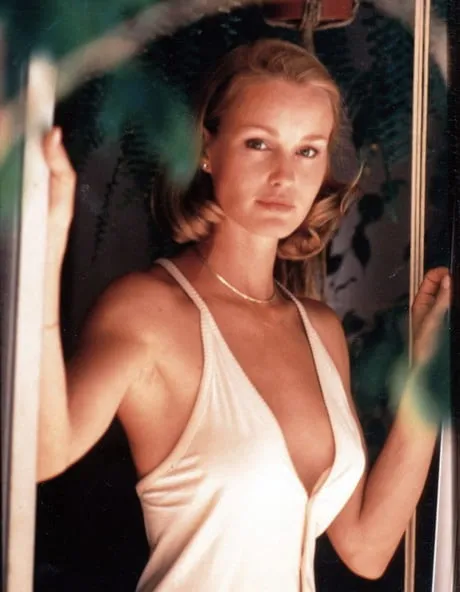
Her range proved astonishing. She could be operatic in her intensity, as in Frances, yet restrained and quietly devastating in films like Music Box (1989), where she played a lawyer defending her father against war crime accusations.
Each role showcased her ability to slip seamlessly into different emotional registers, moving from tenderness to fury to despair with a natural fluidity that never felt forced. She had the rare ability to command attention while making her characters entirely believable as ordinary, flawed human beings.
Then, in the 2010s, when many actresses of her generation had been sidelined by Hollywood’s ageist tendencies, Jessica Lange experienced a remarkable resurgence.
She joined Ryan Murphy’s American Horror Story anthology series, and over the course of several seasons, she delivered some of her most memorable work. To a new generation of viewers, Lange was not just a celebrated actress of the past—she was the beating heart of the show.
She played everything from Constance Langdon, a manipulative Southern matriarch, to Sister Jude, a tormented nun, to Fiona Goode, a glamorous but ruthless witch. In each role, she combined theatricality with raw emotional truth, making her characters unforgettable.
Her performances in the series earned her two Emmy Awards and reintroduced her as a force of nature to younger audiences who may never have seen Frances or Blue Sky.

What makes Jessica Lange’s career so remarkable is not just its longevity but its constant reinvention. She has moved effortlessly between film, television, and stage, proving time and again that great acting transcends medium.
Her dedication to craft has remained unwavering across decades, whether she was starring in a Hollywood blockbuster, an indie drama, or a stylized television anthology.
At every stage of her career, she has refused to be pigeonholed, always reaching for roles that reflect complexity, contradiction, and humanity.
Her legacy is one of grace and grit, glamour and depth. She embodies the rare kind of stardom that balances beauty with substance, fame with artistic integrity.
From the wide-eyed ingénue in King Kong to the battle-hardened matriarchs of American Horror Story, Lange has shown the power of transformation—not just within her characters, but within her career itself.
She has endured not by chasing trends, but by committing fully to the truth of her characters, however messy, painful, or unflattering that truth may be.

More than four decades after her debut, Jessica Lange stands as one of Hollywood’s most respected and admired actresses. Her story is not merely one of survival in an industry notorious for discarding women as they age, but one of triumph through authenticity, fearlessness, and reinvention.
She has proven that true talent is ageless, that emotional honesty never goes out of style, and that reinvention is not only possible but essential. Her career is a living testament to the power of risk-taking, resilience, and artistry—and a reminder that some stars burn not just brightly, but enduringly.