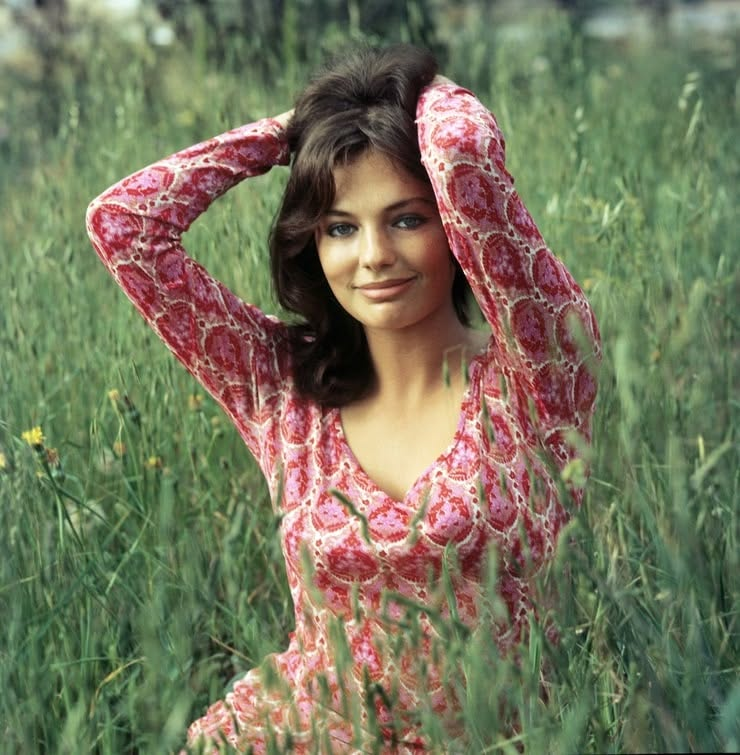
In 1973, at a moment when cinema itself was undergoing a profound transformation, Jacqueline Bisset stood quietly at the center of a cultural shift.
Hollywood was loosening its grip on the rigid studio system, European filmmakers were redefining storytelling, and audiences were beginning to demand characters who felt real rather than idealized.
In the midst of this change, Bisset—only 29 years old—emerged not as a loud symbol of rebellion, but as something far more enduring: a woman whose talent, restraint, and authenticity reshaped expectations of what a leading lady could be.
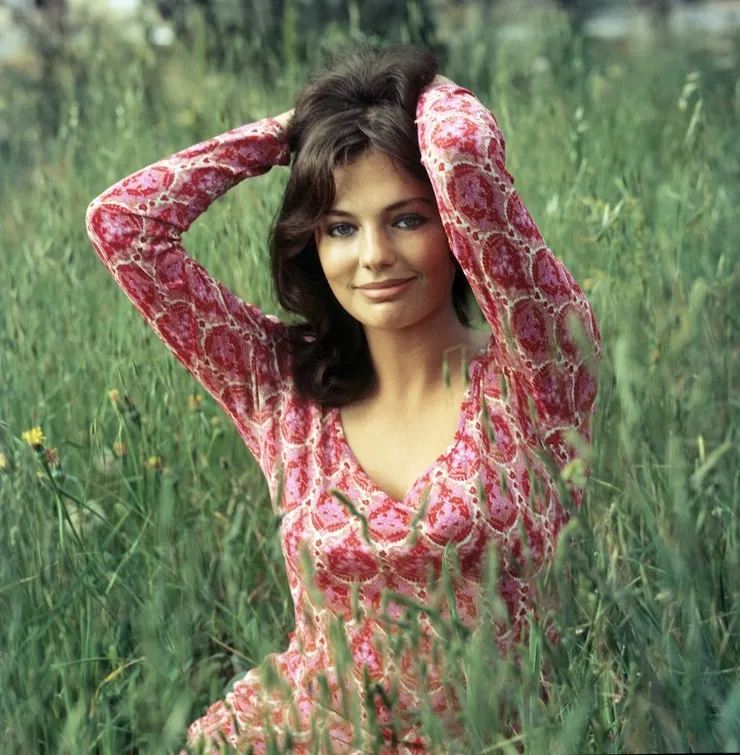
By the early 1970s, Jacqueline Bisset had already captured public attention with her striking beauty.
Tall, poised, with expressive green eyes and an unmistakable presence, she seemed destined for stardom from the moment she appeared on screen.
Yet what distinguished her from many actresses of her generation was her refusal to rely solely on appearance.
While the industry often tried to package women as decorative figures, Bisset consistently sought roles that offered emotional substance. She was keenly aware that beauty fades, but craft endures.

The year 1973 crystallized this philosophy. In Hollywood, she starred opposite Steve McQueen in The Thief Who Came to Dinner. McQueen, already a legendary figure, commanded the screen with his cool, controlled charisma.
Matching such a presence required confidence and subtlety, and Bisset delivered both. Rather than competing for attention, she complemented the performance, creating a dynamic that felt balanced and organic.
Her role demonstrated that strength on screen did not need to be aggressive; it could be calm, intelligent, and assured.

At the same time, Bisset was making waves in European cinema—a space that valued introspection over spectacle.
Her role in François Truffaut’s Day for Night was a turning point, not just for her career, but for how she was perceived internationally.
The film, a loving yet honest portrayal of filmmaking itself, blurred the line between illusion and reality. Bisset’s performance was understated, emotionally precise, and deeply human.
When the film went on to win the Academy Award for Best Foreign Language Film, her credibility as a serious actress was firmly established.

What made this achievement remarkable was her ability to move between cinematic worlds without losing her identity.
Hollywood often demanded accessibility and glamour; European cinema prized ambiguity and emotional truth.
Jacqueline Bisset navigated both with rare grace.
She did not adjust herself to fit the industry—she allowed the industry to meet her where she stood. This flexibility made her one of the few actresses of the era who could thrive across borders and artistic philosophies.

Off screen, her image in 1973 reflected the same quiet confidence.
Photographs from the time show her walking through Paris streets in simple dresses, attending premieres without theatrical flair, and engaging with filmmakers as a collaborator rather than an ornament.
Her fashion choices—natural hair, minimal makeup, clean lines—mirrored a broader cultural shift away from excess.
She embodied the growing belief that authenticity was more powerful than polish.

Equally important was her relationship with fame. At a time when tabloids were growing increasingly aggressive, Bisset maintained a fiercely guarded private life.
She did not cultivate scandal or rely on personal drama to stay relevant. Interviews centered on her work, her influences, and her respect for cinema as an art form.
This restraint, often mistaken for aloofness, was in fact a form of self-preservation—and a statement of values.

Her rise coincided with a larger evolution in how women were portrayed on screen.
The 1970s opened the door to complex female characters who existed beyond romantic subplots. Women could be flawed, thoughtful, uncertain, and strong all at once.
Jacqueline Bisset fit seamlessly into this new narrative landscape. Her performances suggested inner lives—thoughts unspoken, emotions held back, choices weighed carefully. She trusted audiences to read between the lines.

In many ways, Bisset represented a new model of femininity in film. She was sensual without being exploited, intelligent without being cold, and private without being distant.
She did not announce her independence; she lived it. This subtle defiance made her influential in ways that were not immediately obvious, but deeply lasting.
Looking back at Jacqueline Bisset in 1973 is to witness an artist fully inhabiting her moment. She was not chasing trends or attempting reinvention. Instead, she was refining her voice, choosing roles with intention, and building a career rooted in integrity.
Her success did not come from spectacle, but from consistency.

As decades passed, her presence in cinema remained steady. She continued to work across genres and countries, earning respect rather than headlines. In an industry notorious for discarding women as they age, Bisset endured—not by fighting time, but by evolving with it.
Today, her legacy feels especially relevant. In a media landscape obsessed with visibility and immediacy, Jacqueline Bisset stands as a reminder that true influence does not shout. It resonates quietly, frame by frame, role by role.

And in 1973, as the world of cinema stood on the edge of reinvention, Jacqueline Bisset was already there—poised, thoughtful, and timeless—waiting for the world to catch up.