
Natalie Wood, born Natalia Nikolaevna Zakharenko on July 20, 1938, in San Francisco, California, was destined to live a life in front of the camera. The daughter of Russian immigrant parents, her early years were shaped by both her family’s struggles and their ambitions.
Her mother, Maria, was determined that her daughter would achieve success in Hollywood, and Natalie was pushed toward the screen at an age when most children are just beginning school.
At the age of four, she appeared in her first film role, and by the time she starred in the holiday classic Miracle on 34th Street (1947), she had become one of America’s most beloved child stars.
Audiences immediately recognized something special in the little girl with the wide, searching eyes and natural ability to convey both innocence and wisdom.

Unlike many child actors whose careers falter once they grow older, Natalie Wood made the transition from child star to adult actress with extraordinary grace and power. Her role in Rebel Without a Cause (1955), opposite James Dean and Sal Mineo, was a watershed moment in her career.
Playing Judy, a troubled teenager grappling with love, loneliness, and family conflict, Wood delivered a performance of such raw vulnerability that it earned her an Academy Award nomination at just 17 years old.
The film became a cultural landmark, capturing the restless spirit of postwar American youth, and Wood’s performance marked her as one of the most promising young actresses of her generation.

Throughout the late 1950s and early 1960s, Natalie Wood continued to choose roles that demonstrated both her versatility and her emotional depth. In Splendor in the Grass (1961), she played Deanie Loomis, a young woman caught between the pull of passion and the rigid expectations of society.
Her portrayal was heartbreaking and authentic, earning her another Oscar nomination and solidifying her reputation as one of the finest actresses of her era. That same year, she appeared in West Side Story (1961), the sweeping adaptation of the Broadway musical that became one of the most beloved films of all time.
Though her singing voice was dubbed, her performance as Maria radiated sincerity, love, and tragedy, ensuring that her face would forever be tied to one of cinema’s most enduring masterpieces.

Her success was not limited to drama. Natalie also had a talent for lighter roles, proving herself in romantic comedies and other genres, but it was always her ability to portray complex emotions—longing, fragility, resilience—that made her unforgettable.
By the time she was 25, she had earned three Academy Award nominations, an achievement that few actresses in Hollywood history have matched.

Off the screen, Natalie Wood was a figure of fascination and admiration.
She was celebrated not only for her beauty and elegance but also for her intelligence, grace, and dedication to her craft. Unlike many stars molded entirely by the studio system, Natalie carved out her own path.
She sought roles that challenged her and refused to be pigeonholed into the archetype of the Hollywood ingénue. At a time when women in the industry often had little say in their careers, Wood quietly asserted her independence, setting an example for future generations of actresses.

Her personal life, however, was often as dramatic as her films. Her marriage to actor Robert Wagner was the subject of constant public attention. The two married in 1957 when Natalie was just 19, and their union was widely covered in the press as one of Hollywood’s golden romances.
They divorced in the early 1960s but later reunited and remarried in 1972, a rare and much-publicized rekindling of love that fascinated fans. Their relationship, marked by both devotion and turbulence, became a central part of Wood’s legend.
She was also a devoted mother to her two daughters, Natasha Gregson Wagner and Courtney Wagner, and those close to her often described her as warm, loving, and deeply protective of her family.

Tragically, Natalie Wood’s life came to a sudden and mysterious end in November 1981. While on a weekend boat trip off California’s Catalina Island with Robert Wagner, actor Christopher Walken, and the boat’s captain, she disappeared under circumstances that have never been fully clarified.
Her body was discovered the following morning, and her death was officially ruled as accidental drowning. She was only 43 years old. The events of that night have remained one of Hollywood’s most enduring mysteries, surrounded by speculation and unanswered questions.
Yet while the details of her passing continue to draw curiosity, they do not diminish the remarkable career and legacy she left behind.

Natalie Wood’s impact on Hollywood remains profound. She was one of the first child stars to successfully reinvent herself as a serious adult actress, proving that talent and dedication could overcome the typecasting that doomed many of her peers.
She worked with some of the most celebrated actors and directors of her time, from James Dean and Warren Beatty to Elia Kazan and Jerome Robbins, and she held her own with a presence that was both commanding and vulnerable.
She was not just a performer but an artist who gave herself completely to her roles, allowing audiences to see the full spectrum of human emotion reflected on screen.

Her legacy is also carried forward through the generations she inspired.
Actresses who came after her often cited her as an influence, pointing to her courage in tackling emotionally demanding roles and her insistence on being taken seriously in an industry that too often reduced women to ornaments.
She demonstrated that beauty and glamour could coexist with intelligence and depth, and that true artistry required risk, vulnerability, and authenticity.
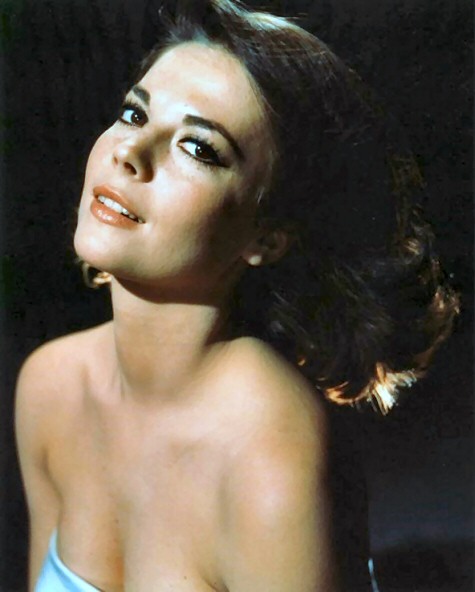
Even decades after her death, Natalie Wood remains a figure of timeless fascination. Her films continue to be rediscovered by new audiences, her performances retaining their freshness and emotional power.
She is remembered not only as one of Hollywood’s great beauties but also as a symbol of what it means to give everything to one’s art. Her story, filled with triumph and tragedy, remains one of the most compelling narratives in the history of American cinema.

Natalie Wood’s life was short, but it was brilliant, filled with unforgettable performances and moments that continue to echo through the decades. She was more than just a star; she was an artist, a trailblazer, and a woman of extraordinary talent and heart.
To watch her on screen is to witness a soul unafraid to bare itself, and that is why, even today, her light has not dimmed.