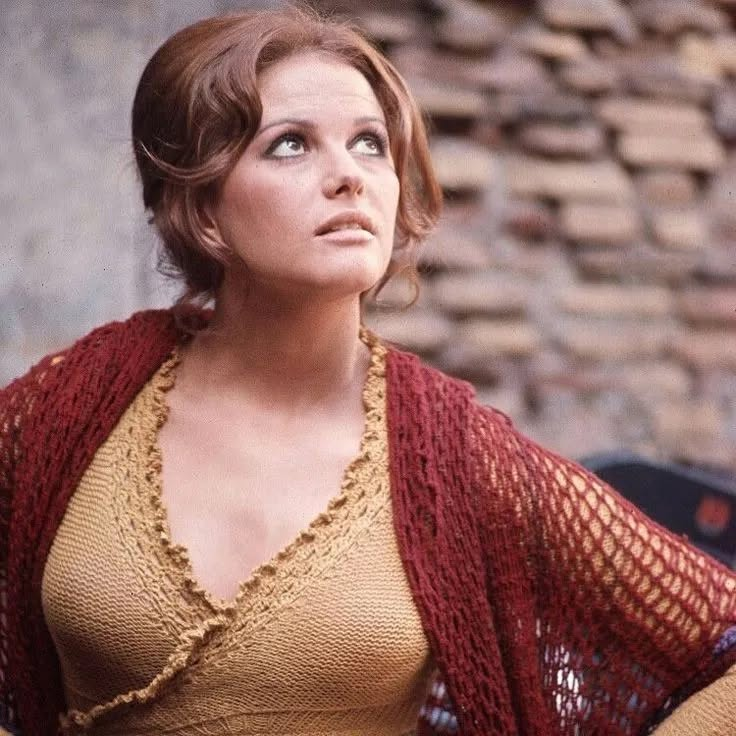
In the golden age of Italian cinema, the early 1960s belonged not only to Rome’s bustling film studios and stylish streets, but also to one rising star who seemed to embody the spirit of both: Claudia Cardinale.
With her Tunisian birth, Sicilian heritage, and unmistakable screen presence, Cardinale emerged as one of Europe’s most captivating actresses.
Yet her story extended far beyond the silver screen—it unfolded in real cafés, on cobblestone streets, and among the everyday Romans who came to see her not only as a star, but as one of their own.
Born in Tunis in 1938 to Sicilian parents, Claudia’s path to cinema was far from ordinary. Initially drawn into film through a beauty contest, she carried with her an unconventional mix of Mediterranean warmth and quiet determination.
When she arrived in Rome, she did not arrive merely as another beautiful young woman seeking fame. She brought ambition, discipline, and an instinctive understanding of how to command the camera without ever forcing it.
Cinecittà Studios—affectionately dubbed “Hollywood on the Tiber”—quickly became her artistic home, and the directors who recognized her power would help launch her into immortality.
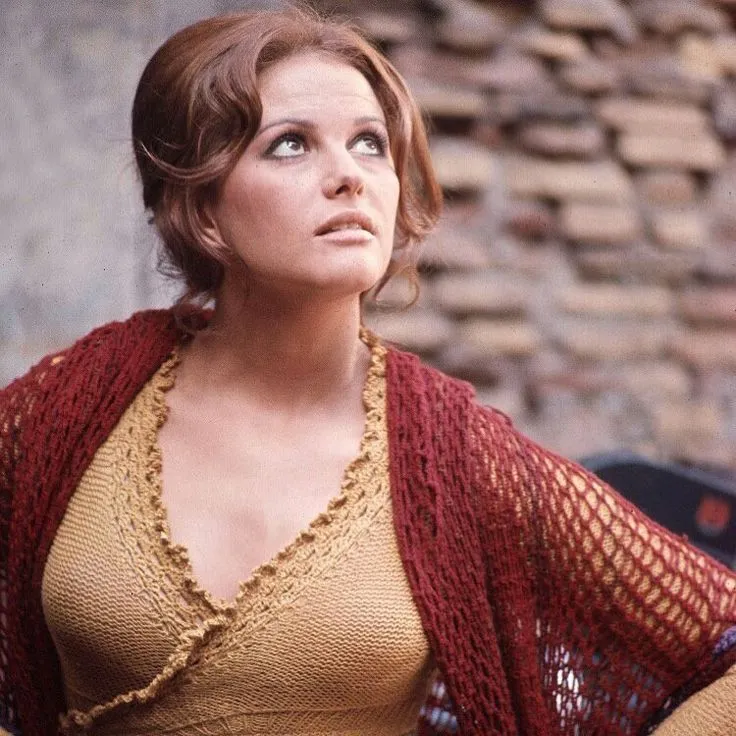
By the early 1960s, her name was tied to some of cinema’s most celebrated works. Federico Fellini cast her in 8½ (1963), where she radiated a mix of mystery and magnetism that balanced Marcello Mastroianni’s dreamlike journey through creativity and memory.
Luchino Visconti gave her one of her greatest roles in The Leopard (1963), where she played Angelica Sedara, the sensual and ambitious young woman who becomes the symbol of change in Giuseppe Tomasi di Lampedusa’s epic tale of Sicily’s fading aristocracy.
These roles demanded not only beauty but also emotional depth and intelligence, qualities Claudia brought with quiet power.
And yet, while cinema audiences admired her performances, Romans fell in love with her presence off-screen.
Unlike many celebrities of her stature, Claudia never disappeared into a world of bodyguards, black cars, and velvet ropes. She lived in the city, not above it.
On weekday mornings, she could be spotted in the bustling markets of Trastevere, speaking warmly with vendors, her laughter carrying easily among the clamor of stalls.
She often walked alone, carrying her signature straw bag, her elegance understated and natural. Along the glamorous Via Veneto, she might sit with quiet poise at a café table, sipping espresso as paparazzi lingered nearby, always at a respectful distance.

There was something about Claudia that seemed to soften the sharp edges of fame. She was luminous, yes—but approachable, too. Stories from those who encountered her in Rome often reflect this duality.
One warm afternoon in 1965, during a break from filming The Pink Panther, Claudia slipped away from the set and found herself wandering near Piazza Navona. In the courtyard of a convent, a group of schoolgirls recognized her immediately.
heir excitement was palpable but hesitant—they whispered among themselves before shyly approaching. Claudia, rather than brushing them aside, crouched down to their level, signed their notebooks, and spent nearly an hour talking and laughing with them.
For those young girls, the encounter was unforgettable. Claudia was not simply a distant star on a cinema screen; she was someone who made room for connection, for kindness, for joy.
Rome itself became intertwined with her story.
The city in those years was alive with glamour and contradictions—American stars and European filmmakers converging in its streets, luxury cars pulling up alongside Vespas, aristocrats dining beside journalists and poets.
In this blend of worlds, Claudia moved easily, embodying a balance of sophistication and sincerity that felt authentically Roman. She was seen at premieres and soirées, yes, but she was also glimpsed strolling across piazzas or sitting quietly in neighborhood trattorias.
She carried with her the rare gift of being both icon and neighbor.

As her fame spread internationally, Claudia Cardinale never lost this connection to Italy, and especially to Rome.
Hollywood tempted her with offers, and she did indeed make her mark abroad in films like Blake Edwards’ The Pink Panther (1963) and Sergio Leone’s Once Upon a Time in the West (1968), where she played the unforgettable Jill McBain. But no matter how far her career carried her, she remained tied to the Eternal City.
Her Roman years were not just a backdrop to her stardom—they were essential to her identity as an artist and as a woman.
Her filmography tells only part of the story. What continues to define Claudia Cardinale in the memory of Italians is her humanity. She symbolized the modern Italian woman: independent yet warm, glamorous yet grounded, bold yet approachable.
She was part of the cultural shift of the 1960s, when Italian cinema was not only competing with Hollywood but redefining global film itself—through neorealism, through art cinema, and through stars like Claudia who embodied both tradition and progress.

Even today, as retrospectives celebrate her work and cinephiles revisit her iconic roles, there remains a collective memory of Claudia not just as a film star, but as someone who walked among the people with grace.
She did not let fame create distance; instead, she used it as a bridge. In this sense, she belongs to Rome just as much as Rome belongs to her.
Claudia Cardinale is remembered not only for her powerful performances and enduring beauty, but also for her unique blend of sophistication and sincerity.
She lived her Roman years not in a rarefied sphere of untouchable glamour, but in the same piazzas, markets, and cafés as the people who adored her.
In the Eternal City’s long love affair with cinema, few stories shimmer quite like hers—a story of stardom softened by humanity, of elegance infused with warmth, of a woman who embodied not just the art of film, but the soul of Rome itself.