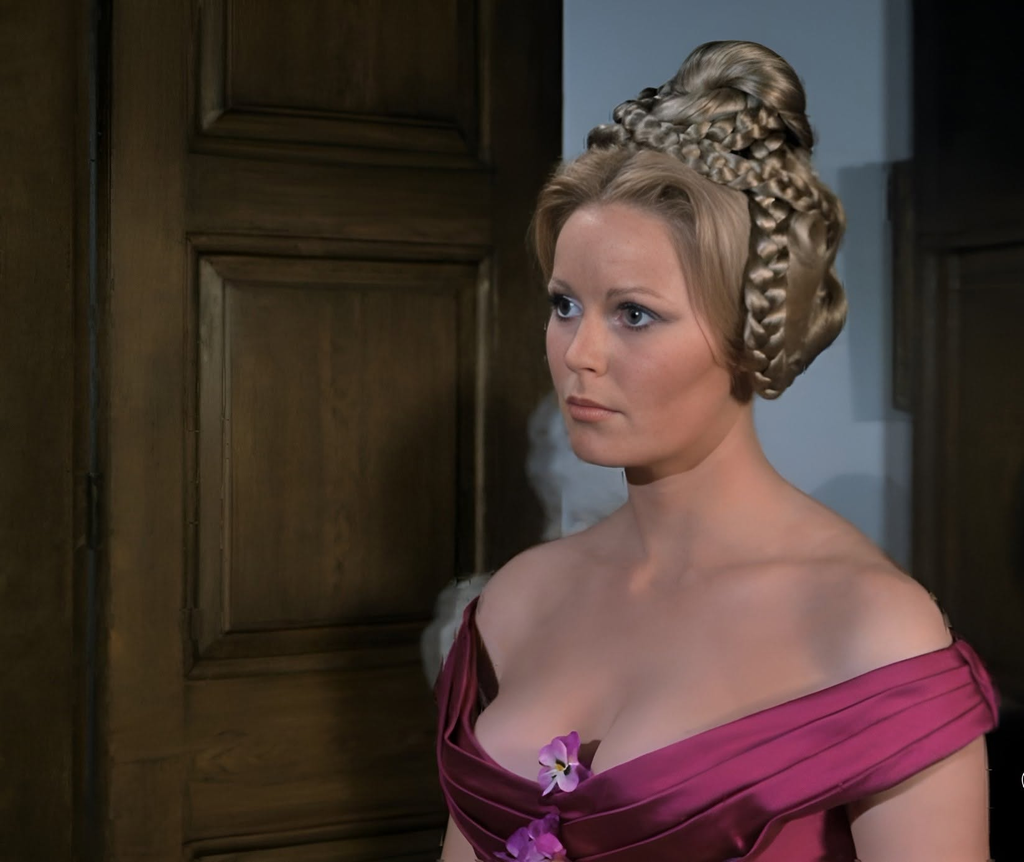
A hush falls over the screen as an elegant figure emerges from the shadows of the genre that shaped her. This is the story of Veronica Carlson, a woman whose life blended the allure of classic horror, the calm pursuit of art, and the quiet courage to leave the spotlight on her own terms.
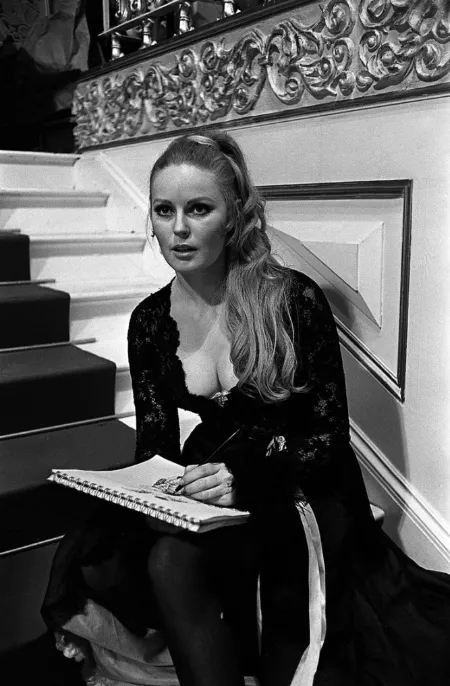
Veronica Mary Glazier, later known to the world as Veronica Carlson, was born on September 18, 1944, in Emley, West Riding of Yorkshire, England.
Her father, William Glazier, served as an officer in the Royal Air Force, while her mother, Edith Allatt, worked as a housemaid. Much of Veronica’s childhood was spent in West Germany, where her father’s postings took the family.
Growing up in a military environment and moving between countries gave her a worldly poise that would later define her screen presence.Her education began at Thetford Girls’ School and Lady Verney High School in West Wycombe, before she continued her studies at High Wycombe College of Art and Technology.
There, she studied art and participated in various college reviews and operettas. Those early creative experiences laid the foundation for a lifelong connection with the arts—first through performance, and later through painting.

She was a natural performer, graceful and poised, with a striking beauty that would soon catch the attention of filmmakers.While still in college, Veronica began taking small acting roles in films and television shows.
One of her earliest appearances was in The Magnificent Two (1967). When she learned that the production needed someone who knew judo, she confidently claimed she could manage a few moves, earning herself a part in the film.
It was a modest beginning, but it opened a path that would soon lead her straight into the heart of British horror cinema.Fate intervened in the form of Hammer Films, the legendary British studio known for its Gothic horror classics.
James Carreras, the head of Hammer, happened to see a photograph of Veronica in a newspaper. Struck by her presence, he offered her a role opposite Christopher Lee in Dracula Has Risen from the Grave (1968).
With that opportunity, Veronica Carlson became part of a cinematic tradition that would define her name for decades.

Her portrayal of Maria in Dracula Has Risen from the Grave placed her directly opposite one of cinema’s most iconic monsters. The film’s success brought her widespread attention and cemented her status as one of Hammer’s rising stars.
She continued her collaboration with the studio in Frankenstein Must Be Destroyed (1969), starring alongside Peter Cushing, and The Horror of Frankenstein (1970). In these roles, she embodied a balance of vulnerability and quiet strength that became a hallmark of Hammer’s leading women.
Carlson often recalled her time with Hammer as being part of a “big warm family.” Despite the genre’s dark and sometimes lurid reputation, she said she was always treated with respect and professionalism.
Outside of her film work, she also appeared in popular television series such as The Saint, alongside Roger Moore, and Randall & Hopkirk (Deceased), proving her versatility beyond horror.

As the 1970s unfolded, however, the film industry began to change. More explicit content and increasing demands for nudity became common, even in mainstream films. Veronica, raised with traditional values, was uncomfortable with this new direction.
Though she had been poised for greater stardom, she decided to step back rather than compromise her principles. “It was never my intention to stop acting,” she once explained. “I thought I was really going places. But the industry changed.
There was a lot of nudity coming into the movies, and I wasn’t into that. I’d had a strict upbringing—I wouldn’t think of taking my clothes off.”In 1974, she married Sydney Charles Love, and soon after, the couple moved to the United States, eventually settling in South Carolina.
There, Veronica shifted her creative focus back to her first passion—art. She became a professional painter, developing a reputation for her portrait work. What began as a quiet retreat from the demands of fame evolved into a fulfilling second career.

Painting allowed her to express herself in a different way, capturing emotions and stories with brush and color instead of dialogue and camera.Although she largely stayed away from the film industry, she never disappeared from the hearts of her fans.
Decades later, in 2019, she made a brief but celebrated return to the screen in House of the Gorgon, a film that reunited her with fellow Hammer icons Caroline Munro and Martine Beswick.
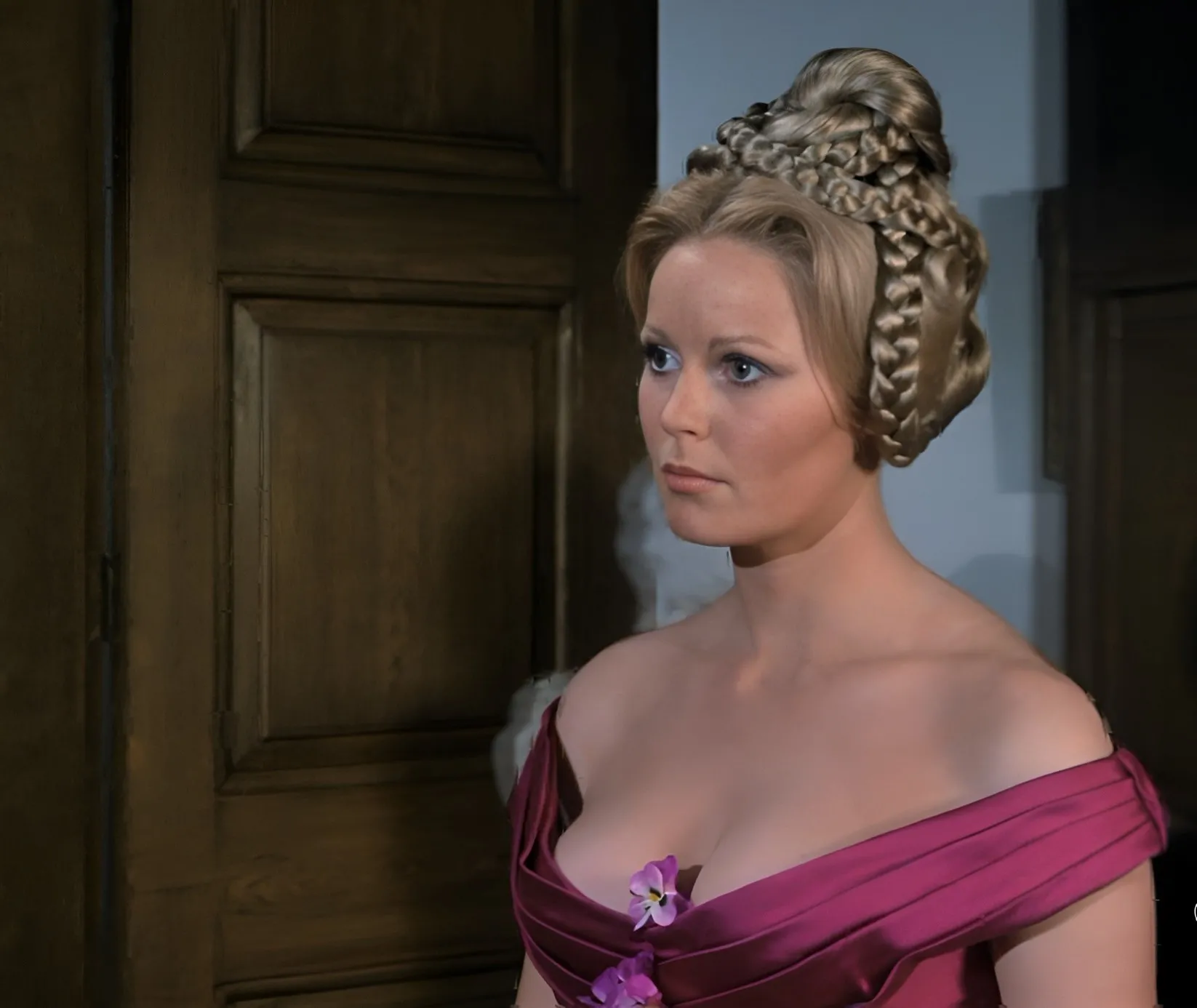
It was a nostalgic tribute to the golden age of British horror and a final curtain call for the actress who had helped define that era. That same year, she was inducted into the Monster Kid Hall of Fame at the Rondo Hatton Classic Horror Awards, an honor that recognized her enduring influence on the genre.
Veronica Carlson’s personal life was one of quiet fulfillment. She and her husband raised three children together, and she continued to paint, attend fan conventions, and enjoy a peaceful life in Bluffton, South Carolina.

Even as the years passed, she remained beloved by fans for her grace, kindness, and genuine appreciation for the people who remembered her work. Reflecting on her time at Hammer, she once said, “The Hammer experience was remarkable.
We were revered as women rather than just used as women.” Her words reflected the respect and fondness she held for that chapter of her life.
Veronica Carlson passed away on February 27, 2022, at the age of 77. Yet her legacy remains vividly alive—in the haunting stills of her films, the warmth of her interviews, and the paintings she left behind.Her story is one of integrity, talent, and reinvention.
She shone as a defining figure of classic horror, then stepped away to live life on her own terms.

She proved that success isn’t only about staying in the spotlight—it’s about remaining true to oneself, even when the world changes around you.29In the flickering glow of Hammer’s gothic sets, Veronica Carlson walked with elegance and conviction.
When the shadows grew too heavy, she stepped into the light, brush in hand, to paint her own destiny. She may have left the screen, but her spirit continues to inspire those who believe that artistry and integrity can, indeed, coexist.