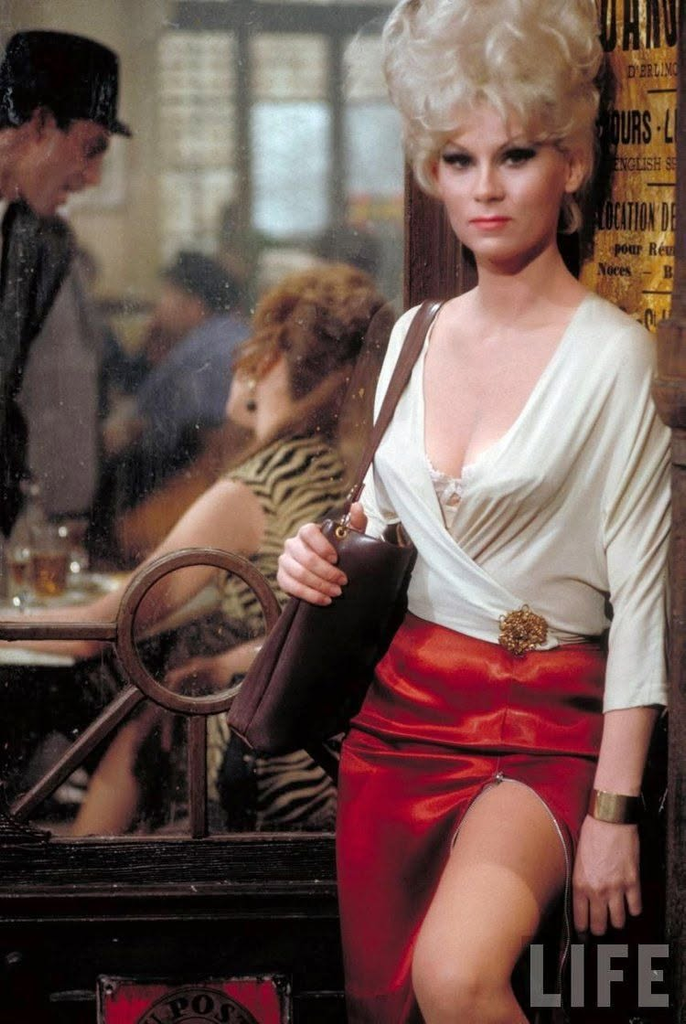
Grace Lee Whitney may have appeared in only a handful of Star Trek: The Original Series episodes, but her role as Yeoman Janice Rand left a mark on science fiction and pop culture that continues to resonate more than half a century later.
For many fans, she was not simply another supporting character—she embodied a new possibility for women on television in the 1960s. Yet Whitney’s real story was far more complex than her brief screen time suggested.
It is a tale of stardom, struggle, survival, and redemption, showing how one woman turned personal tragedy into a powerful legacy of resilience.
Born Mary Ann Chase in Ann Arbor, Michigan, in 1930, Whitney began life far from the glamour of Hollywood. Adopted by the Whitney family, she grew up in a Midwestern environment that seemed an unlikely launching pad for a future entertainer.
By her teens, however, she had discovered a love for performing. She began as a “girl singer” in Chicago nightclubs, where her bright stage presence quickly set her apart. Eventually, she transitioned into acting, moving west in search of bigger opportunities during Hollywood’s golden age.
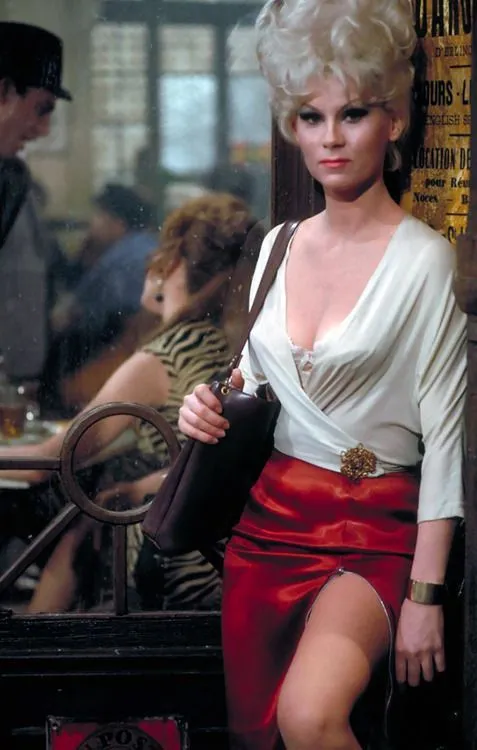
Her early years in film and television were marked by small but memorable roles. Whitney could be spotted in Billy Wilder’s Some Like It Hot (1959) and Irma la Douce (1963), films that remain classics of mid-century cinema.
She also appeared in a string of westerns and TV dramas, steadily working her way into the Hollywood system. With her natural charisma and striking beauty, it seemed only a matter of time before a breakout role arrived.
That opportunity came in 1966 when she was cast in a brand-new science fiction series on NBC: Star Trek. Whitney was hired to play Yeoman Janice Rand, Captain James T. Kirk’s personal assistant.
At a time when female characters were often little more than decorative accessories, Rand stood out.
She was competent, professional, and poised—a young woman trusted with responsibilities at the very heart of the Starship Enterprise. Her towering blonde beehive and sleek red uniform made her instantly recognizable, but it was her mix of loyalty, warmth, and emotional intelligence that gave the character resonance.

Whitney later revealed that the producers initially imagined Rand as a recurring romantic interest for Captain Kirk. This narrative would have given the character more depth and allowed for an exploration of the human side of command.
Yet only eight episodes into the series, Whitney was abruptly written out. The official reason given at the time was vague—rumors swirled that the producers wanted to keep Kirk unattached, free for episodic romances. For years, fans puzzled over her sudden absence, never fully satisfied with the explanations.
It was not until decades later that Whitney shared the truth: her exit was entangled with Hollywood’s darker realities. She revealed that she had been sexually assaulted by an unnamed network executive during the production of Star Trek.
The trauma, combined with her dismissal, pushed her into a spiral of depression and substance abuse.
The rising career that had seemed within her grasp suddenly collapsed, leaving her adrift in an industry that had little compassion for women in her situation.
The years that followed were some of Whitney’s darkest. She struggled with alcoholism and drug addiction, cycling through periods of recovery and relapse. Yet even in the depths of despair, she carried within her a determination to heal.
She eventually found support in Alcoholics Anonymous and faith-based recovery programs, crediting them with saving her life.
Rather than hiding her battles, Whitney chose to share them. In doing so, she became an advocate for sobriety, reaching countless people who found hope in her honesty.

Her 1998 memoir, The Longest Trek: My Tour of the Galaxy, was a groundbreaking act of candor.
At a time when celebrity confessions were far less common than they are today, Whitney wrote openly about her assault, her firing, and her descent into addiction. She did not shy away from pain, but she also emphasized recovery, healing, and her rediscovery of purpose.
The book gave fans a fuller understanding of her journey, transforming her from a forgotten footnote in Star Trek history into a symbol of resilience.
In a remarkable twist of fate, Whitney was welcomed back into the Star Trek universe years after her original departure.
Beginning with Star Trek: The Motion Picture (1979), she reprised her role as Janice Rand in several films, including The Search for Spock (1984), The Voyage Home (1986), and The Undiscovered Country (1991).
Though her appearances were brief, they carried immense symbolic weight. To fans, Rand’s return felt like a homecoming—a recognition that she had always belonged to the Starfleet family.
Whitney also appeared in Star Trek: Voyager and became a fixture at fan conventions. There, she found not only adoration but healing.
The fan community embraced her, not just for the character she had played, but for the woman she had become: honest, courageous, and unafraid to speak her truth. Whitney often said that the love of the Star Trek fans had helped her find peace after so many turbulent years.

Her legacy reaches beyond fandom. Whitney’s openness about her addiction made her a role model for recovery long before it was common for celebrities to share such struggles.
She demonstrated that relapse was not failure, but part of the journey. She reminded people that life could be rebuilt, even after devastating loss. And she stood as a living example of how surviving trauma can eventually lead to a renewed sense of purpose.
Whitney passed away in 2015 at the age of 85, leaving behind not only her son but an entire community of fans who continue to honor her. In online forums, at conventions, and in fan fiction, Janice Rand’s story lives on.
More importantly, Grace Lee Whitney’s own story continues to inspire. She showed that even a supporting role can have an enduring impact, and that true heroism often comes not from the screen, but from the resilience shown in real life.

In the galaxy of Star Trek, filled with captains, engineers, and alien civilizations, Yeoman Janice Rand may have seemed a minor figure. Yet the woman behind her became one of the most powerful symbols of survival in the franchise’s history.
Grace Lee Whitney proved that stars do not fade simply because they fall. With courage and honesty, they can shine even brighter—guiding others through the darkest parts of the journey.