

Science fiction has always been a genre where authors can peer into the future—sometimes with alarming prescience. That holds true for Soylent Green, a 1973 feature film based on the novel Make Room! Make Room! by Harry Harrison. In the year 2022, overpopulation and climate change hammer humanity; those living in poverty have to rely on food supplements, while the elite loom over them in high rises. New York police detective Robert Thorn (Charlton Heston) investigates the murder of one such elite: a board member of the Soylent food corporation.
Now that we’re living in the year the film anticipated, did Soylent Green get anything right? The answer, unfortunately, is yes, though thankfully not all its dystopian ideas came true.
1. Right: Climate Change
The opening scene of Soylent Green provides some blunt but necessary exposition. After waking, Thorn banters with his friend and roommate Sol Roth (Edward G. Robinson). After Thorn turns up his nose at spoiled margarine, Roth complains of the oppressive, year-round heat and “the greenhouse effect.”
While winter hasn’t abandoned the world just yet, things are getting markedly hotter. The summer of 2022 saw record temperatures hit the Northeast. Boston reached 98°F; Albany hit 99°F. In New York, it rose to 93°F, though that wasn’t close to the record of 100°F set that day in 1944. Heat emergencies were declared in Philadelphia, Washington, and Boston. On the West Coast, a heat dome suffocated parts of California, Oregon, and Washington State in temperatures well over 100°F. A report from the UN’s Intergovernmental Panel on Climate Change warned that high emissions from fossil fuels could allow global warming to continue unchecked.
2. Right: Meal Replacements
The Soylent Green of the title refers to a “high energy vegetable concentrate,” a tasteless source of nutrition for a world where unprocessed food is in very short supply. (Soylent is scarce, too: When the precious stuff is distributed, riots nearly break out.) While it’s not exactly necessary for most healthy people to ingest nutritional supplements, a vast array of protein shakes, bars, and other meal replacements is now a regular part of the American diet. Roughly half of the country consumes protein shakes regularly. In a truly ironic twist, a company called Soylent markets a ready-to-drink plant protein product (also called Soylent) that found a fan base among tech bros and busy professionals who don’t want to cook.
3. Half-Right: People Hired as “Furniture”
When Thorn is called to investigate the suspicious death of wealthy William Simonson at the victim’s home, he meets a young woman named Shirl, who introduces herself as “furniture”—a companion for rich tenants provided by the apartment building. It’s implied Shirl may be a sexual partner for Simonson, but they also seem like friends (despite the obviously sexist power dynamic).
In Japan, it’s possible to hire a surrogate—a person who can pretend to be a friend or family member at weddings, baby showers, high-school reunions, and more. One surrogate, dubbed “Mr. Rental,” shares meals and listens to clients as they talk about their lives.
4. Right: Shortages of Consumer Goods
When Thorn strolls through Simonson’s apartment, he’s amazed to discover a variety of amenities that are difficult to come by. He’s most impressed with a bar of soap and cold water. Later, he covets ice cubes, cigarettes, and a spoonful of strawberry jam, which runs $150 a jar.
Thanks to the coronavirus pandemic, consumers have had a hard time locating everything from toilet paper to Choco Tacos. When they do come across one of these treasures, inflated price tags go along with the items. Supply chain issues have also affected the availability of baby formula, gas, and almost anything manufactured overseas. Even before the pandemic, consumers faced a brief shortage of Dawn dish soap.
The shortages lead to angry mobs in Soylent Green. Shortages in the real world haven’t sparked mass demonstrations, though there have been isolated reports of shoppers getting physical over empty shelves.
5. Right: Motivational Exercise Bikes
During the pandemic, home fitness enthusiasts flocked to companies like Peloton, which offer stationary exercise equipment married to some kind of motivational tool—typically a screen with an effusive workout coach beaming in from an online studio. There’s an exercise bike in Soylent Green, too, but the motivation isn’t toning up. It’s so Sol Roth can generate electricity in their shared apartment.
6. Wrong: New York City’s Population
Many of the troubles endured by the characters in Soylent Green are attributed to human overpopulation. In the opening moments of the film, a legend appears informing the viewer that New York City is home to 40 million residents. In 2022, the population in the city is just shy of 9 million.
7. Wrong: The Unemployment Rate
Thorn makes an off-handed comment that there are “20 million guys out of work” in Manhattan, putting the area’s unemployment rate at 50 percent or more. In July 2022, the actual unemployment rate in New York City was at a far more reasonable 6.1 percent. But that figure was still higher than the U.S. rate of 3.5 percent that month.
8. Half-Wrong: Cannibalism
Even if you’ve never seen Soylent Green, you’ve probably heard of the film’s Twilight Zone-esque ending [SPOILER ALERT!]: The processed food replacement Soylent is made of people.
While this kind of cannibalism comes as a huge surprise to Thorn, there haven’t been any similar discoveries with our food supply IRL. But as The New York Times recently observed, cannibalism seems to be having a “moment” in 2022. It’s a topic in novels like Tender Is the Flesh, the movie Fresh, the Showtime series Yellowjackets, and, um, the docuseries House of Hammer. Soylent Green may not have anticipated actual cannibalism, but American culture seems to be consuming a lot of media about it.
Related Tags
- SCIENCE
- CLIMATE CHANGE
- FOOD
- HOME
- CULTURE
- FURNITURE
- SCIENCE FICTION
- Pop Culture
- MOVIES
Home/ENTERTAINMENT
Tom Petty’s Favorite (and Least Favorite) Tom Petty Songs
The legend’s top pick from his catalog was not one of his biggest hits.
ByLogan DeLoye|Oct 18, 2026, 2:00 PM EDT
 Add us as a preferred source
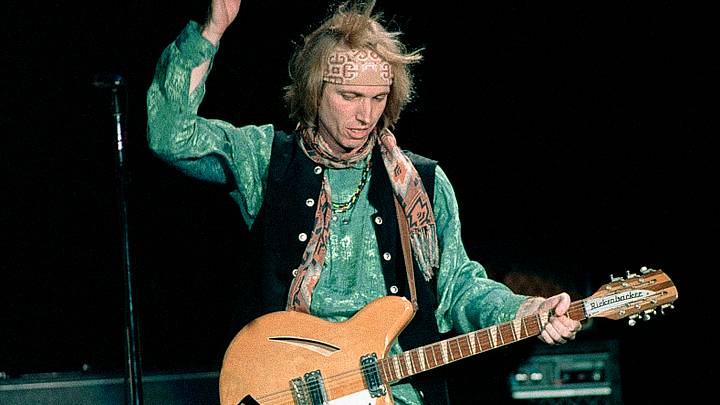
Tom Petty met Elvis Presley when he was just 10 years old, got his first guitar two years later, and the rest is (music) history.
His songwriting was so prolific that millions of listeners found themselves free fallin’, wandering through wildflowers, and dancing with Mary Jane across his catalog. Generations of fans admire the rock ‘n’ roll icon for his talent, collaborative spirit, and his undeniably chill approach to stardom.
Petty rose to fame in 1976 with his debut album, Tom Petty and the Heartbreakers. Throughout his career, he gifted the world 16 studio albums, 13 with his band and three solo projects. His 1981 collaboration with Stevie Nicks landed them near the top of the Billboard charts with “Stop Draggin’ My Heart Around,” four years after his first top 10 hit, “Don’t Do Me Like That.” “Free Fallin’” was the band’s last top 10 hit in 1989.
In the late 1980s, Petty joined the supergroup The Traveling Wilburys alongside Bob Dylan, George Harrison, Jeff Lynne, and Roy Orbison, penning classics like “Handle With Care,” “End of the Line,” “Last Night,” and “Congratulations.”
He was inducted into the Rock and Roll Hall of Fame in 2002 and passed away in 2017 at 66.
The world loves his music, but what were Tom Petty’s favorite (and least favorite) Tom Petty tracks?
“Southern Accents”
In 2002, Petty spoke with the Los Angeles Times about his catalog and named “Southern Accents,” the title track from his 1985 album, as his favorite, citing its connection to his southern roots.
“That may be my favorite among my songs, just in terms of a piece of pure writing. I remember writing it very vividly. It was in the middle of the night, and I was playing it on the piano at home in Encino. I was just singing into my cassette recorder, and suddenly these words came out. I was at the point in my career where I was very much trying to find some new ground. I thought I had used up what I had started with, and I wanted a new direction.”
He also explained how the song tied into his childhood and family life.
“We had lived in California for about 10 years at that point, and I started thinking about growing up in northern Florida, which is a lot different from Miami Beach. It’s close to Georgia, and I came from a real Southern family, and I wanted to address that world. Once I came up with this song, I decided to write an entire album about the theme.”
“Make It Better (Forget About Me)”
Before his passing, Petty sat down with author Paul Zollo for a series of in-depth conversations published in Conversations With Tom Petty in 2020. In one of those chats, Petty was very honest about a song he “hated,” calling it “trash.”
“I hate that song; it’s just trash,” he said, referring to “Make It Better (Forget About Me).” “It was Dave just trying to get me to knock a song out—just write a song for the sake of writing one—and I think that’s what it sounds like to me.”
The track, written in the ‘80s and featured on Southern Accents, only reached number 54 on the Billboard Hot 100.
Read More:
•
8 Hit Songs You Might Not Know Tom Petty Wrote
•
11 Wild Urban Legends Surrounding Popular Songs
Home/ENTERTAINMENT
The Spiritual Meaning of the Hunter’s Moon
October’s full moon has long been linked to preparation, focus, and inner release.
ByNitya Rao|Oct 18, 2026, 4:00 PM EDT
Add us as a preferred source
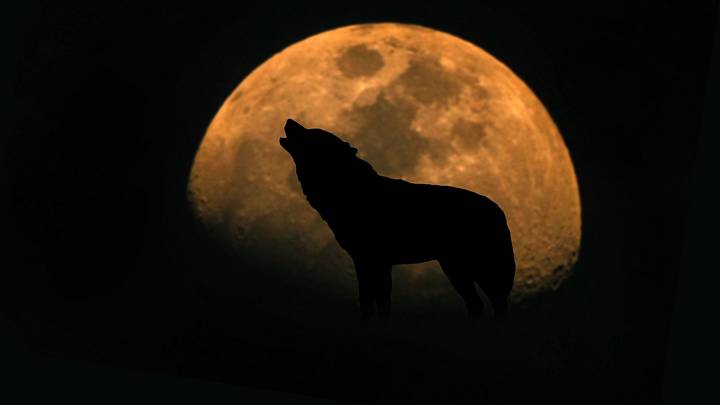
Trick-or-treating might cater to the gatherers of the world, but the full moon that falls just before Halloween is for the hunters. The Hunter’s Moon will join millions of jack-o’-lanterns across America to light up the night sky on October 26, 2026, peaking just after midnight.
The moniker “Hunter’s Moon” refers to the full moon that follows the Harvest Moon, which is the one that falls closest to the fall equinox. This mid-autumn moon goes by many names in different cultures, but its symbolic associations with introspection, preparation, completion, and clarity are universal.
How the Hunter’s Moon Got Its Name
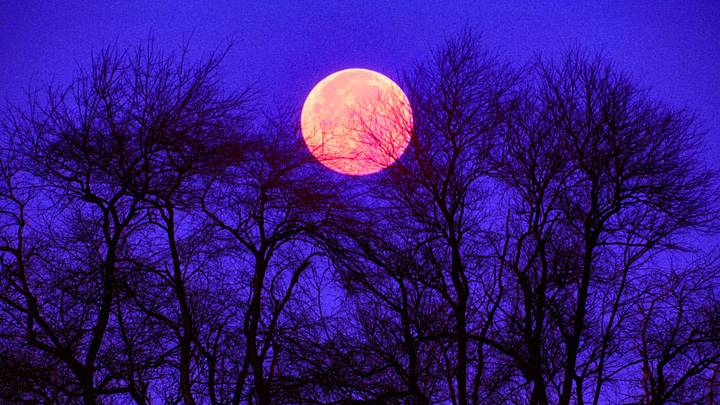
The Hunter’s Moon is to the Harvest Moon as meat is to potatoes. Equally important for seasonal nourishment, the Harvest Moon represents the traditional time for farmers’ final crops, while the following full moon centers on acquiring meat ahead of the winter months.
Moonlit fields that are cleared of crops and filled with plumped-up, pre-hibernation animals make for favorable hunting conditions. They were in fact so ideal that hunters regularly turned to the light of October’s full moon to help them stock up on a whole winter’s worth of meat for the family. While we can now turn to Costco for our seasonal hoarding needs, the deeply-rooted survival practice linked to the Hunter’s Moon has made the name stick.
Like most other full moons, the Hunter’s Moon goes by different monikers depending on who you talk to. In various Native American cultures, names for this moon reflect everything from harvest traditions to changing weather. The Dakota dub it the Drying Rice Moon in honor of rice preparations that take place prior to winter, while the Anishinaabe call it the Falling Leaves Moon for the crunchy, windswept leaves that color the air in autumn. The Ojibwe and Haida, meanwhile, know this full moon as the Freezing Moon or Ice Moon, and the Cree call it the Migrating Moon, a reference to southward-bound migratory birds. Other names for this moon are the Travel Moon, Dying Grass Moon, Blood Moon, and Sanguine Moon.
The Spiritual Symbolism Behind the Hunter’s Moon
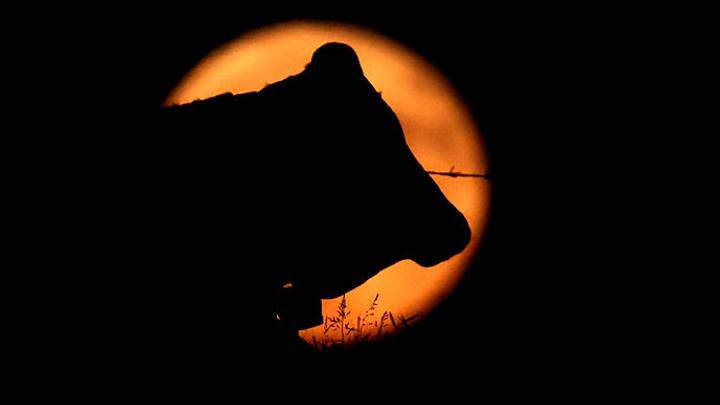
While the history of the Hunter’s Moon is all about stocking the pantry, the symbolic side is more about taking stock of your mindset. The month of October spans a full lunar cycle that marks the transition from harvest to preservation, culminating in the Hunter’s Moon.
Across different traditions, this time of year has long been marked by a shift in the air: in Celtic culture, this window brushes right up against Samhain, a time when the veil to the spiritual world is lowered, and communication with ancestors and spirits is enhanced. Similarly, across parts of India, this same lunar phase coincides with Sharad Purnima, a moonlit celebration of the closing of the monsoon season. A common ritual is to soak kheer, a type of rice pudding, under the light of the full moon and then eat it at dawn. It’s the first full month of fall after the autumn equinox, providing a prime opportunity for internal reflection on the connections and feelings accumulated throughout the year.
With winter comes a focus on preparing for the season ahead—not just in terms of getting and storing what we need, but also protecting the parts of your life that serve you and pruning those that don’t.
Think of it as a last sliver of light leading you to an entrance you can slip through before the door closes. In other words, it’s a nudge to stop putting things off. Whether that means finally having that tough conversation, walking away from a situation that has run its course, or simply dealing with the emotions you’ve been avoiding, it’s a true act of self-preservation—a chance to clear the air now instead of letting those unresolved things weigh you down all winter.
How to Celebrate the Hunter’s Moon
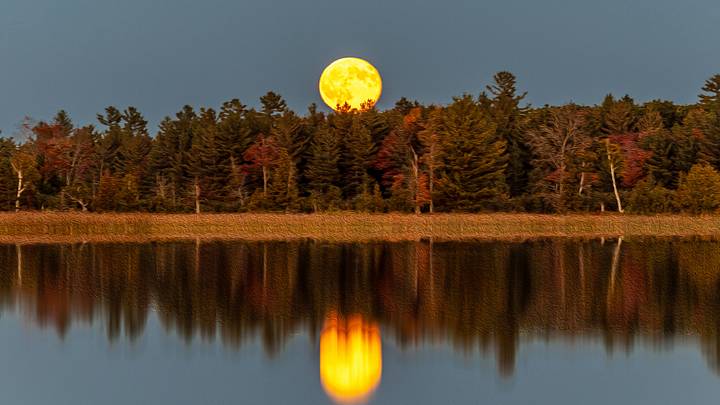
The moon has many different faces, and with that, many ways to honor them. Because this phase is all about balancing decisiveness with deliberation, you can lean into whatever feels most grounding for you right now.
Like a hunter, it’s important to observe your surroundings before deciding where to aim your energy. In a day-to-day sense, that can mean writing down your abundances—and what might be dragging you down—to narrow in on what deserves your focus ahead of a lower-energy season. Full moons are naturally tied to release, making this an ideal time to drop what no longer serves you. Whether that means letting go of bad habits built up throughout the year or intense emotions that will only weigh you down in the season ahead, this is your chance to clear the slate.
And amidst all that release and restock, like with any full moon, the Hunter’s Moon is also a chance to practice gratitude. Under the bright light of the full moon, thank the universe for the abundance of the past harvest and anything that’s serving you, and simply enjoy the beauty of the moon framed by the fall foliage.
More on Full Moons:
•
The Spiritual Meaning of August’s Sturgeon Moon
•
The Spiritual Meaning of the Buck Moon
•
The Spiritual Meaning of the Strawberry Moon
•
Does the Full Moon Really Make People Act Strangely?
Home/CULTURE