Dolly Parton’s “Hello God” Still Hits Hard 25 Years After 9/11 — The Song She Wrote When She Couldn’t Make Sense Of The Tragedy.

“Hello God.”
Two simple words became the opening of one of Dolly Parton’s most vulnerable songs after the events of September 11, 2001, left her — like millions of others — struggling to understand a world that had suddenly become far more frightening.
The attacks killed nearly 3,000 people after hijacked planes struck the World Trade Center and the Pentagon, while another crashed into a field near Shanksville, Pennsylvania. In the aftermath, Parton turned to the one thing she knew how to do when emotions became difficult to put into words: she wrote a song.
That song became “Hello God,” a searching prayer about violence, fear, faith, human weakness and the desperate need for hope.
Released on her 2002 album Halos & Horns, the track remains one of the most personal statements of Parton’s career — and one that still carries a remarkable emotional weight a quarter-century after the tragedy that inspired it.
The Moment That Inspired Dolly To Write.
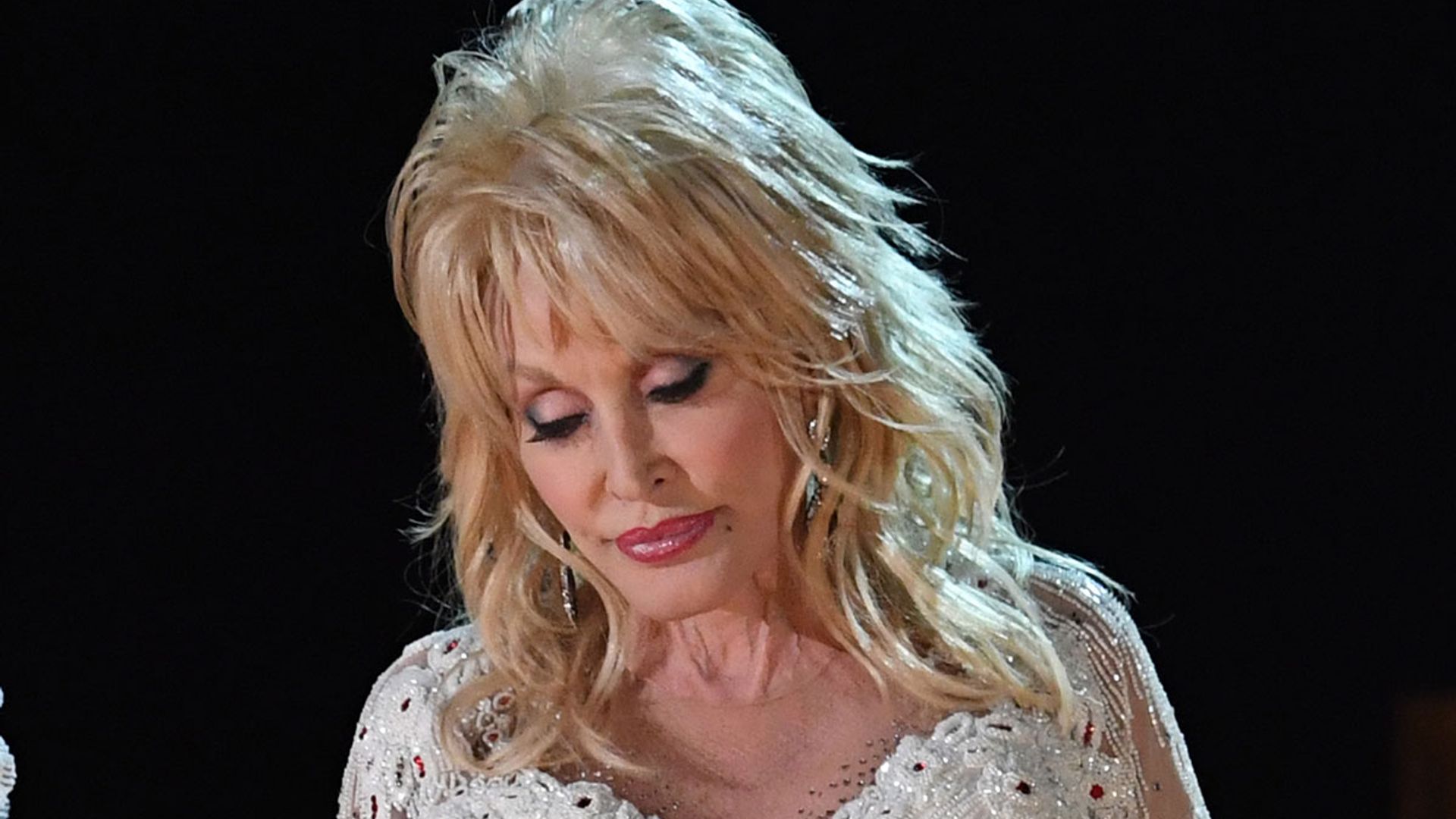
Parton later explained that several songs came to her in the aftermath of the attacks, including “Color Me America,” “Raven Dove” and “Hello God.”
The shock of September 11 forced her to confront questions that had no easy answers.
Why do terrible things happen? Why do people hurt one another? And where can humanity turn when fear and grief become overwhelming?
For Parton, the tragedy also brought home a more basic realization: people are far more vulnerable than they sometimes believe.
Life can change in an instant.
And when that happens, she felt, people need somewhere to turn.
Rather than attempting to offer a simple explanation for suffering, Parton transformed those difficult thoughts into a conversation with God.
A Prayer Filled With Doubt

Parton’s Christian faith has always been an important part of her life, but “Hello God” does not approach faith as though it automatically provides every answer.
Instead, the song leaves room for doubt.
She confronts hatred, violence and confusion while questioning how humanity could have reached such a devastating point. She wrestles with the existence of suffering and the ways people can misuse the freedom they have been given.
That tension is what gives the song its emotional force.
There is faith in it, but there is also bewilderment.
There is a plea for help, but also an acknowledgment that some questions remain painfully difficult to answer.
The result feels less like a polished declaration of certainty and more like someone reaching out during a moment when the world no longer makes sense.
The Song That Took On A Life Of Its Own
“Hello God” appeared on Halos & Horns, released on July 9, 2002.
The album was Parton’s 39th solo studio album and the third instalment in her bluegrass trilogy. It later received a Grammy nomination for Best Country Album, while other songs from the record also earned Grammy recognition.
But “Hello God” occupied a very different emotional space.
It was not written to celebrate Dolly’s success or showcase her lighter side.
It was written from a place of uncertainty.
And that made it stand out.
Dolly’s Powerful CMA Awards Performance
On November 6, 2002, Parton performed “Hello God” at the 36th Annual Country Music Association Awards in Nashville.
She was joined by The Christ Church Choir of Nashville, giving the performance an especially powerful atmosphere.
The performance later became the song’s music video, while “Hello God” was released as the third single from Halos & Horns on November 11.
The song reached No. 60 on Billboard’s Hot Country Songs chart and went on to win Single of the Year at the International Country Gospel Music Association Awards in 2003.
But its significance was never simply about chart position.
The song had become a way for Parton to process something much bigger than herself.
A Song Dolly Kept Close
More than a decade after its release, “Hello God” still had a place in Parton’s live performances.
She chose it as the closing song for every performance on her 2016 Pure & Simple tour, giving the track a prominent role in a set list filled with decades of beloved music.
That decision made the song’s lasting importance difficult to miss.
Parton had written countless songs about love, heartbreak, family, faith, humour and life. “Hello God” came from a different place altogether.
It was born from collective grief.
Why It Still Resonates

The power of “Hello God” is not dependent on the listener having personally experienced September 11.
Its deeper subject is the feeling of helplessness that arrives when something happens that is simply too devastating to comprehend.
The song begins with a historical tragedy, but its emotions reach much further.
Fear. Grief. Anger. Confusion. Faith.
Those feelings do not belong to one particular day.
That is why the song can still feel relevant decades later. Parton did not attempt to turn tragedy into an easy lesson. She gave voice to the questions people ask when they have run out of explanations.
And sometimes, a prayer begins with a question rather than an answer.
One Of Dolly Parton’s Most Personal Songs
Parton’s death on August 25, 2026, at the age of 80 has brought renewed attention to the enormous catalogue she left behind.
There are the obvious classics — the songs that made her a country icon and became part of popular culture around the world.
Then there are songs such as “Hello God.”
Its importance comes from something quieter.
It shows Dolly Parton confronting a moment of profound human tragedy and admitting that even faith can exist alongside confusion. Rather than pretending to understand everything, she turned her uncertainty into music.
Twenty-five years after September 11, that vulnerability remains what makes the song so powerful.
The world changed in a matter of minutes on September 11, 2001.
Dolly Parton responded by asking for help, searching for meaning and reaching toward hope.
That is the legacy of “Hello God” — a song born from one of America’s darkest moments that continues to sound like a deeply personal prayer whenever the world feels frighteningly uncertain.
And perhaps that is why it still hits with such force today.