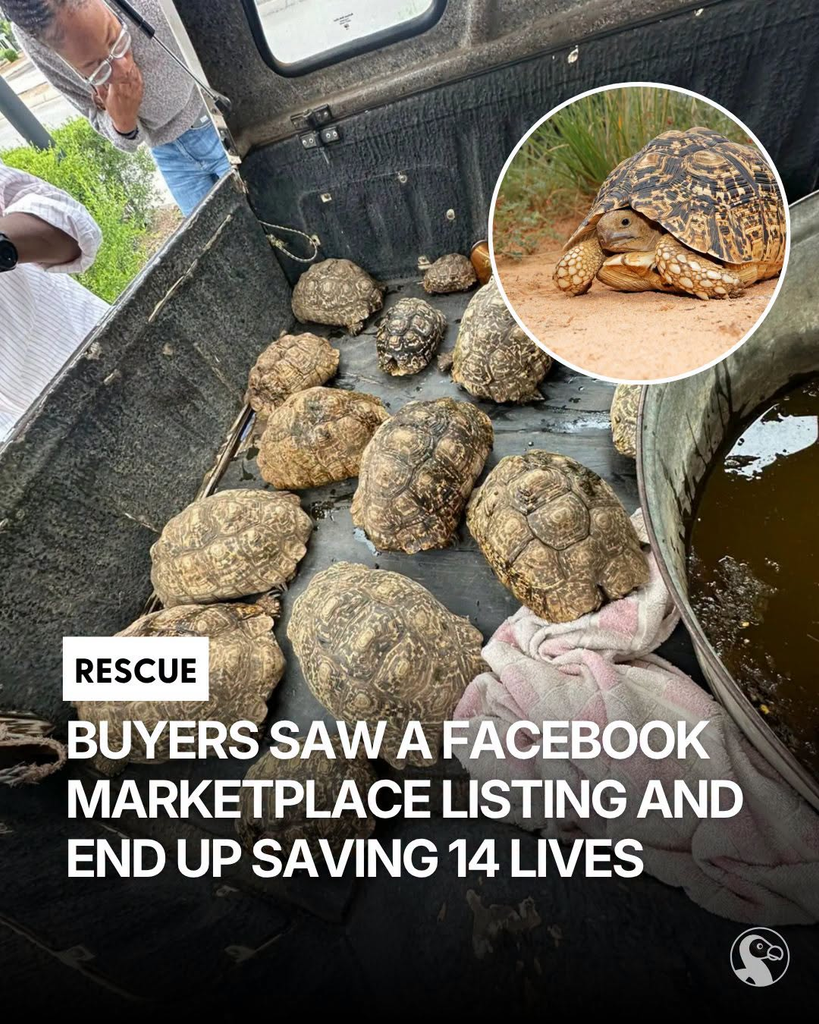
The animals were exhausted, but alive.
By Sarah Ashley
Published on March 19, 2026 at 10:04 AM
Earlier this month in South Africa, someone scrolling Facebook Marketplace spotted a troubling listing. Leopard tortoises were for sale for 1500 rand, or about $90, each.
Though leopard tortoises are incredibly common in South Africa, they are a protected species. Trapping and selling them is illegal.
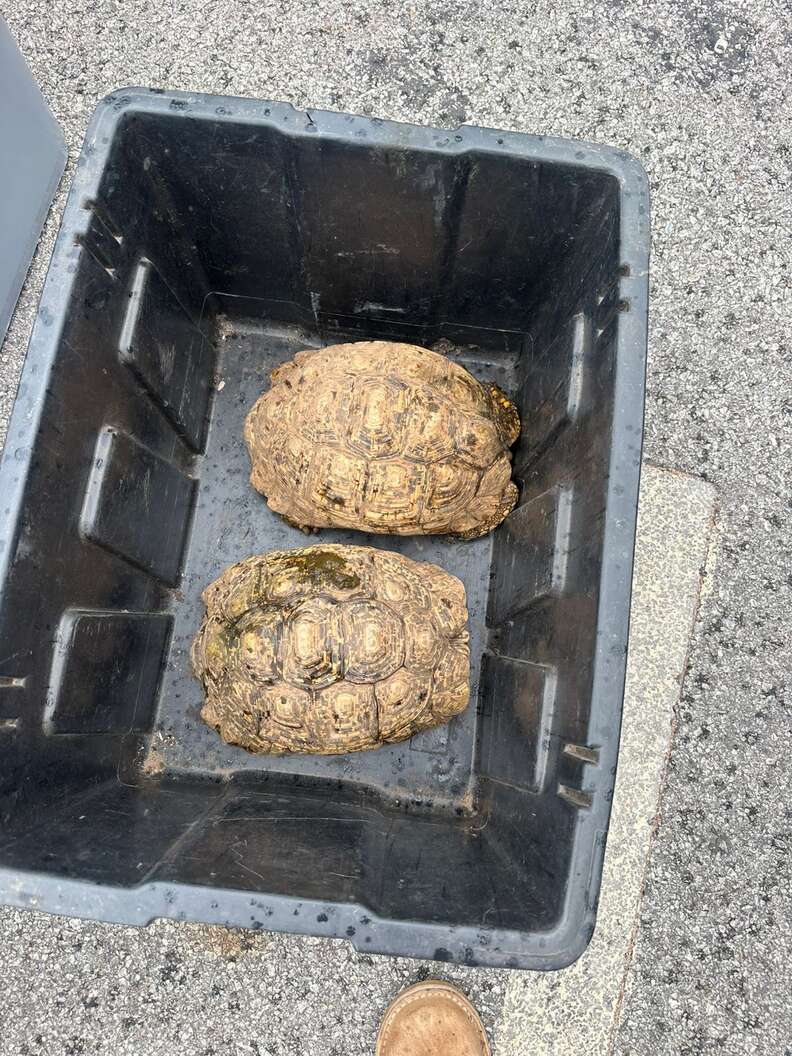
The concerned citizen notified the South African Police Service’s Stock Theft and Endangered Species (STES) Unit and the Limpopo Pangolin Collective, a nonprofit dedicated to helping victims of the illegal wildlife trade.
They decided a stealthy sting operation was the best way to rescue the tortoises.
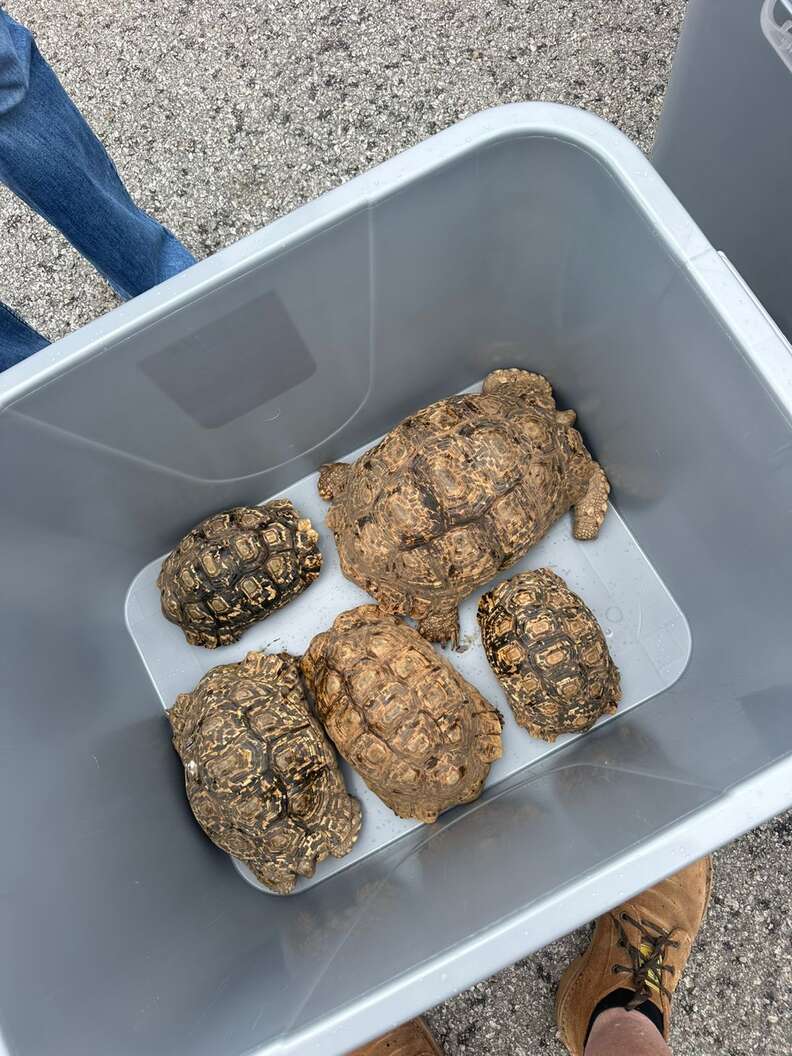
At STES’ request, a Limpopo Pangolin Collective agent, who asked to remain anonymous so they can continue their work safely, reached out to the seller, posing as an interested buyer. A deal was set.
The agent traveled nearly 200 miles to “buy” the animals. They arrived to find 14 tortoises of various sizes piled in a bucket in the back of a truck.
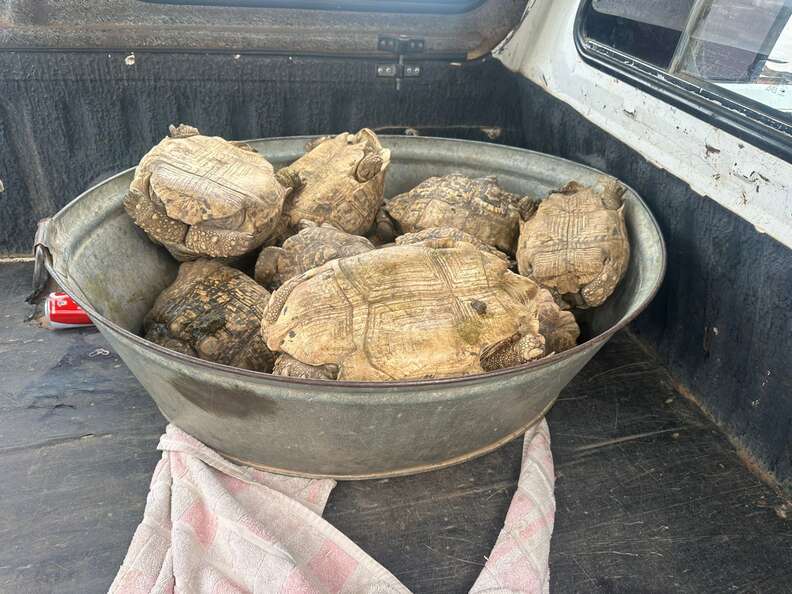
All 14 were in rough shape, but they were alive.
“As soon as they showed us the tortoises, we gave the prearranged signal,” the agent told The Dodo.
Police arrived moments later, arrested the seller and transported the tortoises to the Umoya Khulula Wildlife Centre for medical exams.
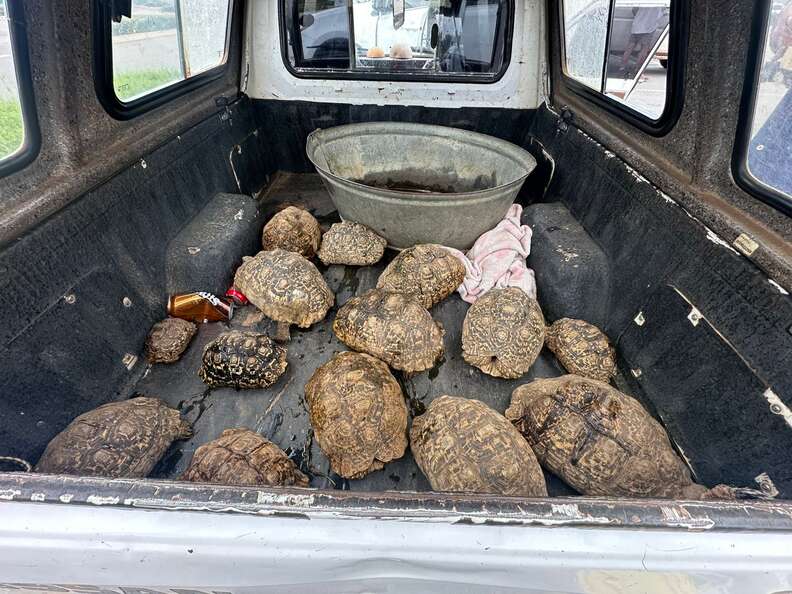
In a Facebook post about the rescue, Umoya Khulula Wildlife Centre wrote, “Over half of [the tortoises] arrived severely underweight, and every single tortoise was dehydrated, stressed, and exhausted from their ordeal.”
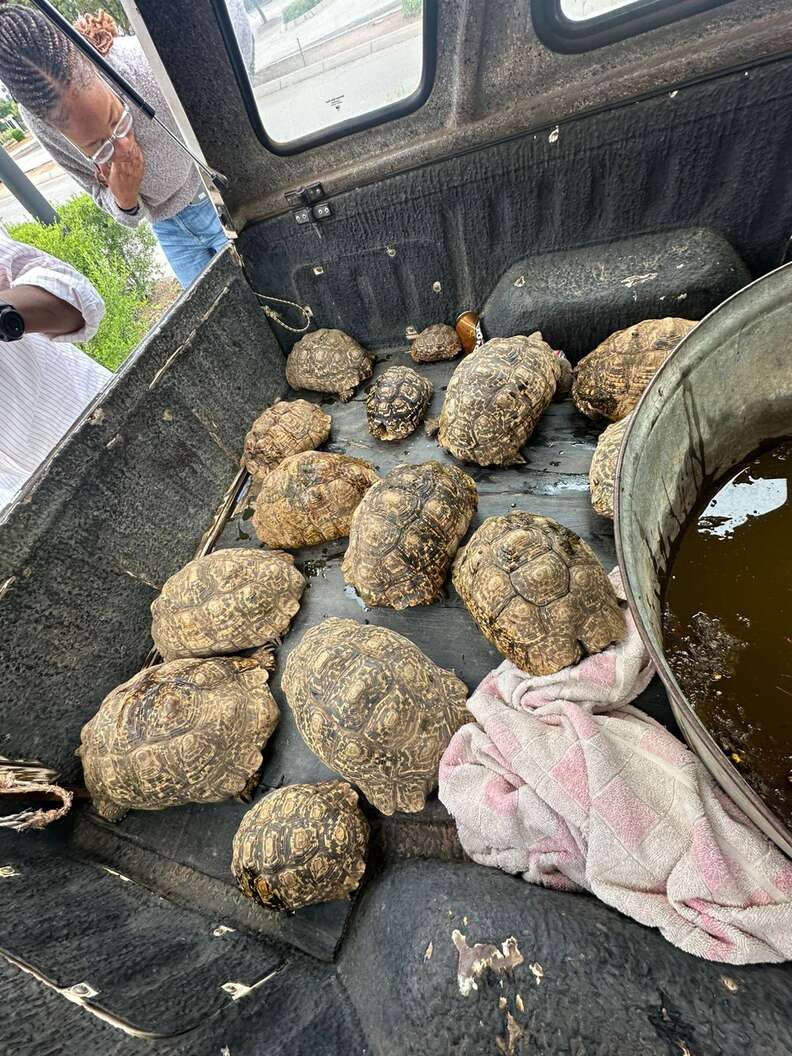
The agent, who has completed many similar sting operations, believed these poachers had likely been accumulating this tortoise collection since mid-January.
“People want them as pets for their kids,” the agent said. “[To] put them in their garden and keep them in a little closed-off area and feed them lettuce and carrots and all sorts of stuff, which is not their diet.”
Leopard tortoises eat native plants, fruits and grasses, according to Chipangali Wildlife Orphanage. Known for the beautiful patterns on their shells, they can live up to 50 years in the wild and grow up to 88 pounds.
Life in a small backyard enclosure for these stunning African animals is not enough.
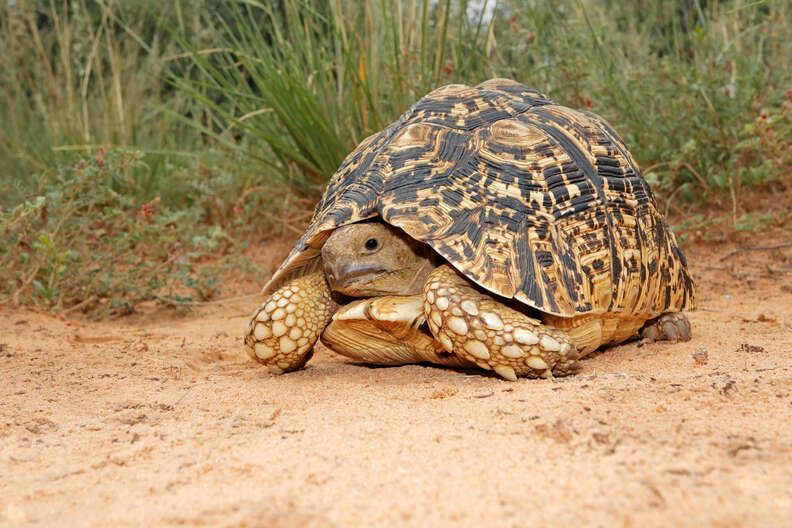
Luckily, the agent said they reached these tortoises in time for them to make a full recovery.
Ten have already been released back into the wild. The four still receiving care are doing well and will hopefully return home within the next week or so.
As Umoya Khulula Wildlife Centre wrote, “They are not pets. They are not medicine. They are not ornaments. They deserve to be free.”
If you would like to support the Limpopo Pangolin Collective so they can continue their important work, you can donate via the Scales Conservation Fund.