More trivia about your favorite childhood classic from the ’80s? As you wish.
ByHannah Keyser|May 13, 2025, 9:19 AM EDT
 Add us as a preferred source

It’s no wonder The Princess Bride is such a beloved film: It’s action-packed but still lighthearted, sweet but not saccharine, silly but still smart—and, of course, endlessly quotable. Fortunately, in 2012, the movie’s leading man, Cary Elwes, was inspired to write a behind-the-scenes book about the making of the movie in honor of its 25th anniversary, for which he interviewed nearly all of the key cast and crew (sadly, André the Giant, who played Fezzik, passed away in 1993).
Pulling from the impressively detailed text of As You Wish: Inconceivable Tales from the Making of The Princess Bride and various interviews Elwes and others have given over the years, we rounded up a series of fun facts and anecdotes sure to delight any fan of the film.
- It was written for the author’s daughters.
- Both the director and the leading man already knew and loved the story before filming even began.
- For a long time, no one was able to make the movie.
- Mandy Patinkin felt a personal connection to the character of Inigo Montoya.
- André the Giant had an unconventional method for learning his lines.
- André could really, really drink.
- William Goldman was incredibly nervous on the set.
- Wallace Shawn was brilliant, but always on edge.
- The duel between Westley and Inigo was excruciatingly researched and rehearsed.
- It was Elwes’s idea to dive headfirst into the “quicksand.”
- Miracle Max really was that funny—and you’re not even seeing his best stuff.
- Billy Crystal and Carol Kane, who played his wife, invented an entire backstory.
- Elwes filmed many of his scenes with a broken toe.
- One particular on-screen injury wasn’t faked.
- One of the final scenes never made it into the final film.
It was written for the author’s daughters.
William Goldman, who wrote the novel The Princess Bride in 1973 and penned the screenplay, told Entertainment Weekly that, “I had two little daughters, I think they were 7 and 4 at the time, and I said, ‘I’ll write you a story. What do you want it to be about?’ One of them said ‘a princess’ and the other one said ‘a bride.’ I said, ‘That’ll be the title.’”
Both the director and the leading man already knew and loved the story before filming even began.
Cary Elwes’s stepfather had given him Goldman’s book in 1975, when the future actor was just 13 years old. Rob Reiner, who directed the movie, first read the book in his 20s when Goldman gave it to his father. It quickly became Reiner’s favorite book of all time, and he had long wanted to turn it into a movie—but he had no idea that many before him had tried and failed.
For a long time, no one was able to make the movie.
At one point or another, Robert Redford, Norman Jewison, John Boorman, and François Truffaut all tried to get the book made into a movie, but due to a series of unrelated incidents—“green-lighters” getting fired, production houses closing—it languished for years. (In one of these proto-Princess Brides, a then-unknown Arnold Schwarzenegger was supposed to play Fezzik.)
After several false starts, Goldman bought back the rights to the book. The movie only got made because Reiner had built up so much good will with movies like and The Sure Thing that the studio, 20th Century Fox, offered to make any project of his choice.
Mandy Patinkin felt a personal connection to the character of Inigo Montoya.

“The moment I read the script, I loved the part of Inigo Montoya,” Patinkin told Entertainment Weekly. “That character just spoke to me profoundly. I had lost my own father—he died at 53 years old from pancreatic cancer in 1972. I didn’t think about it consciously, but I think that there was a part of me that thought, If I get that man in black, my father will come back. I talked to my dad all the time during filming, and it was very healing for me.”
André the Giant had an unconventional method for learning his lines.
Reiner and Goldman met André, then a famous wrestler, at a bar in Paris. “I brought him up to the hotel room to audition him. He read this three-page scene, and I couldn’t understand one word he said,” Reiner recalled. “I go, ‘Oh my God, what am I going to do? He’s perfect physically for the part, but I can’t understand him!’ So I recorded his entire part on tape, exactly how I wanted him to do it, and he studied the tape. He got pretty good!”
André could really, really drink.
Three bottles of cognac and 12 bottles of wine reportedly made him just a little tipsy. When the cast would go out for dinner, André—who, according to Robin Wright, ordered four appetizers and five entrees—would drink out of a 40-ounce beer pitcher filled with a mix of liquors, a concoction he called “The American.”
However, his reputation for being a heavy drinker wasn’t exclusive to the set of The Princess Bride. In the world of professional wrestling, he was well-known for it. Backstage, he was regarded as the “greatest drinker of all time” by many of his fellow hard-partying cohorts, which was no small feat. He reportedly once drank 156 beers in one sitting, though many other infamous tales abound.
William Goldman was incredibly nervous on the set.
Of all the projects he’d written and worked on—which included the Academy Award-winning Butch Cassidy and the Sundance Kid—Goldman loved The Princess Bride best of all. This manifested itself as extreme nervousness about the project. Reiner invited Goldman to be on set for the duration of the filming—which Goldman did not want to do, saying, “I don’t like being on set. If you’re a screenwriter, it’s boring”—but on the first day, he proved to be a slight nuisance. The first couple takes were plagued by a barely-audible chanting, which turned out to be Goldman praying things would go well. And when Wright’s character’s dress caught on fire, he panicked, yelling, “Oh my god! Her dress is on fire!”—even though Goldman himself had written that into the script.
Wallace Shawn was brilliant, but always on edge.
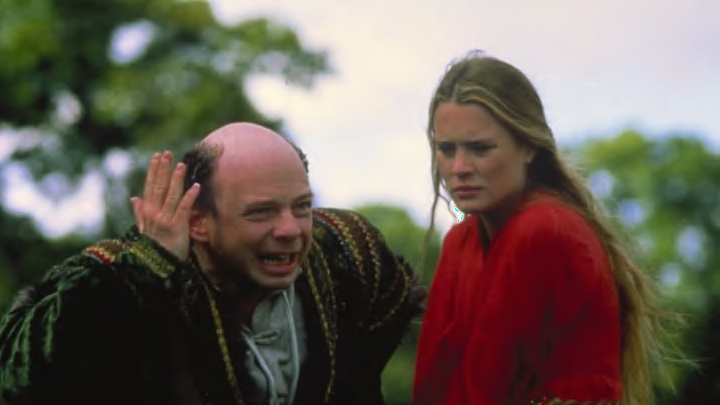
Shawn, who played Vizzini the Sicilian, really is, like his character, a man of “dizzying intellect.” He has a history degree from Harvard and studied philosophy and economics at Oxford. In fact, on a day off from filming The Princess Bride, Shawn went to Oxford to give a guest lecture on British and American literature. But Shawn was inconsolably nervous for the entirety of filming.
After learning from his agent that Reiner had originally wanted Danny DeVito for the part, Shawn was wracked with insecurity, perpetually convinced that he was going to be fired after every bad take. “Danny is inimitable,” Shawn told EW in 2011. “Each scene we did, I pictured how he would have done it and I knew I could never possibly have done it the way he could have done it.”
The duel between Westley and Inigo was excruciatingly researched and rehearsed.
Goldman spent months researching 17th-century swordfighting manuals to craft Westley and Inigo’s duel; all the references the characters make to specific moves and styles are completely accurate. Then Elwes and Patinkin, neither of whom had much (if any) fencing experience, spent more months training to perfect it—right- and left-handed.
“I knew that my job was to become the world’s greatest sword fighter,” Patinkin recalled in Elwes’s book. “I trained for about two months in New York and then we went to London and Cary and I trained every day that we weren’t shooting for four months. There were no stuntmen involved in any of the sword fights, except for one flip in the air.”
Even after months of pre-shooting training, the fencing instructors came to set and, when there were a few free minutes, would pull Elwes and Patinkin aside to work on the choreography for the scene, which was intentionally one of the last to be shot.
It was Elwes’s idea to dive headfirst into the “quicksand.”
That particular Fire Swamp stunt was accomplished by having a trap door underneath a layer of sand, below which there was foam padding for the actors to fall onto. Originally, the direction called for Westley to jump in feet-first after Buttercup, but Elwes argued this wasn’t particularly heroic. Switching up the direction was a risky move—if the trap door wasn’t opened at exactly the right instant, Elwes risked banging his head—or even breaking his neck. After the stunt double successfully executed the dive, Elwes himself tried it, and nailed it perfectly on the first take.
Miracle Max really was that funny—and you’re not even seeing his best stuff.
Billy Crystal brought two photos for his makeup artist, Peter Montagna, to draw inspiration from when creating Miracle Max: Crystal’s grandmother and Casey Stengel. As for the acting, Elwes wrote in his book, “For three days straight and 10 hours a day, Billy improvised 13th-century period jokes, never saying the same thing or the same line twice.”
Unfortunately for viewers, many of the improvised jokes were not fit for a family-friendly film. Only the cast and crew knows how funny his more crude Miracle Max takes were, but judging from the fact that Patinkin bruised a rib trying to stifle his laughter, as he recounts in the book, they were probably pretty good.
Billy Crystal and Carol Kane, who played his wife, invented an entire backstory.

“Billy came over to my apartment in Los Angeles and we took the book and underlined things and made up a little more backstory for ourselves,” Kane said. “We added our own twists and turns and stuff that would amuse us, because there’s supposed to be a long history—who knows how many hundreds of years Max and Valerie have been together?” How has that pair not gotten a spin-off film yet?
Elwes filmed many of his scenes with a broken toe.
Six weeks into production, André convinced Elwes to go for a spin on the ATV that was used to transport the larger man to and from filming locations because he didn’t fit in the van. Almost immediately, the vehicle hit a rocky patch and Elwes got his foot stuck between two mechanisms in the vehicle, breaking his big toe. The young actor tried to hide the injury from his director, but, of course, Reiner quickly found out. He didn’t find a new Westley, as Elwes feared he might, but they did have to work some movie magic to allow Elwes to limp around in many of the scenes undetected.
One particular on-screen injury wasn’t faked.
As soon as Westley recognizes Count Rugen as the six-fingered man, the script calls for the Count to knock our hero unconscious with the butt of his sword. In filming, Christopher Guest, who played Rugen, was naturally reluctant to really hit Elwes for fear of hurting him. Unfortunately, this reticence was reading on screen and take after take failed to look convincing.
Finally, Elwes suggested Guest just go for it, at least tapping him on the head to get the reaction timing right. The tap came a little too hard, however, and Elwes was knocked legitimately unconscious; he later awoke in the hospital emergency room. It’s that take, with Elwes actually passing out, that appears in the film.
One of the final scenes never made it into the final film.
In an alternate ending that was eventually cut, Fred Savage—who plays the initially reluctant audience to Peter Falk’s reading of The Princess Bride—goes to his window after his grandfather has left and sees Fezzik, Inigo, Westley, and Buttercup all on their white horses.
Read More Entertainment Articles:
A version of this story was originally published in 2015 and has been updated for 2025.
Home/ENTERTAINMENT
Quiz: Can You Name the ’90s Horror Movie From Its Final Girl?
Put that ‘90s movie knowledge to the test this Halloween.
ByAlexandria Ingham|Oct 27, 2026, 7:00 PM EDT
Add us as a preferred source
You know the villains, but can you remember the last survivors? The Final Girl is one of the most iconic tropes from horror movies, and the ‘90s had some of the best. Let’s see if you can match the Final Girl to the horror movie.
How did you do? If you got all eight right, we’re impressed, and you’re definitely a horror movie buff. If you didn’t, well, it’s the perfect excuse to have a horror movie binge-watch for Halloween!
Most Iconic Final Girls of the ‘90s
The 1990s was a transformative decade when it came to horror. After decades of watching the women scream and make silly choices, the women of the ‘90s became more self-aware. In fact, they were able to poke fun at their earlier counterparts, even when they were forced into making the same mistakes. The evolution of the Final Girl delivered fierce and proactive heroines we could root for.
Sidney Prescott is one of the most memorable. Neve Campbell brought this teenager to life in Scream, kicking off a new style of slasher movies. It wasn’t afraid to poke fun at its own genre, while bringing a leading woman who was layered with trauma and heartache. Even when Sidney was forced to run up the stairs instead of out the front door, she continued to make quick decisions and made it clear she deserved to survive.
While Gale Weathers was technically a co-Final Girl, it was Sidney we rooted for the most.
Just a year later, Jennifer Love Hewitt became the Final Girl, Julie James, in I Know What You Did Last Summer. Her character had one of the most iconic pop-culture moments, as she looked at the sky and screamed, “What are you waiting for?” and she didn’t let us down when she returned for the sequels. It would have been great to see her survive with Helen Shivers, but unlike Scream, there can usually only be one Final Girl.https://www.youtube.com/embed/IE1ZeXC4vtg?feature=oembed
Before the teens, there was one Final Girl of the ‘90s who will always stand out as the queen. It’s all about Jodie Foster’s Clarice Starling in The Silence of the Lambs. The FBI trainee proved that women could remain grounded and quick-thinking, even when faced with the horror of a killer coming after her. It’s rare that a horror movie lands any Academy Award nominations, let alone wins, but Foster proved it’s possible.
If you love to test your movie knowledge, check out the Mental Floss quiz page daily for more trivia challenges.
The countdown to Halloween is on, and we’re challenging our readers here at Mental Floss with our Trick or Trivia quiz giveaway. For 13 nights between October 19-31, we’re putting your knowledge of all things spooky to the test. Think you know Halloween? Take at least one quiz and enter to be in the running to win a $200 Barnes & Noble gift card.
The Spookiest Star Signs, Ranked By Horror Movie Villains
It turns out some zodiac signs are far deadlier than others—at least on screen.
ByNitya Rao|Oct 27, 2026, 4:00 PM EDT
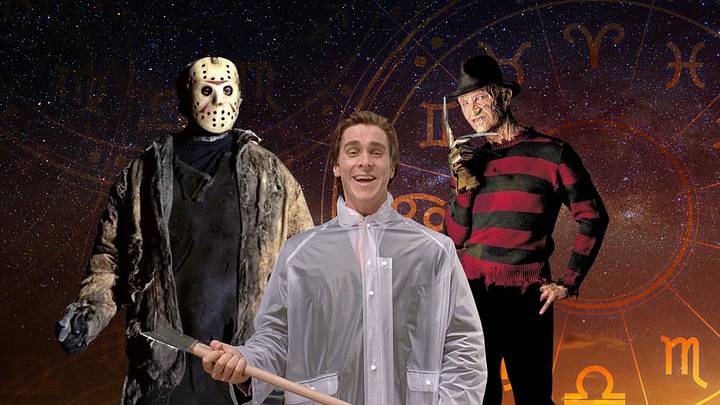
Have you ever watched a horror movie and realized its antagonist was suspiciously similar to the villain in your own story? Whether it’s the strategic Scorpio mind games or the infamous Gemini two-faced tendencies, some red flags feel like they were written in the stars. But can your birth chart actually predict your evil twin on the silver screen?
Doing the Monster Math
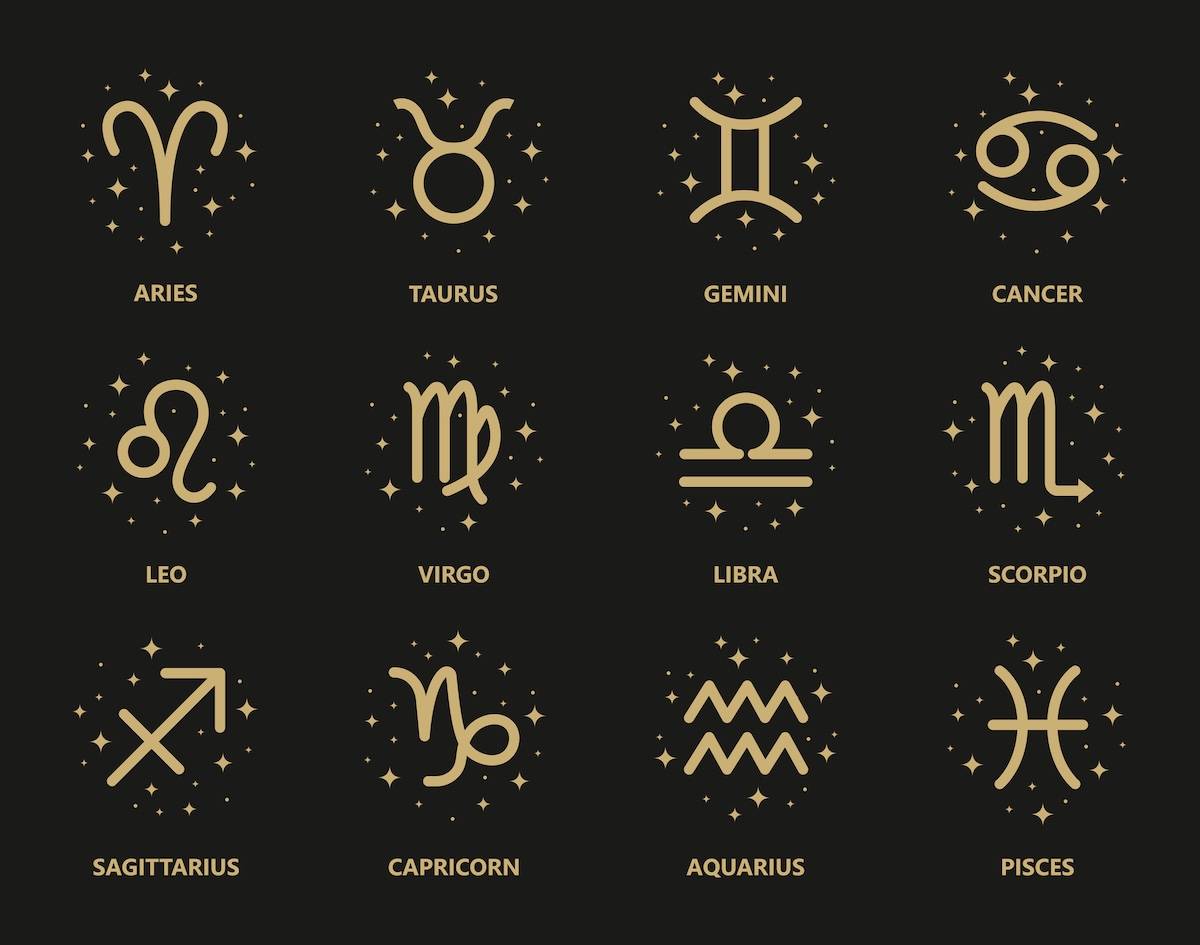
There are 12 zodiac signs: Aries (March 21 – April 19), Taurus (April 20 – May 20), Gemini (May 21 – June 20), Cancer (June 21 – July 22), Leo (July 23 – August 22), Virgo (August 23 – September 22), Libra (September 23 – October 22), Scorpio (October 23 – November 21), Sagittarius (November 22 – December 21), Capricorn (December 22 – January 19), Aquarius (January 20 – February 18), and Pisces (February 19 – March 20).
There are also countless horror characters who wear their signs on their sleeves—from the charmingly polite Libra facade of Norman Bates to the spotlight-stealing, Leo spectacles of Jack Torrance at the Overlook Hotel.
To find out which star signs shine brightest in the horror hall of fame, researchers at California Psychics analyzed 85 famous movie monsters to pinpoint their astrological alignments. Sourcing 23 canonical birthdays from official lore and 62 from fan wikis and Wikidata, the study also factored in character totals and movie appearances to produce a final spookiness score out of 100.
See the full list of the spookiest zodiac signs—from Gemini to Sagittarius—based on their overall score, villain count, and standout slasher icons below:
| Rank | Zodiac Sign | Spookiness Score | Villain Count | Notable Villains |
|---|---|---|---|---|
| 1 | Gemini | 100.0 | 11 | Jason Voorhees (Friday the 13th), Damien Thorn (The Omen) |
| 2 | Scorpio | 91.4 | 11 | Count Dracula (Dracula), Patrick Bateman (American Psycho) |
| 3 | Leo | 89.1 | 10 | Jack Torrance (The Shining), Leatherface (The Texas Chainsaw Massacre) |
| 4 | Aries | 79.6 | 9 | Kayako Saeki (The Grudge), Regan MacNeil (The Exorcist) |
| 5 | Libra | 71.5 | 8 | Michael Myers (Halloween), Norman Bates (Psycho) |
| 6 | Virgo | 61.7 | 7 | Carrie White (Carrie), Frankenstein’s Monster (Frankenstein) |
| 7 | Taurus | 54.5 | 6 | Chucky (Child’s Play), Pennywise (It), M3GAN (M3GAN) |
| 8 | Aquarius | 51.9 | 6 | Hannibal Lecter (The Silence of the Lambs), Samara Morgan (The Ring) |
| 9 | Cancer | 48.6 | 5 | Billy Lenz (Black Christmas) |
| 10 | Sagittarius | 42.1 | 5 | Freddy Krueger (A Nightmare on Elm Street), Jigsaw (Saw) |
| 11 | Pisces | 39.5 | 4 | Angela Baker (Sleepaway Camp) |
| 12 | Capricorn | 25.9 | 3 | Candyman (Candyman); Clarice Starling (The Silence of the Lambs) |
The Horror Horoscope
The stereotype of twin sign Geminis being two-faced might be an actual archetype, with the hockey-masked Jason Voorhees of Friday the 13th confirmed to be one. From The Omen‘s sinister antichrist Damien Thorn, born June 6, to Saw’s cold, calculating detective Mark Hoffman, Gemini tops the list with 11 horror villains, 35 movie appearances, and an eerily perfect spookiness score of 100.0.
Also making up one in eight characters analyzed is the second-spookiest zodiac sign, Scorpio, with a 91.4 score. Scorpio’s ranks include American Psycho‘s Patrick Bateman and Halloween-born slashers Victor Crowley (Hatchet) and Ethan Landry (Scream VI). Fire signs Leo and Aries have 10 and nine characters respectively, with the latter including The Exorcist‘s Regan MacNeil, whose embodiment of an Aries sun shines through from her playful, energetic pre-possession self to her explosive emotionality when pushed to the brink.
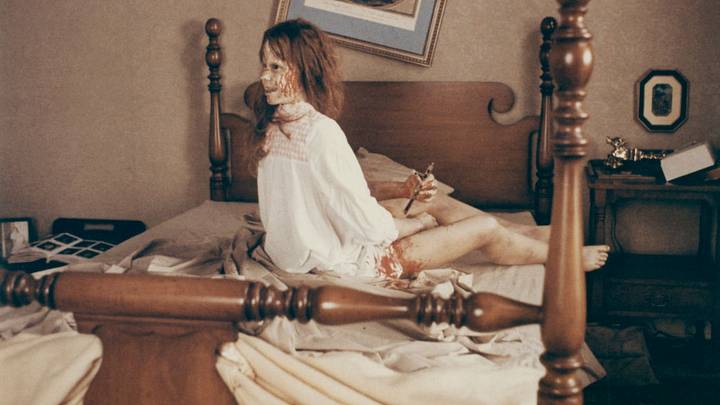
On the less sinister side of the spectrum is Capricorn as the least spooky zodiac sign with a spookiness score of 25.9 out of 100, known for its logical, no-nonsense attitude. Capricorns, like the sharp, determined Clarice Starling of The Silence of the Lambs, prioritize practicality over paranormal activity, cementing the sign’s spot far from the superstitiousness of it all. Watery Pisces also lands near the bottom overall with just four characters, followed by Sagittarius, which Freddy Krueger and Jigsaw share as a sun sign.
Grounded earth signs like Virgo and Taurus sit near the middle of the rankings with around 7% to 8% of horror characters each. While they can produce tragic monsters like Carrie White as well as chaotic characters like Chucky and Pennywise, they leave the highest body counts to air and fire signs.
Who’s Your Spooky Star Sign Soulmate?
Do you share a birth chart with an iconic horror villain, or does your zodiac sign land among the least deadly?