ByJon O’Brien|Dec 22, 2021, 11:00 AM EST
 Add us as a preferred source

Some holiday TV specials have become part of the festive fabric. Who didn’t grow up watching the super-charming A Charlie Brown Christmas every December, for example? But not every seasonal offering brings as much yuletide cheer. Here’s a look at 10 that suggest that those responsible might have indulged in a little too much eggnog.
1. Bewitched // “Sisters At Heart” (1970)
Oh, where to start with this problematic festive episode of classic nose-twitching sitcom Bewitched. In “Sisters at Heart,” Samantha casts a spell on a racist client of husband Darrin, which makes him see everyone as Black (this being 1970 and all, the white cast quite happily wore blackface for the occasion). And then daughter Tabitha uses her witch powers to make herself and African American friend Lisa more aesthetically alike. To be fair, the storyline was conceived by a bunch of tenth-graders who obviously meant well, but perhaps weren’t the best equipped to deal with such a sensitive issue.
2. The Star Wars Holiday Special (1978)
The Star Wars Holiday Special has gained almost mythical status since its one and only screening on CBS in 1978. There’s a good reason the bizarre attempt to combine the space opera with old-school variety has never been re-run. The story itself—Chewbacca must return home for a fictional celebration dubbed Life Day—is pure nonsense and the sets are creakier than Obi-Wan Kenobi, while stars including Carrie Fisher (forced to perform a vocal version of the film’s theme tune) and Harrison Ford all look like they’re about to fire their agents. It’s little wonder George Lucas wanted to smash every copy in existence with a sledgehammer!
3. Rich Little’s A Christmas Carol (1978)
There was obviously something in the mulled wine in 1978. Just a few weeks after the Star Wars fiasco aired, impressionist Rich Little delivered a bonkers take on perhaps the most famous Christmas story (well, apart from the nativity, obviously). You have to applaud his work ethic, and indeed budget management, if nothing else. The Man of a Thousand Voices assumed every single role in the hour-long CBC Television special. And just to make things a little more difficult, he also played each character as a different famous figure, resulting in Scrooge as W.C. Fields and Jacob Marley as Richard Nixon.
4. The Leprechauns’ Christmas Gold (1981)
We could probably fill this entire list with the increasingly off-the-wall stop-motion animations of Rankin/Bass. But this 1981 special, far more suited to St. Patrick’s Day, may well be the most tenuously themed. Indeed, the only yuletide connection is the use of the song “Christmas in Killarney” and the fact that December 25th is the deadline for its villain’s quest. That involves a pine tree-dwelling banshee, accidentally unleashed by a cabin boy, who’ll get turned into salty teardrops come Christmas morning if she fails to dispossess a bunch of leprechauns of their gold.
5. A Christmas Dream (1984)
Mr. T as a street corner Santa tasked with showing Emmanuel Lewis’ young Scrooge the magic of Christmas with a little help from David Copperfield. Could this NBC special be any more 1984? It certainly couldn’t be much more surreal, with The A-Team’s finest forced to deliver lines such as “The blessed of us must try to save the less of us” with a straight face, while his diminutive co-star squeals and shuffles his way through “Santa Claus Is Coming to Town” as if forced at gunpoint. Throw in a ventriloquist’s dummy and a quest to discover whether baby Jesus ever smiled and this is a dream of the fever kind.
6. Andy Williams And The Nbc Kids Search For Santa (1985)
Who knew that your grandma’s favorite crooner, Andy Williams, and mid-’90s ultimate TV pin-up Joey Lawrence once did a duet together? Well, for a few seconds, anyway. The unlikely pair briefly did an awkward song-and-dance routine atop a kid’s bed for what was undoubtedly the most random of Williams’ many festive specials. As its title suggests, 1985’s Search for Santa saw several child stars recruited from the likes of Punky Brewster, The Cosby Show, and Silver Spoons head to Finland to help the singer track down the elusive St. Nick. The result was a stage school nightmare that flitted between annoyingly wholesome and unintentionally creepy.
7. The RuPaul Christmas Ball (1993)
After 13 seasons and counting of Drag Race, not to mention its never-ending spin-offs, RuPaul’s unique take on the traditional variety show now appears relatively tame. But way back in 1993, its low-budget mix of near-the-knuckle jokes, provocative parody infomercials (Whore d’Oeuvre, anyone?) and New York club kid aesthetics provided the most transgressive Christmas special around. Celebrity guests as diverse as Nirvana, Eartha Kitt and Elton John also joined in with the unapologetically queer fun, filmed exclusively in New York for Britain’s Channel 4, that served charisma, uniqueness, nerve, and talent.
8. South Park // “Mr. Hankey, The Christmas poo” (1997)
OK, so South Park creators Matt Stone and Trey Parker were never going to commit to a heart-warming, chestnuts-roasting-on-an-open-fire-type of Christmas special. Even so, a talking, Santa hat-clad piece of feces was still a giant, and unashamedly gross, curveball. Airing during the series’s first season, this ninth episode finds the high-pitched Mr. Hankey emerging from a toilet bowl to help South Park’s residents discover the true meaning of the holiday season. But not before inadvertently sending Kyle, initially the only character aware of his presence, to a mental institution for being an “acute fecalphiliac.”
9. Rapsittie Street Kids: Believe In Santa (2002)
“I saw my parents die, and I’m not sure this wasn’t as emotionally devastating as that.” That’s how Rapsittie Street Kids executive producer James DeLuca described first watching the copious amounts of dead air, parade of obnoxious characters, and the kind of blocky, featureless animation quality you’d expect from a Commodore 64. This baffling musical (oh yes, there are plenty of terrible songs, too) bizarrely boasts a talented voice cast including Nancy Cartwright and Mark Hamill, ensuring that A Star Wars Holiday Special isn’t the most embarrassing thing on the latter’s resume.
10. Grumpy Cat’s Worst Christmas Ever (2014)
This 2014 TV movie is proof that even a network as cookie-cutter as Lifetime can still occasionally get weird during the holidays. Jumping on the bandwagon just a couple of years too late, Grumpy Cat’s festive outing was inspired by the self-explanatory meme that made a mixed breed named Tardar Sauce a worldwide phenomenon. But while the story was relatively traditional, it was told in a very post-modern way, with numerous fourth-wall breaks, meta jokes, and pleas to get it trending on Twitter. Sadly, despite Aubrey Plaza lending her entertainingly snarky voice to the eponymous feline, many critics dubbed Worst Christmas Ever as the Worst Christmas Film Ever.
Why Do We Put Up Halloween Decorations?
Discover the surprising history of Halloween decorations, from ancient Celtic traditions and carved turnips to the elaborate displays that adorn homes today.
ByEden Gordon|Oct 27, 2026, 2:00 PM EDT
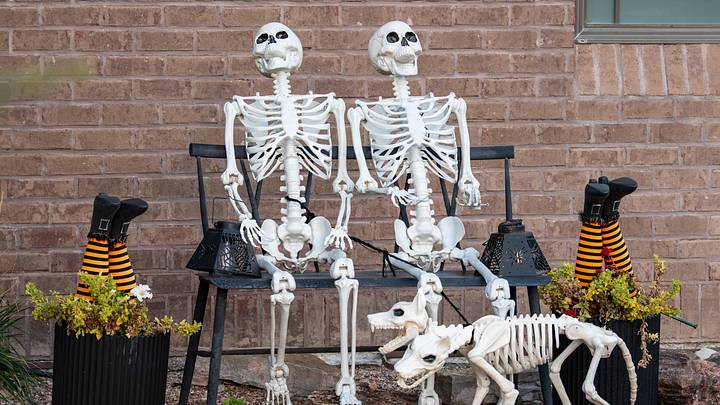
Nowadays, most people associate Halloween with pop-up decorations, pop-culture costumes, and an abundance of candy. But this holiday’s Celtic ancestor was a time of deep reverence and real fear, as many people believed spirits swarmed the earth during this liminal period.
Many of the Halloween staples we know and love today are widely believed to have roots in Celtic traditions—including the practice of putting up spooky decorations. This trend dates back to the ancient practice of carving faces into gourds and squash and displaying them outside homes to keep errant spirits out.
A brief history of Halloween

Most historians trace Halloween’s roots back to the Celtic holiday of Samhain. This festival was one of four major Gaelic holidays, along with Imbolc, Beltane, and Lughnasadh. It was celebrated across present-day Ireland, England, Wales, the Isle of Man, and northern France some 2,000 to 3,000 years ago.
Samhain marked the transition from autumn to winter, and was often honored by sacred communal bonfires lit by Druid priests. Some ancient texts refer to the holiday as a three-day festival during which townspeople were required to appear before their local chieftains.
It was also widely seen as a time when the veil between the world of the living and the dead became thin, allowing ancestors, spirits, monsters, and faeries to cross over and walk among the living. This belief led to the development of many traditions designed to honor the dead and to protect mortals.
In the fifth century CE, as Christianity was in the process of stamping out paganism across Europe, Pope Boniface attempted to turn Samhain into a festival that took place in May and honored saints. Still, autumnal fire celebrations continued to occur. In the eighth century, Pope Gregory III moved the Roman festival of All Saints’ Day to November 1. Later, October 31 became known as All Hallows Eve, and many continued to practice their pagan traditions on that night. Many Irish and Scottish immigrants carried Samhain traditions with them to America in the 19th century, leading to the development of modern-day Halloween.
The roots and surprisingly recent rise of Halloween decorations

The earliest ancestors of our modern Halloween decorations were turnips, gourds, and squash with carved faces, and these were intended to ward off evil spirits during Samhain. In the Middle Ages, turnips were the most popular choice for this task. These were often filled with burning coals and hung from sticks, and were known as jack-o’-lanterns. When immigrants brought these traditions to America, they found pumpkins more common than turnips, so pumpkins became the preferred choice for Halloween carving efforts.
Elaborate, large-scale Halloween decorations as we know them actually didn’t become common until the 1920s and ‘30s. In the decades prior, Americans largely celebrated Halloween with parties and fortune-telling games. In the 1920s, Scottish and Irish immigrants in the U.S. began reviving Old World Halloween traditions of dressing up, visiting homes, and asking for food in exchange for prayers, songs, or other offerings. These visits often became rowdy and prank-heavy, and because of this, communities began setting up organized trick-or-treating systems.
As trick-or-treating for candy became more common in the 1920s, so did Halloween decorations designed to please and entertain young visitors. Their popularity dipped during World War II but exploded as the postwar economy boomed. At this time, decorations were often less scary and more kid-friendly overall, which popularized decorating and helped Halloween become the massive industry that it is today. Many common decorations pay tribute to much older traditions, from ghosts that honor Halloween’s ancient connection to spirits to witches, ghouls, and other creatures from ancient folklore.
Today, people put up Halloween decorations for many reasons. They can offer nostalgic fun, as well as the chance to experience the thrill of a scare without any real danger. They can also connect communities, and sometimes serve as ways to show off wealth and creativity. Decorating for Halloween has also been shown to have some mental health benefits related to the joy it can bring and the benefits of social engagement.
And—if you believe in the old stories—those glowing, singing ghouls and ghosts in front of your home might just also be warding off roving spirits along the way.
Read More:
•
5 Creepiest Baba Yaga Stories From Slavic Folklore
•
Quiz: Can You Match the Monster Movie to the Famous Quote?
•
2026’s Most Spine-Tingling Tourist Destinations for Halloween, Ranked
•
The Spookiest City in Every U.S. State, Mapped
•
10 Halloween Traditions That Don’t Exist Anymore
Quiz: Can You Name the ’90s Horror Movie From Its Final Girl?
Put that ‘90s movie knowledge to the test this Halloween.
ByAlexandria Ingham|Oct 27, 2026, 7:00 PM EDT
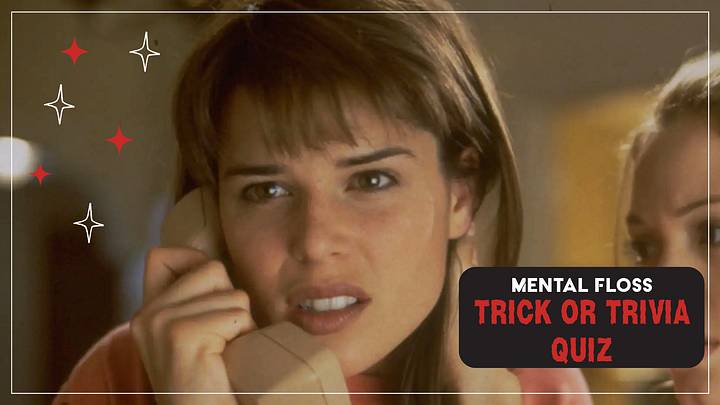
You know the villains, but can you remember the last survivors? The Final Girl is one of the most iconic tropes from horror movies, and the ‘90s had some of the best. Let’s see if you can match the Final Girl to the horror movie.
How did you do? If you got all eight right, we’re impressed, and you’re definitely a horror movie buff. If you didn’t, well, it’s the perfect excuse to have a horror movie binge-watch for Halloween!
More Halloween Quizzes:
•
Quiz: Can You Name the Halloween Costume From These Three Clues?
•
Quiz: Can You Name the ’90s Horror Movie From Its Final Girl?
•
Quiz: Can You Match the Monster Movie to the Famous Quote?
•
Quiz: Can You Match These TV Witches to Their Shows Without Getting Hexed?
•
Quiz: How Many Classic Horror Movies Can You Identify From Their Monsters?
Most Iconic Final Girls of the ‘90s
The 1990s was a transformative decade when it came to horror. After decades of watching the women scream and make silly choices, the women of the ‘90s became more self-aware. In fact, they were able to poke fun at their earlier counterparts, even when they were forced into making the same mistakes. The evolution of the Final Girl delivered fierce and proactive heroines we could root for.
Sidney Prescott is one of the most memorable. Neve Campbell brought this teenager to life in Scream, kicking off a new style of slasher movies. It wasn’t afraid to poke fun at its own genre, while bringing a leading woman who was layered with trauma and heartache. Even when Sidney was forced to run up the stairs instead of out the front door, she continued to make quick decisions and made it clear she deserved to survive.
While Gale Weathers was technically a co-Final Girl, it was Sidney we rooted for the most.
Just a year later, Jennifer Love Hewitt became the Final Girl, Julie James, in I Know What You Did Last Summer. Her character had one of the most iconic pop-culture moments, as she looked at the sky and screamed, “What are you waiting for?” and she didn’t let us down when she returned for the sequels. It would have been great to see her survive with Helen Shivers, but unlike Scream, there can usually only be one Final Girl.https://www.youtube.com/embed/IE1ZeXC4vtg?feature=oembed
Before the teens, there was one Final Girl of the ‘90s who will always stand out as the queen. It’s all about Jodie Foster’s Clarice Starling in The Silence of the Lambs. The FBI trainee proved that women could remain grounded and quick-thinking, even when faced with the horror of a killer coming after her. It’s rare that a horror movie lands any Academy Award nominations, let alone wins, but Foster proved it’s possible.
If you love to test your movie knowledge, check out the Mental Floss quiz page daily for more trivia challenges.
The countdown to Halloween is on, and we’re challenging our readers here at Mental Floss with our Trick or Trivia quiz giveaway. For 13 nights between October 19-31, we’re putting your knowledge of all things spooky to the test. Think you know Halloween? Take at least one quiz and enter to be in the running to win a $200 Barnes & Noble gift card.
More Halloween Reads:
•
What Was Trick-or-Treating Like in the 1950s?
•
What the Night Before Halloween Is Called Across America, Mapped
•
Why Do Werewolves Transform During a Full Moon?
•
Why Do Vampires Sleep in Coffins?
•
Quiz: Can You Name the Halloween Costume From These Three Clues?