ByRoger Cormier|Aug 18, 2017, 6:00 AM EDT
 Add us as a preferred source

Making its debut in 1989, MTV Unplugged—in which famous musicians perform stripped-down arrangements of their biggest hits—was a hit for both the cable network and the music industry, particularly in the early- to mid-’90s. Though it lost its regular time slot in 1999, in the near-20 years since, a handful of artists have popped in for brief revivals. But now it looks as if Unplugged is ready for a reboot; MTV has announced that the series will be back beginning on September 8, 2017, with Shawn Mendes as its first guest. In the meantime, here’s a look behind the scenes of the music series that became a phenomenon.
1. OPINIONS VARY ON WHO CAME UP WITH THE IDEA.
Singer/songwriter Jules Shear has said that he came up with the concept for MTV Unplugged to promote his acoustic album, The Third Party. In 1992, The New York Times wrote that Shear was inspired by Jon Bon Jovi and Richie Sambora’s two-song acoustic set at the 1989 MTV Video Music Awards.
That’s all well and good, but producers Jim Burns and Bob Small claim they got the idea for MTV Unplugged after Bruce Springsteen treated the two—and the thousands of other fans at one of his concerts—to a final encore featuring just himself and his acoustic guitar. (Springsteen would find his way onto Unplugged in 1992.)
Executive producer Joel Gallen has referred to Unplugged as his “baby” as well and, like Shear, was inspired by Bon Jovi and Sambora’s VMA set, which he called a “jumping off point.” In I Want My MTV: The Uncensored Story of the Music Video Revolution, Small said: “Please do not credit Bon Jovi for creating Unplugged. Jon Bon Jovi thinks he was the inspiration for it. He wouldn’t even do the f***ing show until almost 20 years later.”
2. BOTH HBO AND PBS SAID NO.
HBO passed on Unplugged when Shear proposed the concept to the pay channel. Burns and Small pitched the series to PBS after MTV initially said no. PBS simply echoed MTV and HBO. It was only when Burns and Small ally Judy McGrath got a promotion at MTV that a pilot got a greenlight.
3. IT WAS A CHEAP PILOT TO SHOOT.
Bob Small said he had just four hours to set up for the Unplugged pilot, with another four hours to film it—and all on a budget of $18,000. “I couldn’t get money to hire a director,” Small said. “They said, ‘You direct it.'”
4. THERE WAS A HOST FOR THE FIRST 13 EPISODES.
None other than Jules Shear was the undisputed master of ceremonies for the first season. He also joined in on some songs.
5. THE FIRST GUESTS DIDN’T QUITE GRASP THE CONCEPT OF UNPLUGGED.
Glenn Tilbrook and Chris Difford from Squeeze were the stars of the first episode, which aired on November 26, 1989. But they were unprepared. “Chris and Glenn showed up for rehearsal with electric guitars,” Alex Coletti, who would end up producing the show through 2001, recalled. “I said: ‘Very funny, guys. Where are the acoustics? It’s Unplugged.’ They looked at each other and went, ‘Riiight… Make a phone call, quick!'”
6. PRODUCERS SCRAMBLED TO GIVE JOE WALSH ACTUAL FRIENDS.
“The fifth episode was billed as Joe Walsh and Friends, and Joe showed up with only one friend—Ricky, his bass player,” Coletti remembered. “We thought it meant his famous friends, but apparently that got lost in translation.” Walsh had been a member of The Eagles, who had an infamous falling-out, but Walsh’s claim of buddies gave MTV employees false hope. Producer Bruce Leddy found Dr. John recording at a neighboring studio and convinced him to come on and be Walsh’s “friend.”
7. DON HENLEY WAS NOT HAPPY THAT WALSH PLAYED “DESPERADO.”
Walsh’s former Eagles bandmate wrote “Desperado,” as well as a three-page fax explaining to MTV that he didn’t want Walsh to play it and he was refusing permission to air the performance. It was after the fax that the network invited Henley to come on the show himself to perform it. Henley was the first artist to get an entire half-hour on his own as the only artist, which quickly became the status quo for Unplugged. In 1994, when The Eagles reunited, they appeared on an MTV Unplugged special.
8. LL COOL J HAD NEVER WORKED WITH A LIVE BAND BEFORE.
The first Unplugged featuring rap artists took place in 1991. Pop’s Cool Love backed LL Cool J, MC Lyte, De La Soul, and A Tribe Called Quest. “[It’s like] you drink milk for 10 years and then [you have to] drink fruit punch,” Quest’s Q-Tip said about performing with the band. “It’s not that the fruit is bad, but you have to get used to it.”
But LL seemed able to adapt. “We rehearsed the night before and LL Cool J had never worked with a live band,” Coletti said. “Before long, he was calling the shots like he’d been doing it his whole life.”
9. LL COOL J KNOWS YOU SAW HIS DEODORANT.
“People have teased me about the deodorant for years, but I love it,” he said. “It was raw! It was nasty! At least you know I wasn’t stinking.”
10. PAUL MCCARTNEY WAS THE FIRST ARTIST TO OFFICIALLY RELEASE HIS UNPLUGGED SET.
Before Paul McCartney, no other Unplugged artist body had thought to release their acoustic set as an album. But after he performed in 1991, the former Beatle was worried about it getting out to the masses illegally. “I figured that as Unplugged would be screened around the world there was every chance that some bright spark would tape the show and turn it into a bootleg, so we decided to bootleg the show ourselves,” he admitted. “We heard the tapes in the car driving back. By the time we got home, we’d decided we’d got an album—albeit one of the fastest I’ve ever made.” He even titled the live performance collection Unplugged (The Official Bootleg).
11. ERIC CLAPTON WAS HESITANT TO RELEASE HIS SHOW AS AN ALBUM.
“Slowhand” performed to acclaim in 1992, but he initially didn’t think it was good enough to be released officially as a CD. So naturally, his live album Unplugged won the Grammy for Album of the Year. His “Tears in Heaven” performance in particular won Song and Record of the Year. Two years later, Tony Bennett followed suit, winning the 1994 Album of the Year prize for his time on the show.
12. NEIL YOUNG WALKED OUT ON HIMSELF.
Neil Young’s Unplugged was supposed to have been taped at the Ed Sullivan Theater in New York on December 12, 1992. Instead, on that night—at that venue—the audience saw something they would probably never forget: Neil Young walking out the door after numerous mistakes. The “stunned” crew members managed to get him to come back to try again that night. Young opted to junk the performance entirely, and tried again two months later—this time with a band, and with much more success.
13. TORI AMOS WALKED OUT, TOO.
Amos was thrown off and “couldn’t harness the energy.” But unlike Young, she was able to walk back onstage, perform, and not have to try again with another set on a different night. As the singer/songwriter remembered it, she and her manager paced “beneath the MTV thing” backstage thinking about the problem. “Then my [lighting director] came down and said, ‘Something just doesn’t feel right. I can’t put my finger on it,'” Amos told Worstgig.com. “For 700 shows over the five years (prior to that), I’d played with the lights down. So all the lights were up to catch the audience and I felt like somebody was watching me take a shower. So they dimmed the lights, I felt better. By that point because I’d made the choice to stop it and make some changes, I felt like I began again. And I turned the whole show around.”
14. ALEX COLETTI FOUGHT TO CUT “THE MAN WHO SOLD THE WORLD” FROM NIRVANA’S EPISODE.
“Maybe I shouldn’t give this secret away, but I built a fake box out in front of the amp to make it look like a monitor wedge,” Coletti admitted to Guitar World in 1995. “It’s an acoustic guitar, but he’s obviously going through an amp,” he added, talking about the now iconic David Bowie cover. “I actually fought pretty hard to leave that song out [of the final edit of the show], because I felt it wasn’t as genuine as the rest of the songs. But I’m a huge Bowie fan, so I couldn’t fight too hard against the song.”
15. DAVE GROHL WAS ALMOST UNINVITED TO NIRVANA’S SHOW.
The Nirvana drummer remembered that it was a minor miracle that the band’s Unplugged performance went so well. “That show was supposed to be a disaster,” Grohl said. “We hadn’t rehearsed. We weren’t used to playing acoustic. We did a few rehearsals and they were terrible. Everyone thought it was horrible. Even the people from MTV thought it was horrible. Then we sat down and the cameras started rolling and something clicked. It became one of the band’s most memorable performances.”
As Coletti told it, Kurt Cobain was thinking of just replacing Grohl behind the kit, or maybe not using a drummer at all. “What I didn’t know was up until the day [of the Unplugged performance], there was talk of Dave [Grohl] not playing at all in the show,” the producer revealed in 2014. “Kurt wasn’t happy with the way rehearsals were going; he didn’t like the way Dave sounded playing drums with sticks.”
But Grohl turned up the day of filming, and Coletti gifted him some brushes and sizzle sticks to give his drumming a softer sound. “I was afraid Dave would just roll his eyes, like, ‘Oh great, the a**hole from MTV is trying to be my friend,'” the producer remembered thinking. “But instead he opened the package and said, ‘Cool, I’ve never had brushes before. I’ve never even tried using them.'” The album Unplugged in New York won the Grammy for Best Alternative Music Album in 1996. It was the band’s lone Grammy win.
16. YES, THEY TRIED TO GET ROBERT PLANT AND JIMMY PAGE TO PLAY “STAIRWAY TO HEAVEN.”
The Led Zeppelin bandmates reunited in 1994 for the Unplugged special: No Quarter: Robert Plant and Jimmy Page Unledded, which at the time was the highest-rated episode of the series ever. MTV suggested they film it in Queens, New York. Plant suggested Morocco and Wales because it was where he wrote “Kashmir” and “Down by the Seaside,” respectively. Network executives explicitly requested “Stairway” but were shot down. “I think we’re in a disposable world and ‘Stairway to Heaven’ is one of the things that hasn’t quite been thrown away yet,” Plant said in 1994. “I think radio stations should be asked not to play it for 10 years, just to leave it alone for a bit so we can tell whether it’s any good or not.”
17. LIAM GALLAGHER HECKLED HIS BROTHER.
Oasis lead vocalist Liam Gallagher backed out of the Royal Festival Hall gig in London at the last minute due to a “sore throat,” so songwriter/guitarist/brother Noel took over the vocal duties. Noel would later disclose that Liam in fact appeared an hour before showtime “sh*tfaced,” and when he tried to sing it sounded “f**king dreadful.” Liam watched the performance from the balcony and at times jeered the band. Noel told him to shut up. Coletti thought it was all for the best. “There’s something when the songwriter himself sings it. Maybe he’s a little more connected to the song.”
Quiz: Can You Name the Halloween Costume From These Three Clues?
See how many classic costumes you can construct before the clock runs out.
ByNitya Rao|Oct 28, 2026, 7:00 PM EDT
Anyone can copy a Halloween costume with the right reference photo, but can you assemble one in reverse from just a handful of random accessories? From wand-wielding wizards to iconic movie monsters, someone, somewhere, has worn it all. Now it’s your turn to put your costume designer hat on and see how quickly you can build a costume from three key components and sheer creativity. Put your pop culture memory and Halloween fashion sense to the test below.https://www.sporcle.com/framed/?v=10&pm&gid=41faab33X4&fid=6ae23fc6d6f32
More Halloween Quizzes:
•
Quiz: Is This a Lyric From “Monster Mash” or “Spooky, Scary Skeletons”?
•
Quiz: Can You Name the ’90s Horror Movie From Its Final Girl?
•
Quiz: Can You Match These TV Witches to Their Shows Without Getting Hexed?
•
Quiz: Can You Finish These Spine-Chilling Literary Titles?
How did your styling session go? Are you ready to open your Spirit Halloween franchise, or did some of those clues leave you (or at least your hypothetical Halloween Sim) naked and afraid? Whether you nailed every look on the first try or had to call it quits after the third ambiguous cape, challenge a fellow Halloween fanatic to see if they can beat your score!
The Most Popular Halloween Costumes Through the Decades
If piecing together costumes from random props made you realize just how deeply pop culture is embedded in our October traditions, take a look at how Halloween fashion has evolved over the last century (according to The Daily Meal):
1920s: Clowns, Witches & Farmers
As trick-or-treating started gaining traction, homemade costumes like witches, farmers, and the Pierrot clown—complete with iconic black-and-white face paint—became instant classics.
1930s: Mickey & Minnie Mouse
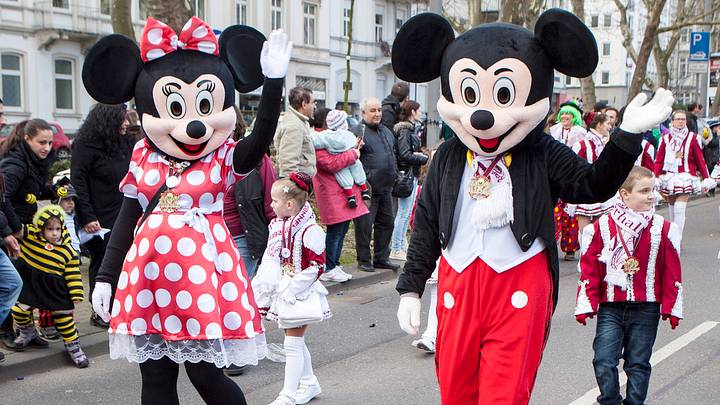
Mass-produced costumes hit the scene thanks to Ben Cooper after landing a major Disney license. Kids could easily transform into Mickey, Minnie, and Snow White in simple slip dresses and rubber masks right alongside traditional ghosts and goblins.
1940s: Witches & Cats
With the rise of pinup culture, classic costumes like witches and cats got a flirty makeover featuring things like fishnet stockings, dark makeup, and shorter hemlines.
1950s: Hula Dancers & Cowboys

Years before Hawaii officially became a U.S. state in 1959, a postwar hyperfixation on all things tiki and luau took over the country. Combined with the massive popularity of Western films, this inspired hibiscus prints, grass skirts, and cowboy hats to join the mix of spookier characters on Halloween night.
1960s: Superheroes
Comic book icons like Superman, Batman, and Catwoman surveyed the streets as rubber masks and capes made cosplaying your favorite crime-fighter easy.
1970s: Peanuts & Star Wars
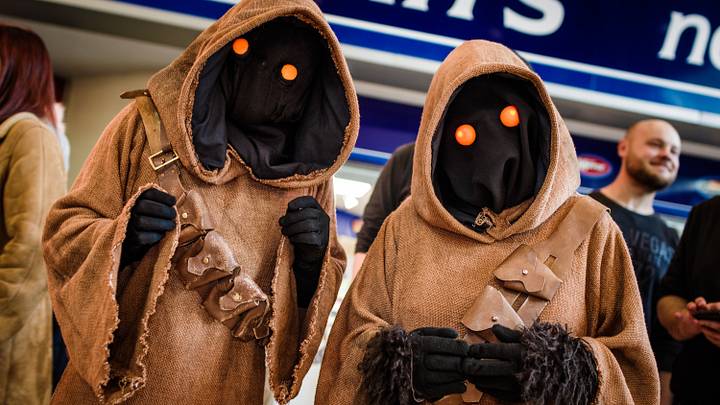
TV, cartoons, and pop culture ruled the decade, with trick-or-treaters sporting plastic masks and ’70s staples to emulate the Peanuts gang, Star Wars characters, and Charlie’s Angels.
1980s: Elvira & Hulk Hogan
Higher-budget costumes let fans lean hard into pop culture on Halloween, whether channeling vampy Elvira hairdos, Hulk Hogan onesies, or slasher villains like Freddy Krueger and Michael Myers.
1990s: Power Rangers & The Simpsons
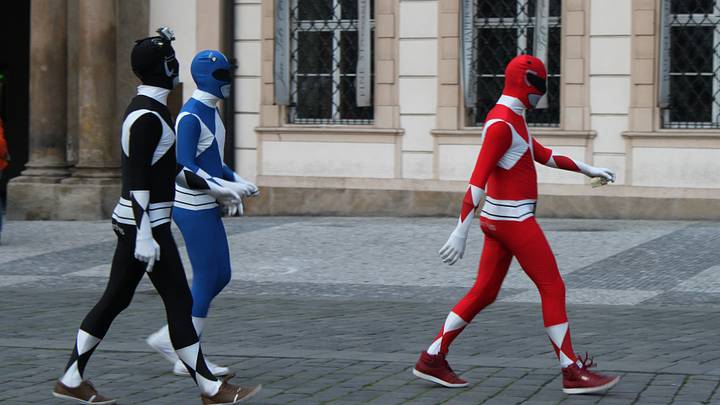
The Mighty Morphin Power Rangers, Teenage Mutant Ninja Turtles, and The Simpsons were the easy answers to the group costume dilemma. Think colorful nylon onesies, yellow face paint, and many, many masks.
2000s: Y2K Stars & Harry Potter
Halloween costume inspiration shifted toward real-life Y2K icons like Britney Spears and Michael Jackson, with just as many fantasy favorites like Harry Potter and SpongeBob SquarePants down the block.
2010s: Frozen & Pop Culture
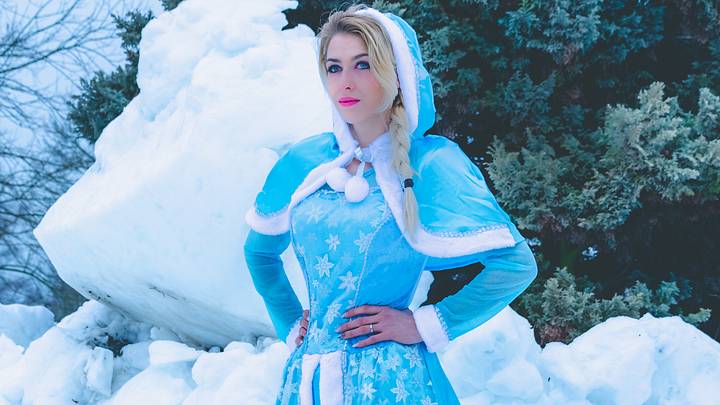
Elsa, Anna, and Marvel heroes reigned supreme amongst the new generation of trick-or-treaters. The digital era also saw the rise of meme costumes and political election outfits featuring even more uncanny valley face masks.
If you love testing your pop culture trivia and Halloween knowledge, check out the Mental Floss quiz page daily for more spooky challenges.
The countdown to Halloween is on, and we’re challenging our readers here at Mental Floss with our Trick or Trivia quiz giveaway. For 13 nights between October 19-31, we’re putting your knowledge of all things spooky to the test. Think you know Halloween? Take at least one quiz and enter to be in the running to win a $200 Barnes & Noble gift card.
More Halloween Reads:
•
7 Forgotten Mischief Night Pranks You Used to See Every Year
•
Quiz: Can You Name the ‘Nightmare Before Christmas’ Character From One Clue?
•
•
What Was Trick-or-Treating Like in the 1950s?
•
What the Night Before Halloween Is Called Across America, Mapped
The Artist Who Taught Bob Ross His Famous Painting Technique
Before Bob Ross painted happy little trees, he learned his famous wet-on-wet technique from a German art master.
ByChris Wheatley|Oct 28, 2026, 2:00 PM EDT
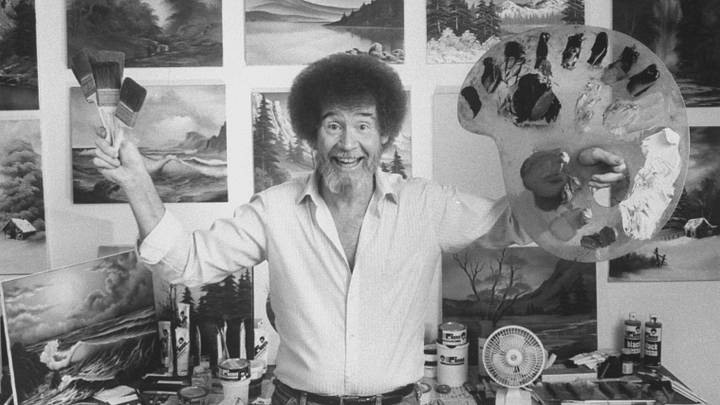
One of the undeniably positive effects of the TikTok era is that, through the vague mysteries of the “algorithm,” fresh generations have been introduced to the soothing talents of painter Bob Ross. Born in 1942 in Daytona Beach, Florida, Ross served as a master sergeant in the United States Air Force, but it was later, when he began working as an art tutor, that his passion for painting propelled him to modest fame.
Becoming Bob Ross
It was one of his pupils, a lady named Annette Kowalski, who first saw possibilities for Ross beyond the classroom. Together with her husband, Walt, Ross, and Ross’ wife, a new company, Bob Ross Inc., was created with Bob as the star. In 1982, Ross taped a pilot for a simple show—just him in front of the camera, painting a landscape whilst offering advice. Broadcast on the tiny station, WNVC, in Falls Church, Virginia, dozens of PBS stations were soon eager to sign him up.
Ross eventually went with WIPB in Muncie, Indiana, where his show, The Joy of Painting, ran from 1983 to 1994. With his distinctive permed hairstyle and soft, welcoming voice, Ross was able to create a warm, comforting atmosphere that appealed even to non-artists.
The Original Master
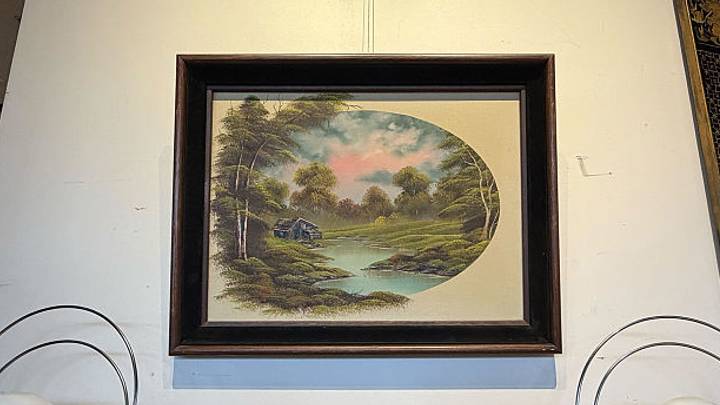
What many people don’t know is that Ross’ techniques and style were not wholly original. Ross had been working as a bartender when he happened upon a television show titled The Magic of Oil Painting, which was hosted by the German painter, William “Bill'” Alexander. Born in Berlin in 1915, Alexander later emigrated to America, where he began hosting shows and writing books on art. He specialized in the alla prima or wet-on-wet technique. Dating back to the 15th century, this approach allowed for a single canvas to be finished in less than half an hour.
Following his retirement from the Air Force, Ross sought out Alexander and studied under him. He even joined Alexander’s company—Alexander Magic Art Supplies—and was acting as a travelling instructor and salesman for this establishment when he first met Annette Kowalski.
A Bitter Rift
Although in the very first episode of The Joy of Painting, Ross fully acknowledged Alexander’s teaching, his rising fame evidently caused friction between the two men. Alexander felt that Ross had leaped to success on the back of his own career. In a 1991 interview, he said of Ross: “He betrayed me.”
Whilst the truth is that neither man can fairly lay claim to have invented the wet-on-wet technique, it’s sad to think that they ended up in animosity. Ross sadly passed in 1995, a year after the final episode of The Joy of Painting was aired.
Read More:
•
The Artist Who Taught Bob Ross His Famous Painting Technique
•
The 10 Most Expensive Picasso Paintings Ever Sold, Ranked
•
The Personal Tragedy Behind Picasso’s Blue Period
•
The Best Indigenous Peoples’ Day Trivia Questions to Reframe How You See American History
•