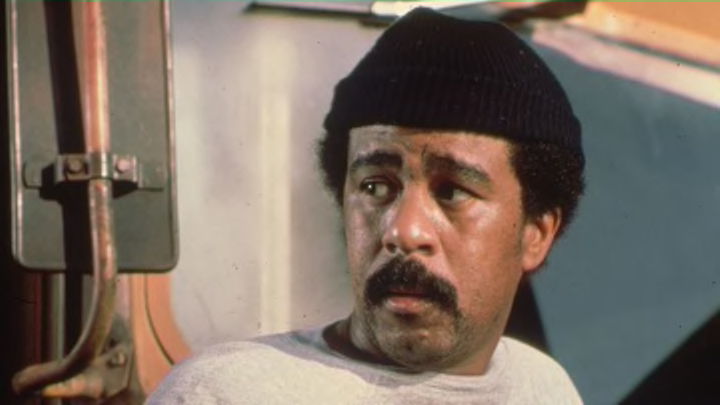
Richard Pryor, who was born on December 1, 1940, is considered by many to be the greatest stand-up comedian of all time. Jerry Seinfeld referred to him as “the Picasso of our profession.” Chris Rock has called him comedy’s Rosa Parks. Yet the indelible mark Pryor made on the world of comedy only tells part of his story.
Like his career in the spotlight, Pryor’s world offstage was also highly compelling and full of shocking turns. He’s one of those people whose real life was so off-the-wall at times that it becomes tough to separate fact from fiction. Here are just a few stories about the brilliant and chaotic life of the great Richard Pryor.
1. Richard Pryor had a tragic childhood.
Richard Pryor had a tragic early life, experiencing things that no child should have to endure: Born to a prostitute named Gertrude on December 1, 1940 in Peoria, Illinois, Pryor’s father was a notoriously violent pimp named LeRoy Pryor. For much of his childhood, Pryor was raised in the actual brothel where his mother worked, which was owned by his own no-nonsense grandmother, Marie Carter. With his mother periodically dropping out of his life for long stretches, it was Marie who served as Pryor’s central guardian and caretaker.
In 2015, The New Yorker published an article to mark the 10th anniversary of Pryor’s passing, which offered further details on his turbulent early life, noting:
Pryor said that one of the reasons he adored movies as a boy was that you were never in doubt as to why the women in them were screaming. As for the sounds that Richard heard in the middle of the night in his room on the top floor of one of Marie’s businesses, he had no idea what was happening to those girls. A number of times, he saw his mother, Gertrude, one of the women in Marie’s employ, nearly beaten to death by his father. Gertrude left when Richard was five. He later registered no resentment over this. “At least Gertrude didn’t flush me down the toilet,” he said. (This was not a joke. As a child, Pryor opened a shoebox and found a dead baby inside.)
2. Richard Pryor walked away from a successful career.
Early in his career Pryor found success by modeling his comedy largely on the work on Bill Cosby, which led to many comparisons being drawn between the two—a fact that Cosby reportedly grew to dislike.
There are conflicting tales of just how Pryor made the 180-degree change in style that led to him becoming a comedic legend. One of the most well traveled tales, and one that Pryor himself confirmed on more than one occasion, states that Pryor was performing his clean-cut act in Las Vegas one night when he looked out into the audience and saw Dean Martin among the crowd. If you believe the story, seeing the legendarily cool Rat Packer’s face made Pryor question what exactly he was doing and caused him to abruptly leave the stage mid-performance. Around this time Pryor moved to the San Francisco Bay area, dropped out of the comedy limelight for several years, and later reemerged with the more pointed, in-your-face style that made him an icon.
3. Richard Pryor won an Emmy for writing.

Though Pryor was better known for his work in front of the camera than behind it, the only Emmy he ever won was for writing. In 1974, Pryor won the Emmy for Best Writing in Comedy for Lily, a comedy special starring Lily Tomlin (in which he also appeared). He earned a total of four nominations throughout his career, two of them as an actor and the other two as a writer.
4. Richard Pryor made Lorne Michaels quit Saturday Night Live.
Back in 1975, Saturday Night Live was brand new, so at the time the show’s creator, Lorne Michaels, wasn’t yet a powerful TV icon. Therefore, when Michaels stuck his neck out and demanded the right to have Pryor on as a guest host, he was really risking a lot. It took Michaels handing in a fake resignation to convince NBC executives to allow the famously foulmouthed comic to appear. Michaels himself had to implement a secret five-second delay for that night’s episode to be sure that any off-the-cuff, unscripted choice language didn’t make its way out over the airwaves. The delay was kept from Pryor who, upon later finding out, confirmed that he would have refused to do the show had he known about it
The episode, the seventh one of SNL’s premiere season, contained one of the most memorable and edgy sketches ever to appear on the show: (the NSFW) Word Association. Chevy Chase and Pryor’s personal writer, Paul Mooney, have each claimed to have written the sketch.
5. Richard Pryor lost the starring role in Blazing Saddles.
Pryor and Gene Wilder made four films together (Silver Streak; Stir Crazy; See No Evil, Hear No Evil; and Another You), but there could have been at least one more. Pryor was one of the credited writers on Mel Brooks’s classic Blazing Saddles and the plan for a time was that he would also co-star in the film, playing Sheriff Bart alongside Wilder as the Waco Kid. In the clip above, Wilder explained how Pryor’s infamous drug use caused him to end up in a remote city and subsequently lose the starring role to Cleavon Little.
6. It wasn’t a drug mishap that caused Richard Pryor to set himself on fire.
One of the most retold stories about Pryor centers around the incident on June 9, 1980 where he set himself on fire and took off running down a Los Angeles street fully engulfed in flames. Though he wasn’t expected to survive the episode, he eventually pulled through and spent the next six weeks recuperating in the hospital. At the time it was often reported that the cause of the accident was Pryor freebasing cocaine. Pryor later admitted that in a drug-fueled psychosis he had actually attempted to kill himself by dousing his body in 151-proof rum and setting himself ablaze. A friend of Pryor’s at the time has gone on record as saying that the idea for the act likely came about that evening after the two of them watched footage of Thích Quảng Đức, the Vietnamese monk who famously burned himself to death in 1963 as an act of protest.
7. Richard Pryor was married seven times.
Pryor was married seven times—to five different women. In the 2013 documentary Omit the Logic, a friend of Pryor’s—who served as the best man at one of his weddings—recounts how Pryor showed up at his hotel room door just a few hours after marrying Jennifer Lee, insisting that he already wanted a divorce. Pryor would get divorced from Lee the next year, only to remarry her 19 years later; the two were still together when Pryor passed away in 2005.
8. Richard Pryor had a soft spot for animals.
In 1986 Pryor was diagnosed with multiple sclerosis, a central nervous system disease that ultimately left him confined to a wheelchair. Pryor was such an avid supporter of animal rights, however, that he actively spoke out against animal testing of any kind—even when that testing meant getting closer to a cure for his own condition. The biography on RichardPryor.com provides more insight into this part of his private life:
He’s been honored by PETA, the People for the Ethical Treatment of Animals, for saving baby elephants in Botswana targeted for circuses. In 2000, as the Ringling Bros. and Barnum & Bailey Circus was preparing to open at Madison Square Garden, Pryor gave the Big Top’s first African-American ringmaster, Jonathan Lee Iverson, something to think about when he wrote him a letter in which he stated: “While I am hardly one to complain about a young African American making an honest living, I urge you to ask yourself just how honorable it is to preside over the abuse and suffering of animals.”
9. Richard Pryor won the first Mark Twain Prize for American Humor.
Beginning in 1998, the John F. Kennedy Center for the Performing Arts began awarding its annual Mark Twain Prize for American Humor, which “recognizes individuals who have had an impact on American society in ways similar to the distinguished 19th-century novelist and essayist Samuel Clemens, best known as Mark Twain.” Pryor was chosen as their very first recipient. In the more than 20 years since, he has been joined by an illustrious group of comedy legends, including Carl Reiner, Bob Newhart, George Carlin, Steve Martin, Carol Burnett, Julia Louis-Dreyfus, and Dave Chappelle.
10. Despite his deteriorating health, Richard Pryor never stopped performing.
Even while MS continued to rob him of his mobility, Pryor’s comedic mind continued cranking. Throughout the early 1990s Pryor would often show up at Los Angeles’s famous standup club The Comedy Store to take to the stage in his wheelchair. In the above clip from The Joe Rogan Experience, a few comics discuss what it was like to watch the all-time great perform in his diminished state.
This story has been updated for 2020.
Home/ENTERTAINMENT
Did Ernest Hemingway Really Say “Write Drunk, Edit Sober”? Uncorking the Truth
Papa loved his rum, but his writing routine was strictly dry. Here’s the real, surprisingly sober story behind the famous quote.
ByNitya Rao|Jul 20, 2026, 2:57 PM EDT
 Add us as a preferred source

Casual penman or professional wordsmith, just about everyone has heard the wacky piece of writing advice, “write drunk, edit sober.” Widely believed to be a way of life for American writer Ernest Hemingway, this famous phrase has served as a green light for wetting your whistle before the ink dries on the page for decades.
The idea is intuitive—loosen your inhibitions to let the words flow, then clean it up once the spins stop. But the backstory is anything but, especially regarding who—or even if someone—actually said it in the first place.
Hemingway’s Real-Life Writing Routine
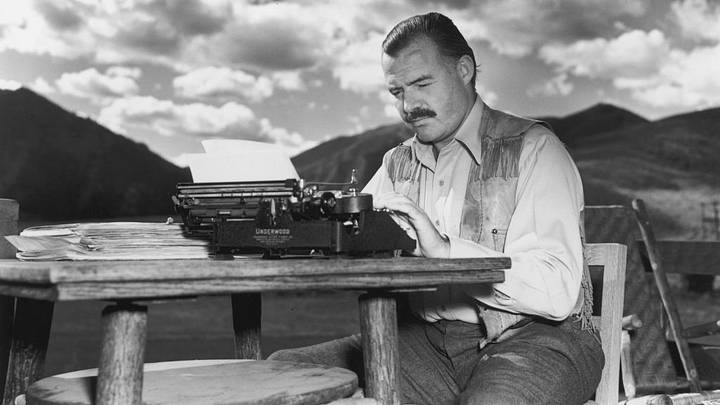
There’s no doubt that Hemingway enjoyed downing a daiquiri or two (or, according to legend, 17 in one sitting). Just as well-known as his works such as The Old Man and the Sea and The Sun Also Rises are his drinking habits, which only got worse after a series of plane and car crashes during his travels. But despite his penchant for adventure and alcohol, Papa was a staunch believer in separating the pen from the pint.
The idea that Hemingway wrote while intoxicated doesn’t hold up to the reality of his actual process. He was undeniably disciplined, waking up before dawn to write while his mind was sharp and, more importantly, sober. He saw writing as a craft that commanded all of his attention, saving his drinking for later on in the day. For Hemingway, a Papa Doble or dry martini was merely a reward once his word count for the morning was met.
His granddaughter, Mariel Hemingway, attests: “He never wrote drunk, he never wrote beyond early, early morning,” she said in an interview. If this is true, then, just how did the edgy quote get attached to his name?
The Faulkner Factor
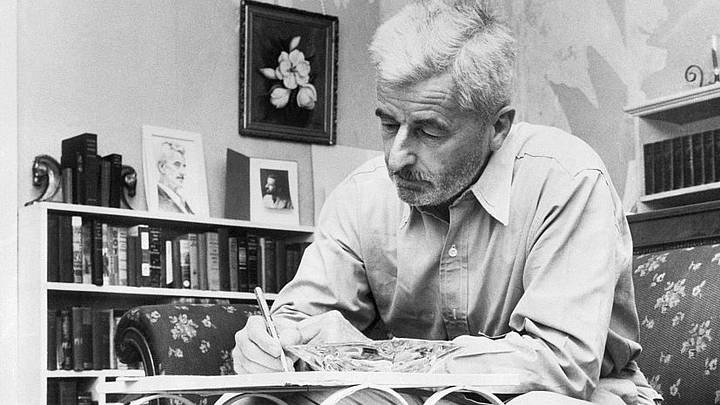
Rivalries didn’t solely reside within Hemingway’s works, but in his real life as well. Throughout his career, the Nobel Prize-winning novelist was pitted against his famous contemporary William Faulkner. The two men critiqued everything about each other, from their contrasting writing styles to their comparable heavy drinking habits.
Not only did Hemingway deny drinking and drafting, but he went so far as to deflect the blame onto his rival. In a Writer’s Digest interview published shortly after his death, Hemingway set the record straight with a sharp retort:
“You’re thinking of Faulkner. He does sometimes—and I can tell right in the middle of a page when he’s had his first one.”
Peter De Vries’ Part
Whether you’re Team Hemingway or Team Faulkner, there’s still no evidence that “write drunk, edit sober” came from either of them. The phrase’s actual roots are entirely fictional.
The quote traces back to a line of dialogue from the 1964 novel Reuben, Reuben by American author Peter De Vries. In the book, a character casually admits: “Sometimes I write drunk and revise sober, and sometimes I write sober and revise drunk.”
Stripped of its backstory, it’s not hard to see why pop culture pins these four words on the talented, albeit tipsy, literary great.
The second half of the quote lends more context to its true meaning: “But you have to have both elements in creation — the Apollonian and the Dionysian, or spontaneity and restraint, emotion and discipline.” Altogether, it’s less of a suggestion and more of an observation on how multifaceted the creative process can be.
Still, Hemingway would agree to disagree. When it came to his typewriter, he knew better than to mix business with booze. Sometimes, a saying survives not because it’s true, but because it’s simply too good a legend to let go.
Next: Join Mental Floss’s Geography Quiz Competition
More Historical Misconceptions:
•
Did Astronaut Jim Lovell Really Say “Houston, We Have a Problem?” Decoding the Real History
•
Did Marie-Antoinette Shout ”Let Them Eat Cake” During the French Revolution? (The Real Story)
•
5 Popular Quotes Commonly Misattributed to Henry David Thoreau
•
4 Popular Quotes Commonly Misattributed to Frida Kahlo
Home/MISCONCEPTIONS
This Is the Worst Horror Movie, at Least According to Stephen King
There’s one movie that, according to the king of horror, is the worst of all time.
ByChris Wheatley|May 31, 2026, 6:00 PM EDT
Add us as a preferred source

When it comes to the horror genre, there can’t be too many authors more celebrated or successful than Stephen King. The master of the macabre also knows a thing or two about horror movies.
More than forty of the writer’s short stories and novels have been adapted for film or television, with King himself providing the screenplay for many. Carrie, Misery, and The Mist are just three fantastic, fear-inducing films based on King’s work.
It stands to reason, then, that when this writer picks out the horror movie he considers the worst to ever have been made, it will be a movie worth avoiding. This is the dubious accolade King bestowed on 1963’s full-length feature, Blood Feast.
The Story of Blood Feast
Blood Feast was the sixth movie made by filmmaker Herschell Gordon Lewis, a man who, over the course of his career, came to be known as “Godfather of Gore.” Horror wasn’t the only genre Lewis worked in. He also helmed a number of exploitation films—movies designed to shock, titillate, enrage, or play upon negative stereotypes.
Many of Lewis’ works fall into the sub-categories of juvenile delinquent and so-called “nudie cuties.” That latter group is pretty much self-explanatory, and Lewis’ contributions include the creatively titled Goldilocks and the Three Bares (1963) and Blast Off Girls (1967).
Within the horror genre, Lewis is sometimes viewed as something of a pioneer, thanks to his explorations of gore and unsettling onscreen visuals. Blood Feast certainly lies within this area and is credited as being among the first “splatter” movies—films with a focus on blood, blood, and more blood.
The plot of Blood Feast revolves around a series of gruesome murders in Miami. In each case, the victim has had a body part removed. Then it’s up to Detective Pete Thornton to track down the killer.
The serial killer in question, Fuad Ramses, works as a caterer by day and is a maniacal follower of the ancient Assyrian and Babylonian cult of Ishtar in his free time. His master plan is to create a special feast for unsuspecting guests that includes a stew made of human remains, which he believes will cause Ishtar to be reborn.
This is all as silly and salacious as it sounds. Actor William Kerwin (who plays Detective Thornton), a stalwart of Lewis’ movies, does about as much as he can with limited resources, as does Mal Arnold (as Fuad Ramses). Playboy Playmate Connie Mason, who stars as Suzette Fremont, Thornton’s girlfriend, adds a touch of glamour. Nothing about Blood Feast is in any way memorable apart from the gore (which is actually pretty tame by today’s standards) and a handful of lingering close-ups during Ramses’ bizarre assaults.
Nevertheless, and despite a mauling by the critics, Blood Feast grossed $4 million against its tiny $24,500 budget. Lewis even made a sequel in 2002, Blood Feast 2: All U Can Eat. The movie also received a remake in 2018.
Why Does Stephen King Hate Blood Feast?
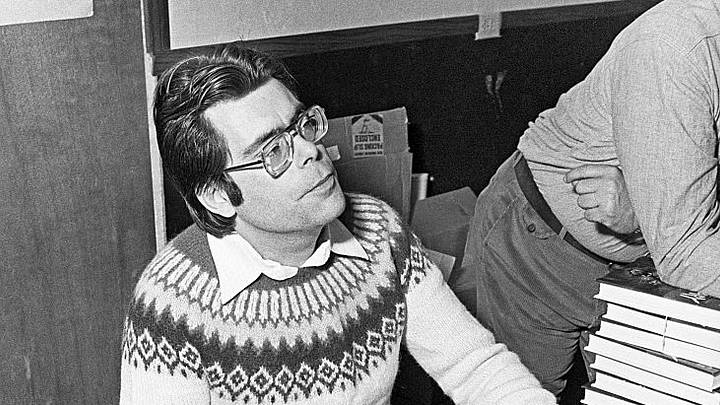
King unfortunately didn’t elaborate too much on why he dislikes the movie so much. He shared his opinions on it in a single, succinct post on X (then called Twitter). “What is the worst horror movie you ever saw? For me, BLOOD FEAST,” the writer wrote on the platform. The movie also has a 38% score on Rotten Tomatoes. King has, however, been a bit more open about the adaptations of his own work, revealing that he loves Stand By Me but dislikes the film version of The Shining.
Read More:
•
5 Stephen King Books You Can Read in a Weekend
•
Quiz: Can You Guess the Stephen King Book Based on a Synonym?
•
Stephen King’s 10 Favorite Movies of All Time Includes Only One Horror Film
•
Quiz: If You Can Name All 10 Stephen King Adaptations, You’re a True Horror Fan
•
Quiz: Can You Get a Perfect Score on This Stephen King Trivia?
Home/MOVIES