ByJennifer M Wood|Nov 24, 2018, 5:00 AM EST
 Add us as a preferred source

While the rest of America was slipping into a turkey coma on Thanksgiving Day in 1988, Minneapolis area residents lucky enough to get clear reception of local UHF channel KTMA were getting the first taste of what would soon become a Turkey Day tradition: Mystery Science Theater 3000, the classic cult television show which made a sport out of mocking schlocky movies of the past. The premise was simple: two mad scientists, Dr. Clayton Forrester and Dr. Laurence Erhardt, launch a janitor (local comedian Joel Hodgson, as Joel Robinson) into space to study the effect bad movies have on the human mind in order to determine the single film that can help them in their efforts toward world domination.
But as it turns out, human beings can withstand a whole lot of bad acting, sloppy pacing, and ridiculous dialogue. Rather than drive them to the brink of insanity, Joel and the robot friends he built while orbiting Earth—Tom Servo, Crow T. Robot, Gypsy, and Cambot—found a certain amount of pleasure in having to endure these B-movies, spending the bulk of the show offering their own bitingly funny analyses of the on-screen happenings. It didn’t take long for audiences to catch on, or for MST3K to migrate to a national stage. As we celebrate the long-running series’ 30th anniversary, here are 15 things you might not have known about Mystery Science Theater 3000.
1. MYSTERY SCIENCE THEATER 3000 WAS BORN FROM FINANCIAL RESTRAINTS.
After trying his luck on the grander Hollywood stage for a few years, comedian Joel Hodgson moved back to Minneapolis with the idea of launching his own television show. There was just one problem: he had no budget. “Basically, Mystery Science Theater came from me saying, ‘What’s the cheapest possible show I could create that would still be novel and bring something new, [and] kind of have a new angle of doing something funny?’” Hodgson told Flavorwire of the show’s origins. “It all just came together, basically, at that point when I realized it could be like hosting a movie show, and if I utilized the silhouette thing, the characters will kind of run not only through the host segments, but through the entire movie, and they’ll be, like, companions.”
2. THE “3000” IN THE TITLE WAS MEANT TO BE CONFOUNDING.
“The 3000 was a joke on all the people that were attaching the year 2000 to various programs,” Hodgson said in a 2011 interview with Art of the Title. “In the late ’80s it was everywhere: ‘America 2000’ was something that George Bush Sr. was talking about a lot so I thought, ‘Wouldn’t it be cool if I name it 3000 just to confound people?’ But there was a lot of confusion about it. I never meant for the show to take place in the year 3000. That simply makes no sense! If it is the year 3000, then why are all the films and the references about the end of the 20th century? For the concept of the show, it’s just a series number like Galaxie 500 or HAL 9000. Fords aren’t from the year 500 and the HAL wasn’t from the year 9000. In hindsight, I think it’s likely that the Mads were trying to snazz up the name of the show by tacking on the 3000.”
3. IN ORDER TO GAUGE THE AUDIENCE’S REACTION, THE PRODUCERS SET UP A PHONE LINE.
Even after its initial debut, the creators of MST3K had no idea whether the show had connected with audiences. So writer-producer Jim Mallon (who voiced Gypsy) suggested they set up a viewer hotline and run the number during the next airing. “When we checked the answering machine on Monday, it was full,” Hodgson told Flavorwire. “So people just reacted to it.” This led Hodgson and company to set up a local fan club for the show, which quickly acquired 1000 members.
4. MST3K’S (FIRST) CANCELLATION WAS ALSO BORN FROM FINANCIAL RESTRAINTS.
As MST3K’s popularity was rising, the fortunes of its broadcaster—KTMA—were moving in the opposite direction, which led to the show’s (first) cancellation in May of 1989. As a thank you to the many local fans who had tuned in religiously, the cast put on a live version of the show at the Comedy Gallery, which attracted an audience of more than 600.
As MST3K neared the end of its run on KTMA, the producers put together a short “best of” reel in order to pitch it to other networks. The show caught the attention of executives at The Comedy Channel, a brand-new, 24-hour comedy network owned by HBO, which premiered on November 15, 1989. Three days later, Mystery Science Theater 3000 made its national debut as one of the channel’s anchor programs.
5. AS PART OF THE COMEDY CHANNEL DEAL, HODGSON AND MALLON INSISTED ON KEEPING ITS PRODUCTION IN MINNEAPOLIS.
While the bulk of The Comedy Channel’s programming was produced on site in New York City, the channel agreed to let Hodgson and Mallon continue shooting in Minneapolis. They did, however, spruce up the look of the show with new sets, revamped robots, and a new opening title sequence.
6. THE BIGGEST CHANGE TO THE MST3K FORMULA WAS IN TURNING TO A SCRIPTED FORMAT.

The early episodes of MST3K were ad-libbed, but in 1989, Hodgson decided that the show should take a turn for the scripted. As part of this change, Hodgson hired writer (and future host) Michael J. Nelson. “I hired Mike based on his act at an open mic and a recommendation from Josh [Weinstein],” Hodgson told Mental Floss. “Also writing the episodes was my call.”
7. IN 1991, MST3K BEGAN A NEW THANKSGIVING DAY TRADITION.
MST3K became Comedy Central’s signature series, with executives nearly doubling its run from 13 to 24 episodes per year in 1991. On Thanksgiving of the same year it launched what would become an annual event: a 30-hour MST3K marathon that came to be known as “Turkey Day,” featuring back-to-back episodes plus behind-the-scenes spots and interviews. In the four years it ran, several of the stars of the films the series mocked—including Adam West (star of Zombie Nightmare), Robert Vaughn (of Teenage Cave Man), and Mamie van Doren (of Untamed Youth and Girls Town)—hosted “Turkey Day.” In honor of the show’s 25th anniversary, Hodgson brought back “Turkey Day” in 2013. For the past few years, the marathon has streamed online via Shout! Factory.
8. JOEL’S DEPARTURE IN 1993 WAS THE RESULT OF CREATIVE DIFFERENCES.
After sitting through his final test of cinematic endurance (Mitchell, starring Joe Don Baker—a skewering that led Baker to claim that if he ever met anyone from the show he would “kick their asses”), Joel managed to escape the Satellite of Love with the help of an office temp, Mike Nelson, who the Mads then captured in place of Joel. In a 1999 interview with The A.V. Club, Hodgson admitted that his decision to leave the show was because of disagreements with Jim Mallon.
“You can’t really be fighting with someone and doing all the stuff you have to do,” Hodgson said. “I think what made the show work for me was that I really loved it. I really liked the audience, and the whole process was … I was really happy doing it, and I realized that I’d turn into Jerry Lewis or something if I started to kind of hate it. And that was starting to happen, just because of these conflicts I was having internally with Jim … The thing would have blown up if we both would have stayed there. I like to look at it like the story of King Solomon, when the baby was brought before him.”
9. WHEN COMEDY CENTRAL CANCELED MST3K IN 1996, FANS (A.K.A. MSTIES) TOOK IT UPON THEMSELVES TO RESURRECT THE SERIES.
Viewers put pen to paper and began a massive letter-writing campaign to save the series. The fan outburst didn’t change Comedy Central’s mind, but executives at the Sci-Fi Channel (now Syfy) understood their plight. And so on February 1, 1997, MST3K began its eighth season on its third network. The episode introduced audiences to Professor Bobo, an ape from the year 2525.
In 1999, Mystery Science Theater 3000 was canceled again, and fans once again launched a campaign to see the show resurrected, with Entertainment Weekly reporting that “efforts to save the show include more than a dozen ‘Save MST3K’ websites, a letter-writing push, and a pledge drive for ‘Save MST3K’ print ads.” The campaign led to a full-page ad in Daily Variety, but Sci-Fi Channel decision-makers remained unmoved, with then-VP of programming Bonnie Hammer citing low ratings coupled with the rising costs of securing film rights (for movies to be ridiculed by the cast) as the problem. Sensing the end was truly near, Nelson admitted: “I’m hoping to find a rich guy to just keep me in his living room and heckle live.”
10. KURT VONNEGUT, JR. WASN’T A FAN.
In 1996, Jim Mallon and writers Trace Beaulieu and Kevin Murphy released the ultimate fan guide, Mystery Science Theater 3000: The Amazing Colossal Episode Guide. In it, Murphy shares the story about meeting his literary hero, Kurt Vonnegut, Jr., and telling him about the show and its premise. Vonnegut was not impressed, telling Murphy that every artist deserves respect, even those who produce a bad movie. Still, Murphy couldn’t resist the opportunity to invite Vonnegut out to dinner, which the author politely declined, stating he had other plans. At dinner that night, Murphy and Vonnegut ended up dining at the same restaurant—except Vonnegut was alone, prompting Murphy to admit that he had been “faced … but nicely faced.”
11. FRANK ZAPPA WAS A FAN.
Frank Zappa was an admitted monster movie fanatic, and wasn’t shy about his love of Mystery Science Theater 3000 during its run. A 1997 article in Total TV Online noted: “MST3K … made the late Frank Zappa an instant convert when he channel surfed into ‘this guy wearing a clown nose and a beanie copter roasting a puppet over an open fire.’ The clown was now-departed (and much beloved) Founding Father Joel Hodgson; the roasted puppet was plucky Tom Servo; and Zappa was equally bemused by the cinematic turkeys being roasted for the main course. ‘He just loved crummy old science fiction movies,’ says writer and voice of Servo Kevin Murphy, who thought ‘Frank Zappa on line one’ was a joke until he picked up the phone.” The show’s producers and Zappa had even discussed plans to collaborate on a giant spider movie; episode 523 was dedicated to Zappa following his passing.
12. A HUMAN-LESS MST3K WEB SERIES DEBUTED IN 2007.
On November 5, 2007, Mallon debuted an animated Web series, The Bots Are Back!, which followed Tom Servo, Crow and Gypsy’s adventures in space. Fan response was not positive, and only four episodes were ever released.
13. THE WORLD HAS MST3K TO THANK FOR HOBGOBLINS 2.
While not every filmmaker whose worked featured on the series was happy about the development, Hobgoblins director Rick Sloane came to see the positive side of the skewering. “I met Mary Jo Pehl a number of years later and she said I was the only director who ever liked the MST3K treatment of their own film,” Sloane told Esquire. “They improved the film dramatically. It was barely watchable in its original version. While I enjoyed every joke that was at an actor’s expense, I was seriously horrified when they did the fake interview with me over the end credits. It’s become a fan-favorite joke and is constantly quoted on the Internet.” But there was an upside to the notoriety: Hobgoblins became so widely known, that it led to the opportunity for a sequel. “I admitted from day one that Hobgoblins 2 was only possible because of the success of MST3K‘s revival of the original,” said Sloane. “I submitted Hobgoblins 2 to both Cinematic Titanic and Rifftrax, but they both thought it was too easy of a target.”
14. THE SHOW’S TITLE SPAWNED A VERB.
“MSTing” is a practice that exists in the fan fiction universe, typically written in a transcript format, in which the characters of one piece of fic (or MST3K’s own characters) commentate another piece of fic. The process is also referred to as sporking.
15. THE RIFFING LIVES ON.
When new episodes of Mystery Science Theater 3000 stopped being produced, the original cast kept riffing. In 2006, Mike Nelson, Kevin Murphy, and Bill Corbett introduced a Web series called RiffTrax, which allows customers to download commentary tracks to sync with a movie. Throughout the year, the group also presents several RiffTrax Live performances at cinemas around the country. In 2007, Joel Hodgson, Trace Beaulieu, Josh Weinstein, Frank Conniff, and Mary Jo Pehl launched Cinematic Titanic, offering a selection of riffed DVDs and a series of live events.https://www.youtube.com/embed/5ct0Z2bQndM?feature=oembed
In 2017, a new generation of fans were introduced to Mystery Science Theater 3000 when—after a successful Kickstarter campaign to bring the series back—Netflix debuted Mystery Science Theater 3000: The Return, with Jonah Ray hosting. The second season just dropped on Netflix.
An earlier version of this post originally appeared in 2013.
The Real-Life Serial Killer That Might’ve Inspired Dexter’s Dark Passenger
Brazil’s most notorious killer of killers has been called the real Dexter for years, but ‘Dexter’s’ creator tells a different origin story.
ByMatt Hoffman|Oct 30, 2026, 9:00 PM EDT
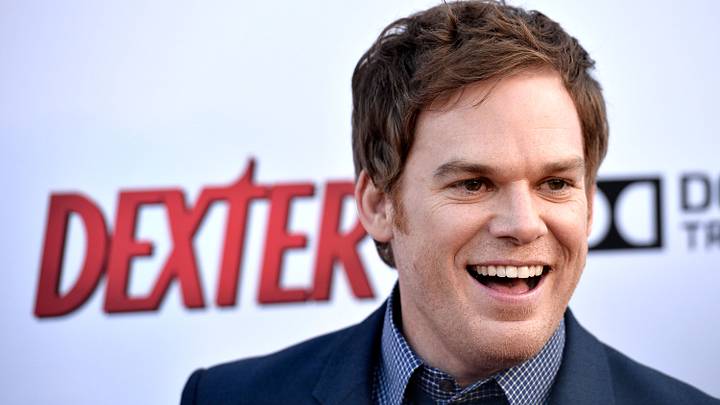
Back in July 2004, Jeff Lindsay introduced readers to Dexter Morgan, a Miami police blood-spatter analyst who kills only people who deserve it, egged on by a voice in his head he calls the “Dark Passenger.” Two years later, Showtime turned Darkly Dreaming Dexter into a hit series with Michael C. Hall.
Somewhere along the way, the internet decided Dexter had a real-life model: Pedro Rodrigues Filho, a Brazilian who claimed to have killed more than 100 people, most of them criminals. Entertainment sites now call him “the Brazilian Dexter,” and ScreenRant describes the show as loosely based on his crimes. No quote from Lindsay or the show’s producers backs that up, but the similarities are hard to miss.
The Boy Who Settled Scores
Filho was born in 1954 on a farm in Santa Rita do Sapucaí, in the Brazilian state of Minas Gerais, with an injured skull: his father, he said, had kicked his pregnant mother during a fight. He told the magazine Época in 2003 that he first wanted to kill at 13, when he shoved an older cousin into a sugarcane press. A year later, after his father lost his job as a school guard over accusations that he was stealing school lunches, Filho shot the official who had fired him, then shot the guard he believed was the real thief. (Accounts disagree on who that first victim was: some Brazilian outlets say the mayor of his hometown, others the deputy mayor of Alfenas, also in Minas Gerais.)
He fled to Mogi das Cruzes, outside São Paulo, where he robbed drug dens, killed traffickers, and took over a dead drug boss’s business. When his pregnant girlfriend was shot dead, he went looking for the man who ordered it and, with four friends, hit a wedding party, leaving seven dead and 16 wounded, according to Época. He was arrested shortly after turning 18 and entered prison on May 24, 1973; in the van on the way there, he killed a fellow prisoner he said was a rapist.
Where the Comparison Holds
Like Dexter, Filho had a code, or said he did. He told Época he killed only people who were no good, and that he never killed children, women, or family men. He also had a father story to rival Harry Morgan’s, though a much darker one: Filho claimed he killed his own father in prison, in revenge for his mother’s stabbing, and chewed a piece of his heart. (Época noted that he gave a psychiatrist a completely different account of how his father died.)
The resemblance mostly ends there. Dexter’s code, as Mental Floss has laid out before, includes “don’t get caught,” and Filho spent roughly four decades behind bars, much of it bragging. He had “Mato por prazer” (“I kill for pleasure”) tattooed on his left arm. He claimed 47 victims inside prison alone, though Época found just 18 charges against him on file in 2003; by his death, Brazilian outlets counted 71 homicides on his record.
What Dexter’s Creator Actually Said
Lindsay has told his origin story many times, and it starts nowhere near Brazil: at a Kiwanis Club lunch where he sat at the head table waiting to speak and, as he told BookPage in 2005, “the idea just popped into my head that sometimes serial murder isn’t a bad thing.” He then built the character out of research: he collected books on sociopaths and murderers, interviewed psychologists and crime scene investigators, and got cop friends to turn him loose in their dead-files room. He also rejects the very label that made Filho famous: “Dexter’s not a vigilante,” he told Middlebury Magazine in 2011. “Vigilantes are trying to perform an act of justice. Dexter just likes to kill people.”
The Ending Dexter Survived
Filho walked out of prison in 2007, went back in 2011 for crimes committed during his sentence, and was released for good in 2018. Within months, he had reinvented himself as a YouTube personality who commented on crimes in the news and lectured about his past. On the morning of March 5, 2023, he was on a sidewalk in Mogi das Cruzes holding a small child when men in a black car opened fire, according to the news site G1. The child was unhurt, but according to the police report, one of the attackers stabbed Filho in the throat as he lay on the ground. He was 68.
Read More:
manual.