ByEscher Walcott|Feb 17, 2021, 5:00 AM EST
 Add us as a preferred source

Amazon’s anthology series Modern Love became a critical hit upon its release in the fall of 2019 and continues to be discovered and enjoyed by new viewers, as they await its second season. Based on the popular The New York Times column of the same name, the series tells tales of love in various forms through the depiction of contemporary, and sometimes unconventional, relationships.
Each standalone episode presents a unique story full of layered characters played expertly by some of today’s most accomplished actors, including Oscar winner Anne Hathaway, Academy Award nominees Dev Patel and Catherine Keener, two-time Golden Globe winner Tina Fey, and Golden Globe nominee Andrew Scott. Here are some facts about the series’ literary origins and its acclaimed first season.
1. The New York Times column upon which Modern Love is based on has been running since 2004.

The New York Times‘s “Modern Love” column came about after husband and wife writers Daniel Jones and Cathi Hanauer each wrote their own books about the challenges of balancing life, work, and family obligations. Hanauer’s book, The Bitch in the House: 26 Women Tell the Truth About Sex, Solitude, Work, Motherhood, and Marriage, was published in 2002; in 2004, Jones wrote a companion title: The Bastard on the Couch: 27 Men Try Really Hard to Explain Their Feelings About Love, Loss, Fatherhood, and Freedom.
After The New York Times wrote a story about the couple, they received a call from Trip Gabriel, one of the paper’s editors, asking if they’d be interested in working on a new column that would allow others to share their own unique “love” stories. Together, they commissioned and edited the first batch of “Modern Love” essays. However, due to her novel writing obligations, Hanauer could not commit to the project full-time, so Jones became the column’s main editor, and still works in that capacity today.
2. The “Modern Love” column receives more than 9000 submissions each year.
As the popularity of the column grew, so too did the number of submissions. Stories can be submitted as either longform essays (running about 1500 words) or as a shortform “Tiny Love Story” (which runs approximately 100 words), and all recollections must be completely true with no fictional characters or names. (You can read more about how to sumit your own “Modern Love” story here.)
Jones curates a selection of essays from the thousands he receives and looks for a mix of unique and impactful stories. “The essays that stick with me are the ones that are instructive about relationships in ways I haven’t heard before,” Jones told Oprah Magazine in 2019. “Finding a new voice and a new perspective is always energizing and fun.”
3. The “Modern Love” column has led to a number of book deals for its writers.
Getting published in the “Modern Love” section of The New York Times has been a springboard for many writers. Jones estimates that the column has led to approximately 50 to 60 book deals. “One of the reasons the column has a large readership in the publishing world is because we showcase the work of so many unknown writers who are telling their most important story,” Jones Jtold Literary Hub in 2019.
Significant books that were born out of “Modern Love” essays include The Thirteenth Horse Won by Ellen Graf, about marrying a stranger, and The Slippery Year: A Meditation on Happily Ever After by Melanie Gideon, about a woman rediscovering life at the age of 43.
4. Amazon’s Modern Love anthology series is based on real “Modern Love” essays.
Running at approximately 30 minutes per episode, each episode of Modern Love is a standalone story based on an essay published in the “Modern Love” column, though some of the details have been altered. Series creator John Carney—the writer/director behind Once and Sing Street—had the challenging task of selecting which of the column’s many essays would be ripe for filming, which meant that they needed to be able to live off the page and resonate with viewers.
5. The original essay writers were not involved in adapting their stories for a very good reason.
Although the writers of the original essays were compensated for the use of their work and allowed to give approval of the final episodes before airing, they were not involved in the actual adaptation process—and for a very sensible reason. In a conversation with The Hollywood Reporter, Carney explained that while he wanted the writers’ final approval on the finished episode, he didn’t want them involved in the creative process so that the series did not “get bogged down in memoir or biography.”
6. Modern Love star Catherine Keener may have broken the rule when it came to keeping the original essay writers uninvolved in production.

While Carney preferred to keep the original writers separate from the production process, Catherine Keener—who starred opposite in Dev Patel in “When Cupid Is a Prying Journalist,” one of the series’ most critically acclaimed installments (it earned Patel an Emmy nomination for Outstanding Guest Actor in a Comedy Series)—couldn’t help but break that rule in order to give the most authentic performance she could. Deborah Copaken, who wrote the essay the episode is based on but wasn’t even allowed to read the script, told Salon about how she met with Keener ahead of filming.
“Catherine Keener sent me an email, using her secret email address, saying, ‘I’m playing you, but I’m not allowed to tell you this, and I’m not allowed to meet with you. But how am I going to play you if I have never met you? Can you please meet for lunch?'” Copaken explained. “So, we sort of secretly met. I told Dan Jones afterwards, ‘Hey, I met with Catherine Keener.’ He told me, ‘Wait, you’re not supposed to.’ I was like, ‘Well, we did.’ We ended up meeting for lunch at Odeon for four hours. We just sat there and chatted and chatted and chatted. And like moms with kids at the same college, we talked about that. It wasn’t necessarily talking about the story itself. We were just talking about who we were in our lives.”
7. New York City is its own character on Modern Love.
Each episode of Modern Love was filmed in New York City, providing the focal backdrop to each love story. This was done in homage to The New York Times column and the essayists featured who reside in the city. Much like the human characters portrayed on the show, who are tied to each other through love and other feelings, New York City and the people and places that make it so vibrant are also part of each story.
8. One episode of Modern Love handles mental illness in a uniquely creative and sensitive way.
“Take Me as I Am, Whoever I Am,” the third episode in the first season of Modern Love, depicts what life is like being bipolar and the effect this has on one’s personal relationships. The episode—which is shown through the lens of a character named Lexi, played by Anne Hathaway, as she grapples with the disorder—received particular praise for its heartbreaking, personal approach to showcasing mental illness yet managing to finish the episode with a surprisingly uplifting ending.
9. Modern Love isn’t afraid to tackle controversial issues.
The most controversial episode of Modern Love‘s first season is undoubtedly “So He Looked Like Dad, It Was Just Dinner, Right?” The episode stars Ozark‘s Julia Garner as Maddy, a young woman enthralled by her much older colleague Peter, played by Boardwalk Empire‘s Shea Wigham. Maddy confuses her feelings for him as romantic when, really, she is simply yearning for a father figure in her life—giving way to the age-old “Daddy Issues” complex. As a result, the episode is filled with awkward and disturbing exchanges between the pair that border on inappropriate as themes of parental replacement are explored.
10. While waiting for a second season, there’s also a Modern Love podcast you can enjoy.
In addition to books and a TV show, the “Modern Love” column launched a podcast in 2016 which can be enjoyed while waiting for the show’s second season (which has already been confirmed). The podcast is narrated by an impressive host of actors, including Jake Gyllenhaal, Issa Rae, and Brian Cox. Even so, Jones was initially surprised by the impact this medium has in retelling these stories. “It’s just a much more direct and sort of intimate experience,” he told Oprah Magazine. “And that has proved to be true with the television show too.”
The Real-Life Serial Killer That Might’ve Inspired ‘Dexter’s Dark Passenger
Brazil’s most notorious killer of killers has been called the real Dexter for years, but ‘Dexter’s’ creator tells a different origin story.
ByMatt Hoffman|Oct 30, 2026, 9:00 PM EDT
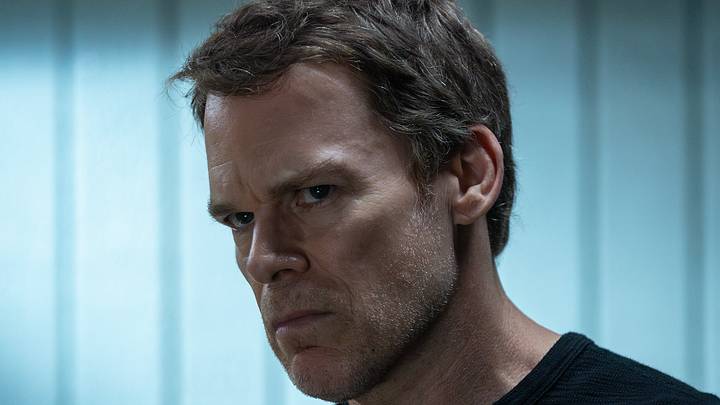
Back in July 2004, Jeff Lindsay introduced readers to Dexter Morgan, a Miami police blood-spatter analyst who kills only people who deserve it, egged on by a voice in his head he calls the “Dark Passenger.” Two years later, Showtime turned Darkly Dreaming Dexter into a hit series with Michael C. Hall.
Somewhere along the way, the internet decided Dexter had a real-life model: Pedro Rodrigues Filho, a Brazilian who claimed to have killed more than 100 people, most of them criminals. Entertainment sites now call him “the Brazilian Dexter,” and ScreenRant describes the show as loosely based on his crimes. No quote from Lindsay or the show’s producers backs that up, but the similarities are hard to miss.
The Boy Who Settled Scores
Filho was born in 1954 on a farm in Santa Rita do Sapucaí, in the Brazilian state of Minas Gerais, with an injured skull: his father, he said, had kicked his pregnant mother during a fight. He told the magazine Época in 2003 that he first wanted to kill at 13, when he shoved an older cousin into a sugarcane press. A year later, after his father lost his job as a school guard over accusations that he was stealing school lunches, Filho shot the official who had fired him, then shot the guard he believed was the real thief. (Accounts disagree on who that first victim was: some Brazilian outlets say the mayor of his hometown, others the deputy mayor of Alfenas, also in Minas Gerais.)
He fled to Mogi das Cruzes, outside São Paulo, where he robbed drug dens, killed traffickers, and took over a dead drug boss’s business. When his pregnant girlfriend was shot dead, he went looking for the man who ordered it and, with four friends, hit a wedding party, leaving seven dead and 16 wounded, according to Época. He was arrested shortly after turning 18 and entered prison on May 24, 1973; in the van on the way there, he killed a fellow prisoner he said was a rapist.
Where the Comparison Holds
Like Dexter, Filho had a code, or said he did. He told Época he killed only people who were no good, and that he never killed children, women, or family men. He also had a father story to rival Harry Morgan’s, though a much darker one: Filho claimed he killed his own father in prison, in revenge for his mother’s stabbing, and chewed a piece of his heart. (Época noted that he gave a psychiatrist a completely different account of how his father died.)
The resemblance mostly ends there. Dexter’s code, as Mental Floss has laid out before, includes “don’t get caught,” and Filho spent roughly four decades behind bars, much of it bragging. He had “Mato por prazer” (“I kill for pleasure”) tattooed on his left arm. He claimed 47 victims inside prison alone, though Época found just 18 charges against him on file in 2003; by his death, Brazilian outlets counted 71 homicides on his record.
What Dexter’s Creator Actually Said
Lindsay has told his origin story many times, and it starts nowhere near Brazil: at a Kiwanis Club lunch where he sat at the head table waiting to speak and, as he told BookPage in 2005, “the idea just popped into my head that sometimes serial murder isn’t a bad thing.” He then built the character out of research: he collected books on sociopaths and murderers, interviewed psychologists and crime scene investigators, and got cop friends to turn him loose in their dead-files room. He also rejects the very label that made Filho famous: “Dexter’s not a vigilante,” he told Middlebury Magazine in 2011. “Vigilantes are trying to perform an act of justice. Dexter just likes to kill people.”
The Ending Dexter Survived
Filho walked out of prison in 2007, went back in 2011 for crimes committed during his sentence, and was released for good in 2018. Within months, he had reinvented himself as a YouTube personality who commented on crimes in the news and lectured about his past. On the morning of March 5, 2023, he was on a sidewalk in Mogi das Cruzes holding a small child when men in a black car opened fire, according to the news site G1. The child was unhurt, but according to the police report, one of the attackers stabbed Filho in the throat as he lay on the ground. He was 68.
Read More:
Why Do We Associate Ravens With Death?
“Quoth the Raven, ‘Nevermore!'”
ByChelsea Thatcher|Oct 31, 2026, 10:00 AM EDT

Ravens are incredibly intelligent birds able to mimic human speech, remember faces, and even hold grudges against those who’ve wronged them. And while they have been a symbol of wisdom and prophecy in different cultures, they’re most often thought of in relation to grief and death. But why?
In several mythologies from around the world, the raven is associated with death. Does that mean these birds are actually ill omens, or that there’s some truth to the folklore? How did so many different civilizations all come to believe similar things about the raven? It honestly has a lot to do with their main source of food.
Carrion Birds
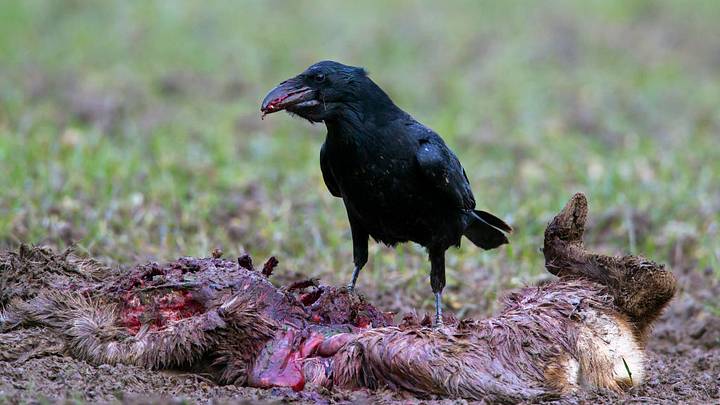
Ravens, along with crows, rooks, and magpies, are carrion birds. They are scavengers, eating the decaying flesh of dead bodies. Today, they commonly find their meals in roadkill and other dead animals, but in the past, they learned that there were absolute feasts on the world’s battlefields.
In war, there were many times that the number of dead was too great to bury all of them. Ancient peoples saw ravens flitting among the bodies of the slain at almost every battlefield, and the connection became ingrained in the collective conscience. Superstition then bled into the narrative, and people saw ravens as omens of death rather than the clean-up crew afterwards.
Ravens in Myth and Religion
Ravens appear in ancient myths and religious texts as symbols of fate and death. In several different cultures, ravens act as messengers between the worlds of the living and the dead. They might even work as Grim Reapers, collecting and transporting souls to the underworld. Swedish mythology claims that ravens are the souls of murder victims who didn’t receive a proper burial, and Germanic lore says they are the souls of the damned.
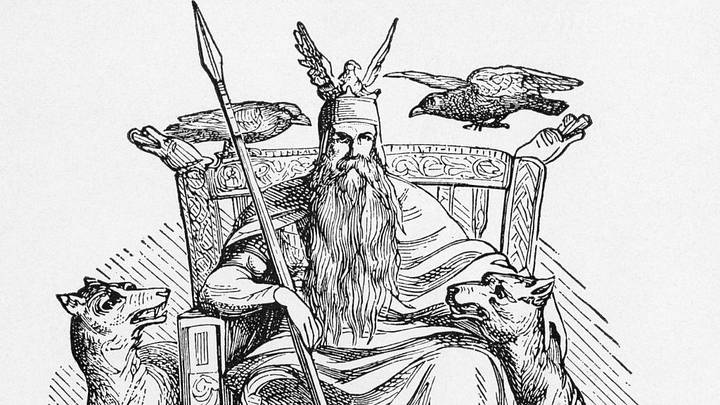
In Norse mythology, Odin, the god of war and death, had two ravens, Huginn (thought) and Muninn (memory), who acted as his eyes and ears in battle. The Norse people believed that if a raven appeared on the battlefield with them, it meant that Odin was watching. In Celtic lore, ravens were also linked to the Mórrígan, goddess of death, war, and fate.
The Bible and the Quran also feature ravens in stories that deal with death. In the biblical tale of the Flood, Noah first releases a raven to see if the waters still cover the land. The raven never returns, presumably because it has found food in the number of wicked flood victims. And in the Quran, a raven is the one to teach Cain how to bury his murdered brother’s body.
Poe’s “The Raven”
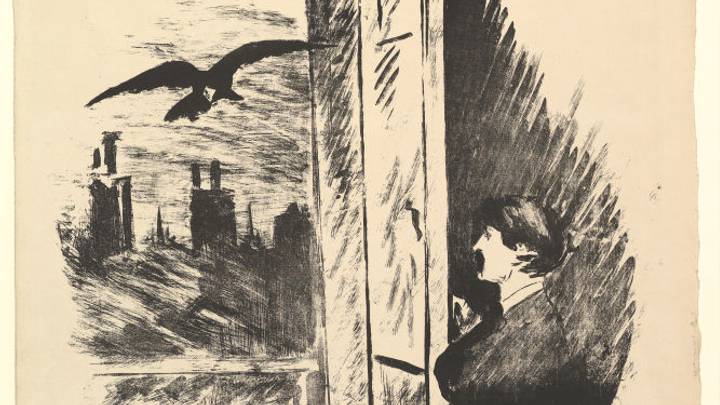
While ravens had been connected with death for centuries, it wasn’t until Edgar Allan Poe popularized the bird in his Gothic poem that they became symbols of horror and misery as well. Poe published “The Raven” in January of 1845, telling the sad tale of a man haunted by the loss of his love and the beginnings of madness. He wants to know if he will ever see his love again, or if the pain of loss will ever subside, and the raven drowns him in despair when it cries out: “Nevermore!”
Ravens were no longer mere omens of death, but an integral part of the horror genre. Alfred Hitchcock would later capitalize on this connection in his 1963 horror film, The Birds. If you weren’t scared of ravens and their association with death before, you were certainly wary of them after that film. And it’s probably a good idea to remain wary of ravens, or at least remember to treat them kindly. Otherwise, they may work together to cause you misery as vengeance.