ByJay Serafino|Aug 9, 2017, 6:00 AM EDT
 Add us as a preferred source

For nearly 10 years, TV viewers got to experience a journey aboard a cruise ship nearly every Saturday night as The Love Boat brought the misadventures and romantic escapades of the luxury liner life right into their living rooms. With a roster of memorable characters like Captain Stubing (Gavin MacLeod), “Doc” Bricker (Bernie Kopell), Burl “Gopher” Smith (Fred Grandy), Julie McCoy (Lauren Tewes), and the finger-gun flailing Isaac (Ted Lange), the series was an immediate hit, lasting from 1977 until the spring of 1986. Here are 10 facts you need to know about TV’s The Love Boat.
1. THE LOVE BOAT FOLLOWS THE LOVE, AMERICAN STYLE ANTHOLOGY FORMULA.
The Love Boat was unique for television at the time in that it was centered around multiple vignettes every week, chronicling the comedic (and romantic) misadventures of an ever-changing group of passengers and the stalwart crew of the ship.
The separate storylines would all have different writers and weave in and out throughout the episode. It wasn’t a typical sitcom, nor was it sketch comedy; it was a style that executive producer Aaron Spelling directly modeled after ABC’s earlier comic hit Love, American Style.
Aimed at an older audience—with an eye on comic hijinks dripping with sexual tension—The Love Boat found an audience instantly, debuting at number 14 on the Nielsen charts and staying strong until the finale.
2. THE SHOW WAS BASED ON A TELL-ALL BOOK BY A REAL CRUISE DIRECTOR.
There’s more reality to The Love Boat than most people would assume. The show was actually based on a book titled Love Boats by Jeraldine Saunders, the first female to become cruise director for Princess Cruises. The 1974 book is a tell-all, revealing anecdotes from Saunders’s decade-long career (at that point) as a cruise director and the various run-ins she had with colorful passengers, crew members, and exotic destinations.
3. IT WAS TURNED INTO THREE TV MOVIES FIRST.
Before The Love Boat became a weekly television show, ABC tested the waters with three made-for-TV movies acting as pilots: The Love Boat (1976), The Love Boat II (1977), and The New Love Boat (1977). The Love Boat II saw the eventual TV cast appear in early versions of their famous roles, including Bernie Kopell, Ted Lange, and Fred Grandy. And The New Love Boat was basically a pilot for what the finalized series was going to be.
After three TV movies and an overhaul of the cast, The Love Boat was ready to officially set sail on September 24, 1977.
4. ROBERT REED AND FLORENCE HENDERSON GUEST STARRED (BUT NOT AS MIKE AND CAROL BRADY).
The Love Boat was a destination for countless celebrity guest stars over the years. Each week, stars from both the big and small screens would make appearances, including Betty White, Joan Collins, Alan Thicke, Gene Kelly, Hulk Hogan, Jeffery Tambor, and Janet Leigh.
The Iron Woman of Love Boat guest stars was none other than Florence Henderson, who boarded the Pacific Princess a staggering nine times, playing various characters. During one of her guest-stints, the boat was also boarded by Robert Reed, who obviously played Mr. Brady on The Brady Bunch. Though the two were in separate vignettes and weren’t playing their former married selves, the show did acknowledge their sitcom past as Henderson briefly sees Reed’s character and the two share a knowing glance.
5. CHARLIE’S ANGELS WERE ONCE ONBOARD FOR A CROSSOVER.
In addition to The Love Boat, Spelling had another project on ABC, Charlie’s Angels, which preceded Love Boat by one year in 1976. So it was only natural to meld the two series—which have as little in common as humanly possible—for a 1979 crossover.
In the two-part episode “Love Boat Angels,” the Angels board the Pacific Princess in order to retrieve stolen pieces of art on a voyage to the Virgin Islands. Though the episode was about the Angels doing their Angel-y thing, The Love Boat favorites like Captain Stubing, Isaac, “Doc” Bricker, and Julie McCoy all made appearances.
6. ONLY THREE ACTORS APPEARED IN EVERY EPISODE OF THE SHOW.
During The Love Boat’s nine years on the air, plenty of the ship’s crew came and went, but three actors were onboard for the series’ entire 250-episode run: Gavin MacLeod, Bernie Kopell, and Ted Lange. Fred Grandy came close, starring in 246 episodes across the entire length of the show. Lange, Kopell, and MacLeod also starred in the 1990 TV movie The Love Boat: A Valentine Voyage and made appearances on Love Boat: The Next Wave.
7. THE SHOW WAS FILMED ON REAL BOATS WITH ACTUAL PASSENGERS.
To shoot The Love Boat you need a boat, right? To make the boat come alive, the production shot on two real cruise ships: The Pacific Princess and Island Princess. Real cruises were booked and actual passengers played extras during certain scenes that required a more authentic look. For the actual people on vacation, filming was just an added bonus, as extras would get a raffle ticket at the end of each day they filmed. The cruises known to double as shooting locales would always sell out.
Filming aboard an actual ship wasn’t the norm, though. Like any sitcom, The Love Boat was mostly shot on soundstages that could create the look of a cabin, dining area, or a ship’s hallways.
8. DIONNE WARWICK SANG THE THEME FOR THE FINAL SEASON.
The Love Boat’s iconic theme was written by Paul Williams—who had written for The Carpenters, David Bowie, and The Muppets—and Charles Fox, the man behind the music for the Wide World of Sports and the first theme for ABC’s Monday Night Football. And for the show’s first eight seasons, The Love Boat theme was performed by Jack Jones until season nine when hit singer Dionne Warwick took over.
Her version closed out the final season of the show, and a completely overhauled version would grace Love Boat: The Next Wave from the late ‘90s.
9. THE REAL LOVE BOAT BECAME A NOTORIOUS VESSEL FOR DRUG SMUGGLERS.
The life of an out-of-work Hollywood icon can be rough, and after The Love Boat went off the air, the Pacific Princess found itself mixed up in the seedy world of narcotics. In 1998, BBC reported that the liner had become “a major tool for smugglers bent on trafficking drugs around the Mediterranean,” and more than 50 pounds of heroin were found aboard in November of that year.
The ship was impounded in Greece during a cruise, stranding the 600 passengers there as the whole ordeal got sorted out.
10. THE PACIFIC PRINCESS WAS BROUGHT TO A SCRAP YARD IN 2013.
When The Love Boat ended, the Pacific Princess—eventually renamed the MS Princess—was still in operation as a functioning luxury liner. In addition to its previously known drug issues, the ship’s final years were spent in a state of constant repairs and unpaid debt. After going through numerous owners and financial maladies, the MS Princess was eventually sent to a Turkish scrap yard in 2013.
Before it went to scrap, the ship was already decommissioned, and getting it back into proper shape would have been senseless from a financial standpoint, according to Ersin Ceviker of the Ship Recyclers’ Association of Turkey. During its trip to the Aliaga port in Turkey, the ship began taking on water and required additional tugboats to bring it to its final destination.
The Real-Life Serial Killer That Might’ve Inspired ‘Dexter’s Dark Passenger
Brazil’s most notorious killer of killers has been called the real Dexter for years, but ‘Dexter’s’ creator tells a different origin story.
ByMatt Hoffman|Oct 30, 2026, 9:00 PM EDT
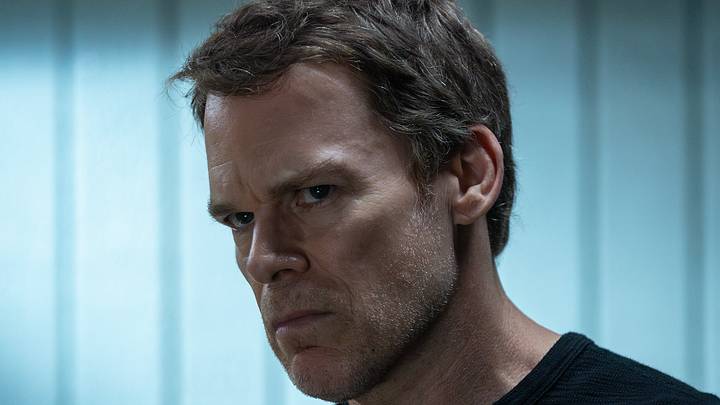
Back in July 2004, Jeff Lindsay introduced readers to Dexter Morgan, a Miami police blood-spatter analyst who kills only people who deserve it, egged on by a voice in his head he calls the “Dark Passenger.” Two years later, Showtime turned Darkly Dreaming Dexter into a hit series with Michael C. Hall.
Somewhere along the way, the internet decided Dexter had a real-life model: Pedro Rodrigues Filho, a Brazilian who claimed to have killed more than 100 people, most of them criminals. Entertainment sites now call him “the Brazilian Dexter,” and ScreenRant describes the show as loosely based on his crimes. No quote from Lindsay or the show’s producers backs that up, but the similarities are hard to miss.
The Boy Who Settled Scores
Filho was born in 1954 on a farm in Santa Rita do Sapucaí, in the Brazilian state of Minas Gerais, with an injured skull: his father, he said, had kicked his pregnant mother during a fight. He told the magazine Época in 2003 that he first wanted to kill at 13, when he shoved an older cousin into a sugarcane press. A year later, after his father lost his job as a school guard over accusations that he was stealing school lunches, Filho shot the official who had fired him, then shot the guard he believed was the real thief. (Accounts disagree on who that first victim was: some Brazilian outlets say the mayor of his hometown, others the deputy mayor of Alfenas, also in Minas Gerais.)
He fled to Mogi das Cruzes, outside São Paulo, where he robbed drug dens, killed traffickers, and took over a dead drug boss’s business. When his pregnant girlfriend was shot dead, he went looking for the man who ordered it and, with four friends, hit a wedding party, leaving seven dead and 16 wounded, according to Época. He was arrested shortly after turning 18 and entered prison on May 24, 1973; in the van on the way there, he killed a fellow prisoner he said was a rapist.
Where the Comparison Holds
Like Dexter, Filho had a code, or said he did. He told Época he killed only people who were no good, and that he never killed children, women, or family men. He also had a father story to rival Harry Morgan’s, though a much darker one: Filho claimed he killed his own father in prison, in revenge for his mother’s stabbing, and chewed a piece of his heart. (Época noted that he gave a psychiatrist a completely different account of how his father died.)
The resemblance mostly ends there. Dexter’s code, as Mental Floss has laid out before, includes “don’t get caught,” and Filho spent roughly four decades behind bars, much of it bragging. He had “Mato por prazer” (“I kill for pleasure”) tattooed on his left arm. He claimed 47 victims inside prison alone, though Época found just 18 charges against him on file in 2003; by his death, Brazilian outlets counted 71 homicides on his record.
What Dexter’s Creator Actually Said
Lindsay has told his origin story many times, and it starts nowhere near Brazil: at a Kiwanis Club lunch where he sat at the head table waiting to speak and, as he told BookPage in 2005, “the idea just popped into my head that sometimes serial murder isn’t a bad thing.” He then built the character out of research: he collected books on sociopaths and murderers, interviewed psychologists and crime scene investigators, and got cop friends to turn him loose in their dead-files room. He also rejects the very label that made Filho famous: “Dexter’s not a vigilante,” he told Middlebury Magazine in 2011. “Vigilantes are trying to perform an act of justice. Dexter just likes to kill people.”
The Ending Dexter Survived
Filho walked out of prison in 2007, went back in 2011 for crimes committed during his sentence, and was released for good in 2018. Within months, he had reinvented himself as a YouTube personality who commented on crimes in the news and lectured about his past. On the morning of March 5, 2023, he was on a sidewalk in Mogi das Cruzes holding a small child when men in a black car opened fire, according to the news site G1. The child was unhurt, but according to the police report, one of the attackers stabbed Filho in the throat as he lay on the ground. He was 68.
Read More:
•
•
Dexter: New Blood: 7 Things We Know
Why Do We Associate Ravens With Death?
“Quoth the Raven, ‘Nevermore!'”
ByChelsea Thatcher|Oct 31, 2026, 10:00 AM EDT
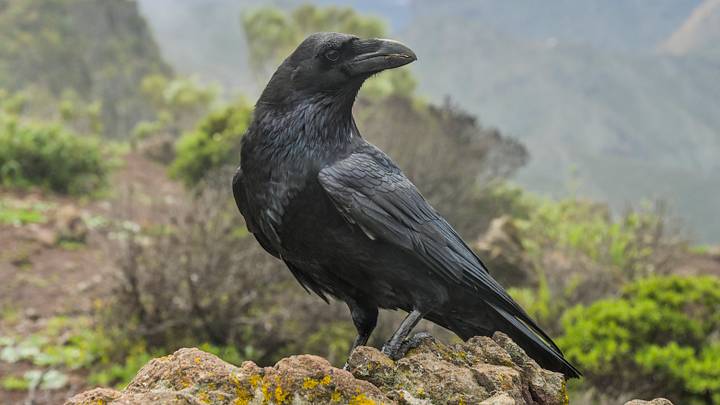
Ravens are incredibly intelligent birds able to mimic human speech, remember faces, and even hold grudges against those who’ve wronged them. And while they have been a symbol of wisdom and prophecy in different cultures, they’re most often thought of in relation to grief and death. But why?
In several mythologies from around the world, the raven is associated with death. Does that mean these birds are actually ill omens, or that there’s some truth to the folklore? How did so many different civilizations all come to believe similar things about the raven? It honestly has a lot to do with their main source of food.
Carrion Birds
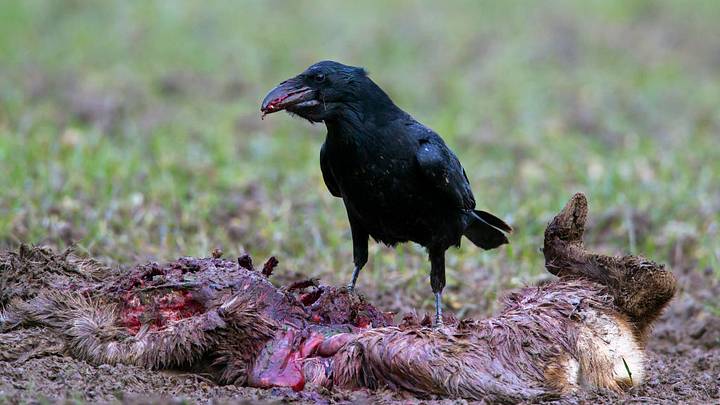
Ravens, along with crows, rooks, and magpies, are carrion birds. They are scavengers, eating the decaying flesh of dead bodies. Today, they commonly find their meals in roadkill and other dead animals, but in the past, they learned that there were absolute feasts on the world’s battlefields.
In war, there were many times that the number of dead was too great to bury all of them. Ancient peoples saw ravens flitting among the bodies of the slain at almost every battlefield, and the connection became ingrained in the collective conscience. Superstition then bled into the narrative, and people saw ravens as omens of death rather than the clean-up crew afterwards.
Ravens in Myth and Religion
Ravens appear in ancient myths and religious texts as symbols of fate and death. In several different cultures, ravens act as messengers between the worlds of the living and the dead. They might even work as Grim Reapers, collecting and transporting souls to the underworld. Swedish mythology claims that ravens are the souls of murder victims who didn’t receive a proper burial, and Germanic lore says they are the souls of the damned.
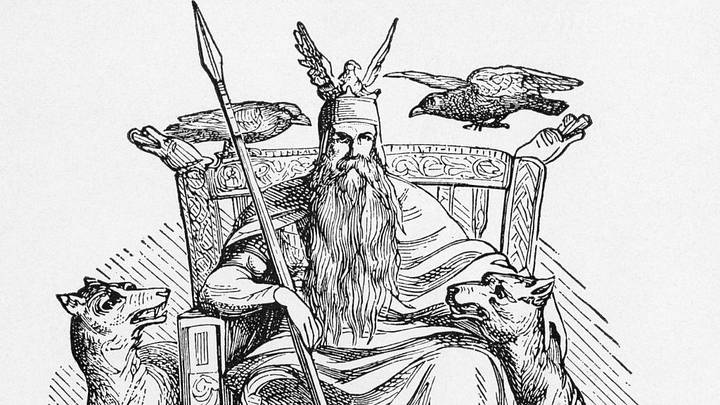
In Norse mythology, Odin, the god of war and death, had two ravens, Huginn (thought) and Muninn (memory), who acted as his eyes and ears in battle. The Norse people believed that if a raven appeared on the battlefield with them, it meant that Odin was watching. In Celtic lore, ravens were also linked to the Mórrígan, goddess of death, war, and fate.
The Bible and the Quran also feature ravens in stories that deal with death. In the biblical tale of the Flood, Noah first releases a raven to see if the waters still cover the land. The raven never returns, presumably because it has found food in the number of wicked flood victims. And in the Quran, a raven is the one to teach Cain how to bury his murdered brother’s body.
Poe’s “The Raven”
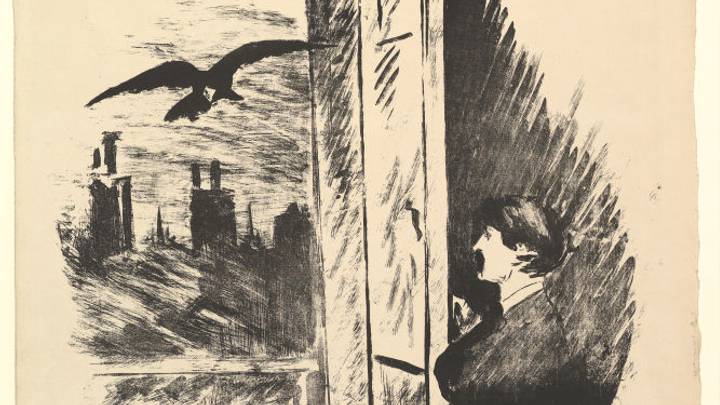
While ravens had been connected with death for centuries, it wasn’t until Edgar Allan Poe popularized the bird in his Gothic poem that they became symbols of horror and misery as well. Poe published “The Raven” in January of 1845, telling the sad tale of a man haunted by the loss of his love and the beginnings of madness. He wants to know if he will ever see his love again, or if the pain of loss will ever subside, and the raven drowns him in despair when it cries out: “Nevermore!”
Ravens were no longer mere omens of death, but an integral part of the horror genre. Alfred Hitchcock would later capitalize on this connection in his 1963 horror film, The Birds. If you weren’t scared of ravens and their association with death before, you were certainly wary of them after that film. And it’s probably a good idea to remain wary of ravens, or at least remember to treat them kindly. Otherwise, they may work together to cause you misery as vengeance.
Read More:
•
Why Do We Associate Ravens With Death?
•
5 Common Misconceptions About Día de los Muertos
•
The Medium Who Wants You to Be Nicer to Ghosts
•
The Personal Tragedy Behind Picasso’s Blue Period
•