ByRoma Panganiban|Jan 1, 2019, 11:00 AM EST
 Add us as a preferred source

British sci-fi TV series Doctor Who has had a long and storied history since it first premiered in 1963 (and its 2005 revival). Although its iconic protagonist, the Time Lord known only as “The Doctor,” never seems to truly age, he has gone through quite a few changes in appearance and demeanor over his past 13 regenerations—most notably last year, when Jodie Whittaker, the Thirteenth and current Doctor, became the first woman to take on the lead role.
While each Doctor has brought his or her own unique flair to the role—it’s hard to imagine anyone else in Fourth Doctor Tom Baker’s striped scarf or Tenth Doctor David Tennant’s classic Chuck Taylors—casting decisions could have gone much differently. Here are 15 other actors who were considered for the role.
1. Hugh David
The first would-be Doctor, Hugh David, was also the first actor to be turned down for the role. David had the distinct honor of receiving an offer from Rex Tucker to originate the role. Tucker was a personal friend of David’s who happened to be a member of the production team preparing for the series’ launch. But when the show named Verity Lambert as its producer, she made the executive call that David, who was 38 years old at the time, was too youthful to play the wise and relatively wizened Doctor she envisioned.
David was passed over in favor of William Hartnell, an actor two decades his senior, though the smooth-faced Matt Smith would later be cast as the Eleventh Doctor at the tender age of 26. David did get a chance to leave his mark on the Whoniverse though; he directed two Doctor Who serials—season four’s “The Highlanders” and season five’s “Fury From the Deep”—both of which are part of the series’ infamous missing episodes.
2. Geoffrey Bayldon

Theater-trained thespian Geoffrey Bayldon was lined up as a potential First Doctor after Verity Lambert said no to Hugh David’s youthful visage, but he wasn’t thrilled by the lengthy commitment the role would have required of him. He was also concerned about being pigeonholed into “old” roles. Instead, he took on another starring role on British television: Catweazle (pictured above), a befuddled wizard from the 11th century accidentally thrust into the 1960s, in stark contrast to the more experienced time-traveling Doctor. After Catweazle took off, Bayldon was devoted to the career-defining role and refused a second offer to become the Second Doctor.
Bayldon appeared in a supporting role as Organon in Doctor Who‘s 17th season, but by the new millennium, he finally consented to take on the mantle of the Doctor—albeit only as a voice actor in the alternate-universe Doctor Who Unbound audio plays. He was 80 years old when the second of his two episodes aired, making him the oldest actor to ever play the Doctor and rendering his earlier objections highly ironic. Bayldon passed away on May 10, 2017 at the age of 93.
3. Richard Griffiths

Venerated stage and screen actor Richard Griffiths, renowned in England as Uncle Monty of Withnail and I and Harry Potter’s nasty Uncle Vernon, was twice considered a possible Doctor. He was on the shortlist to succeed Tom Baker, but was passed over in favor of Peter Davison. Producers kept him in mind, and again considered casting him as a replacement for Seventh Doctor Sylvester McCoy, but the show was canceled before Griffiths could step foot inside the TARDIS.
4. Catherine Zeta-Jones

Though Jodie Whittaker made history in 2017 when it was announced that she would be the first woman to take over the TARDIS, the notion of a “Time Lady” isn’t new to the 21st century. Russell T. Davies, the writer/producer responsible for the series’s 2005 revival, was intrigued by the prospect of a female Doctor. He was particularly excited about the idea of Catherine Zeta-Jones as David Tennant’s potential successor—certainly a more glamorous choice than had ever been considered, but one with a long history of diverse dramatic roles to her name. However, Davies had no real pull with the casting decision, as he turned the show over to Steven Moffat in 2010, who in turn ushered in the reign of Matt Smith and his bow ties.
5. and 6. Joanna Lumley and Dawn French

The idea of a female Doctor was also floated in the 1980s, when the series was experiencing a ratings slump so severe that it was put on temporary hiatus from airing. Sydney Newman, the show’s original creator, suggested reviving audiences’ interest with a female lead. He was called in to advise BBC One on how to bolster the show’s reputation. His plan consisted of temporarily bringing back Patrick Troughton as the Second Doctor before regenerating the Seventh Doctor in female form, though not “a flashy, Hollywood Wonder Woman because this kind of heroine with no flaws is a bore.” Candidates for this game-changing new Doctor included future Absolutely Fabulous star Joanna Lumley (pictured above) and The Vicar of Dibley’s Dawn French—both well-respected, established actresses felt to be equal to the historic role. The BBC nixed Newman’s radical proposal, choosing to keep the Time Lord a lord, not a lady, and the show’s waning popularity led to its 1989 cancellation.
7. Frances de la Tour
At the same time Lumley and French were being considered to take over the role of The Doctor, Frances de la Tour—the Tony and Olivier Award-winning actress who played Mrs. Lintott in The History Boys in both London and on Broadway—was also in the running. But her name made headlines yet again in 2017 when, after announcing his departure from the show, Twelfth Doctor Peter Capaldi said that de la Tour was his personal pick to replace him. “I would like Frances de la Tour to be first female doctor,” Capaldi told The Mirror.
8. Liam Cunningham

The crowded field of aspiring Doctors vying for the part after Sylvester McCoy stepped down attests to the show executives’ confusion about who could best rekindle Doctor Who’s former glory. Irish actor Liam Cunningham put in a bid to become the Eighth Doctor, using both his natural Dublin accent as well as a put-upon “neutral American” one. Though neither voice netted him the job, he appeared as Captain Zhukov in the revived series. He found even greater fame on the small screen as Davos Seaworth in Game of Thrones.
9. Billy Connolly

Better known as a comedian and folk singer, Billy Connolly was another contender for the Doctor’s eighth regeneration. Though he was shortlisted for the part, it seems the decision was never his to make. “It was brought up in a meeting, apparently, but nobody told me until after they decided against it,” Connolly told The Scotsman in 2010. “If I had done it, he would have been angrier, a much angrier Doctor Who. I would have loved it. I’d have taken it.”
10. Mark McGann
Liverpudlian Mark McGann auditioned for the role of the Eighth Doctor at the same time as his older brother Paul. In a double blow to Mark, he didn’t get the part—but his brother did. Talk about sibling envy.
11. Hugh Grant

Rom-com star Hugh Grant may seem like an unlikely choice for a sci-fi hero, but he was one of the first actors approached when casting a Ninth Doctor for the 2005 series revival. Grant said no, due to skepticism about the show’s potential to succeed, but he later got a second chance of sorts when playing one of the Doctor’s regenerations in a 1999 spoof production for charity (which also featured fellow would-be Doctor Joanna Lumley). With trademark self-deprecation, the actor notes that while he regrets his choice, it might have done the show some good, as he’d “probably make a mess of it” anyway.
12. Bill Nighy

Bill Nighy also said no to playing the Doctor, but unlike his Love Actually castmate Grant, his refusal was due to a premonition that the show would take off and garner him an excess of unwanted media scrutiny. It was a character, he claimed, that came with “too much baggage.” He did, however, make an uncredited but significant appearance in 2010 as Musée d’Orsay curator and Vincent van Gogh enthusiast Dr. Black.
Although Nighy was forthcoming about his reasons for passing on the role when he came clean in 2012, he didn’t indicate at what point he turned down the opportunity. Out of respect to “whoever did” take the role, he has refused to say which Doctor he might have been. Despite speculation that he might have been the Ninth Doctor instead of Christopher Eccleston, Nighy’s career has spanned most of the show’s 55-year run, so there’s really no telling.
13. Eddie Izzard

Comedian Eddie Izzard was once rumored to have been cast as the Tenth Doctor, with word coming straight from the mouth of the Fourth Doctor himself. In 2003, former Doctor Who star Tom Baker claimed on BBC Radio Five Live that Izzard had landed the role, touting Izzard as “mysterious and strange and seem[ing] like he has a lot of secrets”—all qualities befitting the inscrutable Doctor. The BBC itself discounted his comments as mere “speculation,” and a spokesman said simply that no decision had yet been made.
14. Benedict Cumberbatch

When David Tennant departed Doctor Who after three seasons as The Doctor, he took a special interest in who his successor might be. He thought Benedict Cumberbatch had the chops for the role, but the Sherlock star didn’t think it would be a good fit. “David [Tennant] and I talked about it but I thought it would have to be radically different,” Cumberbatch said. “And anyway, I didn’t really like the whole package—being on school lunch boxes.”
15. Michael Jackson

The King of Pop could have been the man from Gallifrey. In the late 1980s, at the height of Jackson’s on-screen success with Moonwalker, Paramount Pictures proposed a full-length Doctor Who film starring the chart-topping singer. It’s not clear that he was offered the role of the Doctor himself, though the information lends itself to that interpretation.
An earlier version of this story ran in 2013.
The Real-Life Serial Killer That Might’ve Inspired ‘Dexter’s Dark Passenger
Brazil’s most notorious killer of killers has been called the real Dexter for years, but ‘Dexter’s’ creator tells a different origin story.
ByMatt Hoffman|Oct 30, 2026, 9:00 PM EDT
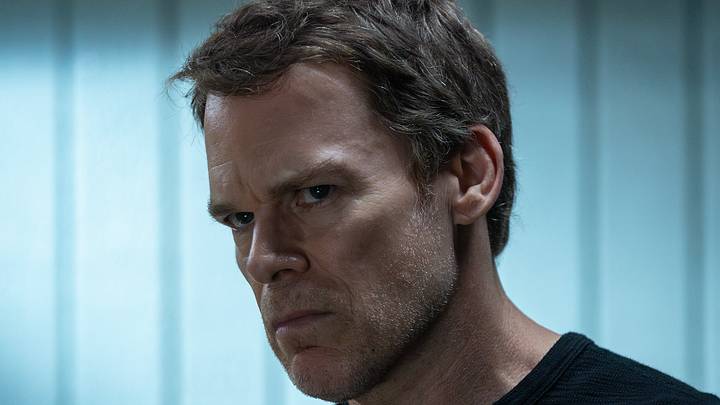
Back in July 2004, Jeff Lindsay introduced readers to Dexter Morgan, a Miami police blood-spatter analyst who kills only people who deserve it, egged on by a voice in his head he calls the “Dark Passenger.” Two years later, Showtime turned Darkly Dreaming Dexter into a hit series with Michael C. Hall.
Somewhere along the way, the internet decided Dexter had a real-life model: Pedro Rodrigues Filho, a Brazilian who claimed to have killed more than 100 people, most of them criminals. Entertainment sites now call him “the Brazilian Dexter,” and ScreenRant describes the show as loosely based on his crimes. No quote from Lindsay or the show’s producers backs that up, but the similarities are hard to miss.
The Boy Who Settled Scores
Filho was born in 1954 on a farm in Santa Rita do Sapucaí, in the Brazilian state of Minas Gerais, with an injured skull: his father, he said, had kicked his pregnant mother during a fight. He told the magazine Época in 2003 that he first wanted to kill at 13, when he shoved an older cousin into a sugarcane press. A year later, after his father lost his job as a school guard over accusations that he was stealing school lunches, Filho shot the official who had fired him, then shot the guard he believed was the real thief. (Accounts disagree on who that first victim was: some Brazilian outlets say the mayor of his hometown, others the deputy mayor of Alfenas, also in Minas Gerais.)
He fled to Mogi das Cruzes, outside São Paulo, where he robbed drug dens, killed traffickers, and took over a dead drug boss’s business. When his pregnant girlfriend was shot dead, he went looking for the man who ordered it and, with four friends, hit a wedding party, leaving seven dead and 16 wounded, according to Época. He was arrested shortly after turning 18 and entered prison on May 24, 1973; in the van on the way there, he killed a fellow prisoner he said was a rapist.
Where the Comparison Holds
Like Dexter, Filho had a code, or said he did. He told Época he killed only people who were no good, and that he never killed children, women, or family men. He also had a father story to rival Harry Morgan’s, though a much darker one: Filho claimed he killed his own father in prison, in revenge for his mother’s stabbing, and chewed a piece of his heart. (Época noted that he gave a psychiatrist a completely different account of how his father died.)
The resemblance mostly ends there. Dexter’s code, as Mental Floss has laid out before, includes “don’t get caught,” and Filho spent roughly four decades behind bars, much of it bragging. He had “Mato por prazer” (“I kill for pleasure”) tattooed on his left arm. He claimed 47 victims inside prison alone, though Época found just 18 charges against him on file in 2003; by his death, Brazilian outlets counted 71 homicides on his record.
What Dexter’s Creator Actually Said
Lindsay has told his origin story many times, and it starts nowhere near Brazil: at a Kiwanis Club lunch where he sat at the head table waiting to speak and, as he told BookPage in 2005, “the idea just popped into my head that sometimes serial murder isn’t a bad thing.” He then built the character out of research: he collected books on sociopaths and murderers, interviewed psychologists and crime scene investigators, and got cop friends to turn him loose in their dead-files room. He also rejects the very label that made Filho famous: “Dexter’s not a vigilante,” he told Middlebury Magazine in 2011. “Vigilantes are trying to perform an act of justice. Dexter just likes to kill people.”
The Ending Dexter Survived
Filho walked out of prison in 2007, went back in 2011 for crimes committed during his sentence, and was released for good in 2018. Within months, he had reinvented himself as a YouTube personality who commented on crimes in the news and lectured about his past. On the morning of March 5, 2023, he was on a sidewalk in Mogi das Cruzes holding a small child when men in a black car opened fire, according to the news site G1. The child was unhurt, but according to the police report, one of the attackers stabbed Filho in the throat as he lay on the ground. He was 68.
Read More:
•
•
Dexter: New Blood: 7 Things We Know
Why Do We Associate Ravens With Death?
“Quoth the Raven, ‘Nevermore!'”
ByChelsea Thatcher|Oct 31, 2026, 10:00 AM EDT
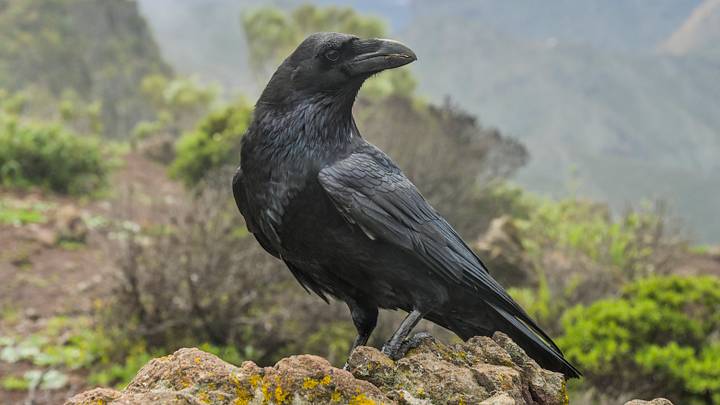
Ravens are incredibly intelligent birds able to mimic human speech, remember faces, and even hold grudges against those who’ve wronged them. And while they have been a symbol of wisdom and prophecy in different cultures, they’re most often thought of in relation to grief and death. But why?
In several mythologies from around the world, the raven is associated with death. Does that mean these birds are actually ill omens, or that there’s some truth to the folklore? How did so many different civilizations all come to believe similar things about the raven? It honestly has a lot to do with their main source of food.
Carrion Birds
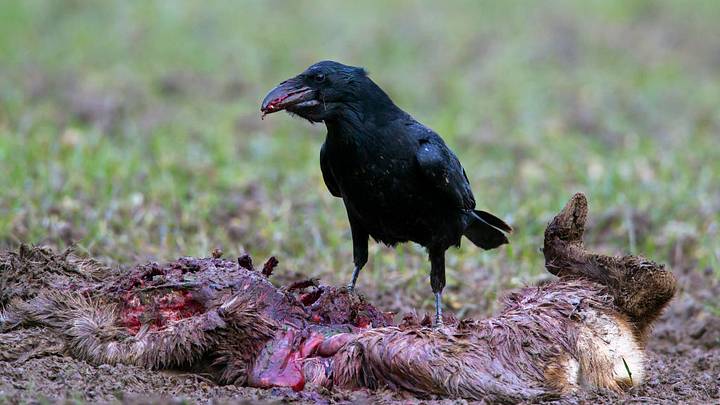
Ravens, along with crows, rooks, and magpies, are carrion birds. They are scavengers, eating the decaying flesh of dead bodies. Today, they commonly find their meals in roadkill and other dead animals, but in the past, they learned that there were absolute feasts on the world’s battlefields.
In war, there were many times that the number of dead was too great to bury all of them. Ancient peoples saw ravens flitting among the bodies of the slain at almost every battlefield, and the connection became ingrained in the collective conscience. Superstition then bled into the narrative, and people saw ravens as omens of death rather than the clean-up crew afterwards.
Ravens in Myth and Religion
Ravens appear in ancient myths and religious texts as symbols of fate and death. In several different cultures, ravens act as messengers between the worlds of the living and the dead. They might even work as Grim Reapers, collecting and transporting souls to the underworld. Swedish mythology claims that ravens are the souls of murder victims who didn’t receive a proper burial, and Germanic lore says they are the souls of the damned.
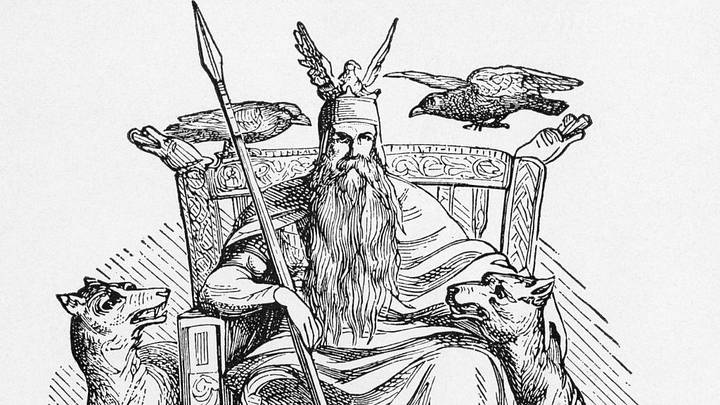
In Norse mythology, Odin, the god of war and death, had two ravens, Huginn (thought) and Muninn (memory), who acted as his eyes and ears in battle. The Norse people believed that if a raven appeared on the battlefield with them, it meant that Odin was watching. In Celtic lore, ravens were also linked to the Mórrígan, goddess of death, war, and fate.
The Bible and the Quran also feature ravens in stories that deal with death. In the biblical tale of the Flood, Noah first releases a raven to see if the waters still cover the land. The raven never returns, presumably because it has found food in the number of wicked flood victims. And in the Quran, a raven is the one to teach Cain how to bury his murdered brother’s body.
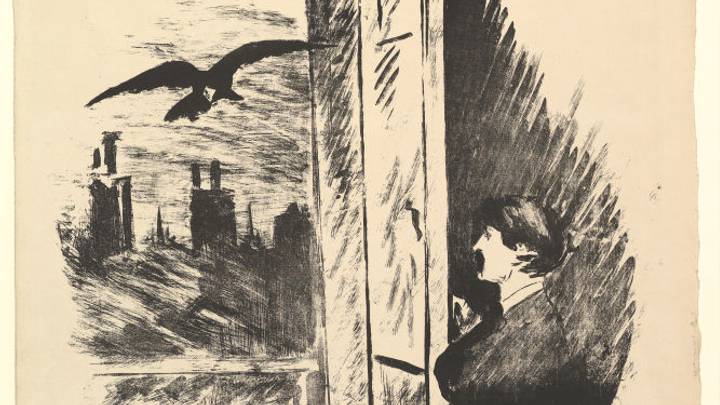
Poe’s “The Raven”
While ravens had been connected with death for centuries, it wasn’t until Edgar Allan Poe popularized the bird in his Gothic poem that they became symbols of horror and misery as well. Poe published “The Raven” in January of 1845, telling the sad tale of a man haunted by the loss of his love and the beginnings of madness. He wants to know if he will ever see his love again, or if the pain of loss will ever subside, and the raven drowns him in despair when it cries out: “Nevermore!”
Ravens were no longer mere omens of death, but an integral part of the horror genre. Alfred Hitchcock would later capitalize on this connection in his 1963 horror film, The Birds. If you weren’t scared of ravens and their association with death before, you were certainly wary of them after that film. And it’s probably a good idea to remain wary of ravens, or at least remember to treat them kindly. Otherwise, they may work together to cause you misery as vengeance.
Read More:
•
Why Do We Associate Ravens With Death?
•
5 Common Misconceptions About Día de los Muertos
•
The Medium Who Wants You to Be Nicer to Ghosts
•
The Personal Tragedy Behind Picasso’s Blue Period
•