
Go behind the scenes of Quentin Tarantino’s killer sequel.
BySean Hutchinson|Mar 11, 2024, 3:55 PM EDT
 Add us as a preferred source

Even if you’ve seen the second half of Quentin Tarantino’s revenge epic, these little nuggets will give you a reason to give it another look.
1. Pulp Fiction spawned the idea.
Uma Thurman and Tarantino came up with the character of The Bride while working on the set of Tarantino’s 1994 film Pulp Fiction. Tarantino mentioned he was interested in doing a revenge movie or a 1970s kung-fu movie, and Thurman envisioned a character left for dead on her wedding day like the scene that opens Kill Bill Vol. 2.
2. The volumes have distinct influences.
The Kill Bill saga was originally supposed to be a single four-hour epic before it was split into two films. Tarantino made the split by having the first film reflect “Eastern” cinematic influences like the kung fu genre, while the second film reflects “Western” influences such as the Spaghetti Western genre.
3. Warren Beatty was Tarantino’s first choice for Bill.
When Tarantino let the actor go because of creative differences, he cast David Carradine in the iconic role because Carradine previously appeared in Tarantino’s favorite childhood TV show, Kung Fu.
4. Samuel L. Jackson makes a sneaky cameo.
He briefly appears as Rufus, the wedding piano player.
5. Kill Bill Vol. 2 was not as violent as you might think.
Only three people are killed onscreen in the entire second movie.
6. Pai Mei pulled double duty.
Actor Gordon Liu plays Pai Mei in Vol. 2, but he also appeared as Johnny Mo, the leader of the Crazy 88, in Kill Bill Vol. 1. Liu was cast in the Kill Bill saga because he previously appeared in a kung fu movie called The 36th Chamber of Shaolin that heavily influenced Tarantino while writing Kill Bill.
7. Tarantino originally wanted to dub his own voice for Pai Mei.
The voice would celebrate the poorly dubbed kung fu movies he loves.
8. Pai Mei appeared in previous kung fu films.
The Pai Mei character had shown up in many previous kung fu movies such as Executioners from Shaolin and Clan of the White Lotus (both starring Gordon Liu). The character and his trademark bushy eyebrows were based on a legendary real life kung fu master known as Bak Mei, which means “White Eyebrows” in Cantonese.
9. The Bride borrowed her finishing move from another film.
The Bride’s “Five Point Palm Exploding Heart Technique” also appears in the Shaw Brothers’ films Executioners from Shaolin and Clan of the White Lotus, which were primary inspirations behind the Kill Bill saga.
10. There are subtle tributes to Charles Bronson and Elmore Leonard.
The poster on the wall of Budd’s trailer is for a movie called Mr. Majestyk, starring Charles Bronson and written by Elmore Leonard. Most of Tarantino’s movies contain numerous references to Bronson, while Tarantino adapted Leonard’s novel “Rum Punch” into his 1997 film, Jackie Brown.
11. Bill’s flute was Carradine’s idea.
Tarantino added the flute that Bill carries with him to the script after Carradine brought it with him to fight rehearsals during the movie’s pre-production. Carradine, who was also a musician, made the flute himself on the set of Kung Fu in the 1970s.
12. Michael Parks also wore two hats.
Parks portrays two separate characters in the Kill Bill saga. He plays Bill’s mentor Esteban Vihaio in Vol. 2 and also played Texas Ranger Earl McGraw in Vol. 1. Parks first played the McGraw character in the film From Dusk Till Dawn, which was directed by Robert Rodriguez and written by and starred Tarantino, and later also played McGraw in Planet Terror and Death Proof directed by Rodriguez and Tarantino respectively.
13. Ricardo Montalban lost his part.
The part of Esteban was originally supposed to be played by Montalban. When Montalban couldn’t make the first table reading of the script, Tarantino had Parks stand in and liked his take so much that he gave him the role in the final film.
14. Robert Rodriguez gave Tarantino a deal on the score.
Fellow director and Tarantino’s best friend Rodriguez wrote the score for Kill Bill Vol. 2 for free and began writing the music before any of the movie was shot. Rodriguez’s band Chingon also performs the song “Malagueña Salerosa” over the closing credits.
15. Of course there’s a movie reference in the climactic scene.
The Western playing on the TV when The Bride confronts Bill is called The Golden Stallion, starring Roy Rogers.
Related Tags
The Real-Life Serial Killer That Might’ve Inspired ‘Dexter’s Dark Passenger
Brazil’s most notorious killer of killers has been called the real Dexter for years, but ‘Dexter’s’ creator tells a different origin story.
ByMatt Hoffman|Oct 30, 2026, 9:00 PM EDT
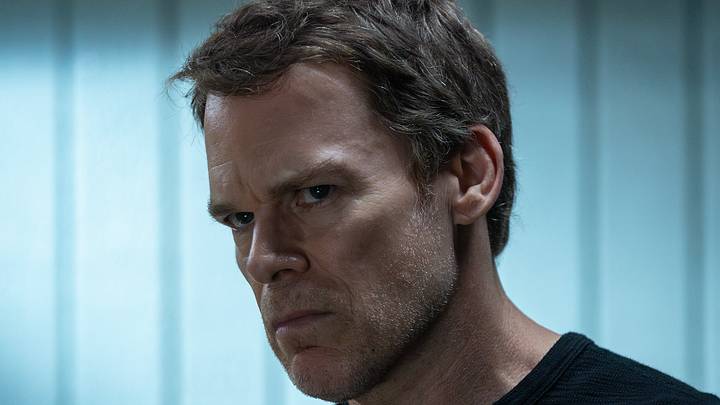
Back in July 2004, Jeff Lindsay introduced readers to Dexter Morgan, a Miami police blood-spatter analyst who kills only people who deserve it, egged on by a voice in his head he calls the “Dark Passenger.” Two years later, Showtime turned Darkly Dreaming Dexter into a hit series with Michael C. Hall.
Somewhere along the way, the internet decided Dexter had a real-life model: Pedro Rodrigues Filho, a Brazilian who claimed to have killed more than 100 people, most of them criminals. Entertainment sites now call him “the Brazilian Dexter,” and ScreenRant describes the show as loosely based on his crimes. No quote from Lindsay or the show’s producers backs that up, but the similarities are hard to miss.
The Boy Who Settled Scores
Filho was born in 1954 on a farm in Santa Rita do Sapucaí, in the Brazilian state of Minas Gerais, with an injured skull: his father, he said, had kicked his pregnant mother during a fight. He told the magazine Época in 2003 that he first wanted to kill at 13, when he shoved an older cousin into a sugarcane press. A year later, after his father lost his job as a school guard over accusations that he was stealing school lunches, Filho shot the official who had fired him, then shot the guard he believed was the real thief. (Accounts disagree on who that first victim was: some Brazilian outlets say the mayor of his hometown, others the deputy mayor of Alfenas, also in Minas Gerais.)
He fled to Mogi das Cruzes, outside São Paulo, where he robbed drug dens, killed traffickers, and took over a dead drug boss’s business. When his pregnant girlfriend was shot dead, he went looking for the man who ordered it and, with four friends, hit a wedding party, leaving seven dead and 16 wounded, according to Época. He was arrested shortly after turning 18 and entered prison on May 24, 1973; in the van on the way there, he killed a fellow prisoner he said was a rapist.
Where the Comparison Holds
Like Dexter, Filho had a code, or said he did. He told Época he killed only people who were no good, and that he never killed children, women, or family men. He also had a father story to rival Harry Morgan’s, though a much darker one: Filho claimed he killed his own father in prison, in revenge for his mother’s stabbing, and chewed a piece of his heart. (Época noted that he gave a psychiatrist a completely different account of how his father died.)
The resemblance mostly ends there. Dexter’s code, as Mental Floss has laid out before, includes “don’t get caught,” and Filho spent roughly four decades behind bars, much of it bragging. He had “Mato por prazer” (“I kill for pleasure”) tattooed on his left arm. He claimed 47 victims inside prison alone, though Época found just 18 charges against him on file in 2003; by his death, Brazilian outlets counted 71 homicides on his record.
What Dexter’s Creator Actually Said
Lindsay has told his origin story many times, and it starts nowhere near Brazil: at a Kiwanis Club lunch where he sat at the head table waiting to speak and, as he told BookPage in 2005, “the idea just popped into my head that sometimes serial murder isn’t a bad thing.” He then built the character out of research: he collected books on sociopaths and murderers, interviewed psychologists and crime scene investigators, and got cop friends to turn him loose in their dead-files room. He also rejects the very label that made Filho famous: “Dexter’s not a vigilante,” he told Middlebury Magazine in 2011. “Vigilantes are trying to perform an act of justice. Dexter just likes to kill people.”
The Ending Dexter Survived
Filho walked out of prison in 2007, went back in 2011 for crimes committed during his sentence, and was released for good in 2018. Within months, he had reinvented himself as a YouTube personality who commented on crimes in the news and lectured about his past. On the morning of March 5, 2023, he was on a sidewalk in Mogi das Cruzes holding a small child when men in a black car opened fire, according to the news site G1. The child was unhurt, but according to the police report, one of the attackers stabbed Filho in the throat as he lay on the ground. He was 68.
Read More:
•
•
Dexter: New Blood: 7 Things We Know
Why Do We Associate Ravens With Death?
“Quoth the Raven, ‘Nevermore!'”
ByChelsea Thatcher|Oct 31, 2026, 10:00 AM EDT
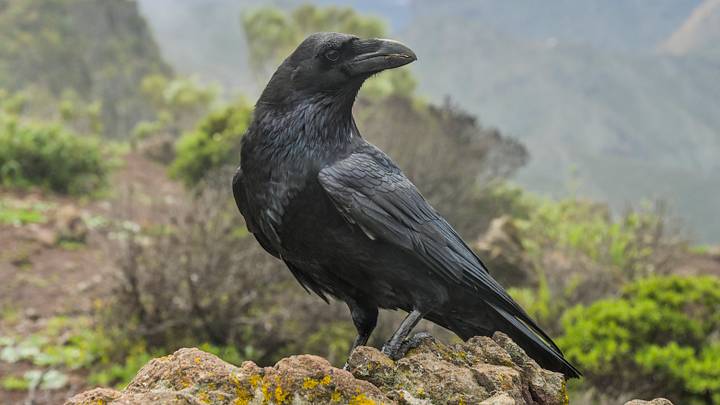
Ravens are incredibly intelligent birds able to mimic human speech, remember faces, and even hold grudges against those who’ve wronged them. And while they have been a symbol of wisdom and prophecy in different cultures, they’re most often thought of in relation to grief and death. But why?
In several mythologies from around the world, the raven is associated with death. Does that mean these birds are actually ill omens, or that there’s some truth to the folklore? How did so many different civilizations all come to believe similar things about the raven? It honestly has a lot to do with their main source of food.
Carrion Birds
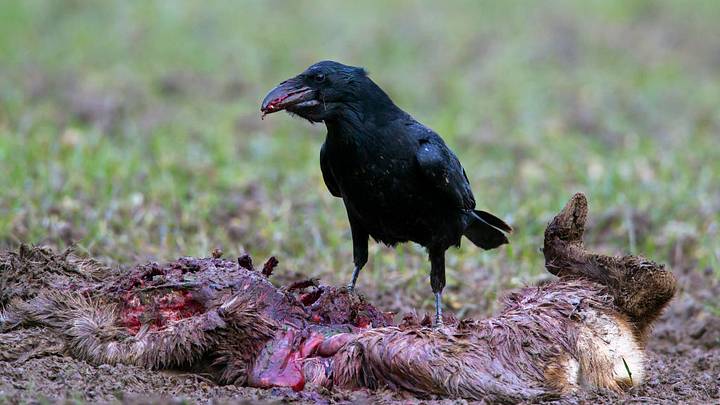
Ravens, along with crows, rooks, and magpies, are carrion birds. They are scavengers, eating the decaying flesh of dead bodies. Today, they commonly find their meals in roadkill and other dead animals, but in the past, they learned that there were absolute feasts on the world’s battlefields.
In war, there were many times that the number of dead was too great to bury all of them. Ancient peoples saw ravens flitting among the bodies of the slain at almost every battlefield, and the connection became ingrained in the collective conscience. Superstition then bled into the narrative, and people saw ravens as omens of death rather than the clean-up crew afterwards.
Ravens in Myth and Religion
Ravens appear in ancient myths and religious texts as symbols of fate and death. In several different cultures, ravens act as messengers between the worlds of the living and the dead. They might even work as Grim Reapers, collecting and transporting souls to the underworld. Swedish mythology claims that ravens are the souls of murder victims who didn’t receive a proper burial, and Germanic lore says they are the souls of the damned.
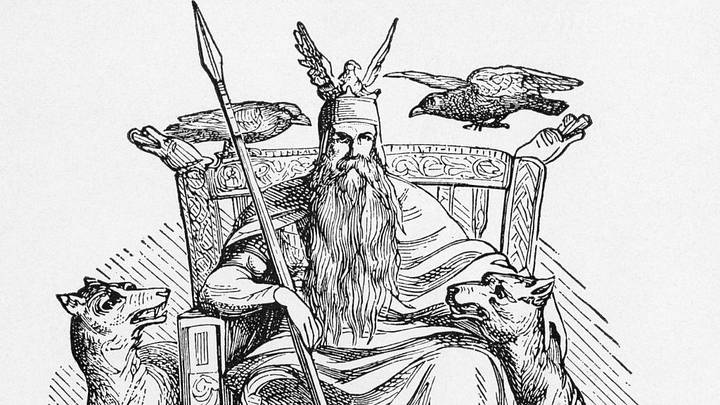
In Norse mythology, Odin, the god of war and death, had two ravens, Huginn (thought) and Muninn (memory), who acted as his eyes and ears in battle. The Norse people believed that if a raven appeared on the battlefield with them, it meant that Odin was watching. In Celtic lore, ravens were also linked to the Mórrígan, goddess of death, war, and fate.
The Bible and the Quran also feature ravens in stories that deal with death. In the biblical tale of the Flood, Noah first releases a raven to see if the waters still cover the land. The raven never returns, presumably because it has found food in the number of wicked flood victims. And in the Quran, a raven is the one to teach Cain how to bury his murdered brother’s body.
Poe’s “The Raven”
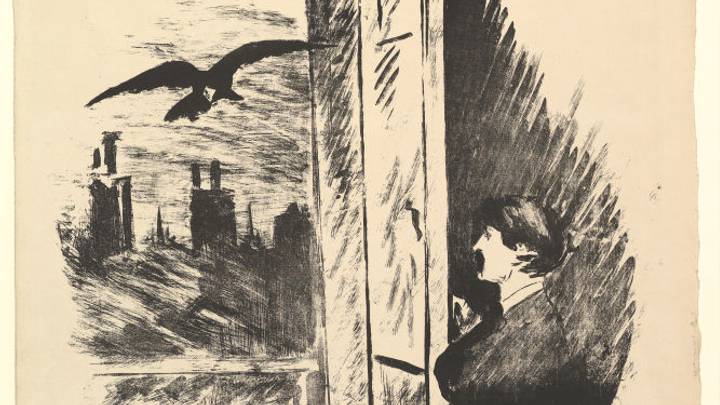
While ravens had been connected with death for centuries, it wasn’t until Edgar Allan Poe popularized the bird in his Gothic poem that they became symbols of horror and misery as well. Poe published “The Raven” in January of 1845, telling the sad tale of a man haunted by the loss of his love and the beginnings of madness. He wants to know if he will ever see his love again, or if the pain of loss will ever subside, and the raven drowns him in despair when it cries out: “Nevermore!”
Ravens were no longer mere omens of death, but an integral part of the horror genre. Alfred Hitchcock would later capitalize on this connection in his 1963 horror film, The Birds. If you weren’t scared of ravens and their association with death before, you were certainly wary of them after that film. And it’s probably a good idea to remain wary of ravens, or at least remember to treat them kindly. Otherwise, they may work together to cause you misery as vengeance.
Read More:
•
Why Do We Associate Ravens With Death?
•
5 Common Misconceptions About Día de los Muertos
•
The Medium Who Wants You to Be Nicer to Ghosts
•
The Personal Tragedy Behind Picasso’s Blue Period
•