
ByJake Rossen|Nov 16, 2021, 9:00 AM EST
 Add us as a preferred source

In the earliest days of television, showrunners didn’t often bother with tying up a long-running show’s loose ends. In a world without cable or many reruns, a series finale was just another episode. But as viewers got more emotionally invested—and as syndication and repeats grew—there came a need for finality.
Newhart may have had one of the best, with star Bob Newhart waking up married to his The Bob Newhart Show co-star Suzanne Pleshette and realizing his new series had all been a dream—a climax so memorable that Bryan Cranston later parodied it after the end of Breaking Bad. (His affable Malcolm in the Middle character, Hal, had apparently dreamed he was a meth dealer.)
And then there are shows that ended with such stunning weirdness that it seems inconceivable viewers could be left feeling anything but befuddled. The finale of St. Elsewhere proposed the show and its many characters had been all in the mind of a young boy with autism—a theory that called into question the canon of all of television thanks to guest appearances from other television characters.
That was strange, but in television, it can definitely get stranger. Check out eight other shows that left viewers dazed and confused.
1. Dinosaurs (1991-1994)
This Jim Henson Productions series about a nuclear family of anthropomorphic dinosaurs proved to be a modest hit for ABC. For four seasons, the Sinclairs—father Earl, mother Fran, and kids Robbie, Charlene, and Baby Sinclair—offered an animatronic take on prehistoric life. Baby Sinclair even birthed a popular catchphrase: “I’m the baby. Gotta love me!”
While plenty of viewers did, Dinosaurs was expensive to produce and not fated for a long run. And while dinosaurs were not known to talk or hold down jobs, the show did take other portions of their existence literally. The series ends with the dinos, ignorant of their effect on climate change, inviting the Ice Age and thus their own extinction. Earl’s employer uses plant-killing chemicals irresponsibly, setting off a chain reaction of environmental calamities. By the end of the episode, snow is beginning to fall and it’s obvious that the characters viewers have come to love—including Baby Sinclair—are doomed.
“From the moment we first talked about the show, we discussed the idea that it was the domestication of these dinosaurs that made them go extinct,” series co-creator Michael Jacobs told Vulture in 2018. “The thing that human beings knew about dinosaurs was that, in the end, they were extinct, so we always had that idea in the back of our minds. The show would end by completing the metaphor and showing that extinction.”
2. Family Matters (1989-1998)
Family Matters is best known as the ABC sitcom that introduced the world to Jaleel White, a.k.a. Steve Urkel. Though he was originally conceived as a minor supporting neighbor character for the Winslow family, Urkel became a pop culture sensation. For the finale, which aired on CBS following the show’s network move in 1997, the show abandoned any pretense of grounded reality. In the two-part “Lost in Space,” Urkel sells a patent to NASA and is shot into space before being briefly marooned. Steve nearly runs out of oxygen before he’s able to return to Earth. (The episode attempts to weave in a subplot of Eddie Winslow, newly minted as a cop, being shot during an altercation, a sharp contrast to Urkel’s space odyssey.)
While it would have been difficult for the show to top that, it wasn’t designed as a finale. Producers had gotten word of its cancellation too late to give it a more definitive send-off.
3. M.A.N.T.I.S. (1994-1995)
Before the superhero movie and television explosion of the new century, comic book-style adventures were few and far between. One exception was M.A.N.T.I.S., a Fox series that ran for one season and featured Carl Lumbly as paralyzed scientist Dr. Miles Hawkins, who regains the ability to walk—and resist bullets—with the aid of an enhanced suit. (The Mechanically Augmented Neuro Transmitter Interception System, for the acronym-curious.)
M.A.N.T.I.S. came under fire early on for some puzzling casting decisions. In the television movie that launched it, Lumbly was aided by characters played by Black actors. In the series, the characters had been swapped out for white confidantes.
It was perhaps no great loss when the show was canceled, though a decision to have Lumbly face off against a giant dinosaur was in sharp contrast to an otherwise grounded premise. (The dinosaur was also mostly invisible, presumably to save on special effects.) To fend off the beast, Hawkins sets off an explosion, killing himself and friend Leora Maxwell (Galyn Görg) in the process. The end.
While M.A.N.T.I.S. may have fallen flat, Lumbly did see some form of superhero redemption. He appeared on the Disney+ Marvel series The Falcon and the Winter Soldier in 2021, playing Isiah Bradley, an early recipient of Captain America’s super soldier serum.
4. ALF (1986-1990)
Nothing was more endemic of 1980s television than ALF, a sitcom about a furry alien from the planet Melmac who moves in with the Tanner family to avoid detection. (Shooting ALF, which was a puppet, proved problematic for his human co-stars, who often had to sidestep holes in the floor to allow for the puppeteering.)
For the 1990 series finale, “Consider Me Gone,” ALF is able to intercept a radio signal from others of his kind who are colonizing a “New Melmac.” Even though it means saying goodbye to his adoptive family, ALF decides to join his fellow alien life forms—but is instead apprehended by government officials eager to find out more about the alien. The show’s producers expected a fifth season—this one set on a military base—but didn’t get one. The impression viewers have is one of ALF possibly doomed to a life of imprisonment. (The notion was scrubbed with a 1996 television movie, Project ALF, in which he’s a government guest but seemingly unharmed.)
5. Dallas (1978-1991)
Most people remember CBS’s primetime soap Dallas for the mystery involving who shot oil magnate J.R. Ewing (Larry Hagman) or the it-was-all-a-dream season provided by presumed-dead Bobby Ewing (Patrick Duffy).
No less memorable was the series finale in which J.R. contemplates the many selfish and otherwise morally corrupt choices he’s made in pursuit of wealth and self-satisfaction throughout his life. The two-parter is a riff on It’s a Wonderful Life, except J.R. slowly realizes people in his life would have been far better off without him. “Sue Ellen making it on her own,” J.R. says, aghast anyone could thrive without him.
Egged on by a malevolent spirit named Adam that appears to him in a mirror—who is implied to be a demon, thanks to a not-very-subtle red suit and glowing red eyes—a despondent J.R. appears to take his own life, though that was retconned in subsequent made-for-television Dallas movies.
6. Little House on the Prairie (1974-1983)
Based on the bestselling, semi-autobiographical book series by Laura Ingalls Wilder, Little House on the Prairie offered viewers in the ‘70s a look at frontier life in the late 1800s. This would probably be the last place where you’d expect an explosion set piece worthy of Arnold Schwarzenegger, but the show provided it in the form of one final TV movie, Little House on the Prairie: The Last Farewell. In the film, the town of Walnut Grove is blown to bits so that it doesn’t fall into the hands of a land baron. Series star Michael Landon suggested the ending because the land leased for the show had to be returned to its owners in its original state and the buildings had to go anyway.
7. The Hills (2006-2010)
While reality shows aren’t typically concerned with having series finales, MTV’s The Hills approached things differently. The sometimes-lurid series featuring a group of twenty-somethings—including Lauren Conrad, Spencer Pratt, Heidi Montag, and Kristin Cavallari—navigating life and love in Los Angeles was ostensibly chronicling rather than orchestrating their lives. But that was called into question during the last episode, when Brody Jenner is seen standing on a Hollywood backlot and surrounded by set decorations. The implication was that The Hills may have been as fictional as any scripted show.
8. Byker Grove (1989-2006)
While Doctor Who remains the BBC’s most prominent long-running series, other shows have been in it for the long haul. Byker Grove, which premiered in 1989 and ran through 2006, was centered on the various dramas of a youth club in Newcastle, England. The overall effect was one of realism—the series tackled teenage topics like sexuality and racism.
It was all the more jarring, then, to have the show conclude in the manner it did. For the 2006 finale, “Deux Ex Machina,” the entire cast comes to realize they’re fictional characters in a television show and that the series’ writers have plans to abolish Byker Grove. Newly possessed of this terrifying self-awareness, the characters try to write their own ending before being attacked by a Tyrannosaurus rex. (For those keeping count, this is the third time dinosaurs have played a part in this finale list.)
It gets stranger. Despite finding a buried treasure that would presumably see the cast “buy” the Grove and prevent it from destruction, dynamite goes off and everyone perishes. Something to ponder the next time you feel like complaining about the ending of Dexter.
Do you love television? Do you spend most weekends lounging on the couch binge-watching your favorite TV shows? Would you like to learn some incredibly fascinating facts about the best series of the past 20 years and the people who made them? Then pick up our new book, The Curious Viewer: A Miscellany of Streaming Bingeable Shows from the Last 20 Years, available now
The Real-Life Serial Killer That Might’ve Inspired ‘Dexter’s Dark Passenger
Brazil’s most notorious killer of killers has been called the real Dexter for years, but ‘Dexter’s’ creator tells a different origin story.
ByMatt Hoffman|Oct 30, 2026, 9:00 PM EDT
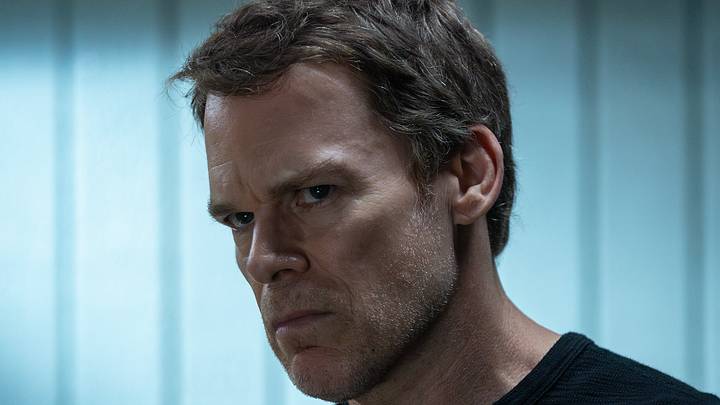
Back in July 2004, Jeff Lindsay introduced readers to Dexter Morgan, a Miami police blood-spatter analyst who kills only people who deserve it, egged on by a voice in his head he calls the “Dark Passenger.” Two years later, Showtime turned Darkly Dreaming Dexter into a hit series with Michael C. Hall.
Somewhere along the way, the internet decided Dexter had a real-life model: Pedro Rodrigues Filho, a Brazilian who claimed to have killed more than 100 people, most of them criminals. Entertainment sites now call him “the Brazilian Dexter,” and ScreenRant describes the show as loosely based on his crimes. No quote from Lindsay or the show’s producers backs that up, but the similarities are hard to miss.
The Boy Who Settled Scores
Filho was born in 1954 on a farm in Santa Rita do Sapucaí, in the Brazilian state of Minas Gerais, with an injured skull: his father, he said, had kicked his pregnant mother during a fight. He told the magazine Época in 2003 that he first wanted to kill at 13, when he shoved an older cousin into a sugarcane press. A year later, after his father lost his job as a school guard over accusations that he was stealing school lunches, Filho shot the official who had fired him, then shot the guard he believed was the real thief. (Accounts disagree on who that first victim was: some Brazilian outlets say the mayor of his hometown, others the deputy mayor of Alfenas, also in Minas Gerais.)
He fled to Mogi das Cruzes, outside São Paulo, where he robbed drug dens, killed traffickers, and took over a dead drug boss’s business. When his pregnant girlfriend was shot dead, he went looking for the man who ordered it and, with four friends, hit a wedding party, leaving seven dead and 16 wounded, according to Época. He was arrested shortly after turning 18 and entered prison on May 24, 1973; in the van on the way there, he killed a fellow prisoner he said was a rapist.
Where the Comparison Holds
Like Dexter, Filho had a code, or said he did. He told Época he killed only people who were no good, and that he never killed children, women, or family men. He also had a father story to rival Harry Morgan’s, though a much darker one: Filho claimed he killed his own father in prison, in revenge for his mother’s stabbing, and chewed a piece of his heart. (Época noted that he gave a psychiatrist a completely different account of how his father died.)
The resemblance mostly ends there. Dexter’s code, as Mental Floss has laid out before, includes “don’t get caught,” and Filho spent roughly four decades behind bars, much of it bragging. He had “Mato por prazer” (“I kill for pleasure”) tattooed on his left arm. He claimed 47 victims inside prison alone, though Época found just 18 charges against him on file in 2003; by his death, Brazilian outlets counted 71 homicides on his record.
What Dexter’s Creator Actually Said
Lindsay has told his origin story many times, and it starts nowhere near Brazil: at a Kiwanis Club lunch where he sat at the head table waiting to speak and, as he told BookPage in 2005, “the idea just popped into my head that sometimes serial murder isn’t a bad thing.” He then built the character out of research: he collected books on sociopaths and murderers, interviewed psychologists and crime scene investigators, and got cop friends to turn him loose in their dead-files room. He also rejects the very label that made Filho famous: “Dexter’s not a vigilante,” he told Middlebury Magazine in 2011. “Vigilantes are trying to perform an act of justice. Dexter just likes to kill people.”
The Ending Dexter Survived
Filho walked out of prison in 2007, went back in 2011 for crimes committed during his sentence, and was released for good in 2018. Within months, he had reinvented himself as a YouTube personality who commented on crimes in the news and lectured about his past. On the morning of March 5, 2023, he was on a sidewalk in Mogi das Cruzes holding a small child when men in a black car opened fire, according to the news site G1. The child was unhurt, but according to the police report, one of the attackers stabbed Filho in the throat as he lay on the ground. He was 68.
Read More:
•
•
Dexter: New Blood: 7 Things We Know
Every Season of ‘The Twilight Zone’ Ranked From Best to Worst by Rotten Tomatoes
There is a fifth dimension beyond that which is known to man, and it holds a ranking of every ‘Twilight Zone’ season.
ByLogan DeLoye|Oct 31, 2026, 8:00 AM EDT
You unlock this door with the key of imagination; beyond it is another dimension where Rotten Tomatoes has ranked all five original Twilight Zone seasons.
The Twilight Zone took over television screens from 1959 to 1964, inviting the people of Earth into “a dimension of sound, a dimension of sight, a dimension of mind,” of “both shadow and substance, of things and ideas.”
The science-fiction series, hosted by Rod Serling, spanned 156 episodes, each with different characters and plots that drew you deeper into The Twilight Zone. Just when viewers thought they had the story figured out, a supernatural (sometimes horrific and psychological) plot twist transpired, leaving you with a moral lesson.
The series as a whole received a 92 % on Rotten Tomatoes, earning top praise from the review site. They also ranked each season individually, with a few scoring higher than others. But which season was the best, and which fell short on the Tomatometer?
SEASON 1 – 100%
The first episode of The Twilight Zone premiered in October 1959 and immediately captivated viewers with a storyline they would never forget, though not the case for the main character. Mike Ferris wanders into the small town of Oakwood, with no idea who he is or why he is there. Hours go by, and he realizes he is entirely alone, but is it all just a simulation?
The season continues with favorites like “Mr. Denton on Doomsday,” “The Four of Us Are Dying,” “The Fever,” “The Monsters Are Due on Maple Street,” “Mr. Bevis,” and “A World of His Own.”
Rotten Tomatoes gave Season 1 of The Twilight Zone a perfect rating.
SEASON 2 – 100%
Rotten Tomatoes also gave Season 2 a perfect score, which upheld the horror and speculative appeal of the first season.
The second season of The Twilight Zone opens with “King Nine Will Not Return,” in which World War II pilot James Embry is on a plane that crashes into the desert. When he wakes up, his crew is gone. Wandering through the desert and seeing strange visions in the sky, he wakes up in a hospital 17 years later, triggered by news headlines of the incident. Was Embry experiencing PTSD, or was there actually something supernatural occurring in his hospital room?
The season proceeds with “Eye of the Beholder,” “A Most Unusual Camera,” “A Penny for Your Thoughts,” “Will the Real Martian Please Stand Up?,” and the finale, “The Obsolete Man.”
SEASON 3 – 90%
Premiering in 1961, the third season of The Twilight Zone begins with an episode about an apocalyptic battle and two enemy soldiers. Throughout the episode, the soldiers, a man and a woman, learn to like each other despite being on opposing sides. With no one left on Earth, they must work together to survive, though hostile and tense.
Other episodes from this season include “The Shelter,” “The Mirror,” “It’s a Good Life,” “To Serve Man,” “Little Girl Lost,” “Nothing in the Dark,” and “The Changing of the Guard.”
Rotten Tomatoes gave the third season a 90%, with the Critics Consensus being that the season “manages to overturn an uneven structure with some superb writing that borders on profound and some of the finest half hours in the series’ history.”
SEASON 4 -86%
Season 4 of The Twilight Zone ranked lower than previous seasons with an 86% on the Tomatometer (tied for last).
The first episode of this season, “In His Image,” follows 35-year-old Alan Talbot, who struggles with homicidal urges and memory issues. He discovers he is actually an android with a malfunction. In the end, Alan is deactivated, and the scientist who created him assumes his identity… and his fiancée!
Other episodes in Season 4 include “Valley of the Shadow,” “Printer’s Devil,” “On Thursday We Leave for Home,” “No Time Like the Past,” and “The Bard.”https://www.youtube.com/embed/SXapeCPpyeo?feature=oembed
Season five of The Twilight Zone premiered in 1963 with “In Praise of Pip,” which follows bookie Max, who learns his son has been wounded at war. Max becomes mortally wounded himself and finds his way to an amusement park where he relives happy memories with a younger version of his son and prays to God to spare his son’s life in exchange for his own. Pip recovers and finds himself in the same park by the end of the episode.
Rotten Tomatoes scored this season an 86%, like the fourth season, once again tied for last, saying that “portions of these episodes are diminished by unfortunate clichés.”
Other Season 5 episodes include “Nightmare at 20,000 Feet,” “Living Doll,” “The Old Man in the Cave,” “Ninety Years Without Slumbering,” “The Masks,” and “The Bewitchin’ Pool.”
Read More:
•
•
18 Celebrities Who Appeared on ‘The Twilight Zone’
•