
ByJennifer M Wood|Feb 24, 2019, 3:00 AM EST
 Add us as a preferred source

When Greer Garson won the Academy Award for Best Actress in 1943 for Mrs. Miniver, she set a Guinness World Record for “Longest Oscars Acceptance Speech” with a rant that clocked in at five and a half minutes. That’s more than twice as much time as Gwyneth Paltrow spent on her notoriously longwinded speech after she nabbed the same award for Shakespeare in Love in 1999.
Oscar producers imposed a 45-second time limit on speeches in 2010, but not every winner would have needed it. Some people thanked the Academy (or didn’t) in 10 words or fewer.
1. Alfred Hitchcock (1968) // Total Words: 5
It took Alfred Hitchcock 20 seconds to make his way across the stage to accept the Irving G. Thalberg Memorial Award but only six seconds to offer his simple, “Thank you,” before pausing and adding, “Very much indeed.” In true Hitchcock fashion, he effectively gave us all we needed without showing too much.
2. Joe Pesci (1991) // Total Words: 5
One gets the feeling that Joe Pesci had a lot more to say than, “It’s my privilege, thank you,” when he won Best Supporting Actor for Goodfellas, but no one wants to see one of cinema’s greatest tough guys cry. Now go home and get your f***ing shinebox.
3. Patty Duke (1963) // Total Words: 2
Hitchcock and Pesci may have given two of the most memorably truncated Oscar speeches ever, but Patty Duke makes them both look positively longwinded. When she won the Best Supporting Actress Oscar for The Miracle Worker, her response was a to-the-point, but clearly heartfelt, “Thank you.”
4. William Holden (1954) // Total Words: 4

When he won Best Actor for Stalag 17, William Holden offered his thanks—twice—with a simple, “Thank you. Thank you.”
5. Gloria Grahame (1953) // Total Words: 4
Gloria Grahame wasn’t fooling around when she breezed onto the stage to grab her Best Supporting Actress Oscar for The Bad and the Beautiful, uttering a quick, “Thank you very much,” without so much as stopping at the microphone to savor the moment.
6. Louie Psihoyos (2010) // Total Words: 2
If The Cove director Louie Psihoyos had his way, he would have said a lot more than just, “Thank you,” when he took home an Academy Award for Best Documentary. Fellow producer Fisher Stevens ate up the bulk of their 45 seconds, so when the mic finally came around to Psihoyos, he could only mutter two words before that ominous sound of orchestral strings hushed him. Psihoyos posted a video online of his intended speech the next day.
7. Dimitri Tiomkin (1953) // Total words: 6
When you win two Oscars in one night like High Noon music director Dimitri Tiomkin did in 1953, it makes sense to keep one of your speeches brief. But Tiomkin kept it short and sweet for both, offering a simple, “Thank you very much. Thank you,” for his first win for Best Dramatic or Comedy Score and, “I feel like a mother of the wonderful twins,” when he was handed a second statue for Best Original Song.
8. Alfred Newman (1953) // Total Words: 4
The 1953 Oscars ceremony were a night full of succinctness. Right before Tiomkin accepted his second award, fellow musician Alfred Newman offered a modest, “Thank you very much,” after receiving the Oscar for Best Musical Score.
9. Delbert Mann (1956) // Total words: 8
When Delbert Mann won his first and only Oscar for directing Marty, he made his appreciation clear: “Thank you. Thank you very much. Appreciate it.” And … scene!
10. Billy Wilder (1961) // Total words: 10
Billy Wilder won all three of the Oscars for which he was nominated for The Apartment—Best Director, Best Screenplay, and Best Picture. While he allowed himself a full 70 words on that last award, his acceptances earlier in the night were much shorter. He and co-writer I.A.L. Diamond showcased their talent for brevity when they each thanked each other. And when Gina Lollobrigida handed Wilder the Oscar for Best Director, he quipped, “Thank you so much, you lovely discerning people. Thank you.”
The Real-Life Serial Killer That Might’ve Inspired ‘Dexter’s Dark Passenger
Brazil’s most notorious killer of killers has been called the real Dexter for years, but ‘Dexter’s’ creator tells a different origin story.
ByMatt Hoffman|Oct 30, 2026, 9:00 PM EDT
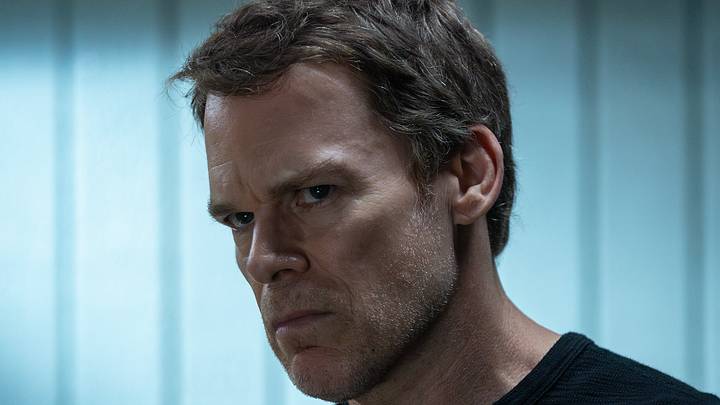
Back in July 2004, Jeff Lindsay introduced readers to Dexter Morgan, a Miami police blood-spatter analyst who kills only people who deserve it, egged on by a voice in his head he calls the “Dark Passenger.” Two years later, Showtime turned Darkly Dreaming Dexter into a hit series with Michael C. Hall.
Somewhere along the way, the internet decided Dexter had a real-life model: Pedro Rodrigues Filho, a Brazilian who claimed to have killed more than 100 people, most of them criminals. Entertainment sites now call him “the Brazilian Dexter,” and ScreenRant describes the show as loosely based on his crimes. No quote from Lindsay or the show’s producers backs that up, but the similarities are hard to miss.
The Boy Who Settled Scores
Filho was born in 1954 on a farm in Santa Rita do Sapucaí, in the Brazilian state of Minas Gerais, with an injured skull: his father, he said, had kicked his pregnant mother during a fight. He told the magazine Época in 2003 that he first wanted to kill at 13, when he shoved an older cousin into a sugarcane press. A year later, after his father lost his job as a school guard over accusations that he was stealing school lunches, Filho shot the official who had fired him, then shot the guard he believed was the real thief. (Accounts disagree on who that first victim was: some Brazilian outlets say the mayor of his hometown, others the deputy mayor of Alfenas, also in Minas Gerais.)
He fled to Mogi das Cruzes, outside São Paulo, where he robbed drug dens, killed traffickers, and took over a dead drug boss’s business. When his pregnant girlfriend was shot dead, he went looking for the man who ordered it and, with four friends, hit a wedding party, leaving seven dead and 16 wounded, according to Época. He was arrested shortly after turning 18 and entered prison on May 24, 1973; in the van on the way there, he killed a fellow prisoner he said was a rapist.
Where the Comparison Holds
Like Dexter, Filho had a code, or said he did. He told Época he killed only people who were no good, and that he never killed children, women, or family men. He also had a father story to rival Harry Morgan’s, though a much darker one: Filho claimed he killed his own father in prison, in revenge for his mother’s stabbing, and chewed a piece of his heart. (Época noted that he gave a psychiatrist a completely different account of how his father died.)
The resemblance mostly ends there. Dexter’s code, as Mental Floss has laid out before, includes “don’t get caught,” and Filho spent roughly four decades behind bars, much of it bragging. He had “Mato por prazer” (“I kill for pleasure”) tattooed on his left arm. He claimed 47 victims inside prison alone, though Época found just 18 charges against him on file in 2003; by his death, Brazilian outlets counted 71 homicides on his record.
What Dexter’s Creator Actually Said
Lindsay has told his origin story many times, and it starts nowhere near Brazil: at a Kiwanis Club lunch where he sat at the head table waiting to speak and, as he told BookPage in 2005, “the idea just popped into my head that sometimes serial murder isn’t a bad thing.” He then built the character out of research: he collected books on sociopaths and murderers, interviewed psychologists and crime scene investigators, and got cop friends to turn him loose in their dead-files room. He also rejects the very label that made Filho famous: “Dexter’s not a vigilante,” he told Middlebury Magazine in 2011. “Vigilantes are trying to perform an act of justice. Dexter just likes to kill people.”
The Ending Dexter Survived
Filho walked out of prison in 2007, went back in 2011 for crimes committed during his sentence, and was released for good in 2018. Within months, he had reinvented himself as a YouTube personality who commented on crimes in the news and lectured about his past. On the morning of March 5, 2023, he was on a sidewalk in Mogi das Cruzes holding a small child when men in a black car opened fire, according to the news site G1. The child was unhurt, but according to the police report, one of the attackers stabbed Filho in the throat as he lay on the ground. He was 68.
Read More:
•
•
Dexter: New Blood: 7 Things We Know
Every Season of ‘The Twilight Zone’ Ranked From Best to Worst by Rotten Tomatoes
There is a fifth dimension beyond that which is known to man, and it holds a ranking of every ‘Twilight Zone’ season.
ByLogan DeLoye|Oct 31, 2026, 8:00 AM EDT
You unlock this door with the key of imagination; beyond it is another dimension where Rotten Tomatoes has ranked all five original Twilight Zone seasons.
The Twilight Zone took over television screens from 1959 to 1964, inviting the people of Earth into “a dimension of sound, a dimension of sight, a dimension of mind,” of “both shadow and substance, of things and ideas.”
The science-fiction series, hosted by Rod Serling, spanned 156 episodes, each with different characters and plots that drew you deeper into The Twilight Zone. Just when viewers thought they had the story figured out, a supernatural (sometimes horrific and psychological) plot twist transpired, leaving you with a moral lesson.
The series as a whole received a 92 % on Rotten Tomatoes, earning top praise from the review site. They also ranked each season individually, with a few scoring higher than others. But which season was the best, and which fell short on the Tomatometer?
SEASON 1 – 100%
The first episode of The Twilight Zone premiered in October 1959 and immediately captivated viewers with a storyline they would never forget, though not the case for the main character. Mike Ferris wanders into the small town of Oakwood, with no idea who he is or why he is there. Hours go by, and he realizes he is entirely alone, but is it all just a simulation?
The season continues with favorites like “Mr. Denton on Doomsday,” “The Four of Us Are Dying,” “The Fever,” “The Monsters Are Due on Maple Street,” “Mr. Bevis,” and “A World of His Own.”
Rotten Tomatoes gave Season 1 of The Twilight Zone a perfect rating.
SEASON 2 – 100%
Rotten Tomatoes also gave Season 2 a perfect score, which upheld the horror and speculative appeal of the first season.
The second season of The Twilight Zone opens with “King Nine Will Not Return,” in which World War II pilot James Embry is on a plane that crashes into the desert. When he wakes up, his crew is gone. Wandering through the desert and seeing strange visions in the sky, he wakes up in a hospital 17 years later, triggered by news headlines of the incident. Was Embry experiencing PTSD, or was there actually something supernatural occurring in his hospital room?
The season proceeds with “Eye of the Beholder,” “A Most Unusual Camera,” “A Penny for Your Thoughts,” “Will the Real Martian Please Stand Up?,” and the finale, “The Obsolete Man.”
SEASON 3 – 90%
Premiering in 1961, the third season of The Twilight Zone begins with an episode about an apocalyptic battle and two enemy soldiers. Throughout the episode, the soldiers, a man and a woman, learn to like each other despite being on opposing sides. With no one left on Earth, they must work together to survive, though hostile and tense.
Other episodes from this season include “The Shelter,” “The Mirror,” “It’s a Good Life,” “To Serve Man,” “Little Girl Lost,” “Nothing in the Dark,” and “The Changing of the Guard.”
Rotten Tomatoes gave the third season a 90%, with the Critics Consensus being that the season “manages to overturn an uneven structure with some superb writing that borders on profound and some of the finest half hours in the series’ history.”
SEASON 4 -86%
Season 4 of The Twilight Zone ranked lower than previous seasons with an 86% on the Tomatometer (tied for last).
The first episode of this season, “In His Image,” follows 35-year-old Alan Talbot, who struggles with homicidal urges and memory issues. He discovers he is actually an android with a malfunction. In the end, Alan is deactivated, and the scientist who created him assumes his identity… and his fiancée!
Other episodes in Season 4 include “Valley of the Shadow,” “Printer’s Devil,” “On Thursday We Leave for Home,” “No Time Like the Past,” and “The Bard.”https://www.youtube.com/embed/SXapeCPpyeo?feature=oembed
Season five of The Twilight Zone premiered in 1963 with “In Praise of Pip,” which follows bookie Max, who learns his son has been wounded at war. Max becomes mortally wounded himself and finds his way to an amusement park where he relives happy memories with a younger version of his son and prays to God to spare his son’s life in exchange for his own. Pip recovers and finds himself in the same park by the end of the episode.
Rotten Tomatoes scored this season an 86%, like the fourth season, once again tied for last, saying that “portions of these episodes are diminished by unfortunate clichés.”
Other Season 5 episodes include “Nightmare at 20,000 Feet,” “Living Doll,” “The Old Man in the Cave,” “Ninety Years Without Slumbering,” “The Masks,” and “The Bewitchin’ Pool.”
Read More:
•
•
18 Celebrities Who Appeared on ‘The Twilight Zone’
•