
ByRick Marshall|Jan 16, 2024, 11:13 PM EST
 Add us as a preferred source

Over its nine-season run, The X-Files covered a lot of ground, pitting its odd-couple stars against all manner of extraterrestrial enemy, cryptozoological creature, and mythological monster. But along with all of the memorable stories fans are still talking about more than a decade after the show ended its run, The X-Files also gave us a few things to be thankful for that might not be as obvious.
1. Breaking Bad
Before he created one of the hottest shows on television, Breaking Bad showrunner Vince Gilligan spent several seasons writing, producing, and even directing episodes of The X-Files. One particular episode in the sixth season, “Drive,” featured an antagonist played by Bryan Cranston. Gilligan was so impressed with Cranston’s portrayal of the character, which required him to humanize an otherwise loathsome person, that he brought him back for the role of Walter White in Breaking Bad.
2. and 3. Buffy the Vampire Slayer and Torchwood
There’s no shortage of filmmakers and television auteurs who were influenced by The X-Files, but two very prominent creators who have name-dropped Chris Carter’s series when discussing some of their most popular projects are Buffy the Vampire Slayer creator Joss Whedon and Torchwood creator Russell T. Davies. In describing his popular show about a teenager tasked with vanquishing the undead, Whedon called Buffy a mix between The X-Files and My So-Called Life. Similarly, Davies called his Doctor Who spinoff series about a mysterious agency investigating supernatural phenomena a cross between The X-Files and This Life.
4. The Growth of Online Fan Communities
Online fan communities were still in their infancy when The X-Files began its run, but the simultaneous rise of both the show and the internet itself resulted in the series becoming one of the earliest to develop a large online following willing to spend countless hours discussing the show, speculating about future stories, and even creating their own original content related to the series. This fortunate alignment of project, fandom, and medium was embraced by The X-Files creators, and led to many message-board users seeing their names pop up in episodes or acknowledged in other ways by the writers. In one particular example of the show’s creators nurturing the online community, a May 2001 episode introduced a character named Leyla Harrison—the name of a popular author of The X-Files fan-fiction who had recently died. This interaction between fans and a project’s creators soon became the model for subsequent series looking to connect with their online fanbase.
5. Julianne Moore in Hannibal
After Jodie Foster declined to reprise her role as F.B.I. investigator Clarice Starling in the 2001 sequel to The Silence of the Lambs, the studio turned to a short list of actresses that seemed like a good fit for the character. Among them was Dana Scully herself, Gillian Anderson. However, it was discovered that Anderson’s X-Files contract prohibited her from playing an F.B.I. agent in any other projects, forcing her to drop out of the running for the role (which eventually went to Julianne Moore). In a weird turn of events, Anderson was recently cast in a recurring role on the Hannibal television series as Hannibal Lecter’s therapist.
6. William B. Davis
Okay, so this one’s a bit of a stretch, but as a big fan of The Cigarette-Smoking Man in The X-Files universe, it’s always interesting to note that actor William B. Davis’ sinister character was never intended to be the recurring foil for Mulder and Scully that he eventually became in the series. Davis was originally cast as an extra for the series while he was teaching at an acting school in Vancouver, where the show was filmed. Chris Carter and the rest of the show’s creative team were so impressed with his performance that they brought him back again and again over the series’ nine-season run, and eventually gave him the honor of being one of the only three actors—along with David Duchovny and Gillian Anderson—to appear in both the first and last episodes of the series. He went on to appear in countless other films and television series, often as a mysterious or otherwise sinister character, while also counting a number of famous actors (including Lucy Lawless) among his students.
7. “Myth Arcs” and “The Chris Carter Effect”
For better or worse, The X-Files coined several terms that have become commonly used in today’s television culture. The phrase “myth arcs” (or “mythology episodes”) has its roots in The X-Files, with fans using the term to describe episodes or multi-story arcs that served the over-arching narrative of the series instead of just that particular episode. Over the course of the series’ nine-season run, most of the “myth arcs” explored the alien-abduction and invasion elements of the story that generally led to season-ending cliffhangers and revelations regarding a threat to the greater world around the characters. Years later, the term continued to see heavy use in discussion of shows like Lost and Buffy the Vampire Slayer. Similarly, “The Chris Carter Effect” has become a relatively common term to describe a show that has let its over-arching mythology become so convoluted that the series begins losing fans who no longer believe the story’s mysteries can be resolved with any amount of satisfaction.
Related Tags
The Real-Life Serial Killer That Might’ve Inspired ‘Dexter’s Dark Passenger
Brazil’s most notorious killer of killers has been called the real Dexter for years, but ‘Dexter’s’ creator tells a different origin story.
ByMatt Hoffman|Oct 30, 2026, 9:00 PM EDT
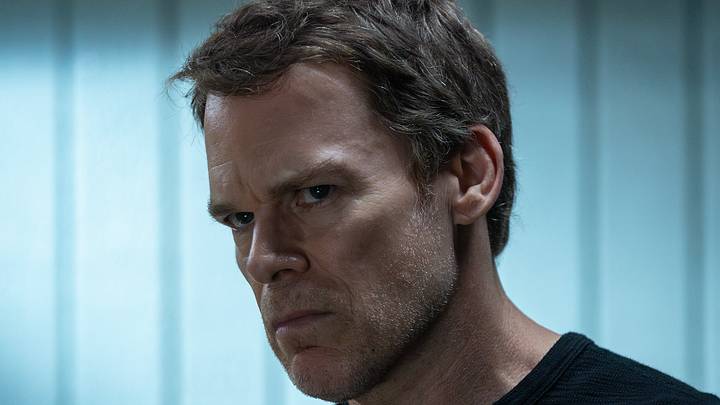
Back in July 2004, Jeff Lindsay introduced readers to Dexter Morgan, a Miami police blood-spatter analyst who kills only people who deserve it, egged on by a voice in his head he calls the “Dark Passenger.” Two years later, Showtime turned Darkly Dreaming Dexter into a hit series with Michael C. Hall.
Somewhere along the way, the internet decided Dexter had a real-life model: Pedro Rodrigues Filho, a Brazilian who claimed to have killed more than 100 people, most of them criminals. Entertainment sites now call him “the Brazilian Dexter,” and ScreenRant describes the show as loosely based on his crimes. No quote from Lindsay or the show’s producers backs that up, but the similarities are hard to miss.
The Boy Who Settled Scores
Filho was born in 1954 on a farm in Santa Rita do Sapucaí, in the Brazilian state of Minas Gerais, with an injured skull: his father, he said, had kicked his pregnant mother during a fight. He told the magazine Época in 2003 that he first wanted to kill at 13, when he shoved an older cousin into a sugarcane press. A year later, after his father lost his job as a school guard over accusations that he was stealing school lunches, Filho shot the official who had fired him, then shot the guard he believed was the real thief. (Accounts disagree on who that first victim was: some Brazilian outlets say the mayor of his hometown, others the deputy mayor of Alfenas, also in Minas Gerais.)
He fled to Mogi das Cruzes, outside São Paulo, where he robbed drug dens, killed traffickers, and took over a dead drug boss’s business. When his pregnant girlfriend was shot dead, he went looking for the man who ordered it and, with four friends, hit a wedding party, leaving seven dead and 16 wounded, according to Época. He was arrested shortly after turning 18 and entered prison on May 24, 1973; in the van on the way there, he killed a fellow prisoner he said was a rapist.
Where the Comparison Holds
Like Dexter, Filho had a code, or said he did. He told Época he killed only people who were no good, and that he never killed children, women, or family men. He also had a father story to rival Harry Morgan’s, though a much darker one: Filho claimed he killed his own father in prison, in revenge for his mother’s stabbing, and chewed a piece of his heart. (Época noted that he gave a psychiatrist a completely different account of how his father died.)
The resemblance mostly ends there. Dexter’s code, as Mental Floss has laid out before, includes “don’t get caught,” and Filho spent roughly four decades behind bars, much of it bragging. He had “Mato por prazer” (“I kill for pleasure”) tattooed on his left arm. He claimed 47 victims inside prison alone, though Época found just 18 charges against him on file in 2003; by his death, Brazilian outlets counted 71 homicides on his record.
What Dexter’s Creator Actually Said
Lindsay has told his origin story many times, and it starts nowhere near Brazil: at a Kiwanis Club lunch where he sat at the head table waiting to speak and, as he told BookPage in 2005, “the idea just popped into my head that sometimes serial murder isn’t a bad thing.” He then built the character out of research: he collected books on sociopaths and murderers, interviewed psychologists and crime scene investigators, and got cop friends to turn him loose in their dead-files room. He also rejects the very label that made Filho famous: “Dexter’s not a vigilante,” he told Middlebury Magazine in 2011. “Vigilantes are trying to perform an act of justice. Dexter just likes to kill people.”
The Ending Dexter Survived
Filho walked out of prison in 2007, went back in 2011 for crimes committed during his sentence, and was released for good in 2018. Within months, he had reinvented himself as a YouTube personality who commented on crimes in the news and lectured about his past. On the morning of March 5, 2023, he was on a sidewalk in Mogi das Cruzes holding a small child when men in a black car opened fire, according to the news site G1. The child was unhurt, but according to the police report, one of the attackers stabbed Filho in the throat as he lay on the ground. He was 68.
Read More:
•
•
Dexter: New Blood: 7 Things We Know
20 Forgotten Reality TV Shows From the 2000s That Are Unbelievable Today
From ‘Flavor of Love’ to ‘The Swan,’ it’s hard to believe any of these shows were even green-lit.
ByPaul Anthony Jones|Nov 1, 2026, 2:00 PM EST
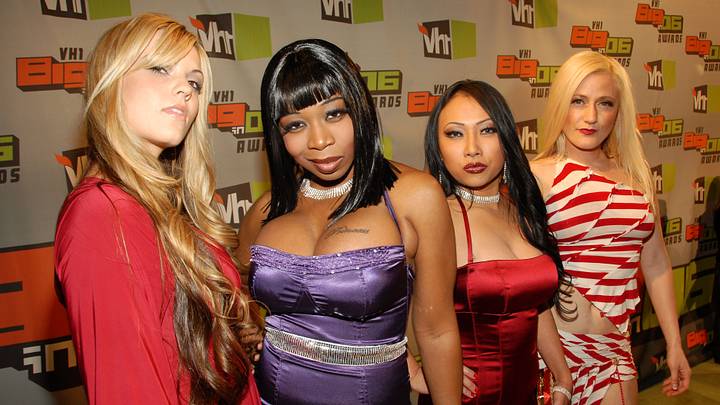
Considering that it ran for a full 15 years, from 2003 to 2018, reality show America’s Next Top Model was hardly without its fair share of controversies. From models being compelled to undergo cosmetic procedures to remain in the contest to fat-shaming scandals, perilous photoshoots, and even race-swapping makeovers, the show made quite a few questionable choices over its original run—so much so, in fact, that it sparked a recent three-part retrospective documentary on Netflix.
But Top Model was by no means alone in sparking controversy, as during the genre’s boom in the early 2000s, TV schedules were filled with increasingly provocative (and often downright bizarre) reality TV shows.
ARE YOU HOT?
One of the lowest-rated television shows on IMDB, as its title suggests Are You Hot? The Search for America’s Hottest People was a six-episode ABC reality show from 2003 in which hopeful contestants had their physical attractiveness judged (and often rudely critiqued) by a panel of experts, including supermodel Rachel Hunter and actor Lorenzo Lamas.
Talent and personality meant nothing, as the show was purely based on looks. Perhaps understandably, it was canceled after a single six-episode season.
ARMED & FAMOUS
A number of popular reality shows, from Dancing With the Stars to the UK iteration of Gordon Ramsay’s Hell’s Kitchen, have been built around famous faces training in or learning how to do various new skills or occupations.
CBS reality show Armed & Famous perhaps took that one step too far in 2007 when five celebrities—including La Toya Jackson and Jack Osbourne—trained as reserve police officers in Indiana, eventually going out on patrol and officially graduating as gun-carrying officers. The show was pulled from schedules after just a handful of episodes.
BEAUTY AND THE GEEK
Female “beauties” and male “geeks” were paired up and made to take part in a string of challenges in Ashton Kutcher’s Beauty and the Geek, which originally ran on The WB from 2005 to 2008. Although cancelled in the U.S., the show has nonetheless sparked a franchise worldwide.
BIG!
The Discovery Channel’s Big! was a short-lived 2004 show in which teams of experts would be gigantic, yet fully functioning, versions of everyday gadgets and objects—from treadmills and vacuum cleaners, to cuckoo clocks and electric guitars.
THE BIGGEST LOSER
Initially broadcast on NBC from 2004–2016, The Biggest Loser was a ratings favorite at its peak, but questions were routinely raised over the controversial techniques involved (including an infamous accusation of illicit weight-loss drug taking that eventually led to an investigation by the LA County Sheriff).
CHANGING ROOMS
Discovery’s long-running Emmy-nominated home decoration show Trading Spaces was actually the U.S. version of the earlier British reality TV favorite Changing Rooms, which was first broadcast back in 1996, and ran until 2004.
Both versions followed the same straightforward premise: two sets of neighbors were given a small budget and 48 hours to entirely redecorate a room in one another’s houses. Not all the renovations quite went to plan, however, with a particularly memorable British episode in 2000 seeing a contestant’s prized £6,000 teapot collection smashed to pieces when some avant-garde suspended shelving collapsed.
FAT FAMILIES
Like a British version of The Biggest Loser, Sky’s Fat Families in 2010 saw straight-talking weight-loss guru Steve Miller spending 24 hours with an overweight family, before giving them the advice and routine needed to get them in shape. Miller’s no-nonsense, fat-shaming approach to encouraging the contestants caused controversy, however, and the show was ultimately cancelled after just two series.
FLAVOR OF LOVE
Surely one of the strangest dating shows of the 2000s, Flavor of Love, broadcast from 2006–2008, saw Public Enemy rapper Flavor Flav playing The Bachelor with three seasons’ worth of romantic hopefuls vying to become his new girlfriend.
HOME ON THEIR OWN
Another short-lived British reality show, just two seasons of Home on Their Own were broadcast from 2002–03. The show involved children being given full control over the redecoration of their parents’ home, while their parents were temporarily moved out of the house while the work when on unsupervised.
What could possibly go wrong? Well, indoor slides, Narnia-themed bedrooms, and a voice-controled robotic toilet were among the kids’ many innovations.
I WANNA MARRY “HARRY”
The quotation marks are important in the title of this 2014 Fox reality show, which followed twelve romantically hopeful young women who were actively manipulated into believing they were competing to be Prince Harry’s next girlfriend. It was essentially a royal version of the next entry on this list.
JOE MILLIONAIRE
Three seasons of Joe Millionaire—in which a group of single women compete for the affections of an “average Joe” they are coerced into believing is a millionaire—were broadcast on Fox in 2003. Despite its controversial manipulation of its contestants, the show was revived in 2022.
MAKING THE BAND
A string of reality shows in the 2000s focused on launching new pop acts, but MTV’s Making the Band was perhaps the most controversial (not least due to the involvement of Sean “Diddy” Combs).
Chief among its issues were accusations of sexism, and increasingly bizarre and demeaning set of “challenges” that seemed to have little to do with getting into the music industry: One episode famously involved Diddy demanding the members of one prospective band go fetch him a slice of cheesecake, leading to them walking five miles to the closest store in the middle of the night.