
ByMark Juddery|Mar 8, 2024, 2:33 PM EST
 Add us as a preferred source
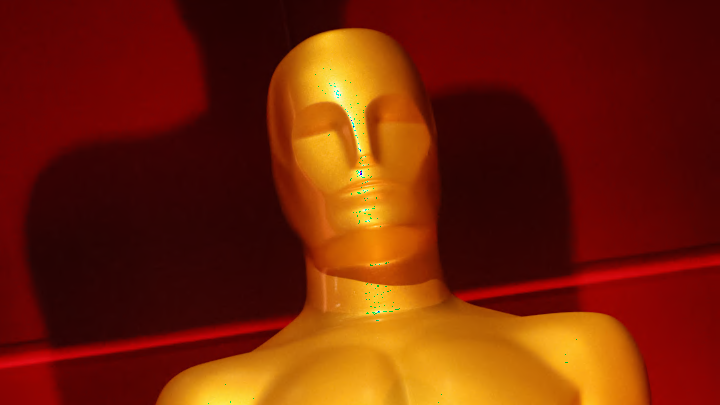
Every year during Oscar season, you can always safely guess one thing: Before the awards are presented, critics will complain about how predictable the Oscars are. But while every year seems to have a few obvious results, you do get the occasional shocker. Take the 1996 awards, for example, when Lauren Bacall was expected to be named Best Supporting Actress. Instead, Juliette Binoche’s name was announced, which was a problem, because she hadn’t even prepared a speech. “I don’t know why I got this,” she apologized. “I thought Lauren would win.” Yes, sometimes the Oscars can surprise. Here are some of the most memorable occasions.
1. Katharine Hepburn (1932-33)
As a young actress, Katharine Hepburn was dubbed “box-office poison,” and wasn’t well-liked in Hollywood, so just being nominated for Morning Glory was surprising enough. She didn’t even show up to the Oscars ceremony, which she might have found entertaining. Host for the night was liberal satirist Will Rogers, joking about Republicans, Hollywood big shots, even Oscars lobbying (predating Jon Stewart’s Oscar night banter by 73 years). His rudest joke, however, was reserved for the Best Actress award. Upon opening the envelope, he summoned the other two nominees, May Robson and Diana Wynyard. They rushed up excitedly, assuming that it was a tie (as had happened with the Best Actor prize the previous year). Instead, Rogers thanked them for their performances and announced that the winner was their rival, Katharine Hepburn. The stunned crowd replied with a half-hearted applause.
Hollywood later warmed to Hepburn, eventually giving her another three Oscars—more than any other actress. Though she never bothered to show up, Hepburn confessed in 1998 that she felt touched by her Oscars. “They gave me their respect and their affection. It was a revelation ““ the generous heart of the industry.” Even after her death, she proved that she could still win Oscars, when Cate Blanchett took home a statuette for playing her in The Aviator (2004).
2. Luise Rainer (1937)
When Luise Rainer was nominated as Best Actress forThe Good Earth (1937), she didn’t even bother to show up to the Oscars, opting to stay home instead. She had won the previous year, and was convinced (like most people) that no actor could ever win consecutive Oscars. Besides, she was up against the revered Greta Garbo, who had never won, for her acclaimed performance inCamille. However, their boss, tycoon Louis B. Mayer, used his considerable power to get an advance peek of the winners’ names on the night—and found that Rainer had indeed beaten the great Garbo! At the last moment, she was ordered to throw on a gown and rush to the awards ceremony, with no time even to apply her make-up. When her second victory in a row was announced, the audience was somewhat taken aback.
While it was a great honor, it didn’t do her much good. Within a year, her career had fizzled. “I have often heard the Academy Award to be a bad omen,” she later said. Still, she is the oldest living Oscar winner (at 99).
3. An American in Paris (1951)
The bookies could have made a killing during the 1951 Oscars, when it was assumed that A Streetcar Named Desire would sweep the field. Easily the favorite, it would win four Oscars, including three of the acting awards. A major upset happened, however, when the Best Director award went not to Streetcar director Elia Kazan, but to George Stevens for the long shot A Place in the Sun. Of course, the Best Director usually directs the Best Film. After this shock, all bets were off. It could go either way: A Streetcar Named Desire orA Place in the Sun. When the envelope was opened, at one of the most suspenseful Oscar nights ever, the winner was An American in Paris.
There was an audible gasp from the audience, followed by loud applause. People who were already leaving suddenly stopped near the exit, wondering if their hearing was all right. Back then, musicals never won the Oscar for Best Film. (The only exception was The Broadway Melody, way back in 1928.) Gene Kelly, the star of An American in Paris, had even been presented with an honorary Oscar that night, which is usually a consolation prize for people who will never win a “real” Oscar. Now his producer, Arthur Freed, was proudly holding one of those statuettes.
4. Grace Kelly (1954)
Judy Garland was a lock for the 1954 Best Actress award for the musical A Star is Born. Not only was it a fine performance, but she was one of Hollywood’s best-loved stars. Most of all, this was her great comeback, after years of breakdowns and personal struggles. On the night itself, she was in hospital recovering from her latest drama: the premature birth of her son. A camera crew was at her bedside, she was wired for sound, and her hair and make-up were done for the inevitable announcement.
To everyone’s shock, the Oscar instead went to 26-year-old former model Grace Kelly, for The Country Girl. To this day, critics call this one of the strangest decisions in Oscars history. Once again showing her acting prowess, Garland smiled graciously at the news, while being secretly heartbroken. Kelly would retire from acting two years later to become Princess Grace of Monaco.
5. Marisa Tomei (1992)
At the 1992 Oscars, the favorite for best supporting actress was esteemed Australian actress Judy Davis, nominated for Husbands and Wives. Still, she had some fine competition from classical British thespians Joan Plowright, Vanessa Redgrave and Miranda Richardson. With such an outstanding field, many were flabbergasted when Jack Palance opened the envelope and announced that the winner was—Brooklyn-born actress Marisa Tomei, for her funny performance in My Cousin Vinny. To this day, film buffs can’t believe it. It was unkindly suggested that, upon opening the envelope, 74-year-old Palance didn’t actually read it, but absent-mindedly repeated the name of the last nominee. For the record, many safeguards are in place to ensure that flubs don’t become official results.
But how could Tomei have won against such a prestigious group? Well, the Academy is famously patriotic. The British vote would have been split—but as the only American nominee, perhaps it should have been surprising if Tomei had not won.
6. Roman Polanski (2002)
Few film directors are as notorious as the French-born, Polish director Roman Polanski. His outspoken opinions about Hollywood have upset many people. His dark and disturbing films, likeRepulsion, Rosemary’s Baby and Chinatown, are not exactly date movies. Oh, and he has been a fugitive from justice since fleeing the U.S. in 1978 while facing statutory rape charges. So when he was nominated for his movieThe Pianist, he was not considered a serious prospect, especially against Martin Scorsese, who (as the Academy was often reminded) still didn’t have an Oscar after many years as one of Hollywood’s great directors. Scorsese didn’t have a lock on the award, however. As Chicago swept the field, things were looking good for Rob Marshall, director of that crowd-pleasing movie. But while Chicago would be named Best Film, it was Polanski who would take the Best Director prize—and despite his sordid past, this was greeted with a warm applause. Of course, he couldn’t be there to accept it. His friend Harrison Ford accepted it on his behalf.
7. Marlon Brando (1972)
Let’s save perhaps the biggest surprise for last. When Brando was announced as the Best Actor winner for The Godfather, it was no surprise. Even though his Don Corleone wasn’t really the lead actor (he died somewhere in the middle of the film), he was expected to win for his unforgettable performance. The surprise wasn’t in the result, but in the acceptance of his award. Instead of the man himself, a Native American woman in tribal regalia introduced herself as Sacheen Littlefeather. “I’m representing Marlon Brando this evening, and he has asked me to tell you that he very regretfully cannot accept this generous award. And the reason for this, being the treatment of American Indians today by the film industry.” After she left, to a stunned audience, presenter Clint Eastwood had to follow her. “I don’t know if I should present this award on behalf of all the cowboys shot in John Ford westerns over the years,” he said.
It was later reported that Littlefeather was actually an actress named Maria Cruz (she has her rebuttal here), and that Brando still received the award, displaying it proudly next to his other Oscar. Still, it goes down one of the great surprises of Oscar night history.
This story was originally published in 2009.
Related Tags
The Best Fantasy Movie From Every Year in the 2010s
From animated classics to unforgettable live-action adventures.
BySuhaib Adeel|Jun 13, 2026, 6:00 PM EDT

In previous eras, the Fantasy genre was often dominated by sprawling live-action epics. The 2000s were largely defined by massive franchises such as The Lord of the Rings and Harry Potter. The 2010s also had their share of big-budget fantasy blockbusters, but this was also when animation became a highlight of this genre.
A lot (if not all) of the movies on this list showed how animation could create worlds and ideas that would be difficult or impossible to properly realize in any other way. Rather than treating fantasy as pure escapism, many of these films used these imaginative settings to explore themes of grief, memory, identity, and loneliness, with great narrative impact.
Looking back, the 2010s successfully expanded on what fantasy movies could be, and these are the absolute best of them.
- How to Train Your Dragon (2010)
- Harry Potter and the Deathly Hallows – Part 2 (2011)
- Life of Pi (2012)
- The Hobbit: The Desolation of Smaug (2013)
- What We Do in the Shadows (2014)
- Inside Out (2015)
- The Jungle Book (2016)
- The Shape of Water (2017)
- Isle of Dogs (2018)
- The Lighthouse (2019)
How to Train Your Dragon (2010)
How to Train Your Dragon was one of the most cinematic animated films of its time. The story follows Hiccup, a young Viking who grows up in a society that sees dragons as enemies. But things change when he befriends Toothless, a feared dragon who turns out to be very different from what the legends had suggested.
The movie brought on legendary cinematographer Roger Deakins as a visual consultant, and his influence is easy to see all over it.
In addition to creative animation and camera work, the music here gives the movie a nice emotional lift. The result is a fantasy adventure that works equally well as a coming-of-age story and a spectacular piece of visual filmmaking.
Harry Potter and the Deathly Hallows – Part 2 (2011)
Ending such a culturally and narratively massive movie franchise was never going to be an easy feat, but Harry Potter and the Deathly Hallows – Part 2 pulled it off.
Taking place during the final stages of the war against Voldemort, there’s very little downtime here. The story moves from one major confrontation to the next, building toward the Battle of Hogwarts.
What makes the movie work isn’t just the action, though there’s plenty of that. By this point, audiences had spent a decade watching these characters grow up, and the emotional payoff matters as much as the action. The movies became darker and more mature as they went, pretty much “growing up” with their target audience.
Life of Pi (2012)
It’s easy to talk about Life of Pi as a visual achievement because it absolutely is, but the movie would not work if viewers didn’t care about the characters, since there are very few of them.
The story begins as a survival tale. After a shipwreck, young Pi Patel finds himself stranded in the Pacific Ocean aboard a lifeboat with a Bengal tiger named Richard Parker.
The ocean sequences are breathtaking. Some scenes look less like traditional filmmaking and more like moving paintings. Director Ang Lee constantly found new ways to make the ocean feel beautiful, terrifying, and lonely all at the same time.
The tiger was one of the great CGI achievements of the decade. Because filming a real tiger on a small boat was, obviously, impractical and dangerous, the filmmakers relied mostly on digital effects that looked very real.
The Hobbit: The Desolation of Smaug (2013)
The Hobbit trilogy never quite escaped comparisons to The Lord of the Rings, and that’s understandable, but if there’s one entry that comes closest to standing on its own, it’s The Desolation of Smaug.
The movie spends much of its runtime following Bilbo and the dwarves as they move closer to the Lonely Mountain. Along the way, the story introduces some of the trilogy’s strongest storytelling elements. The forests of Mirkwood, the city of Lake-town, and finally Erebor itself all help give the film a stronger sense of adventure and a more lived-in feeling than the first movie.
This is also the point where several supporting characters became more memorable, thanks to more character development. You could tell which dwarf was who a bit more easily than in An Unexpected Journey, the first film in the trilogy.
The new characters were great too. Luke Evans’ Bard brought a grounded, reluctant hero to the story, while Lee Pace’s Thranduil commanded attention whenever he appeared on screen. Even Tauriel, a character created specifically for the films, added another welcome perspective to this world.
What We Do in the Shadows (2014)
There are actually more than a few vampire comedies out there, but very few are as consistently funny as What We Do in the Shadows.
The story is about a documentary crew that follows a group of centuries-old vampires that share a house in modern-day New Zealand. Instead of supernatural battles or gothic horror, the movie is mostly about vampire roommates annoying each other and arguing over the most mundane (but realistic) things.
The mockumentary format is a huge part of why it works, thanks to the fact that it treats ridiculous supernatural situations with complete seriousness.
Inside Out (2015)
Inside Out follows Riley, a young girl struggling with a major move while, inside her mind, Joy, Sadness, Anger, Fear, and Disgust try to help her navigate the transition.
The best part about the movie is how it visualizes abstract concepts, resulting in a pretty imaginative and impressive narrative. Instead of taking a traditional or simple route where happiness solves every problem, the movie focuses on the message that it is perfectly okay to feel sad.
Its funny adventure bits keep kids entertained. But for adults, it might resonate on a different level, making you reflect on your own childhood.
The Jungle Book (2016)
Disney’s live-action remakes have produced mixed results over the years, especially more so this decade, but The Jungle Book remains one of the best examples of how the remakes can work and even elevate the original material.
Most of the environments, animals, and scenery were created digitally, yet the jungle still feels tangible and alive. The scale of the world is convincing enough that it’s easy to forget how much of what you’re seeing didn’t physically exist during filming at all.
The voice cast also helps enormously, thanks to Bill Murray, Ben Kingsley, Idris Elba, Scarlett Johansson, and Christopher Walken, all of whom bring these characters to life very well.
The movie also successfully balances nostalgia with a more mature tone. It still includes those beloved musical moments, but it never feels trapped by them.
The Shape of Water (2017)
The Shape of Water is set during the Cold War and follows the story of Elisa, who discovers a mysterious captive creature being held inside a government laboratory. As their bond grows, the story gradually moves from a thriller into something a bit more romantic.
One of the first things you notice here is the great production design. Every location feels carefully crafted, especially the contrast between Elisa’s apartment above an old movie theater, which has a ton of personality, and the government facility, which feels oppressive in comparison.
It’s also easy to see how the movie is a love letter to classic cinema. At one point, the movie even has a musical sequence that pays homage to old Hollywood movies. Guillermo del Toro also does a bit of genre mixing, moving from fantasy