
ByRoger Cormier,Erika Wolf|Feb 27, 2022, 7:17 AM EST
 Add us as a preferred source
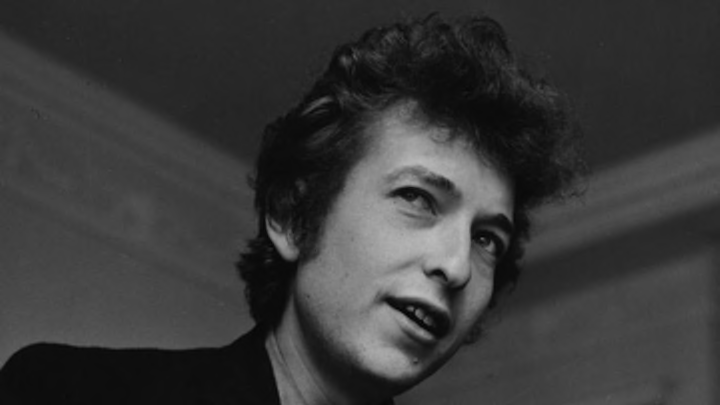
Facts and Bob Dylan have always made for strange companions. Though he achieved worldwide fame as “The Voice of a Generation”—a young man celebrated for his honesty as he sang of both the hard truths of social injustices as well as his own personal romantic anguish—he did so as Bob Dylan, not as Robert Zimmerman, the name he was born with and went by growing up in Minnesota.
Even today, more than 50 years after he first began kicking around the Greenwich Village club scene, Dylan remains an elusive figure who has at times been accused of making career choices specifically to obfuscate and muddle his identity. But there’s plenty we do know about the Nobel Prize winner who wrote some of the most important songs in music history.
1. As a teenager, Bob Dylan claimed that playing with Little Richard was his life goal—though he might have been joking.
Robert Allen Zimmerman was born in Duluth, Minnesota, on May 24, 1941. From an early age, it was clear that his future would be in music. Under his high school yearbook picture, the life goal of the man who would soon become Bob Dylan reads “to join Little Richard.” Though it seems like an honest enough answer, some people believe that he was being cheeky. Just a few years earlier, Zimmerman had taken part in a school talent show where he played keyboards and sang a Little Richard song with his band. But his high school principal was not impressed and cut off the power then closed the curtain on Dylan and his fellow rockers.
2. Bob Dylan conned his way into his very first band.

Zimmerman spent the summer following his graduation from high school working at a busboy at a cafe in Fargo, North Dakota. It was while working there that he managed to talk his way into becoming part of Bobby Vee’s band, The Shadows … by claiming that he had just gotten back from touring with Conway Twitty (he hadn’t).
3. Before he was Bob Dylan, Robert Zimmerman was Elston Gunnn.
When Vee asked Zimmerman what his name was, he told him it was Elston Gunnn—yes, with three Ns. He ended up getting the gig. It was a promising start to what would become a legendary career, but it didn’t last. There wasn’t much money to be made—and Zimmerman/Gunnn was headed to Minneapolis at the end of the summer to attend the University of Minnesota—so the project didn’t last long.
4. Bob Dylan belonged to a fraternity.
It’s hard to picture Dylan participating in fraternity antics like Pledge Week, but he was a part of Greek life at the University of Minnesota. Dylan was a part of Sigma Alpha Mu, a.k.a. Sammy, a well-known Jewish fraternity that counts the late Pulitzer Prize-winning writer Philip Roth among its other brothers. Dylan even lived in Sammy’s frat house, which was conveniently located near a number of local coffee shops and cafés, where Dylan regularly performed.
5. In 1960, Bob Dylan opened for the Smothers Brothers … it didn’t go well.
In 1960, before either Bob Dylan or the Smothers Brothers were well-known entities, the two acts performed together at a Denver club. Dylan was supposed to be the opening act, but apparently neither the audience—nor the headlining brothers—were feeling Dylan’s music, or his look. Tom Smothers apparently said that Dylan looked shabby and complained about his terrible voice; both brothers thought his music was depressing.
6. Bob Dylan hounded a New York Times music critic for a review.

Robert Shelton, a music critic for The New York Times, had seen Dylan perform at a few house parties and really liked his music. He wanted to help the up-and-coming musician by giving him some positive ink, but Dylan’s shows were too small to merit a review in The New York Times. Dylan, however, wasn’t above begging. So he kept bugging Shelton to write about him. Finally, in September 1961, Dylan booked a gig opening for the Greenbriar Boys at Gerde’s Folk City—a show that was big enough for Shelton to finally introduce readers to Dylan’s work. Shelton, of course, praised Dylan’s work, writing:
“Resembling a cross between a choir boy and a beatnik, Mr. Dylan has a cherubic look and a mop of tousled hair he partly covers with a Huck Finn black corduroy cap. His clothes may be in need of a bit of tailoring, but when he works his guitar, harmonica or piano and composes new songs faster than he can remember them, there is no doubt that he is busting at the seams with talent.”
Dylan was signed by Columbia Records shortly after the performance and Shelton’s review.
7. A Columbia executive gave Bob Dylan a record deal … even though he didn’t have the authority to give Bob Dylan a record deal.
Famed record producer John H. Hammond heard Dylan playing harmonica on a Carolyn Hester album and immediately signed the artist to a contract with Columbia Records. There was, however, a small problem: Hammond didn’t have the authority to sign Dylan to a contract. Oops!
It helped that Hammond was known as a man who could spot talent: In addition to Dylan, he had signed Billie Holiday, Aretha Franklin, and Bruce Springsteen. Another Columbia executive described Dylan’s voice as “the most horrible thing” he had ever heard in his life, but Hammond didn’t care. And clearly, Hammond was right.
8. John Hammond’s deal with Bob Dylan brought about a new phrase: “Hammond’s Folly.”
Though Hammond had a tendency to go with his gut (a few years after he signed Dylan, he signed Leonard Cohen—another musician other executives at Columbia weren’t thrilled about. Though he had proven his colleagues wrong more than once, the industry loved reminding Hammond of his rashness—especially after Dylan’s debut album sold just 5000 copies. Hammond’s signing Dylan therefore became known as “Hammond’s folly.” Hammond, however, saw things differently: While Dylan’s first album was considered a flop, Hammond said it cost just $402 to make, meaning it was a money-maker for the company.
9. Robert Shelton wrote some of the liner notes for Bob Dylan’s first album.
When it came time to write the liner notes for Dylan’s first album, Hammond approached The New York Times critic Robert Shelton for help. “The Times music department had an unwritten code that members should have nothing to do with the production of recordings that they might review,” Shelton later wrote in No Direction Home. “But nearly every member earned supplementary income by writing liner notes, anonymously or pseudonymously.” Shelton—writing as “Stacey Williams”—wrote that Dylan’s steel-string playing “runs strongly in the blues vein, although he will vary it with country configurations.”
10. Bob Dylan did a lot of couch surfing before he recorded his first album.
Stability wasn’t something Dylan had a lot of in his life when he began recording his first album. He didn’t even have an apartment. Fortunately, the advance he received for that album was enough that it allowed him to rent his very own apartment. Before that, he spent most nights crashing on the couches of different friends. But he used the money from his record deal to set up permanent residence in the West Village; he lived at 161 West 4th Street. In fact, the photo used on the cover of his second film, 1963’s The Freewheelin’ Bob Dylan, was taken just around the corner from Dylan’s apartment.
11. Bob Dylan’s first album featured mostly non-original material.
While Dylan is widely credited with ushering in the age of the singer/songwriter, his first album didn’t include much original material. In fact, only two of the songs were Dylan originals: “Talkin’ New York” and “Song to Woody,” the latter being a tribute to Woody Guthrie, Dylan’s idol, whom he met shortly after moving to New York City.
12. Bob Dylan recorded his first album in just two afternoons.
On November 20 and November 22, 1961, Dylan and Hammond met up in one of Columbia’s recording studios in New York City and cut Dylan’s first album. Dylan recorded 17 songs in total, each one in a single take, and with no musical accompaniment. “Mr. Hammond asked me if I wanted to sing any of them over again and I said no,” Dylan explained in 1962. “I can’t see myself singing the same song twice in a row.”
13. Bob Dylan penned a protest song with activist Jane Jacobs.
In the 1960s, activist Jane Jacobs spent years battling famed urban planner Robert Moses, who was working to demolish much of Greenwich Village in order to build an urban expressway. Jacobs was successful in fighting against this roadway, which is still notable to this day. Dylan, for one, seemed to appreciate the effort. Some lyrics found in a library at New York University were confirmed to have been a protest song, titled “Listen, Robert Moses,” that was a collaboration between Dylan and Jacobs. Unfortunately, the song was never recorded.
14. Bob Dylan broke a cardinal folk music rule on his first album.

One of the songs on Dylan’s first album is a cover of “House Of The Rising Sun,” a song Dylan had learned from Dave Van Ronk (the folk musician who was the inspiration behind the Coen brothers movie Inside Llewyn Davis). Dylan asked Ronk for permission to record the song using Ronk’s guitar arrangement—but only after he had already recorded it. Ronk was annoyed, as he had planned to record the song on his own album. Ronk eventually stopped performing the song altogether as people thought he was covering Dylan. But when The Animals released their iconic version of the tune, Dylan stopped performing it, too.
15. Johnny Cash and Bob Dylan were longtime supporters of each other.
As early as 1962, Columbia was talking about the possibility of dropping Dylan as part of their roster—this, of course, was before he had recorded his second album, The Freewheelin’ Bob Dylan, which secured his reputation as a living legend. At around the same time, Dylan and Johnny Cash became friendly. According to Hammond, Cash’s support of Dylan was part of what helped convince the label to stick it out with Dylan. Dylan and Cash’s friendship and support of each other continued throughout the years; in 1969, Dylan appeared on the very first episode of The Johnny Cash Show.
16. There was a longtime rumor that Bob Dylan stole “Blowin’ In The Wind” from a New Jersey high school student.
Dylan’s “Blowin’ In The Wind” was based on an old spiritual called “No More Auction Block,” and the artist wrote it himself. But for many years, there was a rumor that Dylan had stolen the song from Lorre Wyatt, a high school student who had actually performance the song nearly a year before Dylan’s own recorded version of the song was released. But the reason for how that happened was very easy to explain: The music arrangement and lyrics to Dylan’s song were published in Broadside magazine a year before The Freewheelin’ Bob Dylan was released, and it was a magazine the teenager read. In November 1963, Millburn High School students told Newsweek that they believed Wyatt wrote the song, even after their fellow student denied it, thinking Dylan paid him $1000 for the rights to it.
17. Suze Rotolo, Bob Dylan’s longtime girlfriend, inspired many of his most famous songs.
Artist Suze Rotolo dated Dylan’s from 1961 to 1964, and she’s the woman pictured with Dylan on the cover of The Freewheelin’ Bob Dylan. She also served as the inspiration for many of Dylan’s most famous songs. Rotolo told Dylan the story of Emmett Till, which inspired him to write “The Ballad of Emmett Till.” He also wrote many songs about Rotolo, including “Boots of Spanish Leather,” “Tomorrow Is a Long Time,” and “Don’t Think Twice, It’s All Right.”
18. Bob Dylan declined to appear on The Ed Sullivan Show.
Dylan said “no” to what could have been a huge promotional opportunity when he passed on appearing on The Ed Sullivan Show. While Sullivan had no problem with Dylan playing “Talkin’ John Birch Paranoid Blues,” just a few hours before Dylan was scheduled to appear and perform the song, a network executive was worried that the Birch organization might sue for libel. So, with virtually no notice, Dylan was told that he would have to change the lyrics or play a different song. Dylan asked the executive if he was out of his “f***in’ mind” … then turned around and walked out the door.
19. Bob Dylan did not speak for one week following Elvis Presley’s death.
Elvis Presley died on August 16, 1977. Dylan, who was in the midst of a divorce at the time, was at his farm in Minnesota with his kids and their art teacher, Faridi McFree, when he learned the news. Dylan said that once he heard, “I went over my whole life. I went over my whole childhood. I didn’t talk to anyone for a week after Elvis died. If it wasn’t for Elvis and Hank Williams, I couldn’t be doing what I do today.”
20. Bob Dylan co-wrote and directed Renaldo and Clara, a nearly four-hour movie.
In 1978, Dylan served as the co-writer and director of Renaldo and Clara—a 235-minute-long rockumentary-dramatic fiction hybrid made in the style of the French New Wave films/Beat Generation-inspired collage. It received almost universally negative reviews. “This is meant to work at the level of Freud, but it is a lot closer to fraud,” Rolling Stone wrote. Writing for The New Yorker, Pauline Kael said, “It’s what Louis and Marie Antoinette might have done at Versailles if only they’d had the cameras.” Dylan played Renaldo.
21. There’s a massive Bob Dylan archive in Tulsa, Oklahoma.
The Gilcrease Museum in Tulsa is home to an impressive archive that contains more than 6000 pieces of Bob Dylan personal papers and other memorabilia. The archive was purchased for between $15 and $20 million. Notebooks in which Dylan wrote Blood on the Tracks; his wallet that once contained Johnny Cash’s phone number; and several never-before-seen poems, artworks, and photos are among the treasure you’ll find in the archive. The Gilcrease Museum also has an archive of Oklahoma musician Woody Guthrie, which is part of the reason Dylan approves of the arrangement.
22. Some scientists have hidden their favorite Bob Dylan lyrics in their scientific papers.
After co-publishing the paper “Nitric Oxide and Inflammation: The Answer Is Blowing in the Wind,” Jon Lundberg and Eddie Weitzburg of Stockhlm’s Karolinka Institute in decided to have a contest to see which one of them could hide the most Dylan lyrics in their papers before retirement.
Two other KI researchers, Jonas Frisén and Konstantinos Meletis, coincidentally also published a Dylan-inspired article, titled “Blood on the Tracks: A Simple Twist of Fate,” and were subsequently brought into the competition. Then yet another KI scientist, Kenneth Chien, was brought in, and this has been going on for years.
23. In 2004, Bob Dylan starred in a Victoria’s Secret commercial.
A group of stunning lingerie models aren’t the first people you’d think of when it comes to possible Dylan collaborators, but that’s exactly what happened in 2004. Dylan appeared in a 30-second ad titled “Angels in Venice,” which was shot in shades of blue and gray.
It may have seemed like an odd move for Dylan, but it’s one he had predicted years before. In 1965, a reporter asked Dylan, “If you were going to sell out to a commercial interest, which one would you choose?” His answer? “Ladies’ garments.”
24. In 2009, a New Jersey homeowner called the cops on Bob Dylan, thinking he was loitering.
In 2009, police in Long Branch, New Jersey, detained Dylan after he wandered into a stranger’s yard, soaked in rain and wearing a hood that concealed his famous face. Dylan was alone and had gotten a bit of distance from the caravan of buses that had accompanied him on every move of the tour thus far, so it must have felt freeing to get away. The cops didn’t believe he was Bob Dylan at first, but once he navigated them back to his tour buses, it didn’t take long to prove he was telling the truth and settle the matter once and for all.
25. In 2016, Bob Dylan won the Nobel Prize.

In 2016, the Nobel Prize’s literature committee chose Bob Dylan as its winner for “having created new poetic expressions within the great American song tradition.” He had been considered as a potential candidate before, though few people assumed that he’d ever win as the prize is typically awarded to novelists and poets. But Dylan is one of the top songwriters in the English language, so it seems appropriate.
A version of this story ran in 2013; it has been updated for 2021.
Related Tags
20 Legendary Artists Who Never Had a No. 1 Hit
They made songs everybody knows by heart that never hit the top of the Billboard Hot 100.
ByMatt Hoffman|Oct 28, 2026, 8:00 AM EDT
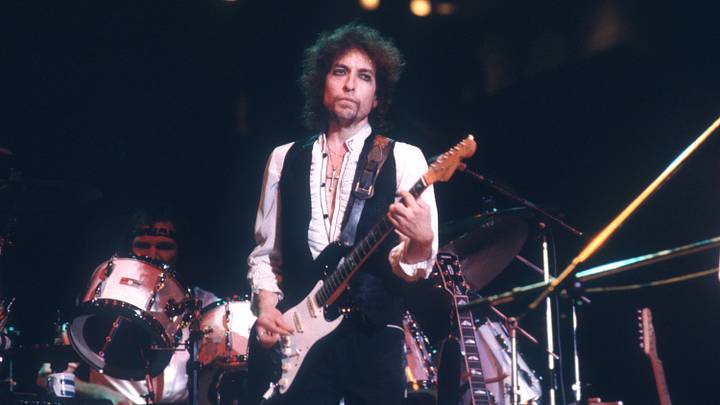
Back in August 1958, Billboard published its first Hot 100, with Ricky Nelson’s “Poor Little Fool” at No. 1. In the decades since, that top spot has gone to the likes of the Archies and Henry Mancini’s orchestra—but never to any of the iconic acts on this list.
Here, we’re talking about songs they performed rather than songs they wrote for other people, which don’t count, nor does a charity single like “We Are the World.” Mental Floss has already quizzed readers on the No. 1s that classic rock bands did produce; this list is about the acts that never got there, in order of how close they came.
Bob Dylan
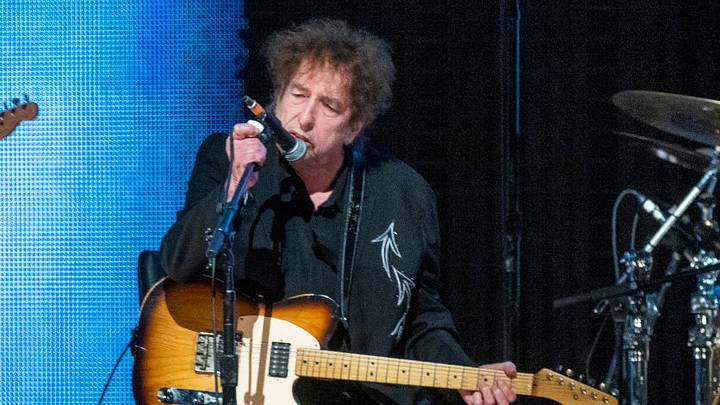
“Like a Rolling Stone” reached No. 2 on the chart dated Sept. 4, 1965, and spent two weeks there behind the Beatles’ “Help!” The next spring, “Rainy Day Women #12 & 35” stalled at No. 2 behind the Mamas & the Papas’ “Monday, Monday.” Dylan’s name did reach the top once, as a writer: the Byrds took his “Mr. Tambourine Man” to No. 1 on June 26, 1965, four weeks before “Like a Rolling Stone” entered the chart.
Creedence Clearwater Revival
“Proud Mary,” “Bad Moon Rising,” “Green River,” “Travelin’ Band,” and “Lookin’ Out My Back Door” all peaked at No. 2 in 1969 and 1970, the most runner-up hits for any act that never reached No. 1. It took six different songs to keep them there, from Tommy Roe’s “Dizzy” and the Archies’ “Sugar, Sugar” to “Bridge Over Troubled Water.” The band did land two No. 1 albums, Green River and Cosmo’s Factory, which had to help a little.
Johnny Cash
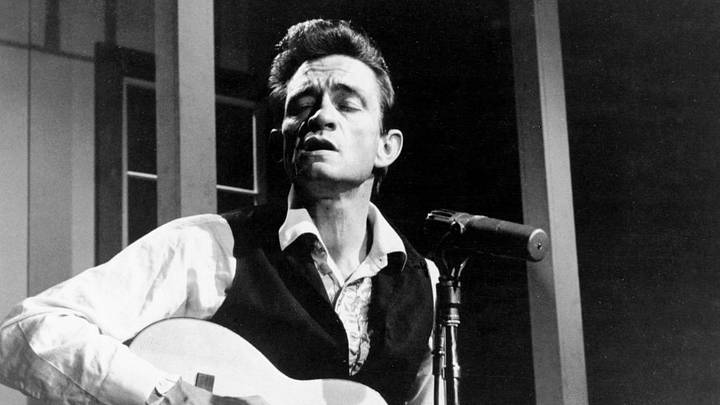
Most people probably don’t know it, but Shel Silverstein—yes, the one who wrote The Giving Tree—wrote “A Boy Named Sue,” the tale of a man hunting down the father who gave him a girl’s name. Johnny Cash recorded a version live at San Quentin, and it became his biggest pop hit, sitting at No. 2 for three weeks in August and September 1969 and spending all of them behind the Rolling Stones’ “Honky Tonk Women.” Silverstein’s songbook also included “The Cover of ‘Rolling Stone,’” a Top 10 hit for Dr. Hook and the Medicine Show.
The Allman Brothers Band
Dickey Betts wrote “Ramblin’ Man” at 3 a.m. at the kitchen table in bassist Berry Oakley’s house, and it was the last song Oakley ever recorded. It became the band’s biggest hit, reaching No. 2 on the chart dated Oct. 13, 1973, with Cher’s “Half-Breed” in the way. A week later, the Rolling Stones’ “Angie” took over No. 1, and “Ramblin’ Man” slid to No. 3.
Journey
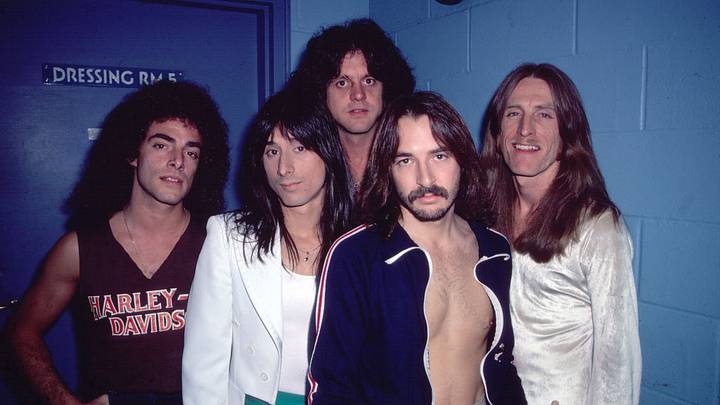
“Open Arms” reached No. 2 on the chart dated Feb. 27, 1982, and stayed there for six weeks. For the first three, it sat behind the J. Geils Band’s “Centerfold,” and when that finally slipped, Joan Jett & the Blackhearts’ “I Love Rock ’n’ Roll” jumped right over it and held No. 1 for the next three. “Don’t Stop Believin’” had already peaked, at No. 9, in December 1981.
Bruce Springsteen
“Dancing in the Dark” spent four weeks at No. 2 in the summer of 1984, the highest the Boss has ever reached as an artist. Duran Duran’s “The Reflex” held No. 1 the first week, and Prince’s “When Doves Cry” held it for the other three. However, Springsteen did write a No. 1: Manfred Mann’s Earth Band took his “Blinded by the Light” to the top in February 1977, and the Pointer Sisters got his “Fire” to No. 2.
James Brown
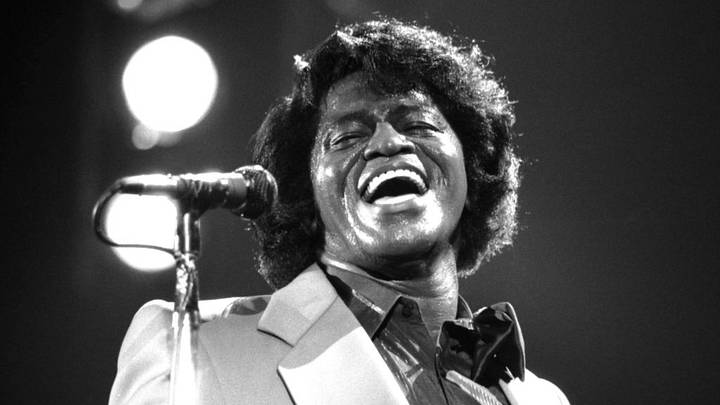
The Godfather of Soul put 91 songs on the Hot 100, starting with “Try Me” in the late 1950s, and none of them made it to No. 1. He came closest with “I Got You (I Feel Good),” which peaked at No. 3 on the chart dated Dec. 18, 1965, and “Living in America,” which reached No. 4 in 1986. The R&B chart treated him better: he topped it 17 times.
Tom Petty
Petty’s highest-charting single isn’t entirely his: “Stop Draggin’ My Heart Around,” credited to Stevie Nicks with Tom Petty and the Heartbreakers, reached No. 3 in September 1981. Under his own name, he never did better than “Free Fallin’,” which hit No. 7 in January 1990, and that was a solo single, not a Heartbreakers one. The band’s own high-water mark was “Don’t Do Me Like That,” No. 10 in 1980.
Led Zeppelin
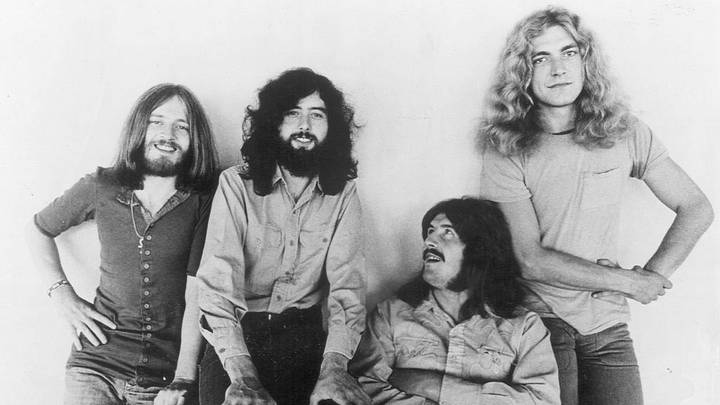
The band refused to release “Whole Lotta Love” as a single in the U.K. In the U.S., Atlantic Records talked them into a three-minute edit, and it reached No. 4 on the chart dated Jan. 31, 1970, still their highest Hot 100 peak. “Stairway to Heaven” only ever went out as a promotional single, and Robert Plant explained in 2005 that “there’s no point putting out a single when the album is the statement of the band.”
R.E.M.
“Losing My Religion” was built around acoustic guitar and mandolin, not exactly the sound of pop radio in 1991, and Michael Stipe called it a “freak hit.” It reached No. 4 on the chart dated June 22, 1991, the band’s highest Hot 100 peak, and it isn’t really about religion: Stipe said he “wanted to write a classic obsession song.” “Shiny Happy People,” from the same album, stopped at No. 10.
The Kinks
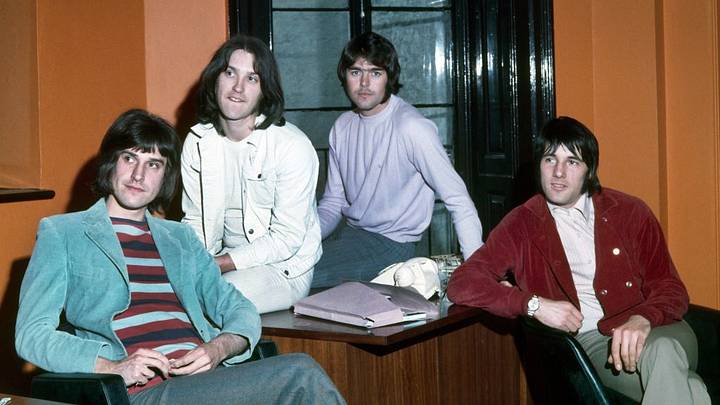
The Kinks peaked at No. 6 twice, 18 years apart: “Tired of Waiting for You” in April 1965 and “Come Dancing” in July 1983. Their best-known songs fell short of even that, with “You Really Got Me” and “All Day and All of the Night” both stopping at No. 7 and “Lola” reaching No. 9 in 1970.
Nirvana
“Smells Like Teen Spirit” peaked at No. 6 on the Hot 100 dated Jan. 11, 1992, the same week Nevermind knocked Michael Jackson’s Dangerous out of No. 1 on the Billboard 200. A week later, Garth Brooks’ Ropin’ the Wind topped the album chart. Nirvana never got that close on the singles chart again: “Come As You Are” stopped at No. 32.
Joni Mitchell
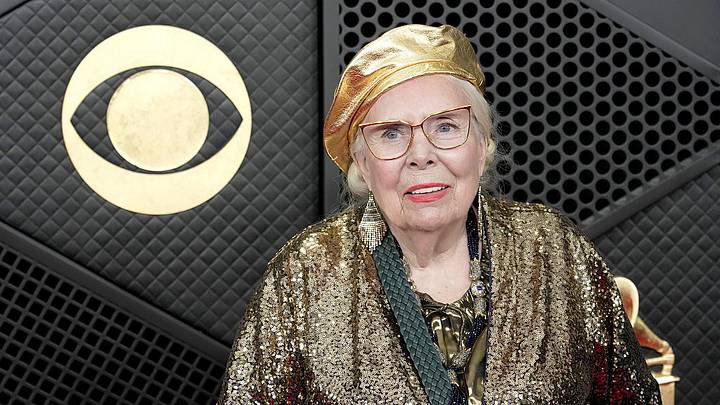
“Help Me” reached No. 7 in June 1974, Mitchell’s only Top 10 single, and the next best, “Free Man in Paris,” stopped at No. 22 later that year. Both came from Court and Spark, which had a near miss of its own: the album spent four weeks at No. 2 on the Billboard 200 in March 1974, and for the first two of them, the record in front of it was Bob Dylan’s Planet Waves.
Lynyrd Skynyrd
“Sweet Home Alabama” calls out Neil Young by name, answering his songs “Southern Man” and “Alabama,” and it peaked at No. 8 in October 1974. Their target had already been to No. 1 with “Heart of Gold” in 1972. “We wrote ‘Sweet Home Alabama’ as a joke,” Ronnie Van Zant said later, and Young played it himself at a show in Miami weeks after the 1977 plane crash that killed Van Zant.
The Who
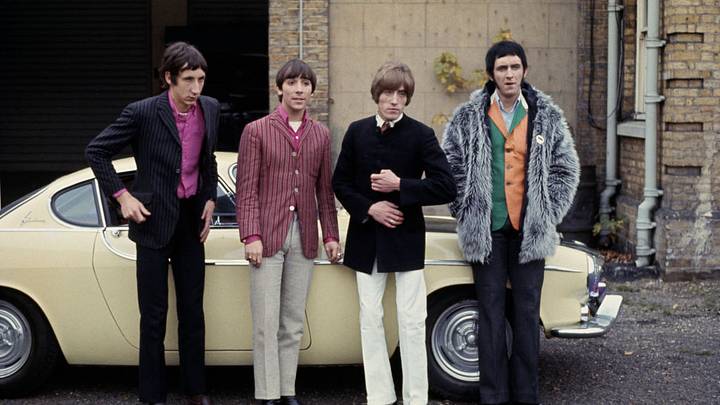
“I Can See for Miles” reached No. 9 in November 1967, and it’s still the Who’s only Top 10 hit in the U.S. The songs people know best did worse: “Won’t Get Fooled Again” stopped at No. 15, “Pinball Wizard” at No. 19, and “My Generation” peaked at No. 74 in 1966.
Van Morrison
“Brown Eyed Girl,” originally titled “Brown Skinned Girl,” peaked at No. 10 in September 1967, and Morrison has never been fond of it: he once said he doesn’t consider it one of his 300 best songs. His actual highest-charting single is “Domino,” which beat it by one spot, reaching No. 9 on the chart dated Jan. 2, 1971.
Grateful Dead
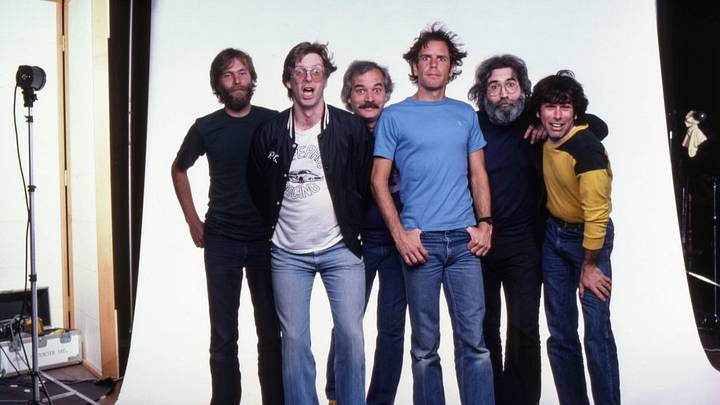
By 1987, the Dead were more than 20 years into a career built on live shows, and their best Hot 100 showing was still “Truckin’,” which hit No. 64 in 1971. Then “Touch of Grey” reached No. 9 on the chart dated Sept. 26, 1987, and pushed In the Dark to No. 6 on the Billboard 200. It remains their only Top 10 single.
Jimi Hendrix
Hendrix’s only Top 40 hit was a Bob Dylan song. Dylan released “All Along the Watchtower” on John Wesley Harding in 1967, Hendrix recorded his version at Olympic Studios in London in January 1968, and it peaked at No. 20 that October. “Purple Haze” had stopped at No. 65 the year before, and “Crosstown Traffic” got to No. 52.
AC/DC
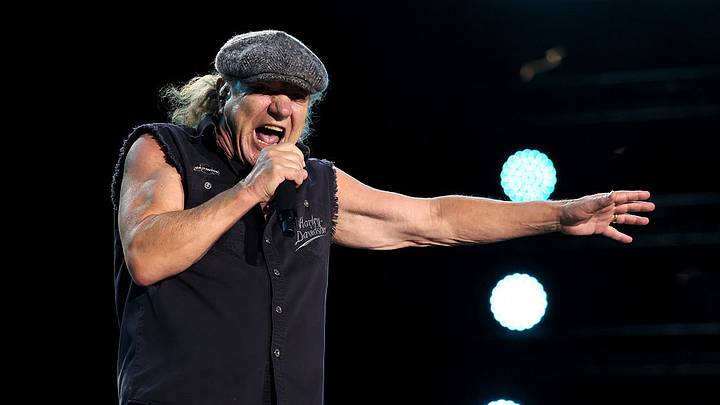
The band behind Back in Black never had a Top 20 hit in the U.S. The album’s title track peaked at No. 37 in early 1981 and “You Shook Me All Night Long” at No. 35, and the band’s best showing came a decade later, when “Moneytalks” reached No. 23 on the chart dated Feb. 9, 1991. The album itself never made it to No. 1 on the Billboard 200, either.
Bob Marley
Marley put exactly one song on the Hot 100: “Roots, Rock, Reggae,” with the Wailers, which peaked at No. 51 in 1976. He does have a No. 1 to his name, as a writer: Eric Clapton’s cover of his “I Shot the Sheriff” topped the chart in September 1974, two years before Marley’s own single charted. He died in 1981, at 36.