
ByJake Rossen|Dec 31, 2018, 5:00 AM EST
 Add us as a preferred source

Television plays host to a number of holiday traditions. In addition to repeated airings of It’s a Wonderful Life and A Christmas Story, the end of the year is also a time for people to revisit The Twilight Zone, Rod Serling’s seminal series that used fantasy elements as metaphors for social issues.
The practice of The Twilight Zone marathon began in the 1980s, when affiliates like WPIX in New York and KTLA in Los Angeles aired the series around-the-clock on New Year’s Eve. In some ways, The Twilight Zone was the original binge-watch. That’s due in part to viewers looking forward to revisiting the show’s trademark: Like short story author O. Henry, Serling and his writers often utilized a plot twist in the climax of their scripts, a conceit that helped make The Twilight Zone an enduring classic.
In anticipation of this year’s New Year’s marathon on SYFY that begins December 31 and runs through January 2, here’s where to look out for 10 of the best shock endings in the show’s history. (The list is in no particular order. You can also find episodes on Netflix. And don’t worry: You’re entering a spoiler-free zone.)
1. “To Serve Man” // Season 3, Episode 24
The imposing Richard Kiel of James Bond villain fame is part of a telepathic alien race known as the Kanamits who have come to Earth with seemingly benevolent intentions. They have answers for war, famine, and other plagues afflicting humankind. To help substantiate their claims, the government enlists two cryptographers to decipher the written text they’ve left behind. The disturbing truth is discovered when it’s already too late.
Opening Sequence: Cryptographer Michael Chambers (Lloyd Bochner) reclines in his alien ship quarters, where it’s apparently permissible to smoke.
2. “The Little People” // Season 3, Episode 28
Commander William Fletcher (Claude Akins) and Navigator Peter Craig (Joe Maross) are two astronauts forced into an emergency landing on a desolate planet. As the dutiful Fletcher tends to ship repairs, Craig goes exploring and finds a race of microscopic inhabitants. Rather than resume their mission, Craig wants to stay behind to rule as the beings’ deity. Inviting worship of a false idol doesn’t end well for him.
Opening Sequence: Fletcher descends a ladder on the stranded rocket ship and informs a lackadaisical Craig the vessel can be repaired in a day or two. Unfortunately, that’s time enough for Craig to get delusions of grandeur.
3. “The Masks” // Season 5, Episode 25
Mardi Gras comes to The Twilight Zone in this tale about a wealthy, terminally ill man named Jason Foster (Robert Keith) who invites his belligerent, greedy family to help settle his affairs before he expires. Foster insists all of them—self-absorbed daughter Emily, her cash-obsessed husband Wilfred, and misbehaving offspring Wilfred Junior and Paula—don masks in honor of the occasion or risk losing their inheritance. But Foster isn’t in a celebratory mood.
Opening Sequence: Two of Foster’s waitstaff arrange flowers for the patriarch’s expected guests while Foster is examined by his physician in his bedroom. With little time left, he’s adamant that he hang on long enough to impart one final piece of fatherly wisdom.
4. “The Silence” // Season 2, Episode 25
Can money buy silence? That’s what Colonel Archie Taylor (Franchot Tone) proposes to Jamie Tennyson (Liam Sullivan), a fast-talking chatterbox who gnaws on Taylor’s nerves at their social club. Taylor wagers that Tennyson can’t remain completely silent in a glass-walled room inside the club for one entire year. If he can, Taylor will pay him $500,000. The matter becomes one of resolve, as Taylor attempts to antagonize Tennyson into speaking by any means necessary.
Opening Sequence: Tennyson rambles on about his investment strategies as Taylor grows increasingly agitated. After consulting with his lawyer, Taylor tells the waiter to pass along a note explaining his unconventional gamble.
5. “Eye of the Beholder” // Season 2, Episode 6
In a society that values conformity, Janet Tyler (Maxine Stuart) has undergone several procedures to improve her cosmetic beauty. The latest—and last—will determine whether she will be deemed acceptable by the high standards set by the state-run hospital. Tyler herself has no idea of the outcome, as the bandages have yet to come off.
Opening Sequence: Tyler rests in her hospital bed, face obscured by gauze, as a nurse tries to soothe her concerns over her hideous appearance.
6. “Time Enough at Last” // Season 1, Episode 8
Henry Bemis (Burgess Meredith) is a bookworm working at a bank who can’t keep his nose out of a good yarn. His love of the written word antagonizes both his boss and his wife Helen (Jacqueline deWit), who each grow tired of his diverted attention. Soon, Bemis finds himself in a world with all the reading material he likes—he’s seemingly the only survivor of a nuclear explosion.
Opening Sequence: Bemis assists (actually, short-changes) a bank customer while keeping a copy of David Copperfield in his lap.
7. “I Shot an Arrow into the Air” // Season 1, Episode 15
Has any space traveler ever met with a welcome fate in The Twilight Zone? After crashing on an asteroid, the four surviving members of an eight-man crew begin to wander the dry landscape in search of water and other life. What they find instead is the kind of cruel fate that would make anyone think twice about suiting up for space exploration.
Opening Sequence: Mission control prepares the Arrow 1 spaceship for lift-off as Serling explains it’s the first manned aircraft into space. (If Serling is narrating your day, it might be time to return to bed.)
8. “Will the Real Martian Please Stand Up?” // Season 2, Episode 28
A roadside diner is the site of a chamber mystery, though the objective isn’t to find a murderer—it’s to discover who among the patrons might be an alien whose ship has crash-landed in a nearby pond. As two police officers investigate, each customer has both reasons and excuses for being the uninvited extra-terrestrial.
Opening Sequence: As snow falls, state troopers investigate reports of an unidentified flying object that’s cut off some of the tree tops. Footprints lead away from the pond and toward the diner.
9. “The Invaders” // Season Two, Episode 15
A woman (Agnes Moorehead) living in a dilapidated cabin is terrorized by a tiny race of alien beings that have landed their spacecraft on her roof. She uses everything at her disposal to ward off their high-tech assault, including fire, before the viewer understands their true intentions.
Opening Sequence: Serling introduces a farmhouse that’s “handmade, crude,” and “untouched by progress.” Its lone occupant is a woman who has been alone for years until a crash from above changes everything.
10. “An Occurrence at Owl Creek Bridge” // Season 5, Episode 22
This adaptation of the Ambrose Bierce short story of the same name was originally produced as a French short film in 1962 and screened as part of The Twilight Zone in 1964, a path that earned it trivia status as the only Zone episode—and possibly the only episode of television—to have won an Academy Award for Best Live-Action Short Film. In the Civil War-torn South, resistance fighter Peyton Farquhar (Roger Jacquet) is about to be hanged by Union soldiers. He escapes, determined to be reunited with his wife no matter the obstacle.
Opening Sequence: Serling introduces the episode by pointing out it’s the first time the series has presented a film shot by others.
20 Things Every ’70s Kid Remembers That Have Completely Disappeared
Before smartphones, streaming, and the internet took over, everyday life was filled with simple pleasures and technologies that have all but gone extinct.
ByPaul Anthony Jones|Nov 1, 2026, 8:00 PM EST
It’s only natural that things change over time, but the pace of change over the last few decades has been head-spinningly quick.
In many ways, that’s made the world easier; staying and getting in touch with people, finding your way around, learning and finding things out, and even shopping and ordering what you want are all now far simpler and more readily available than they were in the past.
But that has had the somewhat less pleasant and more jarring consequence of consigning many of the technologies and experiences of yesterday to history, especially those from the 1970s. Here are 20 that have all but disappeared.
LANDLINE TELEPHONE CORDS
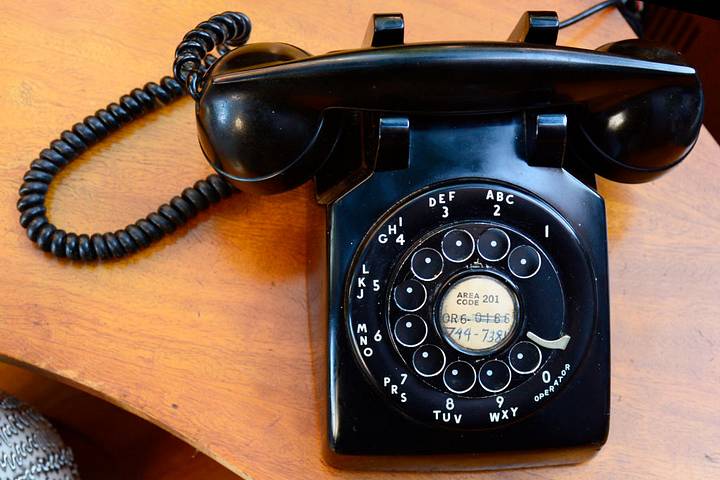
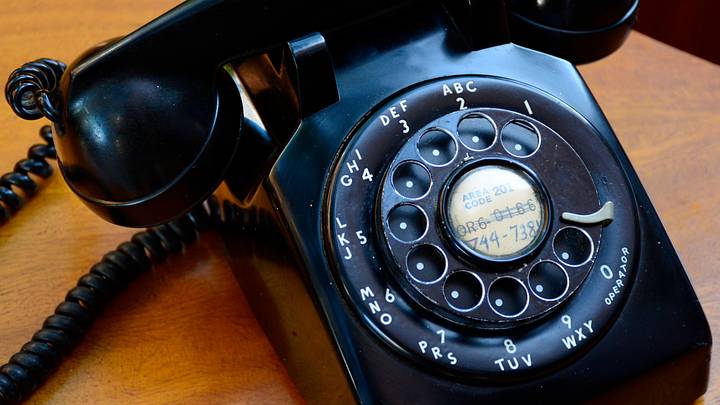
Long before cell phones became a thing, every house had a landline, which was really the only way of keeping in touch with friends and family. Thankfully, the cord on some landline telephones was so long that if you needed a quiet conversation away from your parents, you could take the handset in another room and close the door without stretching it too far.
CALLING THE HOUSE TO SPEAK TO ONE PERSON (WHO MIGHT NOT EVEN BE IN)
Unfortunately, having a landline meant you couldn’t get in touch with one person specifically, but had to call the entire house before narrowing it down to the one member of the household you wanted to reach. (Cue lots of awkward conversations between you and your best friends’ parents—especially if your friend didn’t happen to be in at the time…)
CALL CHARGES
One aspect of the telephones of the past that won’t be missed, however, is the often eye-watering difference between local and long-distance calls. Want to talk to your friend a few streets over? You could talk for hours for a pittance. Want to speak to your aunt or uncle two countries away? Give it ten seconds, tops.
KEEPING THE PHONE OFF THE HOOK
One more telephone-related aspect of the past that’s a little less simple these days? If you didn’t want to be disturbed, you could just take the phone off the hook and be uncontactable for however long you wanted. (These days, the best you can do is a do-not-disturb setting, or just turning your phone off altogether!)
RETURNING REUSABLES (IN EXCHANGE FOR HARD CASH)
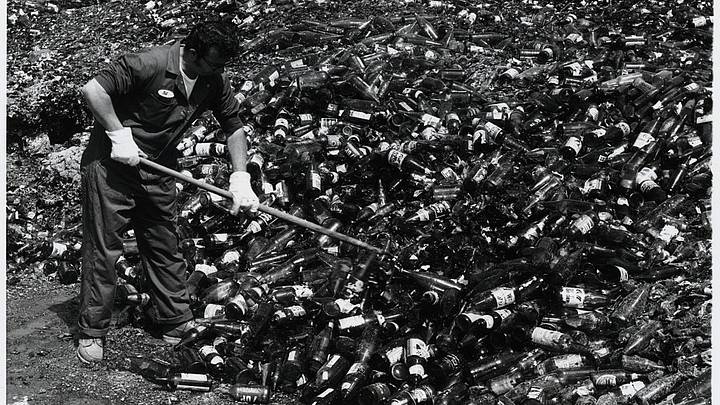
These days, we all have household trash cans for recyclables, and recycling centers will handle most of your reusables cleanly and easily. In the past, though, it wasn’t uncommon for stores and restaurants to have their own in-house schemes for reducing waste, with stores often holding a few cents’ deposit on glass bottles and glasses, or giving a few cents back for returned cans. Some states have taken over these measures themselves, of course, but the days of taking them back to the stores you bought them from are largely long gone.
LASERDISCS
Watching films on discs is by no means anything new—it’s just the DVDs and BluRays of the 21st century are a lot smaller than the LP-sized LaserDiscs of the late 1970s.
CB RADIO SLANG
There was a time when CB radio was so widely used (one in five Americans owned a short-distance radio in the mid 1970s) that the chatter and slang you’d hear over them began to slip into everyday parlance. Whether that’s a “10-4,” a “meat wagon,” or a “good buddy,” many of these snapping turns of phrase have sadly fallen by the wayside.
TV ANTENNAE
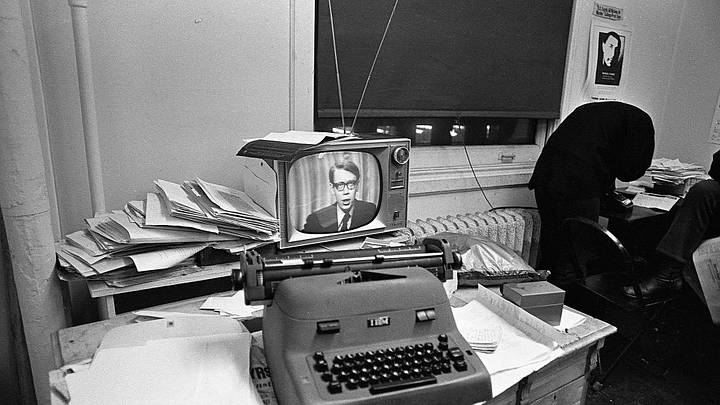
On the subject of sending messages over the airwaves, there was a time when television sets came with movable antennae, Simpsons-style. In the era of smart TVs, though, these have largely become a thing of the past (so no need to wrap your TV aerial in aluminum foil anymore to improve the signal…)
CHANGING TV CHANNELS AT THE SET
Speaking of TVs, although the first commercial television remote control was made available back in 1950, by the 1970s many homes’ television sets still required manual channel-changing—variously achieved by either pressing, turning, or switching a series of (often rather noisy) control buttons or dials on the set itself. The technology might have changed, but we still talk of “tuning in” to television shows today even in the digital age.
APPOINTMENT TV
Digital and cable television, as well as streaming and catch-up services, have also done away with the so-called “appointment TV” era of the past too. There was a time when missing your favorite show meant precisely that—you’d missed your one chance to watch it, and would be left scouring the TV guide for weeks to come hoping to catch a rerun.
TV GUIDE MAGAZINES
With that last one in mind, TV guides are gradually disappearing too. Why pick up a printed magazine listing each and every show when you can watch whatever you want, whenever you want it—or, failing that, just surf the in-build TV guide at the bottom of the screen until you come across something you want to watch.
TELEPHONE DIRECTORIES
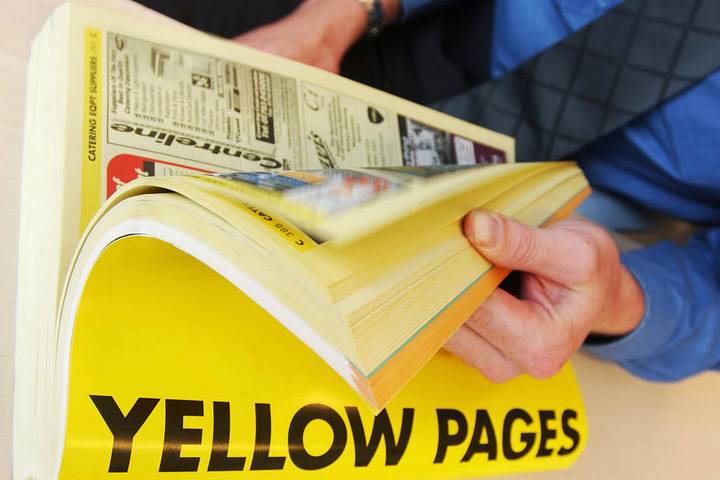
Not that TV shows were the only thing you had to browse by hand in weighty, information-heavy printed guides in the 70s, either. Business directories like the Yellow Pages listed every business in town across hundreds of pages, while the domestic phone directory did precisely that for home addresses. Want to know anything along those lines today, and it’s all online.
ROAD MAPS
Another printed resource that’s all but vanished today are road maps. Once the staple of every long-distance trip, and of every car glove compartment, these are becoming increasingly rare (outside of rural walks and hikes where mobile coverage and internet access might not be guaranteed!)
TRAVELER’S CHECKS
Another vacation staple of the 70s was the traveler’s check, which, unlike cash, had the added safety net of being reimbursable if lost or stolen. Ever more commonplace technologies like credit and debit cards, PIN numbers, and wireless payments have made these once widely used exchanges a thing of the past.
HITCHHIKING
Once a staple of many a cross-country trip (and many a movie based around it), hitchhiking reached peak popularity in the 1960s and 1970s, when someone thumbing a lift (or at least, trying to) was a common sight at practically every highway on-ramp.
SMOKING ON PLANES
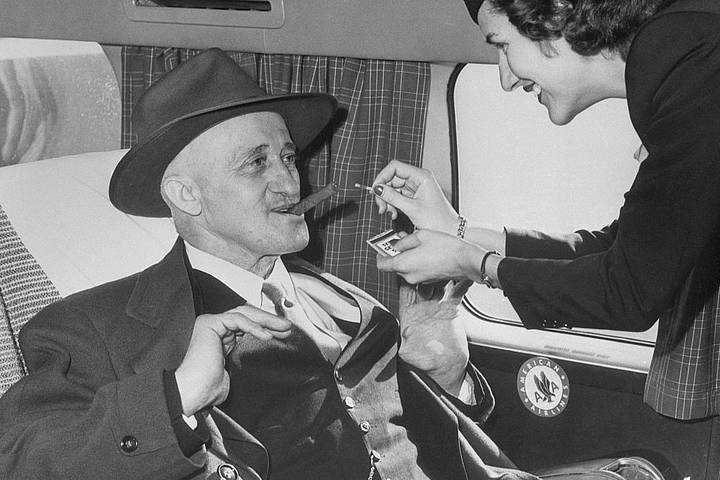
Going on an overseas vacation in the 1970s, meanwhile, often meant enduring the smell of cigarette smoke on the long plane journey too. Not that airplanes were the only place where smoking was once tolerated—back in the seventies, smoking was all but universal, and you’d see people lighting up everywhere from shopping malls to (ironically enough) hospitals.
CIGARETTE VENDING MACHINES
In fact, smoking was once so widespread that these were all but universal too.
CHRISTMAS CATALOG SURFING
Wintertime, of course, means Christmas—and there was a time when Christmas meant perusing department store catalogs and circling everything that you’d like Santa to bring you. (These days, you’re perhaps more likely to drop it all in an online shopping cart and sit back and wait for it to be delivered.)
SEASONAL FRUIT

At the slightly healthier end of the seventies scale, however, the seasonality of fruits, vegetables and other produce was once far more widely followed than it is today. Nowadays, with industrial greenhouses, climate-controlled polytunnels and GM foods engineering ever-hardier varieties, even the softest of summer berries are often still available in the depths of winter.
HAVING NOTHING TO DO (OR ANYTHING TO PLAY WITH)
One of the effects of all this click-and-buy consumerism, however, is that real, genuine downtime seems to be a thing of the past. In an era of endless scrolling, streaming, and messaging, few of us find ourselves without anything to do and end up having to make our own fun armed with whatever toys, paper, and coloring pens we might have once had at our disposal.