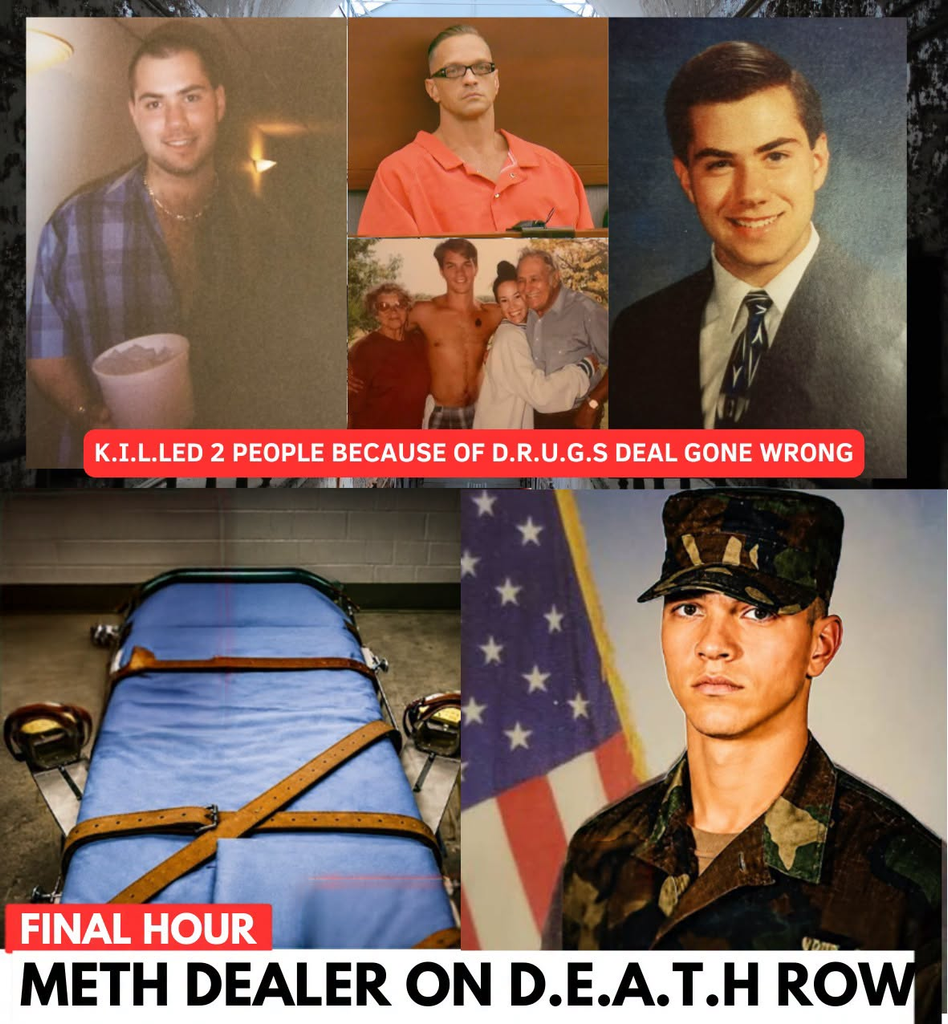
Scott Raymond Dozier | Crime, Final Hours & Last Words…
 The condemned man who spent years begging the state of Nevada to 𝓀𝒾𝓁𝓁 him was found dead in his prison cell this afternoon, an apparent suicide that ended one of the most unusual legal battles in the modern history of American capital punishment. Scott Raymond Dozier, 48, was discovered unresponsive in his cell at Ely State Prison, according to Nevada Department of Corrections officials. He was pronounced dead at the scene.
The county coroner has found no evidence of foul play, and authorities confirmed Dozier was not on active suicide watch at the time of his death.
Dozier had been sentenced to death in 2007 for the brutal murder and dismemberment of 22-year-old Jeremiah Miller, a former Arizona State University student who had flown to Las Vegas with $12,000 in cash to broker a methamphetamine deal. But the state never managed to carry out the execution. Twice, Nevada scheduled Dozier’s death.
Twice, the execution was halted at the last minute, not by appeals from the condemned man himself, but by legal challenges from pharmaceutical companies that did not want their drugs used to 𝓀𝒾𝓁𝓁 him.
The final twist in this extraordinary case is that Dozier did not want to be saved. Unlike nearly every other prisoner on death row in America, he had voluntarily abandoned his appeals, fired his legal team, and demanded that the state carry out his sentence as quickly as possible. He told the courts he would rather be dead than spend the rest of his life locked inside a maximum-security prison.
He described his existence on death row as boring, repetitive, and devoid of meaning. He was an avowed atheist who did not believe in an afterlife, but he insisted that death represented relief, not punishment.
Dozier’s path to death row began in relative obscurity. Born in Great Falls, Montana in 1970, he was remembered by his family and teachers as a precocious and intelligent child, a talented artist who worked in charcoal and pastel from a young age. He enlisted in the United States Army in 1990 and served honorably until his discharge in 1992.
 He married Angela Drake on New Year’s Day 1991, and the couple had a son, Ashton, in 1993. By all outward appearances, Dozier had the building blocks of a stable adult life, military service, marriage, fatherhood, and a series of legitimate jobs that included performing in a costume dinner show at the Luxor Hotel and Casino in Las Vegas.
But behind that façade, Dozier had already begun a slow descent into the world of methamphetamine manufacturing and distribution, a world that prosecutors would later describe as a hotbed of violence and betrayal in the American Southwest during the late 1990s. He was arrested on 𝒹𝓇𝓊𝑔 charges in 1989 and again in 1995. In 1998, a house he was living in exploded under circumstances that were never fully resolved, badly injuring a young woman who lost part of her right arm and leg in the blast.
Despite being wanted on warrants at the time, Dozier went to the hospital to see her, a gesture of genuine tenderness that would become a recurring contradiction in his life, warmth toward the people he loved, coexisting with a ruthless willingness to destroy those he considered threats.
The first murder charge came from Arizona. Prosecutors alleged that Dozier shot 26-year-old Jason Green in the back of the head while Green sat reading a magazine, then enlisted a chain of associates to help dispose of the body. Green’s remains were eventually recovered from a shallow grave outside Phoenix in September 2002.
Dozier maintained that he came home to find Green already dead and disposed of the body only to protect his 𝒹𝓇𝓊𝑔 operation from police scrutiny. An Arizona jury convicted him of second-degree murder in 2005, and he was sentenced to 22 years in prison.
The Nevada case was built on far more gruesome evidence. Jeremiah Miller, a young man who wanted to become an elementary school teacher and who spoke fluent Spanish, had been introduced to Dozier through a mutual acquaintance in the 𝒹𝓇𝓊𝑔 trade. Miller borrowed $12,000 from a dealer known as Grandpa and flew to Las Vegas with Dozier and another woman, planning to buy ephedrine, a key chemical used in methamphetamine production.
The first trip fell through, but Dozier called Miller back for a second attempt. Miller flew out alone on April 18, 2002. He called his girlfriend that night to say the deal had gone through and that he would be home the next day.
He was never seen alive again.
Days later, a maintenance worker at a Las Vegas apartment complex discovered a large suitcase in a dumpster. Inside was the dismembered torso of Jeremiah Miller. His limbs had been carefully removed at the joints.
His head was never found. Identification came down to two tattoos on the remains, a dragon and the words Always Remember. The prosecution’s case relied heavily on testimony from Dozier’s own associates, men with their own criminal exposure who told police that Dozier had bragged about the killing, shown them news clips about the discovery of the body, and suddenly had cash after appearing broke in the days before Miller vanished.
Dozier’s defense argued that the case was entirely circumstantial, that investigators found no blood evidence in the motel room where the murder allegedly took place, and that every witness against him was a self-interested criminal with reasons to cooperate with prosecutors. The jury was not persuaded. Dozier was convicted of first-degree murder with the use of a deadly weapon and robbery with the use of a deadly weapon in October 2007.
During the penalty phase, prosecutors used the Arizona conviction as an aggravating factor, arguing that this was a pattern of violence, not an isolated act. The jury sentenced him to death.
The Nevada Supreme Court affirmed both the conviction and the death sentence in 2012. But by then, something had shifted inside Dozier. He no longer wanted to fight.
He had spent years trying to avoid execution, but life on death row had ground him down in ways that the threat of lethal injection never could. He gave up his remaining appeals and wrote to the court asking to be executed. He arranged for his brain to be donated to a university lab for research.
 He told his family to cremate the rest of his remains. He was, in the language of capital punishment, a volunteer, a prisoner who asks the state to 𝓀𝒾𝓁𝓁 him rather than continue living under a death sentence that never seems to arrive.
Nevada, however, was not prepared to grant his request. The state had not executed anyone since 2006, and like most of the country, it had run into a wall that had nothing to do with the courts and everything to do with pharmaceutical companies. 𝒹𝓇𝓊𝑔 manufacturers, uncomfortable with their products being used to 𝓀𝒾𝓁𝓁 people, had increasingly refused to sell the drugs states needed for lethal injection.
When Nevada’s corrections director reached out to nearly 250 different suppliers asking for execution drugs, not one agreed to help.
The state eventually built a new execution chamber at Ely State Prison and settled on a 𝒹𝓇𝓊𝑔 combination no state had ever used before, the sedative diazepam, the powerful opioid fentanyl, and a paralytic 𝒹𝓇𝓊𝑔 called cisatracurium. If it went forward, Dozier would become the first person in American history executed using fentanyl. A death warrant was signed, and his first execution date was set for November 14, 2017.
But Dozier’s own defense attorneys raised concerns about the untested combination, specifically that if the fentanyl failed to render him fully unconscious, the paralytic could leave him aware and unable to signal that something had gone wrong. Days before the scheduled execution, a judge agreed and removed the paralytic from the protocol. The state appealed, and the execution was stayed while the case moved through Nevada’s court system.
Dozier was frustrated by the delay in ways that had nothing to do with fear of death. He had already said goodbye to his family. He had prepared himself mentally for an ending and then watched that ending get pulled away by a legal fight he had not asked for and did not want litigated on his behalf.
The Nevada Supreme Court eventually sided with the state on procedural grounds, and a new death warrant followed in June 2018. A second execution date was set for July 11, 2018, at 8:00 p. m.
, with the original three-𝒹𝓇𝓊𝑔 combination restored, though diazepam was swapped for a different sedative, midazolam.
Once again, everything was in place. The chamber was ready. Dozier had said his goodbyes to his family for what he believed, for the second time, would be the last time.
But that morning, the 𝒹𝓇𝓊𝑔 manufacturer Allergan filed an emergency lawsuit. The company had learned that its midazolam, a 𝒹𝓇𝓊𝑔 it sold strictly for medical use, was about to be used in Dozier’s execution, and it argued that Nevada had obtained the product deceptively, aware that the company prohibited this exact use. Allergan was not trying to save Dozier’s life.
It was trying to protect its own reputation as a manufacturer of medicine meant to help people, not 𝓀𝒾𝓁𝓁 them.
Las Vegas District Judge Elizabeth Gonzalez issued an emergency order that morning, just hours before Dozier was scheduled to die, blocking Nevada from using the company’s midazolam. Without it, the state had no legal way to carry out the execution as planned. For the second time, Scott Dozier had prepared himself to die, and for the second time, he remained alive when the appointed hour came and went.
It marked the first time in the modern era of the death penalty that a pharmaceutical company had successfully stopped an execution through the courts. Other manufacturers soon voiced similar objections, Pfizer over its fentanyl, Sandoz over the cisatracurium. A Las Vegas court later found that Nevada had obtained Allergan’s product through what it called bad faith subterfuge, and barred the state from using its remaining supply at all.
In the months after the second cancellation, Dozier’s situation inside Ely State Prison changed dramatically. His family and lawyers said he was placed under increasingly restrictive conditions, deprived of most of his belongings, cut off from the exercise yard, phone calls, and visitors, and placed under close mental health observation. Prison officials described the measures as precautionary, citing concerns raised by a mental health provider.
Dozier’s lawyers argued his mental state was deteriorating specifically because of the isolation itself. His sister compared the experience to having a terminally ill family member, never knowing which visit or phone call might be the last, and now not even sure why those things had been taken away in the first place.
Court filings later revealed that in the months before his death, Dozier had made several attempts to end his own life, including reportedly trying to obtain a lethal substance through the mail. The state maintained its restrictions were a direct response to that risk. His family argued there was little evidence he posed an active danger, and that the isolation itself was the greater threat to his well-being.
None of it was resolved by the time law enforcement found him unresponsive in his cell on January 5, 2019.
Nevada had spent years building a legal and physical apparatus specifically to grant Scott Dozier’s request. In the end, the state never carried out his sentence. He died in custody in the middle of an unresolved legal fight before anyone, the courts, the pharmaceutical companies, or Dozier himself, had settled the question of how or when it would end.
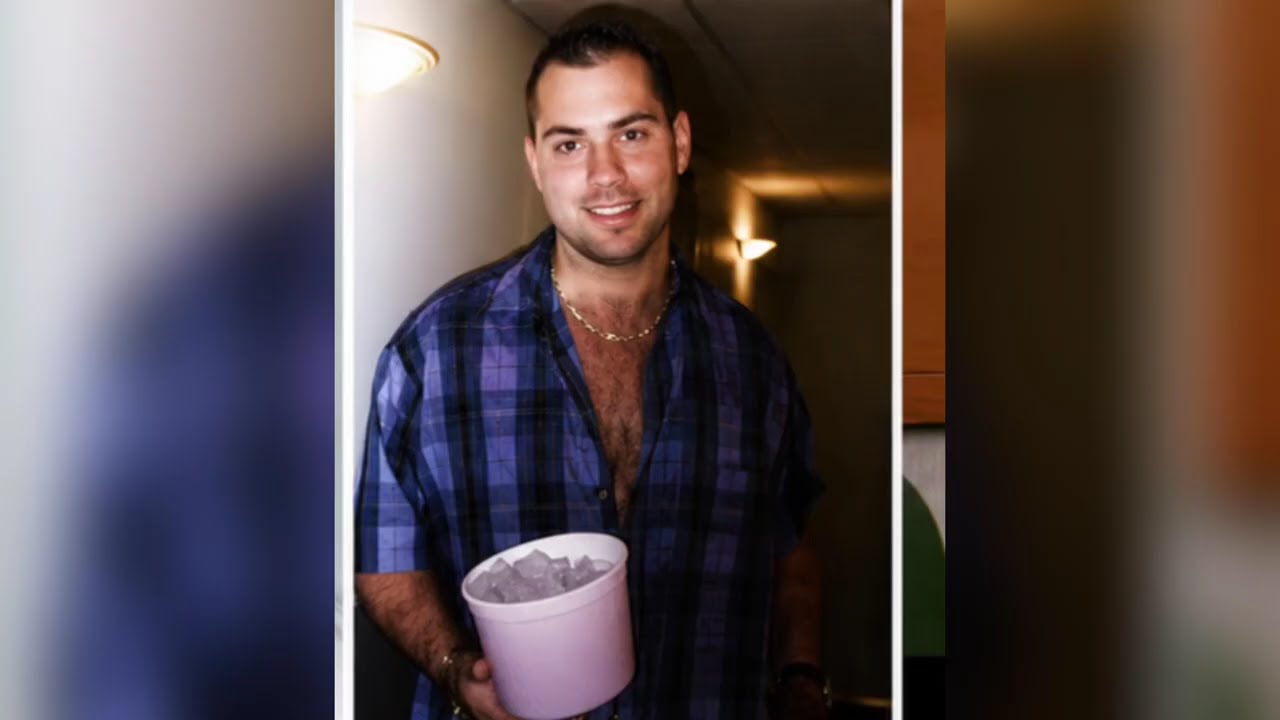 The county coroner has not yet released an official cause of death, but authorities said the preliminary investigation indicates suicide by hanging. An autopsy is scheduled for the coming days.
Dozier’s death leaves behind a tangle of unresolved questions, both legal and moral. The families of his victims, Jason Green and Jeremiah Miller, have spent nearly two decades waiting for closure that never fully arrived. Jeremiah Miller’s father, David, asked a question in court that still haunts the record, Where is the rest of my boy?
His son’s head was never recovered, and the family has never been able to give him a complete burial. Dozier maintained his innocence in both murders until the end, even as he demanded that the state execute him for them.
The case has also 𝓮𝔁𝓹𝓸𝓼𝓮𝓭 the deep contradictions in the American death penalty system. Nevada was willing to 𝓀𝒾𝓁𝓁 Scott Dozier. It built an execution chamber specifically for him.
It selected the drugs. It scheduled his death twice. But it could not actually carry out the sentence because the pharmaceutical industry, the very industry that supplies the tools of lethal injection, refused to participate.
The state was left in the absurd position of having a willing condemned man, a ready execution chamber, and no legal way to 𝓀𝒾𝓁𝓁 him.
Dozier’s own lawyers, who spent years fighting to keep him alive, were placed in the equally strange position of arguing against an execution their client desperately wanted. They raised legitimate concerns about the untested 𝒹𝓇𝓊𝑔 protocol, concerns that were ultimately validated when the courts intervened. But Dozier saw their efforts as a betrayal.
He had made his choice. He wanted to die. And the legal system, designed to protect the rights of the condemned, kept getting in his way.
The broader debate over capital punishment in America will continue without him. But Scott Dozier’s case will be remembered as a strange footnote in that debate, the story of a man who wanted to die faster than the state could figure out how to 𝓀𝒾𝓁𝓁 him. It is a story that raises uncomfortable questions about the purpose of the death penalty, about whether it is meant to punish or merely to warehouse, and about what happens when the machinery of execution breaks down so completely that a condemned man takes matters into his own hands.
Dozier was 48 years old. He had spent more than a decade on death row. He had been scheduled to die twice.
He had said goodbye to his family twice. He had prepared himself for an ending twice. In the end, he gave himself the ending the state could not deliver.
He was found alone in his cell, in a remote prison town in the high desert of eastern Nevada, with the question of his guilt still exactly where it had always been, settled by a jury, denied by him, and unresolved, in the deepest sense, for the families of the two men who never got a say in how their own stories ended.
The Nevada Department of Corrections has announced that a full investigation into the circumstances surrounding Dozier’s death will be conducted, standard procedure for any inmate death in state custody. The department also confirmed that Dozier was not on suicide watch at the time of his death, though he had been placed on watch multiple times in the preceding months. How he was able to end his life despite the heightened scrutiny he was under will be a central focus of that investigation.
Dozier’s family has not yet issued a public statement. His mother, Martha, and father, Larry, who maintained his artwork in their home for years and kept a page online to share the pieces he continued to make in prison, have been notified of his death. His son, Ashton, who testified at his father’s 2007 trial that he loved him and that the two used to work on cars together, has also been notified.
The family’s grief is complicated by the fact that Dozier spent years demanding the very outcome that has now occurred, albeit by his own hand rather than the state’s.
The legal battle over Nevada’s execution protocol is now moot, at least as it applies to Dozier. The state’s remaining supply of execution drugs, already barred from use by court order, will likely be destroyed or returned to the manufacturers. The execution chamber at Ely State Prison, built at significant expense specifically for Dozier’s case, will sit empty.
The state has no other inmates currently facing imminent execution, and the pharmaceutical industry’s refusal to supply drugs makes it unlikely that Nevada will be able to carry out any execution in the foreseeable future.
Scott Raymond Dozier was born on November 20, 1970, in Great Falls, Montana. He was remembered as a great kid who talked too much. He became a soldier, a husband, a father.
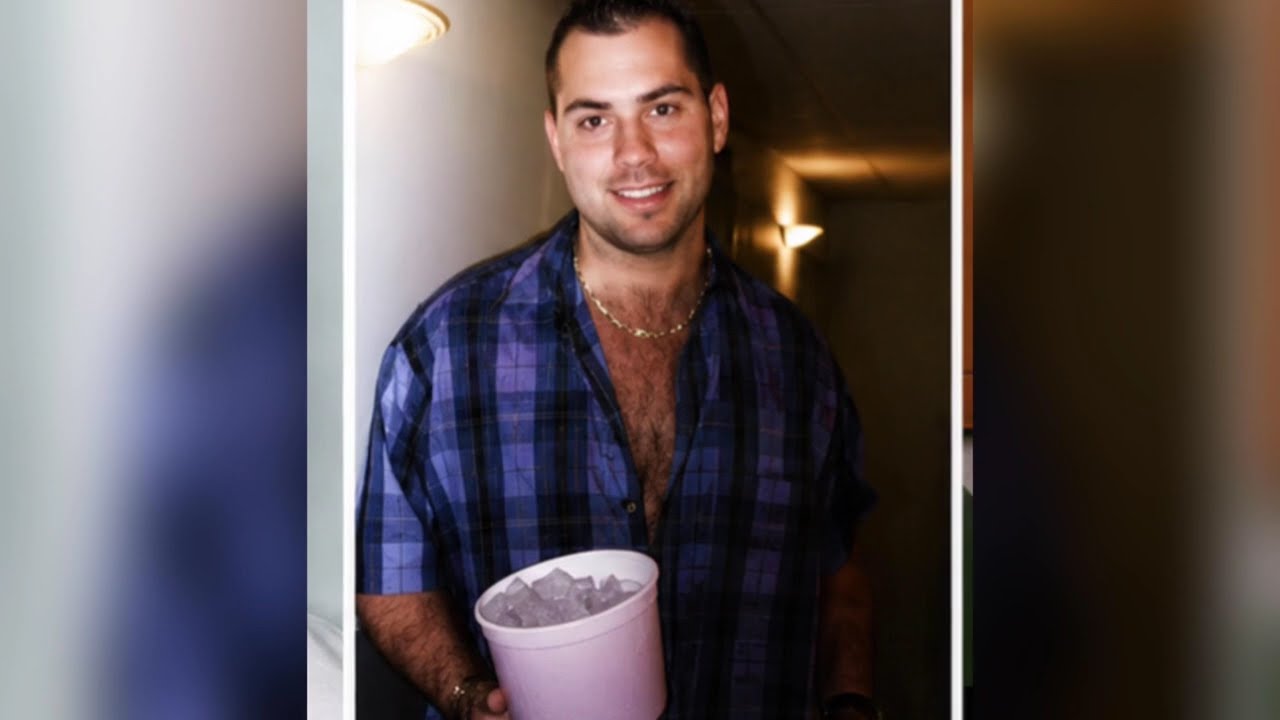 He worked legitimate jobs and once performed in costume at a Las Vegas casino. He entered the methamphetamine trade and became connected to the deaths of two men in two different states. He was convicted of murder in both.
He was sentenced to death in Nevada and to 22 years in prison in Arizona. He gave up his appeals and demanded execution. The state could not deliver.
He died on January 5, 2019, in a prison cell, at his own hands, at the age of 48.
The story of Scott Dozier is a story about the choices that turn a promising young man into one of the most unusual death row prisoners in American history. It is also a story about the limits of the state’s power to 𝓀𝒾𝓁𝓁, about the strange alliance between a condemned man who wanted to die and a pharmaceutical industry that refused to help him, and about the families left behind, both the family of the killer and the families of his victims, who must now live with the aftermath of a death that no one, not the courts, not the state, and not even the man himself, could have predicted.
Jeremiah Miller’s mother, Kemari, and father, David, spent years searching for their son after he vanished. They printed flyers and distributed them from Kingman to Las Vegas, at casinos and along the Hoover Dam. They never gave up hope that he might be found alive.
When they learned that his dismembered torso had been identified through his tattoos, they were left with a grief that no conviction and no execution could ever fully address. They will now face the news of Dozier’s death with the complicated emotions of survivors who have waited two decades for justice and received only a footnote.
Jason Green’s family could not be reached for comment. His life outside Dozier’s orbit remains, in the public record, almost entirely unknown. He was 26 years old when he died, a man connected to the same methamphetamine operation that would eventually consume Dozier’s life.
His death was the first of the two murders for which Dozier was convicted, and his remains were recovered from a shallow grave outside Phoenix in 2002. His killer was convicted in 2005 and sentenced to 22 years in prison, a sentence that became largely academic once Dozier was sentenced to death in Nevada.
The Nevada Supreme Court, in affirming Dozier’s conviction and death sentence in 2012, found sufficient evidence to support the verdict but struck down the deadly weapon sentencing enhancements attached to the original judgment. The core conviction and the sentence stood, but the legal wrangling over the details of his punishment would continue for years, a fitting coda to a case that seemed to generate legal complications at every turn.
Dozier’s own account of the murders never changed. He maintained that he found Jason Green already dead and disposed of the body to protect his 𝒹𝓇𝓊𝑔 operation. He maintained that he did not 𝓀𝒾𝓁𝓁 Jeremiah Miller, despite the testimony of multiple witnesses who placed him at the scene and described his behavior in the aftermath of the killing.
He acknowledged that he was present when Miller died, but he insisted that he was not the one who pulled the trigger. The juries in both states did not believe him, and the courts upheld their verdicts. But Dozier carried his claim of innocence to his grave, even as he demanded that the state 𝓀𝒾𝓁𝓁 him for crimes he said he did not commit.
The psychological evaluation conducted in 2005 described Dozier as having elements of antisocial personality disorder with narcissistic traits. The evaluation found an above-average IQ paired with a lack of empathy, a sense of invincibility, and what the psychologist called a superficial or glib charm that made him unusually persuasive. It was a profile that explained much about his life, the charm that made him well-liked as a kid, the manipulation that allowed him to thrive in the 𝒹𝓇𝓊𝑔 world, and the cold calculation that led him to demand his own execution when life on death row no longer suited him.
Dozier’s final months were marked by a deteriorating mental state that his lawyers attributed to the isolation imposed by prison officials. He was cut off from most of his belongings, denied access to the exercise yard, and placed under close observation. He made several attempts to end his own life, including reportedly trying to obtain a lethal substance through the mail.
The state maintained that its restrictions were a direct response to that risk, but his family argued that the isolation itself was the greater threat to his well-being. The debate became academic when he was found dead in his cell.
The investigation into Dozier’s death will examine how he was able to end his life despite the heightened scrutiny he was under. Prison officials have confirmed that he was not on active suicide watch at the time of his death, but the circumstances surrounding his final hours remain unclear. The county coroner has not yet released an official cause of death, and the Nevada Department of Corrections has announced that a full investigation will be conducted.
The broader implications of Dozier’s death extend far beyond the circumstances of his final hours. His case has become a symbol of the dysfunction in the American death penalty system, a system that can sentence a man to death, build an execution chamber for him, schedule his execution twice, and still fail to carry out the sentence because of legal challenges from pharmaceutical companies that do not want their products used to 𝓀𝒾𝓁𝓁. The state of Nevada spent years and significant resources trying to grant Dozier’s request, and in the end, he had to grant it himself.
The debate over capital punishment in America will continue, but Scott Dozier’s case will stand as a cautionary tale about the limits of state power and the strange, sometimes tragic, consequences of a legal system that cannot always deliver the justice it promises. He was a man who wanted to die, and the state could not 𝓀𝒾𝓁𝓁 him. He died anyway, alone in a cell, in a remote prison town, with the question of his guilt still unresolved in the deepest sense.
His story is a reminder that the death penalty is not just a legal mechanism, it is a human 𝒹𝓇𝒶𝓂𝒶, with all the complexity, contradiction, and tragedy that human dramas entail.
© 2026 MZ News — Blog powered by WordPress.