
ByKara Kovalchik|Aug 20, 2018, 6:00 AM EDT
 Add us as a preferred source

For more than 40 years, Peter Falk entered living rooms around the world as Lieutenant Columbo, an unconventional L.A. homicide detective known for his rumpled raincoat and trademark cigar. The actor would go on to win four Emmys for the role, while the series itself remains a benchmark for television crime dramas. But if series creators William Link and Richard Levinson went with their initial choice, the iconic role of Columbo would have gone to a syrupy-smooth crooner rather than the inelegant Falk. Get familiar with one of TV’s most unique heroes with facts about Columbo.
1. BING CROSBY WAS ORIGINALLY EYED FOR THE ROLE.
Columbo creators Richard Levinson and William Link’s first choice to play their low-key detective was crooner Bing Crosby. Der Bingle loved the script and the character, but he feared that a TV series commitment would interfere with his true passion—golf. It was probably providential that Crosby turned the role down, since his death in 1977 occurred while the series was still a solid hit on NBC.
2. PETER FALK WAS AN UNEXPECTED SEX SYMBOL.

Character actor Lee J. Cobb was also considered for the role, until Peter Falk phoned co-creator William Link. Falk had gotten a copy of the script from his agents at William Morris and told Link that he’d “kill to play that cop.” Link and Levinson knew the actor back from their days of working in New York, and even though he was the opposite of everything they’d originally pictured for Lt. Columbo, they had to admit that Falk had a certain likeability that translated to both men and women. Falk was described by a certain female demographic as “sexy,” and males liked him because he was an unthreatening, humble, blue-collar underdog who was smarter than the wealthy perps he encountered.
3. FALK WAS A GOVERNMENT WORKER BEFORE BECOMING AN ACTOR.
Peter Falk wasn’t too far removed from the character he played. In real life he tended to be rumpled and disheveled and was forever misplacing things (he was famous for losing his car keys and having to be driven home from the studio by someone else). He was also intelligent, having earned a master’s degree in Public Administration from Syracuse University, which led to him working for the State of Connecticut’s Budget Bureau as an efficiency expert until the acting bug bit him. He was also used to being underestimated due to his appearance; he’d lost his right eye to cancer at age three, and many of his drama teachers in college warned him of his limited chances in film due to his cockeyed stare. Indeed, after a screen test at Columbia Pictures Harry Cohn dismissed him by saying, “For the same price I can get an actor with two eyes.”
4. COLUMBO’S DOG WASN’T A WELCOME SIGHT AT FIRST.

When Columbo was renewed for a second season, NBC brass had a request: They wanted the lieutenant to have a sidekick. Perhaps a young rookie detective just learning the ropes. Link and Levinson were resistant to the idea, but the network was pressuring them. They conferred with Steven Bochco, who was writing the script for the season opener, “Etude in Black,” and together they hatched the idea of giving Lt. Columbo a dog as a “partner.” Falk was against the idea at first; he felt that between the raincoat, cigar, and Peugeot his character had enough gimmicks. But when he met the lethargic, drooling Basset Hound that had been plucked from a pound, Falk knew it was perfect for Columbo’s dog.
The original dog passed away in between the end of the original NBC run of the series and its renewal on ABC, so a replacement was necessary. The new pup was visibly younger than the original dog, and as a result spent more time in the makeup chair to make him look older.
5. FALK’S REAL-LIFE WIFE PLAYED A ROLE IN THE SERIES.
Falk first met Shera Danese, the woman who would become his second wife, on the set of his 1976 film Mikey & Nicky. The movie was being filmed in Danese’s hometown of Philadelphia, and the aspiring actress had landed work as an extra. They were married in 1977, and she was able to pad out her resume by appearing on several episodes of Columbo. Her first few appearances were limited to small walk-on parts—secretaries, sexy assistants, etc. By the time the series was resurrected on ABC in the early 1990s, she was awarded larger roles.
She originally auditioned for the role of the titular rock star in 1991’s “Columbo and the Murder of a Rock Star,” but her husband adamantly refused, since the role included a scene of her in bed making love to a much younger man. She instead played the role of a co-conspiring attorney, and was also allowed to sing the song that was the major hit for the murdered star.
6. THE CHARACTER’S TRADEMARK RAINCOAT CAME FROM FALK’S CLOSET.
The initial wardrobe proposed for Columbo struck Peter Falk as completely wrong for the character. To get closer to what he wanted for Columbo, the actor went into his closet and found a beat-up coat he had bought years earlier when caught in a rainstorm on 57th Street. And he ordered one of the blue suits chosen for him to be dyed brown. The drab outfit would become one of the trademarks of the character for decades.
7. STEVEN SPIELBERG GOT AN EARLY BREAK ON COLUMBO.
“Murder by the Book” was the second Columbo episode filmed, but it was the first one to air after the show was picked up as a series. Filming was delayed for a month, though, when Falk refused to sign off on this “kid”—a 25-year-old named Steven Spielberg—to direct the episode. Finally he watched a few of Spielberg’s previous credits (all of them TV episodes) and was impressed by his work on the short-lived NBC series called The Psychiatrist. Once filming was underway, Falk was impressed by many of the techniques employed by the young director, such as filming a street scene with a long lens from a building across the road. “That wasn’t common 20 years ago,” Falk said. He went on to tell producers Link and Levinson that “this guy is too good for Columbo.”
8. COLUMBO’S FIRST NAME WOUND UP THE SUBJECT OF A LAWSUIT.
Fred L. Worth, author of several books of trivia facts, had a sneaking feeling that other folks were using his meticulously researched facts without crediting him. He set a “copyright trap” and mentioned in one of his books that Lt. Columbo’s first name was “Philip,” although he had completely fabricated that so-called fact. Sure enough, a 1984 edition of the Trivial Pursuit board game listed the “Philip” Columbo name as an answer on one of their cards, which led to a $300 million lawsuit filed by Mr. Worth.
The board game creators admitted in court that they’d garnered their Columbo fact from Worth’s book, but the judge ultimately determined that it was not an actionable offense. By the way, years later when Columbo was available in syndicated reruns and HD TV was an option, alert viewers were able to freeze-frame a scene where the rumpled lieutenant extended his badge for identification purposes in the season one episode “Dead Weight” and determine that his first name was, in fact, “Frank.”
9. THE SERIES DIDN’T FOLLOW A STANDARD MYSTERY FORMAT.
The premise of Columbo was the “inverted mystery,” or a “HowCatchEm” instead of a “WhoDunIt.” Every episode began with the actual crime being played out in full view of the audience, meaning viewers already knew “WhodunIt.” What they wanted to know is how Lt. Columbo would slowly zero in on the perpetrator. This sort of story was particularly challenging for the series’s writers, and they sometimes found inspiration in the most unlikely places. Like the Yellow Pages, for example. One of Peter Falk’s personal favorite episodes, “Now You See Him,” had its genesis when the writers were flipping through the telephone book looking for a possible profession for a Columbo murderer (keep in mind that all of Columbo’s victims and perps were of the Beverly Hills elite variety, not your typical Starsky and Hutch-type thug).
A page listing professional magicians caught their eye, and that led to a classic episode featuring the ever-suave Jack Cassidy playing the role of the former SS Nazi officer who worked as a nightclub magician. When the Jewish nightclub owner recognized him and threatened to expose him, well, you can guess what happened. But the challenge is to guess how Lt. Columbo ultimately caught him.
10. THERE WAS A SPINOFF THAT KIND OF WAS BUT THEN WASN’T.
The 1979 TV series entitled Mrs. Columbo was not technically related to the original Peter Falk series. In fact, Levinson and Link opposed the entire concept of the series; it was NBC honcho Fred Silverman who gave the OK to use the Columbo name and imply that Kate Mulgrew was the widowed/divorced wife (the series changed names and backstories several times during its short run) of the famed homicide detective. The “real” Mrs. Columbo was never mentioned by her first name during the original series, but actor Peter Falk possibly slipped and revealed that her name was “Rose” when he appeared at this Dean Martin Roast saluting Frank Sinatra and asked for an autograph.
David Lynch’s Extremely Reliable Daily Routine
The filmmaker’s work was anything but predictable—but his daily habits were the foundation of his frequent creative ventures beyond the edges of ordinary reality.
ByEden Gordon|Nov 3, 2026, 10:00 AM EST
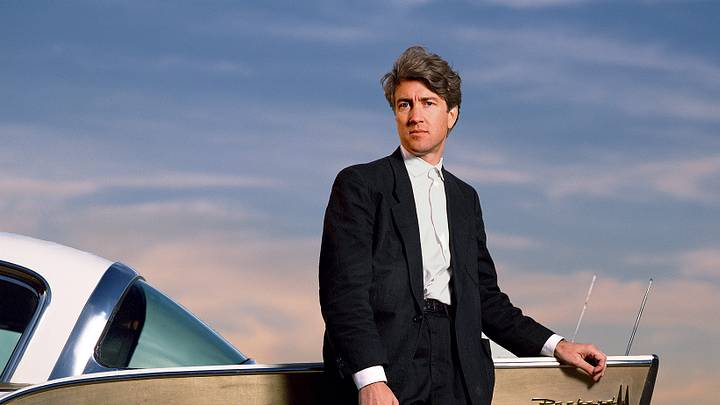
In his work, David Lynch plundered the depths of the bizarre, trawling the underbelly of the American psyche and translating it into dreamlike and disorienting cinema and television. But in his daily life, he made sure his days were as predictable as possible.
The filmmaker behind masterpieces like Twin Peaks and Mulholland Drive relied on daily routines, which allowed his limitless creativity to wander far beyond the edges of what most people could dream up. “If you have a habit pattern,” Lynch told The New Yorker in 2021, “the more conscious part of your mind can concentrate on your work, and you can get ideas and do those things, and the rest sort of takes care of itself in the background.”
David Lynch’s morning ritual: coffee and meditation
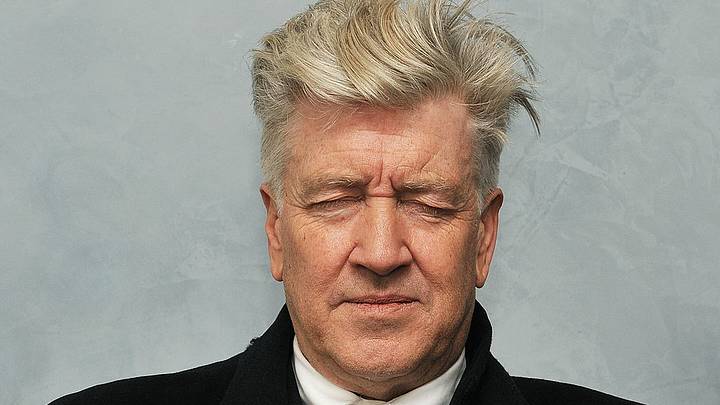
Lynch’s days always began with one thing: coffee. Like Dale Cooper in Twin Peaks, Lynch shared an unshakable love for the stuff, and typically started his days with a cappuccino. “I like to get going with the coffee right away. That’s just the way it is with me,” he shared with Vice in 2020. “You know how in a hospital they put an IV in your arm? I pretty much have a drip going all day long.”
After his first cup of joe, he would sit for meditation—a non-negotiable cornerstone of the filmmaker’s life for decades. Lynch began practicing Transcendental Meditation in 1973 and continued to do so daily until his death in 2025, claiming to have never missed a session. The practice involves sitting for 20 minutes twice a day and mentally reciting a mantra, which is provided by a certified teacher at an official Transcendental Meditation course and kept secret for life.
Lynch was a major advocate for the technique, which he often said was key to his happiness and creativity. The practice inspired his book Catching the Big Fish: Meditation, Consciousness, and Creativity, and in 2005, he established the David Lynch Foundation, which aimed to spread Transcendental Meditation around the world.
After Lynch finished his morning meditation, he’d head to work. That could look quite different each day, depending on whether he was searching for new ideas, filming on set, promoting a film, or something else. Still, no matter what, and even on set, he always made time for his afternoon meditation session.
David Lynch’s eating habits
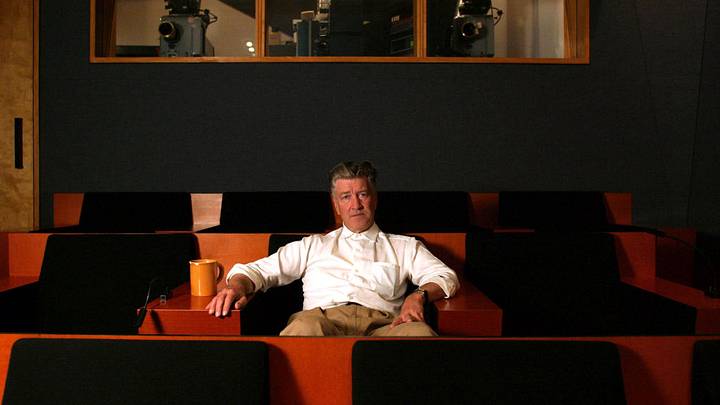
Lynch preferred to eat the same meals many times in a row, and sometimes stuck with one dish for months at a time. After meditating, he would typically have a small breakfast—“either some amrit nectar or a small smoothie with protein powder and blueberries and peaches,” he once shared. In a 1997 interview with Marie Claire, he said that at the time, his favored lunch meal consisted of tomatoes, tuna, feta cheese, and olive oil. For dinner, he cited a preference for chicken and broccoli with soy sauce.
Some food habits endured longer than others. His longest-lasting daily meal, he said, was a Bob’s Big Boy chocolate milkshake, which he had at 2:30 p.m. every day for seven years. He also aimed to eat at the same times every single day, no matter what.
Lynch preferred not to cook at home, however. “I don’t allow cooking in my house. The smell. The smell of cooking—when you have drawings, or even writings— that smell would go all over my work,” he said in a 1990 interview with Time. “So I eat things that you don’t have to light a fire for. Or else I order a pizza. The speed at which I eat it, it doesn’t smell up the place too bad. The smell doesn’t last too long.”
For the filmmaker, routine was the foundation that allowed his creativity to fly as freely as it did. “When there’s some sort of order there, then you’re free to mentally go off any place,” he said in a 2000 interview with the journalist Charlie Rose. “You’ve got a safe sort of foundation and a place to spring off from. It is very important for me [in the creative process]…The purer the environment, the more fantastic the interior world can be, it seems to me.”
Read More:
The 5 Best Indian Restaurants in the U.S., According to Guy Fieri
Chicken vindaloo in Alaska and lamb curry in New Mexico? These are the unexpected Indian restaurant picks that made Guy Fieri’s list.
ByNitya Rao|May 12, 2026, 8:34 PM EDT

Guy Fieri has spent decades behind the wheel of his red Camaro, proving that you don’t need a plane ticket to Delhi to find world-class curry. From the high-desert heat of Santa Fe to a hidden gem inside a Utah gas station, the Mayor of Flavortown has uncovered a “real deal” map of Indian cuisine right here in the U.S.
We aren’t just talking about your standard, lukewarm lunch buffets or the neon-red chicken you find at the mall. We’re shouting out five standout restaurants where the spices are toasted fresh, the tandoors are roaring, and the flavors are, in Fieri’s words, “off the hook.”
If you’re ready to trade the burgers for biryani and see how the spice trade meets the American Main Street, explore this mouthwatering list of Fieri’s top five Indian restaurants in the U.S.
- Paper Dosa – Santa Fe, NM
- Tandoori Oven – Logan, UT
- Gandhi Mahal – Minneapolis, MN
- Hari Om Cuisine of India – Fairbanks, AK
- Al Noor – Baton Rouge, LA
Paper Dosa – Santa Fe, NM
Lamb Curry
Santa Fe is world-renowned for its green chile, but Paper Dosa is successfully putting South Indian comfort food on the New Mexican map. This isn’t your typical rich, cream-based fare; instead, Chef Paulraj Karuppasamy offers an aromatic, authentic approach to the subcontinent’s lesser-known culinary region.
While their namesake paper-thin fermented rice crepes are a work of art, Fieri was specifically floored by the lamb curry. The dish features a lighter profile than most Northern Indian stews, relying on fresh curry leaves and toasted mustard seeds rather than heavy dairy. The result is a vibrant, aromatic dish with layers of flavor—”spice,” “smoke,” and “acid,” to be specific—that allow the tenderness of the lamb to shine through. After sampling the spread, from the potato-stuffed masala dosa to the fragrant lamb curry, Fieri noted that a visit here “isn’t just a meal; it’s an experience.”
Tandoori Oven – Logan, UT
Chicken Tikka Masala
In the world of Diners, Drive-Ins and Dives, some of the best culinary treasures are found in the most unassuming places. Case in point: Tandoori Oven, which is famously tucked inside a Utah gas station. While travelers might stop for a tank of unleaded, locals know to head inside for a “smorgasbord of flavors” that the Arora brothers have been perfecting for years.
When giving Fieri the lowdown on the restaurant’s offerings, Chef Sham Arora clarified that Northern Indian food is typically richer than its Southern counterparts, and the signature chicken tikka masala he later whipped up is a prime example. The secret to this creamy, spicy “Indian stew,” as Fieri describes it, lies in a rigorous two-day marination process that breaks down the proteins until the meat is so tender that your teeth simply sink into it.
After a trip into a traditional clay tandoor oven, the chicken is smothered in a vibrant, orange-red tomato-onion gravy and served with rice, naan, or—if you’re doing it right—both. Between the “perfect blend of spice” and the high-heat char from the clay tandoor, Fieri found himself struggling with the etiquette of eating something so delicious. He joked that his only real anxiety was figuring out how to “shovel it in fast enough” without looking like a dog who had never seen food before.
Gandhi Mahal – Minneapolis, MN
Dal with Naan
Gandhi Mahal is a Minneapolis legend that proves you can be “green” while serving up red-hot curry. Before its original building was lost in 2020, the restaurant was a marvel of urban sustainability, featuring a full aquaponics system in the basement. This high-tech setup allowed the kitchen to grow its own fresh produce and raise fish right on-site. Today, that commitment to fresh ingredients continues through their “Curry in a Hurry” concept.
When Fieri visited, he was immediately floored by the “outstanding” chicken tikka masala, noting it had “such a depth” of flavor. He specifically praised the “richness” of the ground almonds in the sauce and the juiciness of the chicken, which he likened to butter.
But the “next level” experience didn’t stop there. Fieri also got a taste of the plant-based side of the menu, continuing his Indian feast with a helping of earthy dal and blistered naan. The lentils are simmered for hours before being finished with a tarka—a traditional technique where whole spices are tempered in hot ghee to create an explosion of flavor.
Fieri was so impressed by the bite of smooth dal and pillowy naan that he declared the combination “multi-layered perfection.” For Fieri, the soulfulness of the cooking made it the perfect entry point for any skeptic: “If you don’t think you like Indian food, let this be your visa.”
Hari Om Cuisine of India – Fairbanks, AK
Chicken Vindaloo
If you think you have to be in a major metro area—or even the mainland—for authentic spice, Hari Om in Fairbanks is here to prove you wrong. Located just a few hours south of the Arctic Circle, this eatery provides a fiery contrast to the Alaskan chill thanks to the expertise of Chef Amit Paul.
With nearly three decades of experience, Paul has mastered the Dum Pukht tradition—a specialized slow-cooking method where the pot is sealed, allowing the food to steam in its own juices. This technique is likely why Fieri was so impressed with the texture of the chicken vindaloo, noting that the chicken was so tender it “just fell apart.”
The dish features a thick sauce built from a potent paste of red chiles and vinegar, a combination that hits all the right notes for the Mayor of Flavortown. “I love the spice, and I love the acidity,” Fieri remarked, adding that the dish has a “really nice mix of spices” and a distinct “zip.” While the vindaloo brought the heat, Fieri also sampled the lamb korma, a rich, nut-based curry that showed off the kitchen’s range.
Ultimately, Fieri concluded that the meal is “everything you want it to be, especially on a cold day in Fairbanks.”
Al Noor – Baton Rouge, LA
Lamb Kebabs
Baton Rouge might be the land of gumbo and crawfish, but Fieri found a culinary powerhouse tucked away in a suburban strip mall at Al-Noor. Chef Khalad Al-Noor famously walked away from a career in corporate engineering to return to his roots, and the result is what Fieri calls “Indian Soul Food.”
The lamb sheekh kebabs are a masterclass in tandoori cooking. The process starts with fresh ground lamb mixed with a total of 16 flavorful ingredients, including fresh ginger, garlic, and a custom blend of toasted spices. Next, the supple meat is hand-molded onto long metal skewers and lowered into a roaring clay tandoor. The intense heat renders the fat perfectly, creating a kebab that is incredibly juicy with a signature charred exterior.
While Fieri called the restaurant’s unique espresso-rubbed venison “off the hook,” it was the lamb that he deemed truly “outrageous,” noting that the spices aren’t just on the meat—they’re in it.
More Like This:
•
5 Best Restaurants in the U.S., According to Guy Fieri
•
The 5 Best Mexican Restaurants in the U.S., According to Guy Fieri
•
Flavortown Across America: An Interactive Map of Guy Fieri’s Restaurant Empire
•
5 Best Donut Shops in North America, According to Guy Fieri
•