
ByStacy Conradt|May 9, 2018, 2:00 PM EDT
 Add us as a preferred source

Everyone turn around and wave goodbye to the folks back on the dock … they may never see you again. But then again, you probably never saw them before, either. Here are 15 facts about Disney’s Jungle Cruise.
1. WHEN IT DEBUTED, IT WAS A VERY SERIOUS TRIP THROUGH EXOTIC LOCATIONS.
For the first few years, the Jungle Cruise was more of a documentary-style attraction. All of the funny scenes and jokes were added years later—and thank goodness. The ridiculously bad jokes delivered with perfect apathy (“And now, we’re approaching beautiful Schweitzer Falls, named after the famous African explorer, Dr. Albert Falls.”) are the best part of the ride for many people.
2. WALT DISNEY WANTED TO INCORPORATE LIVE ANIMALS.

When the ride was still in development, Walt Disney wanted to use live animals. When a zoologist explained that many of the animals were nocturnal, which would leave daytime guests gazing at catnapping creatures, Walt opted for creatures he could control. For a time, however, the ride queue did feature live alligators.
3. DISNEY DROVE A CAR THROUGH THE DRY “RIVERBEDS” TO PROMOTE THE RIDE.
As Disneyland was being constructed, Walt often gave TV viewers a preview of what was being built. Before the Jungle Cruise had water, he drove a Nash Rambler (one of the show’s sponsors) through the “riverbeds” to show off Schweitzer Falls and the crude mechanics of the animals.
4. IT’S THE RIDE THAT LED DISNEY TO VIEW HIS PARKS AS NEVER BEING COMPLETE.
It may be apocryphal, but the story goes like this: Walt was strolling through Disneyland when he heard a young boy asking his mom to take the eight-minute trip through the jungle. Not even slowing her stride, the mother replied something to the effect of, “No, we did that last time we were here.” Hearing that, Walt decided he had to keep changing and improving things in order to keep guests coming back.
5. SOME JUNGLE CRUISE SKIPPERS HAVE GONE ON TO BIGGER AND BETTER THINGS.
Famous wisecracking skippers include Kevin Costner and Ron Ziegler (Richard Nixon’s press secretary).
6. MOST OF THE “EXOTIC” JUNGLE PLANTS AREN’T EXOTIC AT ALL.

How do you get the tropical aesthetic provided by exotic plants without shelling out the big bucks for shipping and maintaining them? Just use Disney’s tactic: “plant” an orange tree upside down and let vines grow and twine around the exposed roots.
7. THE WATER IS CLEANER THAN IT LOOKS.
That murky water passengers sail through is dyed brown, dark green, or muddy blue. The coloring serves two purposes: It provides a more realistic portrayal of swampy waters, of course, but it also conceals the fact that the cruise ships are on a track in a pool that’s less than four feet deep in most areas.
8. DISNEY WAS THRIFTY WHEN IT CAME TO THE AIRPLANE USED IN THE RIDE.
If you pony up the cash for a Lockheed Model 12 Electra Junior airplane, you might as well get your money’s worth, right? Disney used the back half for the scene near the Jungle Cruise’s hippo pool at the Magic Kingdom, and the front half for the Casablanca scene in “The Great Movie Ride” at Hollywood Studios.
9. SOME OF THE SPECIAL EFFECTS ARE PRETTY LOW-TECH.
You might think that getting the animals’ eyes to glow as you make your way through the Asian temple is a high-tech trick, but it’s really just the opposite. Their eyes are really just marbles painted with a reflective coating.
10. LOOK FOR INSIDE JOKES HIDDEN IN THE QUEUE.
At the Magic Kingdom at Disney World, a pair of crates sits bundled with some barrels as if they’re cargo ready to be shipped. A close look at the addresses reveals that one is going to “Thomas Kirk, Esq., M. Jones, Cartographers Ltd. Field Office, Island of Bora Danno.” The other is addressed to “Kenneth Annakin, Director of Imports, Wyss Supply Company, Colony of New Guinea.”
This is a reference to the Disney movie Swiss Family Robinson. Tommy Kirk played Ernst Robinson in the 1960 film, then went on to play the title character in the 1964 movie The Misadventures of Merlin Jones. James MacArthur, the actor who played Fritz Robinson, later played Danny Williams—you know, “Book ‘em, Danno” on Hawaii Five-O. So that’s the first crate explained. The second crate refers to Ken Annakin, the director of Swiss Family Robinson, and “Wyss Supply” is a little wink to the author of the original book, Johann Wyss.
11. A JUNGLE CRUISE MOVIE STARRING TOM HANKS AND TIM ALLEN WAS PLANNED, AND SCRAPPED.
Buzz and Woody meet Jumanji? It almost happened. Entertainment Weekly first reported on a Jungle Cruise movie starring Tom Hanks and Tim Allen back in 2011, which clearly never came to be. But that doesn’t mean that a movie isn’t happening: Though no release date has been set, Dwayne “The Rock” Johnson, Emily Blunt, and Jesse Plemons have all signed on for starring roles in the film.
12. ONE OF THE BOATS ACTUALLY SANK.

Perhaps its name was prophetic, because “Sankuru Sadie” at the Magic Kingdom did, in fact, sink. In 2004, the boat took on more water than it could hold and went under—though, given how shallow most of the water is, it probably didn’t go far. The boat was refurbished and put back into rotation.
13. THERE USED TO BE A KATHARINE HEPBURN CAMEO.
The ride was largely inspired by the movie The African Queen, starring Humphrey Bogart and Katharine Hepburn. As a somewhat macabre homage to the film, the Florida Jungle Cruise once featured a little nod to Hepburn—literally. Near the end of the ride, Trader Sam the headhunter cheerily holds up a couple of shrunken heads. “Trader Sam has a deal for you. Two of his heads for one of yours,” is how the joke typically goes. Riders who looked closely would have noticed that one of Sam’s shrunken heads looked an awful lot like Hepburn.
14. ED SULLIVAN RODE THE JUNGLE CRUISE IN A 1959 KODAK COMMERCIAL.
If you want to see what the Jungle Cruise looked like just a few years after Disneyland’s opening day, check out this commercial for Kodak’s innovative new Brownie camera, available for just $74.50!
15. DISNEYLAND’S JUNGLE CRUISE FEATURES A PALM THAT PRE-DATES THE PARK.
Located just outside the entrance of the Jungle Cruise in California is a large palm tree. Referred to as “the Dominguez Palm,” this bit of vegetation has been around way longer than Mickey has been; it dates back to 1896. It’s named after the family who lived there before the land became a theme park. The rancher who sold the land to Disney requested that this particular tree be spared, and Disney obliged, moving all 15 tons of tree from the parking lot area to Adventureland.
David Lynch’s Extremely Reliable Daily Routine
The filmmaker’s work was anything but predictable—but his daily habits were the foundation of his frequent creative ventures beyond the edges of ordinary reality.
ByEden Gordon|Nov 3, 2026, 10:00 AM EST
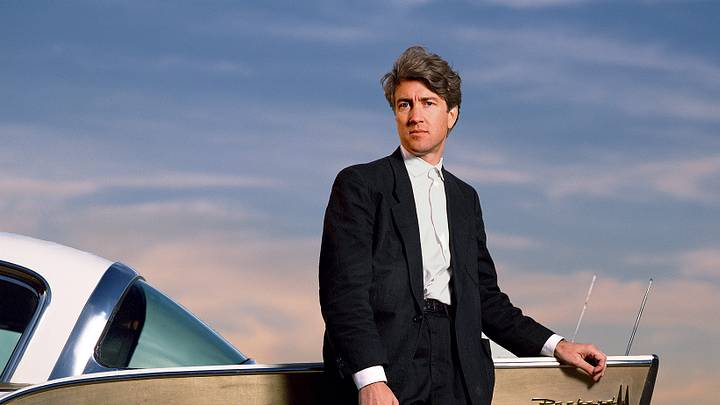
In his work, David Lynch plundered the depths of the bizarre, trawling the underbelly of the American psyche and translating it into dreamlike and disorienting cinema and television. But in his daily life, he made sure his days were as predictable as possible.
The filmmaker behind masterpieces like Twin Peaks and Mulholland Drive relied on daily routines, which allowed his limitless creativity to wander far beyond the edges of what most people could dream up. “If you have a habit pattern,” Lynch told The New Yorker in 2021, “the more conscious part of your mind can concentrate on your work, and you can get ideas and do those things, and the rest sort of takes care of itself in the background.”
David Lynch’s morning ritual: coffee and meditation
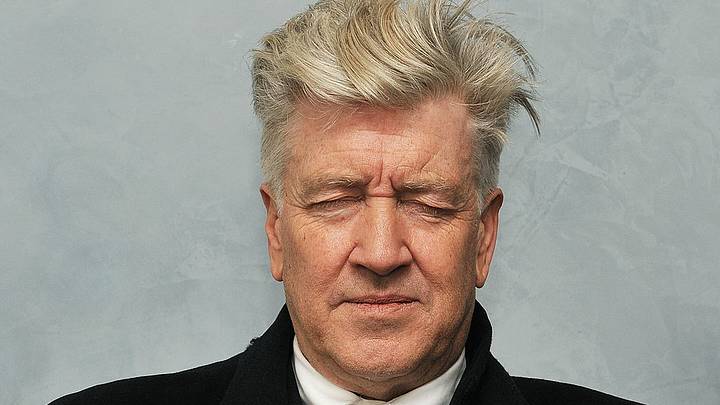
Lynch’s days always began with one thing: coffee. Like Dale Cooper in Twin Peaks, Lynch shared an unshakable love for the stuff, and typically started his days with a cappuccino. “I like to get going with the coffee right away. That’s just the way it is with me,” he shared with Vice in 2020. “You know how in a hospital they put an IV in your arm? I pretty much have a drip going all day long.”
After his first cup of joe, he would sit for meditation—a non-negotiable cornerstone of the filmmaker’s life for decades. Lynch began practicing Transcendental Meditation in 1973 and continued to do so daily until his death in 2025, claiming to have never missed a session. The practice involves sitting for 20 minutes twice a day and mentally reciting a mantra, which is provided by a certified teacher at an official Transcendental Meditation course and kept secret for life.
Lynch was a major advocate for the technique, which he often said was key to his happiness and creativity. The practice inspired his book Catching the Big Fish: Meditation, Consciousness, and Creativity, and in 2005, he established the David Lynch Foundation, which aimed to spread Transcendental Meditation around the world.
After Lynch finished his morning meditation, he’d head to work. That could look quite different each day, depending on whether he was searching for new ideas, filming on set, promoting a film, or something else. Still, no matter what, and even on set, he always made time for his afternoon meditation session.
David Lynch’s eating habits
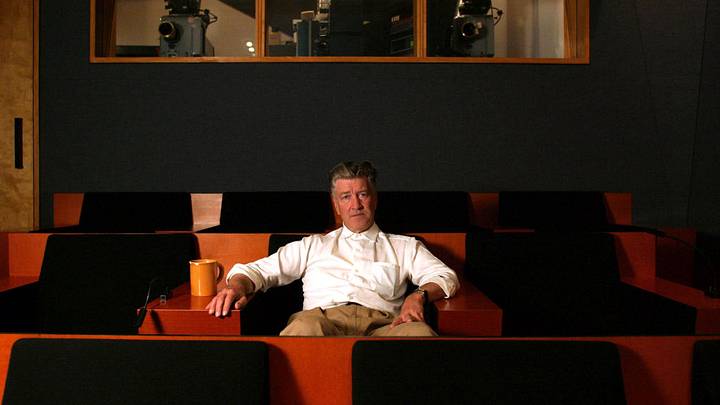
Lynch preferred to eat the same meals many times in a row, and sometimes stuck with one dish for months at a time. After meditating, he would typically have a small breakfast—“either some amrit nectar or a small smoothie with protein powder and blueberries and peaches,” he once shared. In a 1997 interview with Marie Claire, he said that at the time, his favored lunch meal consisted of tomatoes, tuna, feta cheese, and olive oil. For dinner, he cited a preference for chicken and broccoli with soy sauce.
Some food habits endured longer than others. His longest-lasting daily meal, he said, was a Bob’s Big Boy chocolate milkshake, which he had at 2:30 p.m. every day for seven years. He also aimed to eat at the same times every single day, no matter what.
Lynch preferred not to cook at home, however. “I don’t allow cooking in my house. The smell. The smell of cooking—when you have drawings, or even writings— that smell would go all over my work,” he said in a 1990 interview with Time. “So I eat things that you don’t have to light a fire for. Or else I order a pizza. The speed at which I eat it, it doesn’t smell up the place too bad. The smell doesn’t last too long.”
For the filmmaker, routine was the foundation that allowed his creativity to fly as freely as it did. “When there’s some sort of order there, then you’re free to mentally go off any place,” he said in a 2000 interview with the journalist Charlie Rose. “You’ve got a safe sort of foundation and a place to spring off from. It is very important for me [in the creative process]…The purer the environment, the more fantastic the interior world can be, it seems to me.”
manual. Read More: