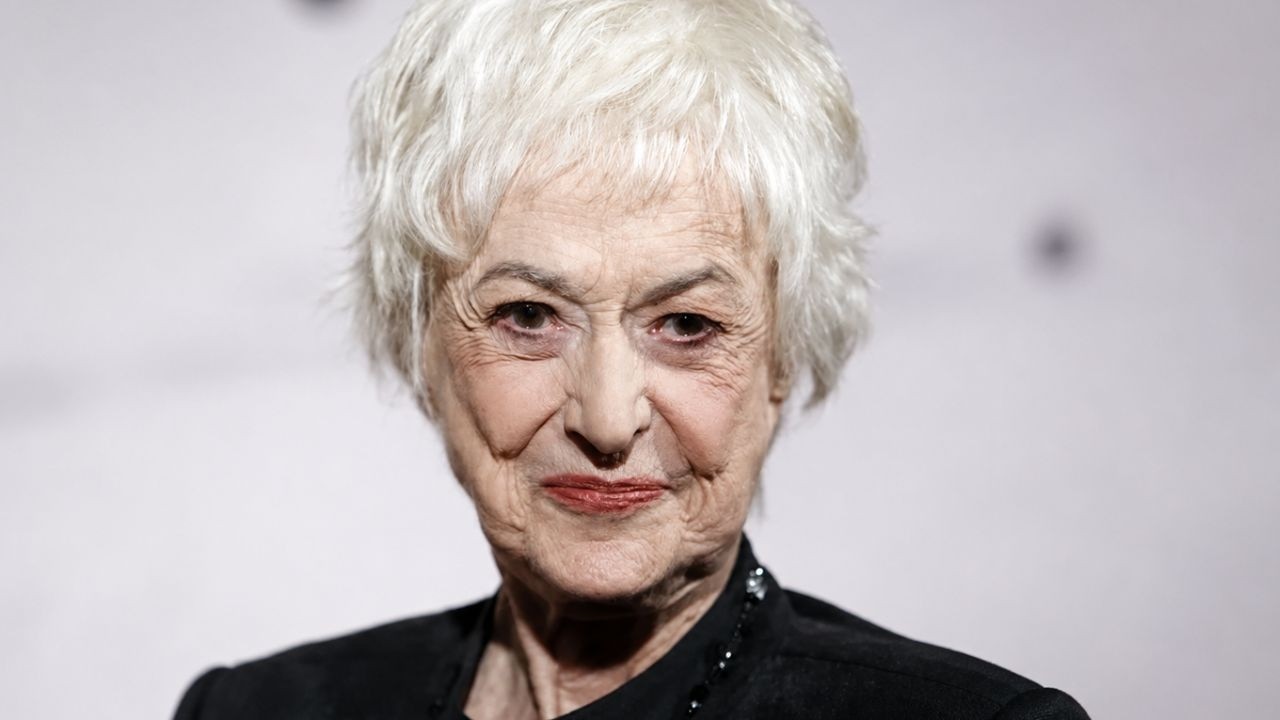
The final performance ended, the stage lights dimmed, and the towering figure with the basso profundo voice stepped into the shadows, leaving behind a legacy that had fundamentally altered the landscape of American comedy. For decades, the public knew Bea Arthur as the formidable Maude Findlay and the acerbic Dorothy Zbornak, but the woman behind those iconic roles lived a life of profound contradiction—a celebrated star who craved obscurity, a comedic titan who battled personal regret, and a private citizen whose final act of generosity would only be revealed after her death. The revelation that she had been living a “double life” is not one of 𝒔𝒄𝒂𝓃𝒹𝒶𝓁 or hidden romance, but rather the stark divide between her public persona and her fiercely protected private world, a world that has now come into sharper focus following the release of archival footage and new interviews with those closest to her.
The story of Bea Arthur is one of relentless perseverance against an industry that initially rejected her. Born Bernice Frankel in Brooklyn in 1922, she grew up in Cambridge, Maryland, where her family ran a women’s clothing store. From a young age, she was marked as different—standing nearly five feet ten inches tall by the age of twelve, with a voice that was deep and resonant, she was often cast in male roles in school plays.
Her dream was to be a “little blonde girl” who could sing and dance, but reality had other plans. These physical attributes, which she considered flaws, would later become her signature, but the journey to that realization was arduous and spanned nearly three decades of quiet struggle.
Before she ever stepped onto a soundstage, Arthur served her country. In 1943, she enlisted in the United States Marine Corps Women’s Reserve, becoming one of the first women to join the organization. She served as a typist and later as a truck driver and dispatcher, achieving the rank of staff sergeant before her honorable discharge in 1945.
This period of military service instilled in her a discipline and resilience that would serve her well in the cutthroat world of New York theater. After the war, she trained as a medical laboratory technician, but the pull of the stage was too strong. She moved to New York, enrolled at the Dramatic Workshop of the New School, and began a life of bit parts and off-Broadway productions.
For over a decade, Arthur toiled in relative obscurity, appearing in Shakespearean plays and Greek dramas at the Cherry Lane Theater. She was known only within the insular community of New York theater, while the rest of the country had no idea who she was. The industry deemed her too tall, her voice too deep, and her look too unconventional for the leading lady roles of the 1950s.
She was consistently cast as strong-willed characters or women much older than her actual age. It was a period of immense frustration, yet she persevered, honing the razor-sharp timing and deadpan delivery that would eventually become her trademark. A nightclub owner once advised her to pursue comedy, a suggestion that would prove prophetic.
The turning point came in 1964 when she joined the Broadway production of Fiddler on the Roof as Yente the matchmaker. Her performance caught the attention of critics and, more importantly, producer Norman Lear, who had seen her years earlier. But it was her role as Vera Charles in Mame in 1966 that truly established her.
Starring opposite Angela Lansbury, Arthur won the Tony Award for Best Featured Actress in a Musical, proving that her unconventional presence could command the stage. This success, however, came at a time of personal strain. Her husband, director Gene Saks, was battling hepatitis, and Arthur had become the family’s primary breadwinner, supporting him and their two adopted sons, Matthew and Daniel.
The double life that Arthur led was perhaps most evident during this period. On one hand, she was a rising Broadway star, celebrated for her wit and presence. On the other, she was a mother struggling to balance a demanding career with family life.
She rarely spoke about her children in interviews, shielding them from the public eye. Those who visited her home described a woman who shed the trappings of stardom at the door, becoming a mother who enjoyed cooking and quiet evenings at home. Yet, the pressure was immense.
The decision to adopt children while pursuing a career that required constant travel and late nights created a tension that would define her personal life for years to come.
 In 1971, Norman Lear invited her to appear on All in the Family as Maude Findlay, a liberal cousin of Archie Bunker. Arthur initially refused, not wanting to leave the stage, but after repeated persuasion, she agreed to a two-episode arc. The response was explosive.
Audiences were captivated by this character who was the polar opposite of the demure female sitcom characters of the era. Maude was loud, opinionated, and unapologetically political. The character was so popular that CBS quickly developed a spin-off series, Maude, which premiered in 1972.
The show was a cultural phenomenon, tackling issues that had never before been addressed in a comedy, including the Vietnam War, divorce, and mental health.
The zenith of this controversy came in November 1972 with the two-part episode “Maude’s Dilemma,” in which the 47-year-old character decides to have an abortion. At the time, Roe v. Wade had not yet been decided, and abortion was illegal in most states.
Dozens of television stations refused to air the episode, and thousands of protest letters flooded CBS. The press debated the issue relentlessly. Yet, despite the backlash, approximately 65 million viewers tuned in to watch the story unfold.
It was a watershed moment in television history, proving that sitcoms could be a vehicle for serious social commentary. Arthur, at the center of the storm, remained resolute, understanding the power of the platform she had been given.
While Maude made her a household name, the pressure of the role began to take its toll. By 1978, despite strong ratings, Arthur made the 𝓈𝒽𝓸𝒸𝓀𝒾𝓃𝑔 decision to end the series. She believed the character had run its course and had no desire to prolong the show for commercial gain.
This decision, which surprised many in the industry, was a clear reflection of her artistic integrity. It also marked the end of her marriage to Gene Saks. The couple, who had been together for nearly three decades, divorced quietly in 1978.
The gap between their careers had grown too wide, and the demands of Arthur’s fame had driven them apart. She never married again.
 The early 1980s were a quiet period for Arthur. She appeared in a failed sitcom, Amanda’s, an adaptation of Fawlty Towers, which was cancelled after just ten episodes. For the first time since Maude, she was without a hit show.
It was a rare moment of uncertainty in a career that had seemed unstoppable. But in 1985, screenwriter Susan Harris created the character of Dorothy Zbornak specifically for Arthur. The role was written to fit her unique talents—her height, her voice, and her sharp wit.
The Golden Girls premiered that year and became an instant phenomenon, running for seven seasons and winning numerous awards, including a second Emmy for Arthur in 1988.
The show was revolutionary in its portrayal of older women. Dorothy, Blanche, Rose, and Sophia were not supporting characters; they were the center of the story, with active romantic lives, careers, and complex friendships. Arthur’s portrayal of Dorothy was a masterclass in deadpan comedy.
Unlike Maude, who was fiery and argumentative, Dorothy was composed, using her timing and a single, concise line to devastating comedic effect. The chemistry between the four leads—Arthur, Betty White, Rue McClanahan, and Estelle Getty—was undeniable, even if the relationship between Arthur and White was often described as professional rather than warm. They had vastly different personalities and working styles, but they remained committed to the show.
Behind the scenes, Arthur’s private life remained a closely guarded secret. She was known to prefer staying home to attending Hollywood parties. Her friendships were deep but few, with Angela Lansbury and Adrienne Barbeau among her closest confidantes.
She rarely gave interviews about her personal life, and when she did, she was guarded. It was only in her final years that she revealed a deep-seated regret. When asked if she would change anything about her life, she did not mention her career or her awards.
Instead, she said, “I wish I had spent more time with my children.” This confession, made in a rare moment of vulnerability, revealed the profound cost of her success.
The second double life Arthur led was in her final years. While she continued to make appearances, including a memorable turn on the Comedy Central Roast of Pamela Anderson in 2005, she was quietly battling lung cancer. She kept her illness a secret from the public and from many of her colleagues.
 During this time, she devoted her energy to charitable causes, particularly the Ali Forney Center, which supports homeless LGBTQ+ youth. In 2005, despite her declining health, she raised approximately $40,000 for the organization through a stage performance. She was deeply moved by the plight of young people rejected by their families for their sexual orientation or gender identity.
On April 25, 2009, Bea Arthur passed away at her home in Los Angeles from complications of lung cancer. She was 86 years old. The news shocked the entertainment world.
Broadway theaters dimmed their lights in her honor. Tributes poured in from colleagues and fans alike. But it was the revelation of her will that truly surprised the public.
She left $300,000 to the Ali Forney Center, a final act of generosity that she had kept entirely private. In 2017, the organization opened the Bea Arthur Residence, a housing facility for homeless LGBTQ+ youth, named in her honor. It was a legacy that had nothing to do with her acting roles, yet it reflected the real Bea Arthur more clearly than anything else.
The “double life” of Bea Arthur was not one of deception but of compartmentalization. She was a public figure who craved privacy, a comedian who was deeply serious about social justice, and a mother who regretted the time she spent away from her children. She was a woman who, for nearly 30 years, was told she was not right for Hollywood, only to become the face of two of the most influential television shows in American history.
She was a star who walked away from hit series at the height of their success because she believed in artistic integrity over commercial gain. And she was a philanthropist who used her final resources to provide a home for those who had none.
Her legacy is multifaceted. She changed the way television portrayed women, proving that a middle-aged woman could be the center of a hit sitcom. She pushed the boundaries of what a comedy could address, tackling abortion and other controversial topics decades before they became mainstream.
She created a comedic style—the deadpan, the pause, the perfectly timed line—that has influenced generations of actors. And she left a humanitarian legacy that continues to impact lives today. The story of Bea Arthur is a testament to the fact that true success is not about fitting in, but about persevering until the world catches up to your unique vision.
It is a story of a woman who lived her life on her own terms, both in the spotlight and behind closed doors, leaving behind a body of work and a legacy of kindness that will endure for generations.