
Even 30 years later, we still can’t tell you what the The Venus Butterfly is.
ByRoger Cormier|Mar 11, 2024, 4:37 PM EDT
 Add us as a preferred source

Created by Steven Bochco, the mind behind one of the most innovative network shows ever in Hill Street Blues, and Terry Louise Fisher, a former entertainment lawyer, novelist, and Cagney & Lacey writer/producer, L.A. Law ran for eight seasons on NBC from 1986 to 1994, collecting 15 Emmy Awards during its run. The series—which premiered 30 years ago, on September 15, 1986—centered around the ambitious (and horny) lawyers and junior staff of the Los Angeles law firm McKenzie, Brackman, Chaney and Kuzak. The attorneys tackled then-hot-button issues and made American television history while doing so.
1. COMPOSER MIKE POST WROTE THE THEME MUSIC AROUND A CAR TRUNK SLAMMING.
Steven Bochco told composer Mike Post that he wanted to start the opening sequence with a car trunk slamming shut. Post, who had worked with Bochco on Hill Street Blues (and also created the iconic theme music for Law & Order) wrote the L.A. Law theme based on that directive.
2. CORBIN BERNSEN HAD TROUBLE FIGURING OUT HIS CHARACTER.
Corbin Bernsen’s first audition with Bochco in New York didn’t go very well. He auditioned for the role of Michael Kuzak (which eventually went to Harry Hamlin) and was suffering from the flu. Bochco thought it was a “little disappointing” because he thought Bernsen was good-looking. The actor went to Los Angeles and caught a woman with blonde hair turning her head to watch him run down Mulholland Drive, which is when he locked into who the character of Arnie Becker was. Bernsen said it was smooth sailing after that. “I went in the next day and essentially the day after I got the job.”
3. JILL EIKENBERRY WAS BATTLING BREAST CANCER DURING THE SHOW’S FIRST SEASON.
After shooting the pilot, Jill Eikenberry—who played Ann Kelsey—was diagnosed with breast cancer. Her husband, Michael Tucker (Stuart Markowitz on the show), called Bochco to say the two couldn’t do the show because of it, but Bochco assured them that Eikenberry would be off the set by 5 p.m. every day to go to UCLA for radiation treatments. Going against their publicist’s advice, Eikenberry revealed the ordeal in 1988. (They later fired the publicist.)
4. SUSAN DEY AUDITIONED IN AN ODD PLACE.
Susan Dey read for Grace Van Owen at a grammar school picnic. (Both Dey and Bochco’s children were there).
5. THEY SPENT MORE THAN $1 MILLION ON THE SETS.
Three sets were built for L.A. Law—including an exact replica of a Los Angeles courtroom, complete with a removable jury box and a courtroom elevator—to the tune of more than $1 million. Keeping the cast in designer duds was no cheap affair either; the wardrobe budget was about $40,000 per episode.
6. HARRY HAMLIN IS EATING SOMETHING IN EVERY CONFERENCE ROOM SCENE.
“If you go back and watch the pilot as the very first conference room scene ends, I reach over and pull a sandwich toward me,” Hamlin told the Los Angeles Times. “I picked it up as they were shooting my last bit. I had my mouth full of food. We shot another conference room scene, and there was a plate of croissants. I thought, ‘I will make this a thing.’ If you look go back and look, I will be eating in every conference room scene. It became a running gag with the prop department.”
7. TERRY LOUISE FISHER MADE UP THE VENUS BUTTERFLY.
In the ninth episode of the series, titled “The Venus Butterfly,” Stuart (Tucker) wins Ann (Eikenberry) over with his mysterious sex move, known as The Venus Butterfly. Bochco initially told Eikenberry about the idea late one night over the phone while she was visiting her mother in Wisconsin, but it was Fisher who wrote that part of the episode, which would later win the co-creators the Emmy for Outstanding Writing in a Drama Series. Fisher insisted she had just made it up, but viewers wrote in and begged the writers to tell them what it was. A perfume company and erotic toy manufacturer asked Bochco to purchase the rights to the name “Venus Butterfly,” but he turned them down.
8. BOSTON ATTORNEY DAVID E. KELLEY CAME ON AS A WRITER DURING THE FIRST SEASON.
While working as a lawyer in Boston, David E. Kelley wrote the movie From the Hip (1987) in his free time, which landed him an agent and caught the attention of Bochco, who hired him as a writer for L.A. Law after reading just the first 30 pages of that script. Kelley asked for a five-month leave of absence from his law firm, but L.A. Law quickly turned into a full-time job. After Bochco left the show at the end of the third season, Kelley was promoted to executive producer.
9. BOCHCO LIKED TO PUNISH HIS BROTHER-IN-LAW’S CHARACTER.
Douglas Brackman, Jr. was played by Alan Rachins, who is married to Joanna Frank, Bochco’s sister (who played Brackman, Jr.’s wife, then ex-wife, Sheila on the series). In 1990, The New York Times listed some of the things poor Douglas went through on L.A. Law:
“During the five seasons that ‘L.A. Law’ has been broadcast, the boorish, balding Douglas—in addition to being hung upside down in a hospital room with skin grafts on his posterior—has had a Slinky caught in his braces, has engaged the services of a sex therapist because sex gives him gas and makes him faint, flipped his toupee in aerobics class while trying to impress the young instructor, discovered he has a pair of boorish, balding half-brothers, been arrested in a sushi bar and has voted himself out of the senior partnership at the firm that bears his father’s name.”
It was enough that the third season was devoted to bringing Douglas “back to normalcy,” to counteract his many humiliations from season two.
10. THE SHOW INFLUENCED ACTUAL LAW, FOR GOOD AND BAD.
In 1990, a lawyer in Miami Beach argued to an (unconvinced) judge that the jury had acquitted the doctors in his client’s malpractice suit because a very similar case was a storyline in the previous night’s episode of L.A. Law, where the doctor defendant had also been found free of guilt (the judge had not seen the episode). In that same New York Times article, it was reported that L.A. Law was responsible for increased applications to law schools, and that attorneys had changed their approach to their attire and the way they talked to juries.
After Abby Perkins fought to regain custody of her son on the show, an attorney sent a letter to Michele Greene (the actress who portrayed Perkins) telling her that the storyline had affected the outcome of a child-abuse case in Texas.
11. EVEN DIANA MULDAUR WAS SHOCKED AT HER ELEVATOR DEATH.
Kelley explained that Diana Muldaur’s character, Rosalind Shays, was a “finite” character, because he never wanted her to become nicer over time or lose her edge. The more the writers thought about having her fall down an empty elevator shaft, the more it made sense to them. Kelley said that while he didn’t tell the actress she was going to perish before sending her the script to season five’s “Good to the Last Drop,” he had warned Muldaur in the past that her character wasn’t long for this world. In an interview, Muldaur claimed she had no idea Shays was going to die until reading the script. She refused to do the stunt herself; her stunt double needed 10 takes to get it right.
12. HOMER SIMPSON MADE AN APPEARANCE.
Dan Castellaneta, the voice of Homer Simpson, played a man fired from playing Homer Simpson at a theme park in the season seven premiere “L.A. Lawless.” He was hidden underneath a crude Homer costume. “Usually I don’t want to associate myself on camera as the voice of Homer Simpson,” Castellaneta said. “But this was so cool that I had to do it.”
13. IT FEATURED THE FIRST LESBIAN KISS ON AMERICAN NETWORK TELEVISION.
While Amanda Donohoe (who played C.J. Lamb) and Michele Greene’s kiss was groundbreaking, Greene revealed it was a sweeps stunt. “I think it was a positive step, especially at that time,” she said. “Now we have gay and lesbian characters having relationships on mainstream TV shows like Will & Grace and that is a big step from the days of Abby and C.J. Lamb. On L.A. Law they never intended to explore the issue of a relationship between two women; it was about ratings during sweeps so I always found it a bit cynical.” Some advertisers pulled their commercials for the episode, “He’s a Crowd,” but NBC simply replaced them and no money was lost.
14. TWO CHARACTERS TRANSFERRED FROM ANOTHER SHOW ON ANOTHER NETWORK, MAKING A DIFFERENT KIND OF TV HISTORY.
Civil Wars, an ABC series, was canceled, allowing lawyer Eli Levinson (Alan Rosenberg) and legal secretary Denise Iannello (Debi Mazar) to pop up on L.A. Law and join the cast in its final season. It was the first time primetime characters moved from one drama series to another network’s non-spinoff series. On L.A. Law, it was explained that Levinson was Stuart Markowitz’s cousin.
15. THERE’S A REBOOT IN THE WORKS FROM BOCHCO.
Original writer Bill Finkelstein told Bochco of an idea he had for a potential new version of the series. “I called my friends at Fox, because they own the show, and they were very interested in having a conversation, and so Billy and I sat down and we sort of reconceptualized what L.A. Law would look like and be about over 30 years later,” Bochco told Variety earlier this year. Bochco reported that Fox is “very enthusiastic” about doing it.
Related Tags
Quiz: Which ‘Little House on the Prairie’ Character Are You?
Find out which pioneer best matches your personality with this eight-question quiz!
ByNitya Rao|Jul 18, 2026, 8:00 PM EDT

Before we had the “tradwife” trend, we had Little House on the Prairie, where living off the land was the norm rather than the niche lifestyle it is today. The sweeping plains of Independence, Kansas, from Laura Ingalls Wilder’s original novel to the 2026 Netflix adaptation, remain the same. Yet, somehow, the world was an entirely different place. It was a world where survival required just as much pluck as it did positivity.
In the series premiere, Pa tells Laura that “hope is everything,” a profound sentiment she eventually echoes back to him by the season finale. And while the unpredictability of life on the prairie probably calls for a prayer or two, Ma reminds us that it isn’t always a bad thing. In Episode 4, she insists that “an uncertain life is full of possibilities.”
Maybe you relate to Ma’s realism, or perhaps you’re more like Pa, rose-colored glasses and all. Then there are the Lauras of the world who would rather be traipsing through the tallgrass than thinking about the perplexities of pioneering. Dr. George Tann’s charisma, Mary’s perfectionism, and John Edwards’ mysteriousness fill in the blanks. We may have evolved from bonnets to baseball caps, but each of us has an inner pioneer personality that persists.
Are you ready to find your place within the covered wagon? Take this quiz to discover which Little House on the Prairie character captures your true colors.
Which pioneer mirrors your personality the most? Each and every member of the community is resilient, passionate, and inspiring in their own way. Share this personality quiz with your family and friends to find out if you’re the same Little House on the Prairie character, or if you have the perfect balance of traits to brave the frontier together!
The Evolution of the Little House Legacy
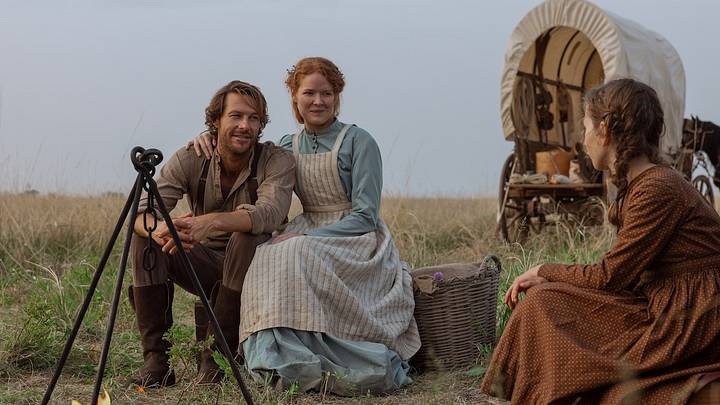
If you were raised on Little House reruns, odds are you have a favorite memory of life on the prairie. But before it became the next big thing to stream, Little House on the Prairie was a product of pen, paper, and fuzzy frontier flashbacks. That was roughly the recipe that Laura Ingalls Wilder used to craft the autobiographical book Little House in the Big Woods in 1932.
It was this coming-of-age tale that gave readers a tiny taste of the family’s cozy yet chaotic world of handcrafted log cabins and homemade maple sugar. Much like the staple pioneer sweet, one bite—and book—simply wasn’t enough. Over nearly a century, that opening chapter spawned eight more original novels, a 1970s TV series, and, most recently, a Netflix series offering a visually richer, realistic take on frontier life.
Along the way, generations of fans hitched their wagons to Laura’s fiery spirit and Mary’s quiet strength, while looking to Ma and Pa as the blueprint for making a house a home. From the page to the screen, this timeline traces the Little House on the Prairie legacy, showing how each installment puts its own spin on the Ingalls saga:
The Original Book Series
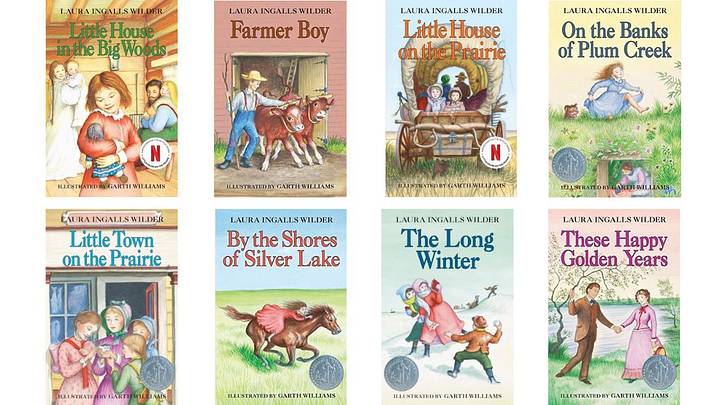
Little House in the Big Woods (1932)
Farmer Boy (1933)
Little House on the Prairie (1935)
On the Banks of Plum Creek (1937)
By the Shores of Silver Lake (1939)
The Long Winter (1940)
Little Town on the Prairie (1941)
These Happy Golden Years (1943)
The First Four Years (1971)
The Screen Adaptations
Little House on the Prairie, NBC Series (1974–1983)
Beyond the Prairie: The True Story of Laura Ingalls Wilder, CBS Movies (2000-2002)
Little House on the Prairie, Disney Miniseries (2005)
Little House on the Prairie, Netflix Series (2026)
We might swap out the actors or change the cinematography, but the heart of the Ingalls family never fails. We keep coming back to them because watchable resilience is rare, whether they’re braving a brutal blizzard or just fighting to keep a roof over their heads. Every reimagining reflects the respective era it was made in, but the overarching theme of holding onto hope through hardship is timeless.
Next: Join Mental Floss’s Geography Quiz Competition
More Personality Quizzes:
•
Quiz: Which ‘Sex and the City’ Character Are You?
•
Quiz: Which Beatles Band Member Are You?
•
Quiz: Which Disney Princess Are You?
•
Quiz: Which Disney Prince Is Your Fairytale Match?
Did Ernest Hemingway Really Say “Write Drunk, Edit Sober”? Uncorking the Truth
Papa loved his rum, but his writing routine was strictly dry. Here’s the real, surprisingly sober story behind the famous quote.
ByNitya Rao|Jul 20, 2026, 2:57 PM EDT

Casual penman or professional wordsmith, just about everyone has heard the wacky piece of writing advice, “write drunk, edit sober.” Widely believed to be a way of life for American writer Ernest Hemingway, this famous phrase has served as a green light for wetting your whistle before the ink dries on the page for decades.
The idea is intuitive—loosen your inhibitions to let the words flow, then clean it up once the spins stop. But the backstory is anything but, especially regarding who—or even if someone—actually said it in the first place.
Hemingway’s Real-Life Writing Routine
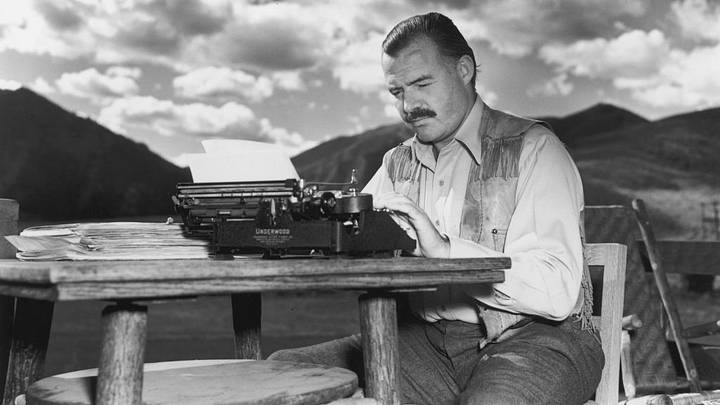
There’s no doubt that Hemingway enjoyed downing a daiquiri or two (or, according to legend, 17 in one sitting). Just as well-known as his works such as The Old Man and the Sea and The Sun Also Rises are his drinking habits, which only got worse after a series of plane and car crashes during his travels. But despite his penchant for adventure and alcohol, Papa was a staunch believer in separating the pen from the pint.
The idea that Hemingway wrote while intoxicated doesn’t hold up to the reality of his actual process. He was undeniably disciplined, waking up before dawn to write while his mind was sharp and, more importantly, sober. He saw writing as a craft that commanded all of his attention, saving his drinking for later on in the day. For Hemingway, a Papa Doble or dry martini was merely a reward once his word count for the morning was met.
His granddaughter, Mariel Hemingway, attests: “He never wrote drunk, he never wrote beyond early, early morning,” she said in an interview. If this is true, then, just how did the edgy quote get attached to his name?
The Faulkner Factor
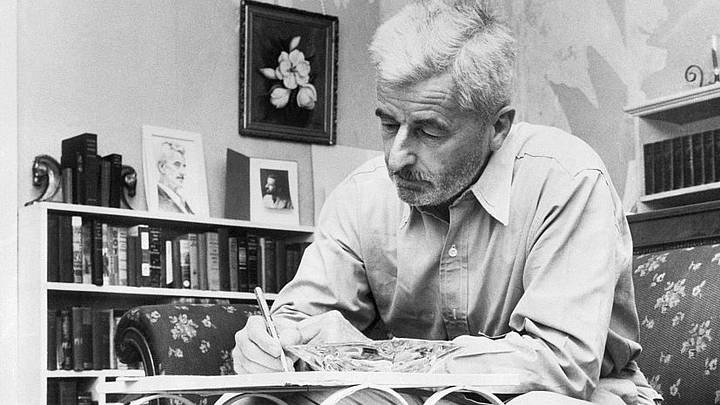
Rivalries didn’t solely reside within Hemingway’s works, but in his real life as well. Throughout his career, the Nobel Prize-winning novelist was pitted against his famous contemporary William Faulkner. The two men critiqued everything about each other, from their contrasting writing styles to their comparable heavy drinking habits.
Not only did Hemingway deny drinking and drafting, but he went so far as to deflect the blame onto his rival. In a Writer’s Digest interview published shortly after his death, Hemingway set the record straight with a sharp retort:
“You’re thinking of Faulkner. He does sometimes—and I can tell right in the middle of a page when he’s had his first one.”
Peter De Vries’ Part
Whether you’re Team Hemingway or Team Faulkner, there’s still no evidence that “write drunk, edit sober” came from either of them. The phrase’s actual roots are entirely fictional.
The quote traces back to a line of dialogue from the 1964 novel Reuben, Reuben by American author Peter De Vries. In the book, a character casually admits: “Sometimes I write drunk and revise sober, and sometimes I write sober and revise drunk.”
Stripped of its backstory, it’s not hard to see why pop culture pins these four words on the talented, albeit tipsy, literary great.
The second half of the quote lends more context to its true meaning: “But you have to have both elements in creation — the Apollonian and the Dionysian, or spontaneity and restraint, emotion and discipline.” Altogether, it’s less of a suggestion and more of an observation on how multifaceted the creative process can be.
Still, Hemingway would agree to disagree. When it came to his typewriter, he knew better than to mix business with booze. Sometimes, a saying survives not because it’s true, but because it’s simply too good a legend to let go.
Next: Join Mental Floss’s Geography Quiz Competition
More Historical Misconceptions:
•
Did Astronaut Jim Lovell Really Say “Houston, We Have a Problem?” Decoding the Real History
•
Did Marie-Antoinette Shout ”Let Them Eat Cake” During the French Revolution? (The Real Story)
•
5 Popular Quotes Commonly Misattributed to Henry David Thoreau
•
4 Popular Quotes Commonly Misattributed to Frida Kahlo
Quiz: Can You Match These ‘90s Sitcom Catchphrases to the TV Show?
“We were on a break!”—You know exactly which show that phrase came from, but can you name all of these from the ‘90s?
ByAlexandria Ingham|Jun 1, 2026, 8:00 AM EDT

When it comes to TV shows, there are two elements that always stand out: the theme songs and the catchphrases. Both are just as important as each other, but how well can you remember the catchphrases? We have a quiz, putting your knowledge of ‘90s sitcoms to the test.
So, how did you do? Those who got all 10 right deserve to brag all about it! We love it when you beat our quizzes—and we hope that you enjoy it, too. Don’t forget to share this with your friends, so you can all test your knowledge of the best ‘90s shows.
Take More ‘90s Quizzes:
•
Quiz: Only ‘90s Kids Can Name All 10 of These Iconic Family Films
•
Quiz: Can You Guess These ’90s Love Songs from the First 5 Lyrics?
•
Quiz: Which ‘90s Movies Featured These A-List Actors?
•
Quiz: Can You Match the ’90s Hit to the Artist Behind It?
•
Quiz: Is This a Quote From a Disney Movie or a ‘90s Rom-Com?
The ‘90s Were the Golden Era for Catchphrases
When you think about catchphrases, there is one decade that will always stand out. Whether it was sitcoms or drama, the 1990s had some of the best one-liners that would develop into something much bigger. And the shows probably never thought they would have catchy lines at the time, and then they got to see how everything grew.
What do you think of when you think back on Friends? Sure, “We were on a break” is still one of those memorable lines, but there are other catchphrases that make everyone laugh. The best thing is that some catchphrases were only part of one episode, and yet, they still stand the test of time. Who doesn’t say “Pivot!” when moving furniture?
While The Simpsons started in 1989, it was really in the ‘90s when the show found its footing. With that came some of the best catchphrases of all time. “Eat my shorts” remains a beloved catchphrase, although it’s not used as often by Bart Simpson anymore. It’s another show with some of the best lines that we can name and—and you can probably name who said it!
Catchphrases remain important for TV nostalgia. They allow fans to connect with each other quickly, whether it’s through the line on a shirt or hat or through a greeting said at a convention. It’s almost like being in the right clique in high school, as we find that we have finally found out people! In some cases, connecting over the fun lines is better than singing the theme song together.
These phrases were also good for the shows at the time. They helped—and still help—with merchandising. After all, who doesn’t have a mug or shirt with the line they love the most on? If you get some of the more obscure catchphrases, you really put fans’ knowledge to the test.
Do you love testing your TV knowledge? We do, too, which is why we have regular trivia going up on the Mental Floss quiz page. Check it out daily for more fun.
More ‘90s Reads:
•
The Best Nostalgia Trivia Questions for Millennials to Prove They Grew Up in the ’90s
•
6 Forgotten Mall Stores From the 1990s You Used to Love
•
5 Nostalgic ’90s Disney Snacks You Forgot You Grew Up With
•
The Best ‘Friends’ Trivia Questions To Test Your Knowledge of the Popular Show
•