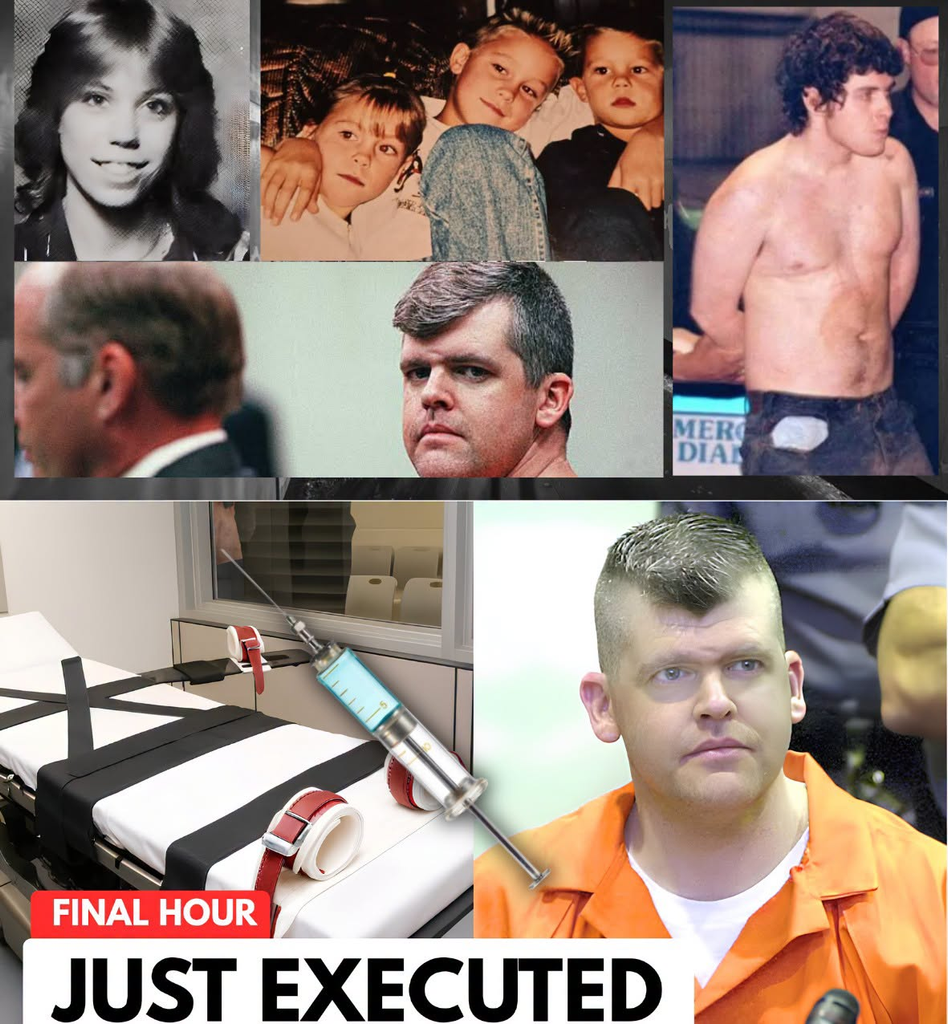
The final silence came at 8:15 p.m. on May 1st, 2025, when Jeffrey Glenn Hutchinson, 62, was pronounced dead at Florida State Prison in Raiford, ending a 24-year wait for justice that began with a shotgun blast and a 911 call that confessed to the unthinkable.
Hutchinson, a Gulf War veteran, offered no final words, no apology, and no explanation as the lethal injection chemicals entered his bloodstream. His legs trembled involuntarily for a few seconds, a brief physiological response before his body went still, and the state of Florida carried out a quadruple death sentence that had been pending since the turn of the millennium.
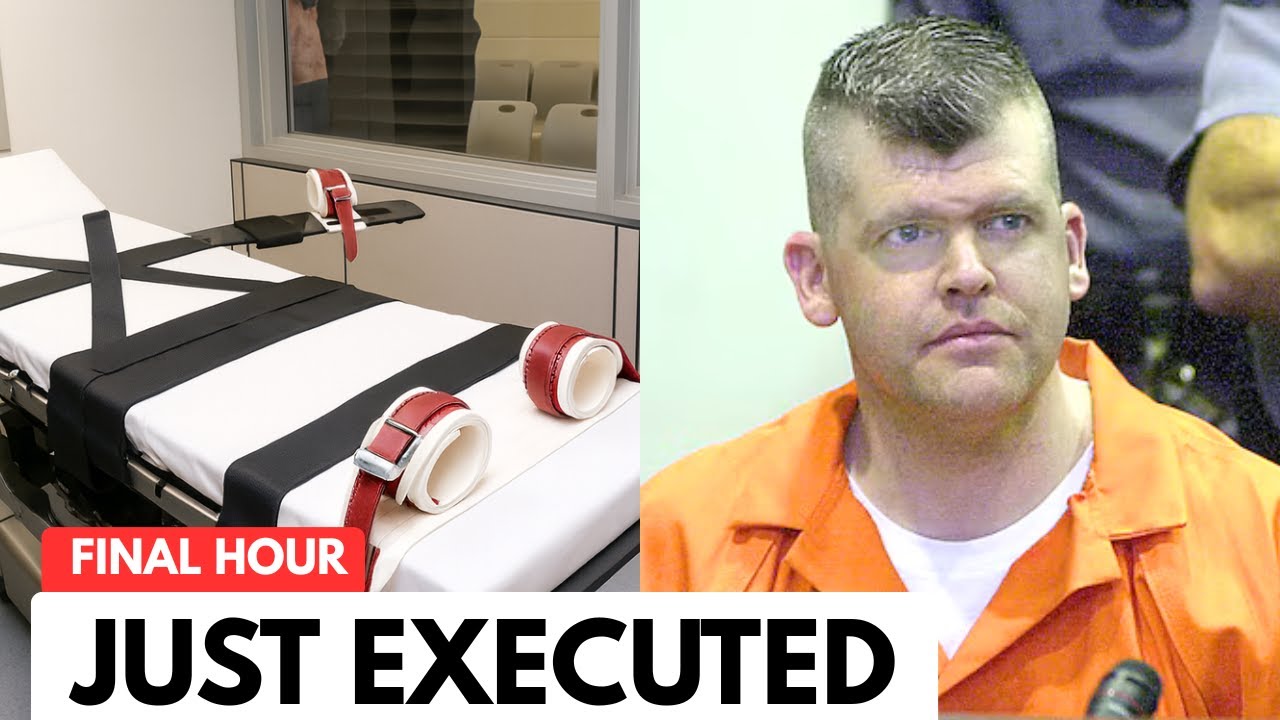 The execution was the culmination of a case that shocked the quiet community of Crestview in Okaloosa County on September 11th, 1998. That Friday evening, Hutchinson drove to the home of his former girlfriend, 32-year-old Renee Flaherty, and murdered her and her three children with a shotgun, extinguishing four lives in a matter of moments.
The victims were 9-year-old Jeffrey, 7-year-old Amanda, and 4-year-old Logan, children whose futures were erased in a domestic violence attack that remains among the darkest chapters in Florida’s criminal history. Renee Flaherty had recently separated from Hutchinson, believing the difficult chapter of their volatile relationship was closing, but the danger had only been deferred.
What made the case particularly haunting was Hutchinson’s own call to emergency services after the killings. He contacted 911 himself, calmly reporting that he had shot his girlfriend and her three children, a chilling admission that triggered an immediate manhunt across the Florida panhandle. He was found later that day with a self-inflicted gunshot wound to his abdomen, survived, and was taken into custody.
Before his descent into infamy, Hutchinson had served his country in the Gulf War, a conflict that sent hundreds of thousands of Americans to the deserts of Kuwait and Iraq in the early 1990s. Like many veterans, he returned home carrying invisible burdens, psychological wounds that would fester for years, trauma that his defense team would later argue fundamentally broke his mind.
His relationship with Renee Flaherty developed over time, eventually leading them to live together in Crestview. From the outside, they appeared to be a family navigating the complexities of blending lives, but family members sensed instability from the start. Arguments became a regular feature of the household, creating an atmosphere of unpredictability and stress that the children could feel deeply.
Hutchinson’s psychological state seemed fragile, possibly connected to his wartime experiences, possibly rooted in conditions that predated his service. By mid-1998, the relationship had become untenable, and the couple separated. For Renee, this meant refocusing entirely on her children and their future, but distance did not equal safety.
The trial that followed was marked by a defense strategy centered on Hutchinson’s mental health and military service. His lawyers presented evidence of Gulf War illness and post-traumatic stress disorder, portraying him as a man fundamentally broken by combat, someone whose judgment on that September evening was severely impaired by trauma that the military had inflicted.
 The prosecution countered forcefully, acknowledging Hutchinson’s service but arguing that mental health struggles do not justify mass murder. They highlighted evidence of premeditation, the fact that he had traveled to the home with a weapon, and made conscious choices at every step. Millions of veterans carry trauma, they argued, and the overwhelming majority never commit violent crimes.
The jury agreed, convicting Hutchinson on all four counts of first-degree murder. In the penalty phase, they recommended death, and in 2001, the judge accepted that recommendation, imposing three death sentences for the murders of the children and a life sentence for the murder of Renee Flaherty.
Life on death row exists in a peculiar temporal zone, suspended between two worlds. Hutchinson spent 24 years in this state of limbo, occupying a cell while knowing that eventually, inevitably, his execution would be scheduled. The only uncertainty was when, and his legal team pursued every available avenue of appeal.
But Hutchinson’s appellate journey was marred by critical errors. His attorneys failed to meet an important filing deadline in federal court, a procedural mistake that proved fatal to his appeal. Because of this missed deadline, federal judges never conducted a substantive review of his constitutional claims, and questions about trial fairness and mental health were never heard on their merits.
As his legal options dwindled, an unusual coalition rallied to his cause. A group of 129 military veterans from various wars signed a petition to Florida’s governor asking for clemency. They argued that executing a man whose mind may have been irreparably damaged by serving his country represented a profound moral failure, compounding tragedy rather than resolving it.
The governor declined to grant clemency, and the execution moved forward as planned. In his final days, Hutchinson was transferred to death watch, a specially monitored area near the execution chamber where condemned inmates spend their last hours under constant observation. He was permitted to request a last meal, a tradition deeply embedded in American capital punishment culture.
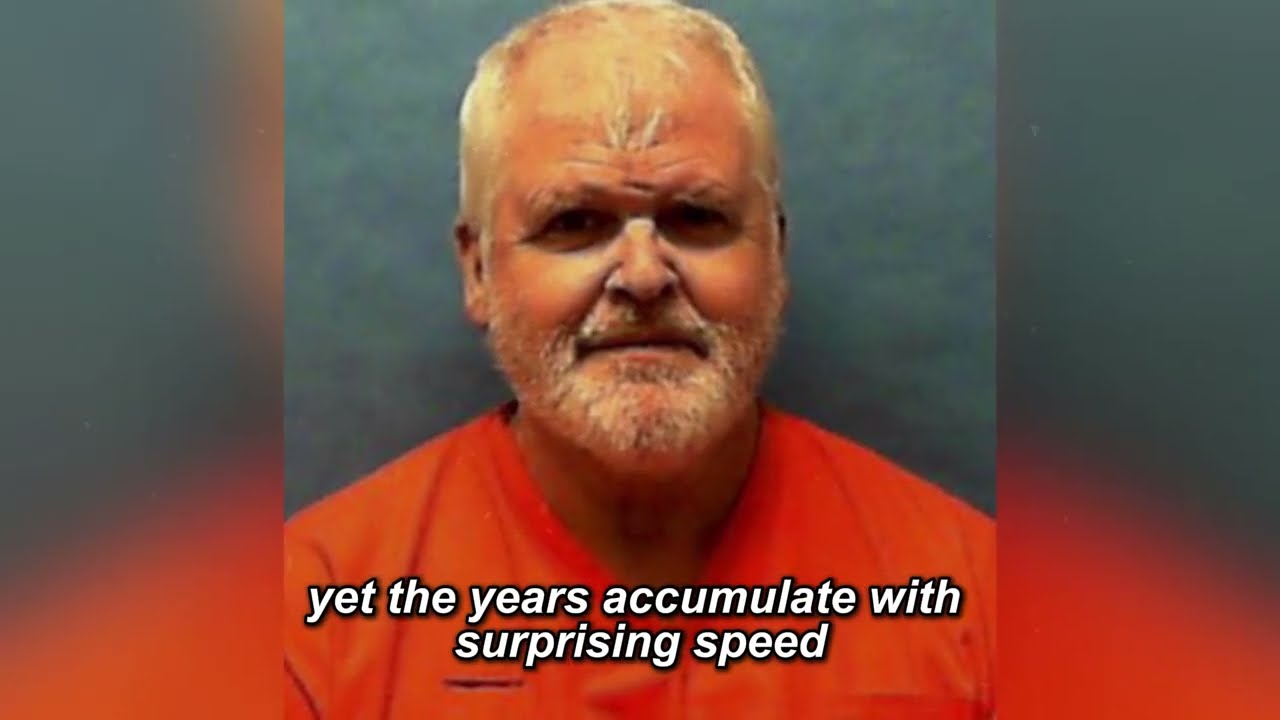 Hutchinson’s final meal selection reflected his time in Florida, salmon and mahi-mahi, two fish species common to the state’s waters, accompanied by asparagus, a baked potato, and iced tea. The meal cost well under the $40 limit Florida imposes, and whether these foods held particular meaning for him or simply appealed to his taste remains unknown.
The evening of May 1st brought the execution protocol into motion. Hutchinson was escorted into the execution chamber, a clinical room designed for the purpose of administering death. Witnesses gathered, including prison officials, representatives from the State Attorney’s Office, and family members of the victims.
Heavy curtains concealed the personnel who would inject the lethal drugs.
Florida’s lethal injection protocol follows a three-𝒹𝓇𝓊𝑔 sequence used in many states. The first chemical is a sedative meant to induce unconsciousness, the second is a paralytic agent that stops respiration, and the third stops the heart. In theory, this process causes a painless death, though witnesses sometimes describe signs of distress that raise questions about how peaceful these deaths truly are.
Before the drugs flow, condemned prisoners are offered a final chance to speak. Hutchinson said nothing. When prison officials asked whether he wished to make a final statement, he declined.
Witnesses reported that he murmured something inaudible to himself, perhaps a prayer, perhaps just random thoughts at the end of a life, but he directed no words to the assembled witnesses.
 The execution commenced, and chemicals entered his bloodstream through intravenous catheters. Those watching reported that his legs trembled briefly as the drugs took effect, involuntary muscle contractions lasting only seconds before his body became motionless. From the first injection to the pronouncement of death, approximately 15 minutes elapsed.
At 8:15 p. m. , medical personnel confirmed that Jeffrey Glenn Hutchinson was dead.
He became the fourth person executed in Florida that year and the 15th person executed in the United States in 2025. After 24 years of legal proceedings, appeals, and delays, the sentence was carried out in a quarter of an hour.
For Renee’s family, for those who loved Jeffrey, Amanda, and Logan, this moment represented the end of a journey that had lasted more than two decades. Executions affect different people in different ways, some feel a sense of closure, a belief that justice has finally been achieved, while others feel only emptiness, recognizing that no punishment can restore what was taken.
What remains for the rest of us is the narrative itself, a Gulf War veteran whose psychological wounds may have contributed to catastrophic violence, a troubled relationship that ended in unthinkable tragedy, three children whose lives were cut short before they truly began, a mother who died trying to protect them. It’s the story of a legal system that took nearly a quarter century to execute a sentence.
Hutchinson went to his death without offering explanation, without expressing remorse, without providing any comfort to those he had devastated. Only silence. And perhaps that silence communicates more than words ever could.
It leaves fundamental questions unanswered, creates a void that cannot be filled, serves as a reminder that some acts reverberate through time and can never be made right.
© 2026 MZ News — Blog powered by WordPress.