
ByMeredith Danko|Jan 19, 2018, 5:00 AM EST
 Add us as a preferred source

On January 20, 1998, teenagers found a new small-screen obsession when Dawson’s Creek made its debut. Created by Kevin Williamson, the series centered around a tight-knit group of friends—Dawson Leery (James Van Der Beek), Joey Potter (Katie Holmes), Pacey Witter (Joshua Jackson), and Jen Lindley (Michelle Williams)—living in the picturesque (and fictional) town of Capeside, Massachusetts.
It didn’t take long for the series, which ran for six seasons, to become a bona fide pop culture phenomenon. On the 20th anniversary of its premiere, here are 22 things you might not know about Dawson’s Creek.
1. IT FOUND ITS INSPIRATION IN SEVERAL OTHER MOVIES AND TV SHOWS.
“I pitched it as Some Kind of Wonderful, meets Pump Up the Volume, meets James at 15, meets My So-Called Life, meets Little House on the Prairie,” said creator Kevin Williamson. “I sort of threw everything in there.” Fox passed on the show, so Williamson brought his pitch to a younger network, The WB, which got its start in 1995. In an attempt to reach a younger audience, the network picked up Dawson’s Creek.
2. KATIE HOLMES’S MOM PLAYED DAWSON IN HER AUDITION TAPE.

Williamson actually wanted to cast Selma Blair as Joey, but he decided to audition other actresses—including Katie Holmes, who he’d seen in Ang Lee’s film The Ice Storm. Still a high school student at the time, Holmes refused to fly to Los Angeles to audition because she had another commitment: playing Lola in her school’s production of Damn Yankees. So, in their sewing room, Holmes and her mother acted out the scene and filmed it. “I had the camera, and my mom would read Dawson’s lines,” Holmes told Rolling Stone.
3. JOSHUA JACKSON AUDITIONED FOR BOTH PACEY AND DAWSON.
Joshua Jackson actually auditioned for both lead roles. He originally read for Pacey, but the producers were interested in hearing him read for Dawson as well. Then, they switched him back to auditioning for Pacey. Despite an exec falling asleep during one of his auditions, Jackson got the role. One of his competitors for that role, by the way, was future American Pie star Jason Biggs.
4. KEVIN WILLIAMSON HAD TO FIGHT FOR JAMES VAN DER BEEK TO BE CAST.

Dawson was the last role to be cast. On the way to the audition in Los Angeles, James Van Der Beek actually sat next to future Entourage star Adrian Grenier on the plane, only to discover that he was also auditioning for the part of Dawson Leery. After watching the auditions, the head of Sony didn’t believe that Van Der Beek had star quality. But Williamson was convinced that Van Der Beek could do it, so they kept having him read the scene over and over again. Finally, Williamson yelled, “I wrote Dawson! I am Dawson! This is Dawson!” Two days before filming was scheduled to begin, Van Der Beek was officially cast.
5. WILLIAMSON PUT PROPS FROM SCREAM AND I KNOW WHAT YOU DID LAST SUMMER IN DAWSON’S BEDROOM.
Williamson wrote the screenplays for all the Scream movies as well as I Know What You Did Last Summer. Sometimes he used Dawson’s world to wink at his own work. For example, in the season one episode “The Scare,” Dawson and Joey watch I Know What You Did Last Summer together. Later, in the season finale, there’s a poster for the movie hanging on Dawson’s wall. “The Scare” also has a few Scream references and contains the iconic Ghostface mask.
6. WILLIAMSON LOVED STEVEN SPIELBERG AS MUCH AS DAWSON DID.

Dawson’s passion for Spielberg movies came from Williamson’s direct childhood experience. “In fifth grade, Jaws came out,” Williamson once said. “It began my love affair with Steven Spielberg. I took out a spiral notebook and I wrote the sequel to Jaws.” Sound familiar?
Unsurprisingly, it was tough to get the rights to all of the Spielberg posters that hang in Dawson’s room. In fact, Spielberg watched the pilot to personally approve the use of his work. He did ask that they remove a line about Jen looking like Kate Capshaw, but other than that, he was fine with the references. According to Van Der Beek, Spielberg later approached him at a Lakers game to say, “I like the posters on your wall.”
7. THEY WEREN’T ALLOWED TO SAY THE WORD “MASTURBATE” IN THE PILOT.
In the original script, Joey plainly asked Dawson, “How often do you masturbate?” After examining the pilot, Standards and Practices told them that they couldn’t say the word “masturbate” on television. In the final version of the episode, she asks, “How often do you walk your dog?”
8. DAWSON’S HAIRCUT WAS INSPIRED BY BRAD PITT’S HAIRSTYLE IN THE DEVIL’S OWN.

The studio insisted that Van Der Beek change his hair for the role. The crew paged through an Entertainment Weekly and saw an ad for The Devil’s Own, and Dawson’s infamous haircut was born.
9. THE SHOW LOST A SPONSOR FOR BEING CONTROVERSIAL.
The show shocked audiences and critics with its blunt dialogue about sex—and a first season plot line about an affair between a teacher and a high school student didn’t detract from the controversy. Procter & Gamble was supposed to be a sponsor of the show but pulled out before it aired.
“As we have learned more about the episodes over the long term and the content that will unfold over time, the majority of the content within the majority of the episodes walks a fine line and bumps up against what we think is appropriate,” a spokesperson for the company said.
10. WILLIAMSON KNEW HE WANTED JACK TO BE GAY, BUT HE DIDN’T TELL ANYONE AT FIRST.

In the second season, two new characters were introduced: siblings Jack and Andie McPhee. Williamson claimed that while creating the characters, there was a voice in the back of his head saying, “God, I wish Jack could be gay. That would be so great to write a gay character.” But he decided not to mention it to anyone, including the writers. Jack quickly became one of the show’s most popular characters and halfway through the season, Williamson had him come out to his friends.
11. THE “TRUE LOVE” EPISODE FEATURED THE FIRST MALE GAY KISS ON U.S. PRIMETIME TELEVISION.
“True Love” was the third season finale, which aired in May 24, 2000. In the episode, Jack kisses his boyfriend, Ethan. Ten years later, Kerr Smith, who played Jack, recalled, “I did know how historic it was and he did too. I’ll never forget the day that we were filming that. I was quite nervous, as was he … We knew what we were doing. We knew what we were addressing. We knew that it was important and that a lot of people were going to be looking up to the show now for this particular type of storyline. I think we did a good thing.”
12. MEREDITH MONROE WAS 29 WHEN SHE PLAYED 16-YEAR-OLD ANDIE.

Meredith Monroe, who played Andie McPhee, was nine years older than Katie Holmes and 10 years older than Michelle Williams. But her on-screen brother, Kerr Smith, was also a little old for high school. He was 27 when he was cast.
13. HALFWAY THROUGH THE SERIES, A HURRICANE WREAKED HAVOC ON THE SET.
One of the downsides to filming on the Wilmington, North Carolina coastline was the possibility of hurricanes. In fact, one took down the pier outside the Leerys’ home. It was only halfway through the series and the crew had to rebuild the pier because it had already become a beloved part of the show.
14. VAN DER BEEK’S MEME-WORTHY CRY WAS AN AD LIB.
Years after Dawson cried on a pier in the first season finale, his cry-face became a meme. Van Der Beek had a good sense of humor about it and even admitted that his tears were organic. “It wasn’t scripted, I don’t think,” he said. “You know, it was just high drama; you’ve been living with this character for a while and a scene like that just kind of drops in your lap and you just lose it.”
15. JACKSON USED TO MOON PEOPLE TO EASE TENSION BEFORE FILMING SCENES.
In an interview on Late Night with Conan O’Brien, Holmes said, “I think he really thinks he’s doing a service to everyone … It doesn’t even faze us anymore. We have different directors every week that come in and he’ll do it and some people will give a chuckle. The rest of us are like, ‘Oh,’ you know. The directors get a kick out of it.”
16. MICHELLE WILLIAMS WAS OFTEN INSECURE ABOUT NOT GETTING ENOUGH SCREEN TIME.

“The show was primarily a love triangle between Dawson, Pacey, and Joey,” Michelle Williams later explained. “For the most part. At times I felt, ‘What’s not good enough about me? Am I doing something wrong?’ Flipping through the script you’re only in three pages, ‘Oh, boy. Okay.’ And maybe I had questions about why that was.” Van Der Beek helped her through these times by reminding her that her career would be easier because she would be the least associated with the show in the future. (Given the fact that she has been nominated for four Oscars—and counting—since her Dawson’s days, Van Der Beek was clearly onto something.)
17. THE CAST MODELED IN A J. CREW CATALOG.
In a beautiful cross-marketing moment, Holmes, Jackson, Van Der Beek, and Williams did a photo shoot for J. Crew in 1998. You can find pictures online, but if you’d like a copy of your own, they usually sell for over $100 on eBay.
18. SOME OF BUSY PHILIPPS’S SCENES HAD TO BE REWRITTEN AFTER A WILD NIGHT OUT.
In an interview with Wendy Williams, Busy Philipps confessed that she liked to party during her Dawson’s Creek days. One drunken night out resulted in an emergency room visit and a dislocated knee. This was an inconvenience for the writing staff who, according to Philipps, “had to rewrite the show so that I was laying down and sitting down for two weeks.”
19. THE SHOW HAD SIX HEAD WRITERS, ONE FOR EACH SEASON.
After the second season, even Williamson went off to focus on other projects. During a Reddit AMA, someone asked Van Der Beek why there were so many writer shifts over the course of the series. He responded, “I think it was more a function of our writers being in such high demand that they were eventually wooed with offers [to do] their own shows, or just a matter of someone coming into an already established show with a very specific voice and everyone realizing a few steps down the road that it just wasn’t quite the right fit.”
20. JOHN WESLEY SHIPP’S CHARACTER WAS KILLED OFF BECAUSE HE DIDN’T LIKE WHERE THE SHOW WAS GOING.

John Wesley Shipp, who played Dawson’s dad, grew disappointed with the show, especially after Williamson left. He didn’t like how small the roles of the parents were becoming. “At the end of the four seasons and the kids were going to be going to college, I saw the handwriting on the wall,” Shipp explained. “We would be standing in the background with Lily and waving at Parents Day and I really had no interest in doing that. So when they wanted to renegotiate our contact, I set my price really high.” Executive producer Paul Stupin asked if he would return to do the death storyline and Shipp agreed.
21. WILLIAMS DIDN’T WANT JEN TO DIE.
According to Williamson, “Michelle was a little scared and nervous. She goes, ‘Well, what if we do a reunion show? What if we do a movie or something?’ I’m like, ‘Well, then you’ll be a ghost.’” He noted that Jen’s death “was that last bit of growth that pushed [the characters] into adulthood.”
22. ANDIE WAS CUT FROM THE FINALE.

Meredith Monroe did return for the finale, but her scenes were not aired. Andie was a medical resident in Boston, who came back to Capeside to say goodbye to Jen. She also had a sentimental scene in the hospital cafeteria with ex-boyfriend Pacey. Her scenes can be found on the Dawson’s Creek DVDs.
In 2015, Williamson and several members of the Dawson’s Creek team reunited for a panel discussion about the show in which it was revealed that the panel’s moderator, Julie Plec—a longtime friend and collaborator of Williamson’s who was also a writer on Dawson’s Creek—was the one who wanted Andie to appear in the finale. “She felt it was incredibly important for Pacey and his first love Andie to have some sort of a resolution,” wrote The Hollywood Reporter.
20 Outdated Things Millennials Still Love
From flip phones to emo anthems, these nostalgic favorites never go out of style, even if millennials are busy adulting now.
ByPaul Anthony Jones|Nov 5, 2026, 8:00 PM EST
In 2026, it was quietly reported that longstanding fast-food favorite Pizza Hut had, for several years, been gradually bringing back its old-school restaurants, in an attempt to revitalize the business after the brand was sold to new owners. The retro-styled refits—complete with padded booths, stained glass lamps, and classic chunky red glassware—proved pure nostalgia for anyone who grew up in the 1980s and 1990s when Pizza Hut restaurants were at their heyday. (And it proved to make good business sense too, with the rolling out of the retro design costing a fraction of a standard renovation.)
Needless to say, the refit restaurants quickly proved popular among Millennials—and nor were they the only outmoded things that Millennials still cling to.
OLD-SCHOOL EMOJIS
While it’s Gen Alpha who seemingly use the most emojis overall, recent studies have shown that emoji use differs greatly across the generations, with Millennials—who grew up on a diet of Buzzfeed quizzes and MSN Messenger—sticking to tried and tested emojis that the generations after largely ignore. The Face With Tears of Joy Emoji is still the go-to laughter response among Millennials, for instance, but is dismissed as cringe and outdated by Gen Z and younger (who prefer a rather less wholesome skull to show extreme hilarity). And while Millennials so no problem at all with a simple thumbs up, Gen Z finds it passive-aggressive and noncommittal.
GIFS
It’s not just old-fashioned emojis that Millennials are holding on to, either. More than a third of Millennials regularly use GIFS as a means of expressing their opinions, with two-thirds claiming doing so allows them to convey their feelings more accurately than words alone. The generations behind, however, are increasingly turning their backs on gifs, which are apparently being seen as ever more cringey among Gen Zs and Gen Alpha.
FLIP PHONES
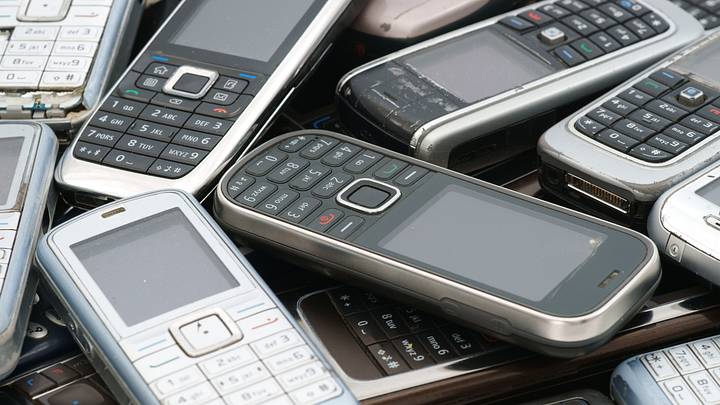
Millennials might like sending emojis and gifs, there was something about using a simpler screen or a far more complicated handset back in the day. Early 2000s flip phones might have had grayscale screens, shrill ringtones, and next to no battery life, but there was something about flipping a phone open to answer it that a swipe of a touchscreen just can’t match. No wonder the tech world now seems to be nostalgically re-embracing the style more than 20 years later.
CLASSIC KIDS TV
Speaking comforting classics that you grew up with, one thing Millennials and Gen Z can seemingly agree on is that kids TV was far better back in the day than it is today. These two cohorts watch more repeats of classic childhood movies and TV favorites than any other generation.
THE BIG SCREEN EXPERIENCE
When it comes to finding something entertaining to watch, Millennials are also near single-handedly keeping the big summer blockbuster alive. With a worrisome one in ten cinemagoers claiming that the summer movie experience has all but died out, Millennials are bucking that trend, with almost two-fifths proudly claiming the opposite and that the summer blockbuster is alive and well. (Perhaps growing up with The Matrix, The Mummy, The Sixth Sense and the first Star Wars prequel all released in the same summer might have something to do with it.)
STAND-ALONE BLOCKBUSTERS
On the subject of blockbusters, the big-budget movie experience at the moment is dominated by remakes and spinoffs, or else stories set in some pre-existing universe. Sequels and IP-mining are by no means new, of course, but with almost 40 films in the endless expanded MCU and Disney currently slating more remakes and sequels than original stories, it seems the standalone blockbusters of the 80s and 90s are a thing of the Millennial past.
Case in point, 16 of the Top 20 highest-grossing movies of the 1990s were either stand-alone or entirely original movies, with only four spinoffs and sequels (Star Wars: Episode 1, The Lost World: Jurassic Park, Terminator 2 and Toy Story 2) listed alongside the likes of Armageddon, Ghost, Twister, and Independence Day.
So far in the 2020s, the exact opposite is true, with only four of the current Top 20 (The Odyssey, Barbie, Michael and Oppenheimer) not belonging to an existing movie universe.
DISNEY ORIGINALS
The live-action remakes of Disney classics might be proving big business, but for Millennials—who grew up on hand-drawn and painted classics like The Little Mermaid and Beauty and the Beast—there’s really no comparison.
PRACTICAL EFFECTS
Is it fair to say Millennials grew up at the best time for movie effects? Millennials had the best of both worlds in the 90s and early 2000s, with movies like Jurassic Park and Terminator 2 seamlessly blending practical effects with cutting-edge CGI, while others, like The Lord of the Rings and Harry Potter movies, built stunning practical sets and used real-world locations to bring their universes to light. Modern big-budget extravaganzas that increasingly rely on green screen and LED backlots just don’t seem to match up, and don’t have quite the same immersive quality.
EMO MUSIC
If you’re a Millennial who fell deeply into the emo subculture of the early 2000s, then you might have heard your parents say that it was just a phase. Not so, it seems, as Millennials are still proudly holding on to the bands, artists, and music that defined them more than two decades ago and supporting their music still today.
VINYL RECORDS
On the subject of music, though, Millennials have long been the driving force behind the recent resurgence in popularity of vinyl records, too, all but single-handedly steering the decades-old format through the choppy waters of the streaming era. Having brought LPs and record players back from the brink, however, more recent research is showing that Gen Z are catching up too and are jumping on the Millennial bandwagon as the biggest buyers of vinyl records in the mid 2020s.
MIXTAPES
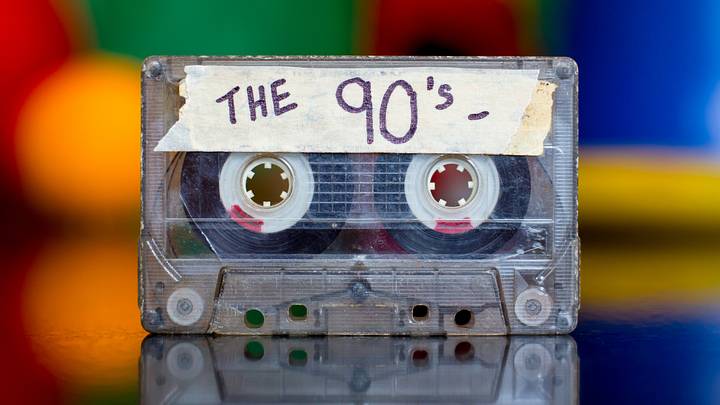
Curating a Spotify playlist just isn’t the same as burning a bespoke CD or recording a uniquely compiled cassette tape, is it?
PHYSICAL MEDIA
It’s not just vinyl and mixtapes, either. Millennials and Gen Z alike are increasingly expressing a preference for physical media of all types—from CDs and DVDs to old-school gaming consoles and cartridge games. Turns out paying for streaming platforms that don’t stream the movie you want to watch when you want to watch it (and can delete it even once you’ve bought it) isn’t the best business model.
BOARD GAMES
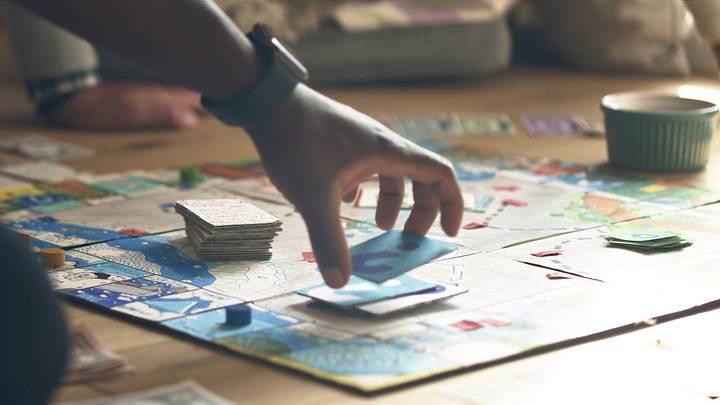
The pandemic made board games fashionable again, leading to a resurgence of interest among Gen Z, but for Millennials they never went out of favor. Two-thirds of Millennials admit to being board game fanatics, with almost 40% claiming that they enjoy regular board games as a hobby.
ARCADES
Not that Millennials only played dice-rolling games back in the day, of course. A pocketful of loose change was all you needed to have a good time when video game arcades were everywhere—although these too, it seems, are starting to enjoy a renaissance as the edge continues to wear off in the digital age.
PEN AND PAPER
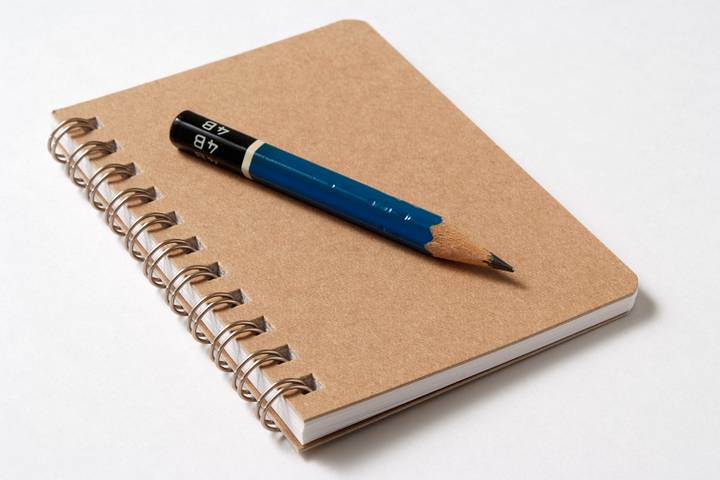
In an era when you can make a note of absolutely anything on your phone, there’s a growing trend among Millennials and Gen Zs for re-embracing pen and paper. As well as giving the opportunity for some much-needed time away from a screen, there’s something satisfyingly tactile in making a to-do list by hand and scratching each job off as you do it.
ONE-TIME PURCHASES
Speaking of things that used to be simpler back in the day, it used to be the case that if you needed, say, a new program for your computer, you would buy it, install it, and it would be yours in perpetuity. Nowadays, everything is a subscription service—so that one-off fee has been switched to a steady and increasingly infuriating drip-feed of monthly payments and constant downloadable upgrades.
WORKPLACE PROFESSIONALISM
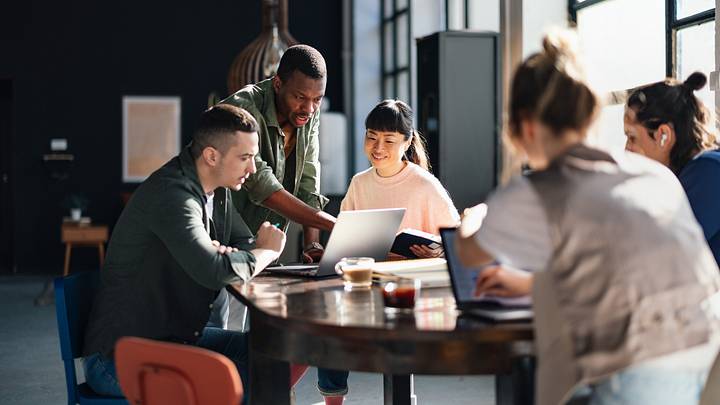
From the “Gen Z stare” to the rumbling debate over whether or not you can take an iced coffee into a job interview, much has been said in recent years of the different social mores of Millennials versus Gen Z and beyond. With Boomers now retired, and Gen X not far behind them, Millennials are becoming the elder statesmen and women of the workplace—and in that capacity are steadfastly defending the professional etiquette of the past against an ever more relaxed and less demanding style of professionalism that’s emerging among the generations behind.
AN AI-LESS INTERNET
Use a search engine today, and chances are you’ll be shown an AI-curated overview of the search results, rather than the results themselves. Scroll a social media feed, and you’ll likely end up wading through a morass of AI slop. Try to order something online, and you might get an AI chatbot asking you what you’re looking for and if there’s anything they can do to help (if it hasn’t already made things worse). Things really were better, easier, and more human back in the day.
ONLINE ANONYMITY
On the topic of the early internet, it’s easy to forget that influencer culture is a relatively recent phenomenon, and there was a time in the not-too-distant past when people did not live their every moment online, and we were all largely anonymous. Sure, there were Facebook pages and MySpace profiles, but people typically kept themselves to themselves and used them to expand on real-life, in-person friendships and relationships, rather than build new parasocial ones with strangers.
DOWNTIME
There was a time when your downtime was genuine downtime—not time spent still scrolling feeds, watching shorts, and digesting headlines. And what’s more, Millennials seem to be figuring that out, with studies showing more and more Millennials are switching off when they really don’t need to be online.
Read More:
•
100 Amazing Facts About Millennials
•
20 Things Millennials Grew Up With That Are Already Obsolete
•
The Two Types of Millennials, and the Differences Between Them