
ByTodd Gilchrist|Dec 2, 2020, 9:00 AM EST
 Add us as a preferred source
Since the earliest days of cinema, gangsters have been the characters we’ve both loved and loved to hate. During the era of the Production Code, the heyday of the “gangster film,” Hollywood ensured that they were always brought to justice. But the popularity of their stories almost always owed more to the criminal exploits that led up to that moral reckoning, long after they’d won audiences’ admiration, envy, or even love. Their role was playing society’s outlaw, and their responsibility was to clash with its values to accomplish their own nefarious goals. That journey has endlessly fascinated viewers as a vicarious thrill, an escapist fantasy, or a truly primitive tale of good and evil.
When the Code lost its authority over film productions and stories about gangsters proliferated across the globe, portraits of their behavior, both good and bad, took on even more complex, ambiguous dimensions. Where once they were gleefully flaunting society’s rules, some gangsters sought legitimate paths—only to discover that their opportunities for success demanded that they cut a few corners or make deals with unsavory types; and some unsavory types upheld a certain code of honor that their supposedly law-abiding counterparts seemed to be challenging.
Making a list of the best gangster movies is tough, because there are lots of movies that overlap with this category without quite hitting the target. There are dozens of incredible heist movies, for example, and many others that study the criminal mindset without quite qualifying their characters as “gangsters.” But the films below explore the gangster as both a character and an idea at its fullest, most vivid, and most resounding. These 20 films are proof that crime pays off handsomely onscreen—even if we wouldn’t necessarily want to follow in their footsteps.
1. Public Enemy (1931)
Based on Beer and Blood, an unpublished novel written by two former newspapermen, William A. Wellman’s pre-Code gangster film gave James Cagney the role that would define his career. The story of a young gangster’s rise during Prohibition, Wellman’s film drew inspiration from real-life individuals and true stories from the heyday of Al Capone’s rivalries in Chicago.
Wellman cemented Cagney’s stardom after swapping his and co-star Edward Woods’s roles, but subjected the young actor to a number of dangerous scenarios, including a real punch to the mouth and a set riddled with live ammunition. Meanwhile, Cagney’s feverish intensity paved the way for decades of gangster roles as bracing and unforgettable as the grapefruit that he iconically smashes in co-star Mae Clarke’s face.
2. White Heat (1949)
James Cagney became known for tough guy roles in the early days of Hollywood talkies, giving audiences someone whose criminal exploits they could cheer for—at least until the Production Code imposed strict guidelines to ensure no one wanted to emulate him in real life. In his comeback with Warner Bros., Cagney plays psychotic hoodlum Arthur “Cody” Jarrett, whose fixation with his mother leads him deeper and deeper into trouble. Cagney’s refrain from the film—“Made it, Ma! Top of the world!”—became an instant catchphrase that echoed throughout film history in other films like Ernest Dickerson’s Juice, thanks to the actor’s unforgettable appeal giving the doomed crook glory, even in a tragic death at the hands of the authorities.
3. Bonnie and Clyde (1967)
Characterized as a “rallying cry” announcing the New Hollywood era at a time already full of turbulent change, Arthur Penn’s chronicle of Bonnie Parker (Faye Dunaway) and Clyde Barrow (Warren Beatty) inches toward the more open portrayals of sex and violence that the Production Code prohibited, and this film’s enormous success enabled later on. Beatty and Dunaway are sexy and mesmerizing as the tragic duo, following a foolhardy dream of becoming bank robbers to escape the boredom of their poverty-stricken lives, bringing Clyde’s equally reckless brother (Gene Hackman), his disapproving wife (Estelle Parsons), and an impressionable kid along for their doomed ride. In a genre dominated by mythmaking, Penn’s film tells how these two outlaws wrote their own story.
4. Get Carter (1971)
British crime exploded in popularity in the late 1960s and ‘70s, and Michael Caine was often the face of its jazziest, most violent expressions. In this adaptation of a 1970 Ted Lewis novel, Caine plays Jack Carter, a London gangster who travels home to discover that his brother was murdered—and decides to take revenge. Working with director Mike Hodges (who later directed the exceptional Croupier with Clive Owen), Caine aimed to deliver a more hardened, gritty portrayal of criminal behavior than he had in previous films like the brisker, more fun The Italian Job, even drawing upon real-life acquaintances he had with underworld types. Meanwhile, Hodges’s use of local bystanders as extras and a cinematographer with previous experience in documentary film further demystifies and grounds the action in this frequently brutal, amoral tale.
5. The Godfather (1972)
Despite the Italian-American Civil Rights League’s insistence that any mention of mafia and cosa nostra be excised from Francis Ford Coppola’s adaptation of Mario Puzo’s story about the fictional Corleone family, no film has become more synonymous with organized crime—and indeed, the mob—than this sweeping drama. Coppola cemented not only his own career but those of Al Pacino, John Cazale, and others with a complex portrait of a family hierarchy where some members eagerly join the “family business” and others struggle against it. An entire legacy of gangster-inspired filmmaking can be traced back to The Godfather, perhaps appropriately, as so much of it is about legacies inherited, defined, and forged—to say nothing of the fact that it features some of the most exceptional writing, acting, and directing in cinema history.
6. Battles Without Honor And Humanity (1973)
Technically, Battles Without Honor and Humanity is not just one film, but five shot by director Kinji Fukasaku in less than two years. It examines the evolution of warrior codes—from sword fights to gunfights—in a post-WWII Hiroshima. Inspired by a series of nonfiction magazine articles, Fukasaku aims not only for an artful interpretation of real events, but utilizes narration, newsreel data, and other techniques to give his storytelling a vivid sense of authenticity. Meanwhile, the series’ violent landscapes track much more than a single gangster’s journey through an unforgiving criminal community, embracing and exploring the hierarchies, the power plays, and the bodies left behind the in the wake of the Yakuza’s march toward dominance—and perhaps self-destruction—at all costs.
7. The Friends Of Eddie Coyle (1973)
So many gangster stories are about low-level hoods and their attempts to navigate their way up the chain of command—to outsmart or outshoot people literally gunning for their job, or their stash. This Peter Yates film follows the title character, an aging delivery truck driver (played by the great Robert Mitchum), as he attempts to satisfy his criminal bosses while avoiding a pending jail stretch that will almost certainly kill him. Heists, double-crosses, and arrests multiply as poor, increasingly drunk Eddie tries to negotiate with an ATF agent who expects him to work as an informer, without betraying the confidence of a local bar owner (Peter Boyle) who he doesn’t know has already betrayed him. With its slow and sad end for an old man hanging on to his last scraps of life, the film depicts a much less noble career in crime than some other examples, which at least offer glory before that precipitous fall.
8. The Godfather Part II (1974)
After examining the path of Italian-Americans and the immigrant experience in the early 1900s with The Godfather, Francis Ford Coppola complemented that crime saga with a story inseparable from the fabric of the country in its sequel, following Michael Corleone’s journey at the head of the Corleone family while chronicling his father Vito’s humble origins in the America. Parallel journeys charted by Pacino and Robert De Niro spotlight how intrinsically immigrant lives are woven into the fabric of the country, and many industries that seem “legit,” while Coppola wields his scalpel carving away the last remnants of Michael’s humanity that his father was able to preserve for himself, and had once tried to protect for his children.
9. The Long Good Friday (1980)
The idea of “going legit” is one that is regularly explored in gangster movies, but few do it more effectively than in this British film about Harry Shand (an electrifying Bob Hoskins) and his imploded aspirations to become a businessman. Capturing the energy of late 1970s London, and the many issues that dominated the social landscape of the era, director John Mackenzie shunts Harry first through an intriguing mystery—who committed the murders disrupting his world?—toward an explosive climax between him and no less than the IRA, with his relationship with the American mafia staking his bid for legitimacy hanging in the balance.
10. Once Upon a Time in America (1984)
Sergio Leone turned down the chance to direct The Godfather to focus on his own crime saga, which he delivered 12 years later as his final film. Different versions forced Once Upon a Time in America to find its audience years after its initial release, but the almost-four hour-long version brought its transcendent virtues vividly into focus. De Niro plays Noodles, a street kid who grows up to become a powerful gangster, only for his scruffy criminal origins to haunt him for the rest of his life—including keeping him from the life and love he desperately seeks. Ennio Morricone’s tack-piano score underlines the melancholy failure of a man left penniless and alone by the same criminal pursuits that helped lift him out of squalor, while Leone’s patience offers a character study that in one operatic swoop encapsulates the achievement of lifelong dreams—and for some, their inescapable cost.
11. The Untouchables (1987)
Working in a different mode than his cocaine-fueled Scarface, Brian De Palma focused this period thriller on the good guys rather than the bad ones, but gave them perhaps one of the most infamous real-life gangsters of all time to square off against: Al Capone, played with simmering menace by Robert De Niro. The director’s homages to classic cinema, such as in the Battleship Potemkin-riffing train station shootout, showcase his effortless craftsmanship. But it’s the battle of wills between Capone, his ruthless henchmen, and Eliot Ness’s upstanding, fearless police unit that gives this film such a lasting charge.
12. Goodfellas (1990)
Where Coppola’s Godfather films—up to and including Part III in 1990—tried to examine the criminality of the Corleone family from a historical and socioeconomic perspective interlaced with the origins of America itself, Martin Scorsese’s mob masterpiece trekked through the invigorating minutiae of a young lieutenant and his hard-stolen success in a world that didn’t recognize his brand of overachieving, which is also why it couldn’t stop him sooner. Ray Liotta’s portrayal of mobster (and perhaps, inevitably, informant) Henry Hill jolts through the details of his life of crime, from the wild affluence to the peaks and valleys of living outside the law, while Scorsese’s propulsive direction draws a powerful question mark about whether it’s worse to be a criminal, or just to get caught—and what each viewer’s answer says about them.
13. King of New York (1990)
Few directors capture the seedy side of New York better than Martin Scorsese, but Abel Ferrara is right up there. In his 1990 crime story, Christopher Walken plays Frank Black, a crime lord recently released from prison who gets in a big hurry to make up for lost time, killing his competitors with ruthless efficiency while frustrating the cops who can’t seem to catch him. A murderer’s row of actors poised for their own stardom fill out its ensemble cast, but it’s Walken’s invigorating unpredictability that elevates his portrayal to classic status, balancing irresistible charisma with an ice-cold sociopathy that leaves audiences on the edge—afraid but also eager to watch his next move.
14. Miller’s Crossing (1990)
In their infinite capacity to recreate an anachronistic time and place with such specificity that you feel like you’re there, Joel and Ethan Coen told this particular story early in their career, a featherweight noir about a gangster’s right-hand man (Gabriel Byrne) and the trouble in which he finds himself after his boss (Albert Finney) and another rival (Jon Polito) go to war over the ne’er-do-well brother (John Turturro) of his sometime lady friend (Marcia Gay Harden). Effortlessly smart, and crackling with the kind of period jargon for which the duo is known, the Coens manage to showcase their protagonist’s endless, inventive maneuvering in a world of shifting loyalties, suggesting that it’s always possible to find another way out—although there’s almost always a punishing beatdown standing in the way.
15. Carlito’s Way (1993)
The Brian De Palma-Al Pacino pairing of Scarface is by far the showier, more popular option most might choose on a list of gangster films. But for many viewers, this 1993 effort written by David Koepp is the superior film, in that it keeps Pacino on a tighter leash playing gangster cues in a more minor, albeit more deeply felt, key. As Carlito’s increasingly corrupt attorney Dave Kleinfeld, Sean Penn enjoys the film’s biggest opportunity to chew scenery, but even if the film culminates in a blood-soaked race to Penn Station, Pacino’s turn gives the story a melancholy, reflective edge that makes you want to see him succeed with his modest, post-criminal dreams, even if the legacy he created for himself, and the associations and loyalties he maintains and even enables, prove to be an albatross he just can’t quite remove from around his neck.
16. Sexy Beast (2000)
Music video director Jonathan Glazer made his feature debut with this hypnotic story of a retired gangster (Ray Winstone) enlisted by his decidedly insistent former colleague Don (Ben Kingsley) to stage a robbery at the behest of mob boss Teddy Bass (Ian McShane). Winstone’s understated role as the reluctant bag man opposite Kingsley gives his co-star ample time to destroy the scenery and anything else in his way, but it’s McShane in the Big Bad role of Teddy that underscores the difference between a friend and a boss: You might be afraid to say no to the former, but when it comes to the latter, you’d better just start with yes.
17. City of God (2002)
Fernando Meirelles directed this sprawling, propulsive drama about the evolution of gangsters within Brazil’s slums between the 1960s and 1980s, and the growth of organized crime. It follows the city’s petty thieves, a.k.a. “The Runts,” as they evade police and accrue the wealth and status that a life of abject poverty refused them an opportunity to earn. Meirelles chronicles the ways that their consolidation of power is met with opposition from both the local, often equally corrupt authorities, and inspires copycats eager to carve out their slice of a very small pie.
18. Infernal Affairs (2002)
Andrew Lau and Alan Mak directed this film that became the inspiration for Martin Scorsese’s first Oscar-winning directorial effort, The Departed. The notion of cops and crooks being opposite sides of the same coin is an idea that has long been explored in cinema, particularly in Hong Kong, but Infernal Affairs gives the contrast explicit dimensions when a cop is sent to infiltrate a Triad at the same time that a low-level Triad member is instructed to become a mole in the police force. The movie reckons brilliantly with the emotional challenges of each of these two characters’ undercover work, while shuffling them through scenarios meant to test their ability to maintain their true loyalties, to appear to be faithful to organizations they’re betraying, and to help catch their counterpart while not getting caught themselves.
19. Eastern Promises (2007)
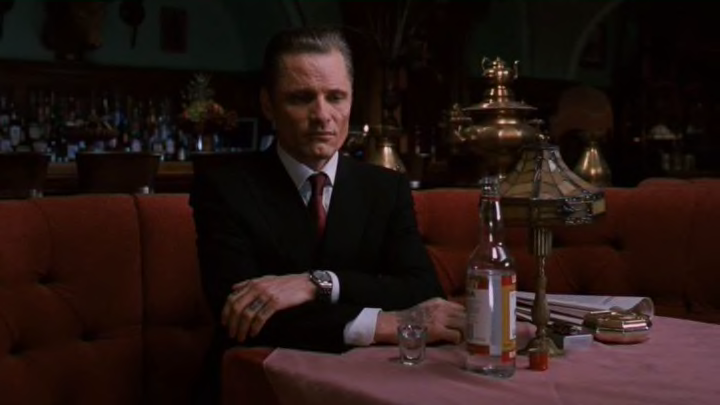
After David Cronenberg more or less incidentally made a gangster movie, a masterpiece in its own right, with A History of Violence—arguably more about traditions of violence and what they imprint on families—he followed up with this piercing, full-throated story of a Russian mob enforcer (Viggo Mortensen) trying to juggle his responsibilities babysitting his best friend and boss’s petulant son Kiril (Vincent Cassel) while also dealing with the death of a young prostitute whose child leads back to a ring of kidnappings by the mafia. Mortensen’s buck-naked knife fight in a bath house is certainly the film’s showstopper, but Cronenberg explores the ties that bind, and some that shackle, while delivering a very powerful and evocative study of these characters shaped by privilege and then tested by responsibility.
20. A Prophet (2009)
Director Jacques Audiard created this story to give images “for people who don’t have images in movies, like the Arabs in France.” Whether it’s a good or bad thing that those images are of people ensconced in criminality, Audiard delivered something extremely powerful, following an angry, naïve young convict named Malik (Tahar Rahim) as he becomes part of an organized crime organization while behind bars. Slowly watching and learning as he ascends the ranks beneath his brutal Corsican mob boss, Malik becomes a proxy for the failed, forgotten and seemingly weak who decide to make something of themselves out of sheer determination and will—and sometimes almost without realizing it.
110 Thanksgiving Jokes That Are Surprisingly Easy to Digest
The turkey might be overcooked, but these Thanksgiving puns and dad jokes are anything but dry.
ByNitya Rao|Nov 7, 2026, 7:00 PM EST
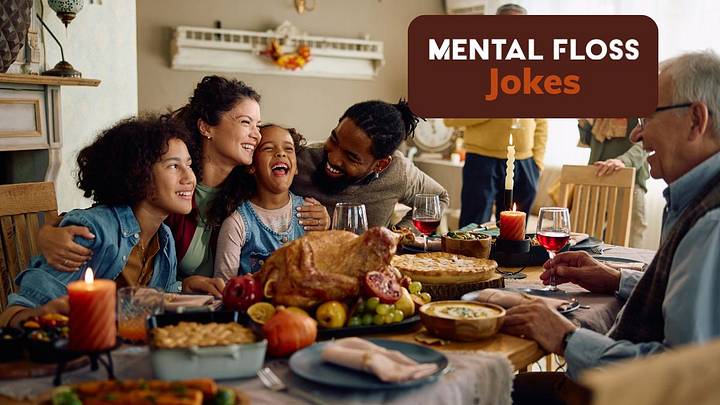
Studies show that 10 to 15 minutes of laughing can burn up to 40 calories. On Thanksgiving, after a spread filled with golden-brown turkey, creamy mashed potatoes, and unlimited pumpkin pie, you’ll definitely want to double that dose and pass it down the table.
While you can usually count on your zany uncle to supply a few unexpected chuckles midway through the meal, why leave your holiday humor to chance? Prepping a few Thanksgiving jokes alongside your stuffing is the best defense against a dead-silent dinner table. After all, who doesn’t love a bit of playful holiday humor between passes of the platter?
Why did the turkey pass on the pumpkin pie? He was stuffed.
What happens when potatoes drink too much? They get mashed.
If either of those carved out a smile, you’re in for a real feast! Whether you’re looking to break an awkward silence before politics come up or simply want to entertain the kids’ table, here are more than 100 hilarious Thanksgiving jokes, puns, and dad jokes guaranteed to give your core a workout.
Funny Thanksgiving Jokes
1. Who delivers the best Thanksgiving sides?
Yam-azon.
2. Why do so many people eat potatoes on Thanksgiving?
Because they’ve got a-peel.
3. What do you call a wisecracking Butterball?
A fresh turkey.
4. What did one pumpkin pie say to the other?
“You wanna piece of me?”
5. In what state did the pilgrims arrive?
Exhaustion.
6. What do you call a sad cranberry?
A blueberry.
7. What do you get when you cross a Thanksgiving centerpiece with a trumpet?
A horn-ucopia.
8. How do potatoes cross the sea?
On gravy boats.
9. What smells the best at a Thanksgiving dinner?
Your nose.
10. Why did the Brussels sprout cross the street?
It spotted a fork in the distance.
11. What did the butter say when it won the race?
“I’m on a roll!”
12. What do sweet potatoes wear to bed?
Yammies.
13. What did the gravy say when it got promoted at work?
“I’m moving up in the food chain!”
14. Why did the roll go to the doctor?
It was feeling crummy.
15. What’s the difference between a Thanksgiving turkey and a bad joke?
One gets dressed, and the other gets roasted.
16. What did the shocked pumpkin say to the squash?
“Oh my gourd!”
17. What do you call a male turkey’s idea of a practical joke?
Tomfoolery.
18. What happens when potatoes drink too much?
They get mashed.
19. Who can be both naked and dressed at the same time?
A turkey.
Thanksgiving Turkey Jokes
20. What do you call a track-star turkey?
Fast food.
21. What’s a turkey’s favorite dessert?
Apple gobbler.
22. What does a turkey say to a search engine?
Google, google, google!
23. Why did the turkey bring a microphone to the dinner table?
He wanted to host a roast.
24. What’s the best way to stuff a turkey?
Serve him lots of mac and cheese and pie.
25. Where do you find a turkey with no legs?
Exactly where you left it.
26. Why did the turkey get sent to the dean’s office?
He used fowl language.
27. What kind of turkey is always running late?
A slow-cooked one.
28. What do you get when you cross a turkey with a ghost?
A poultry-geist.
29. Why did the turkey get bumped to first class on his flight?
He was a frequent flyer.
30. What did one turkey say to the other turkey at the pub?
“Let’s get basted.”
31. What do you call a turkey the day after Thanksgiving?
A lucky duck.
32. Why did the turkey pass on the pumpkin pie?
He was stuffed.
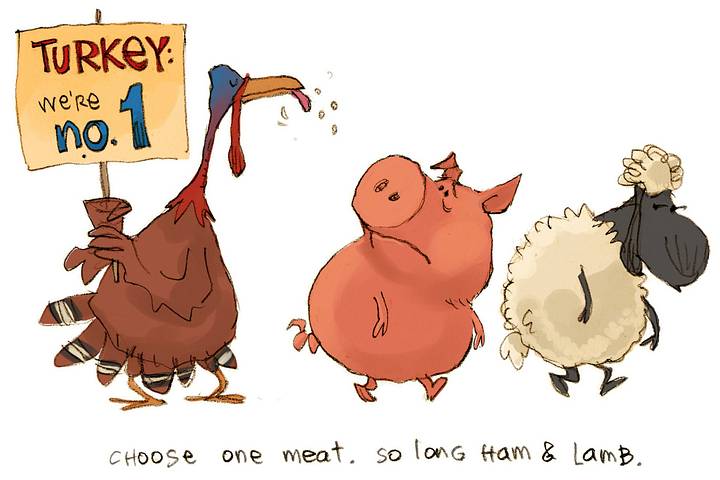
33. What did the Thanksgiving turkey say to the Christmas ham?
Nice to meat you.
34. What do turkeys give thanks for on Thanksgiving?
Vegans.
35. Did you hear about the turkey who lost his left wing?
He’s all right now.
36. What type of key has legs and can’t open doors?
A tur-key.
37. Why did the turkey get kicked out of family game night?
He was accused of fowl play.
38. Why did the turkey cross the road?
To prove it wasn’t chicken.
39. What’s the best song to play while cooking a turkey?
“All About That Baste.”
40. What’s the most musical part of a turkey?
The drumstick.
41. How did the turkey get home in time for Thanksgiving?
He took the gravy train.
42. What’s a turkey’s favorite part of a golf game?
The birdie.
43. What do turkeys use to serve wine?
A gob-let.
44. What champagne do male turkeys like to drink?
Tom Perignon.
45. What does a turkey with a bum leg say?
“Wobble, wobble.”
46. Why don’t turkeys fly on airplanes?
They prefer to wing it.
47. Did you hear about the turkey dance?
It was a Butterball.
48. Why did the Butterball stay in the freezer until Thanksgiving morning?
He wanted to keep a cool head under pressure.
49. What do you call a turkey who never has your back?
A fair-feather friend.
50. Did you hear about the turkey who had a fever?
He had a temperature of 350.
51. What do you call a badly behaved Thanksgiving bird?
A grounded turkey.
52. What do you call a turkey on Friday morning?
A sandwich.
53. Where does a turkey do its holiday shopping?
The HoneyBaked Ham shop.
54. What do you call a turkey who’s bad at bowling?
A gutterball.
55. What was the turkey looking for at the toy store?
Gobbleheads.
56. What does a turkey use to tell the future?
A crystal butterball.
57. Which side of the turkey has the most feathers?
The outside.
58. Where does a turkey go on vacation in November?
Turkey.
59. What do turkeys have in common with the White House?
They both have wings.
60. What do you call a bunch of turkeys rocking out?
A Wood-flock.
Pilgrim Jokes
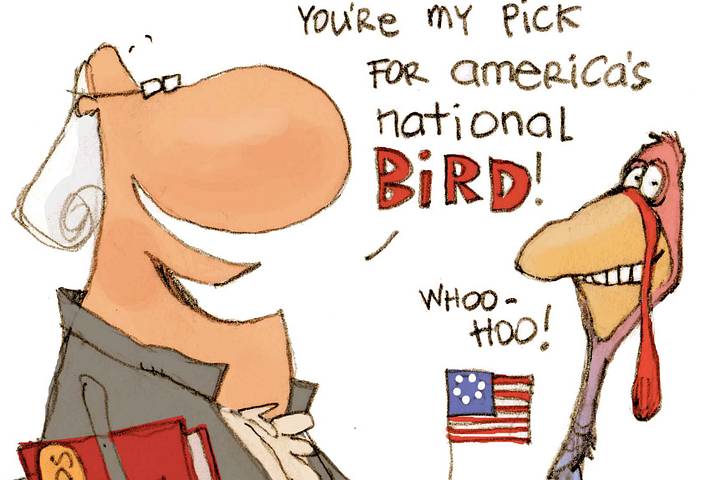
61. Why did the Pilgrim go to the pool?
To get a puri-tan.
62. What kind of music did the Pilgrims listen to on the Mayflower?
Plymouth Rock.
63. Why did the Pilgrims cross the Atlantic?
To get to the other side.
64. What did the Pilgrims use to bake Thanksgiving desserts?
May-flour.
65. What was the Pilgrim’s favorite subject in school?
His-story.
66. Why did the Pilgrim love gardening?
He was good at planting roots.
67. What’s a Pilgrim’s favorite dance?
The Turkey Trot.
68. What event was held on the Mayflower the day after Thanksgiving?
A Black Friday sail.
69. How do Pilgrims break a bad habit?
They stop cold turkey.
70. What do pilgrims learn in school?
Pilgrammar.
71. Why don’t Pilgrims tell secrets in the cornfield?
There are too many ears around.
72. Why don’t Pilgrims sue?
Because they like to settle.
73. Where do Pilgrims learn to surf?
Boarding school.
74. What did the Pilgrim wear to Thanksgiving dinner?
A har-vest.
75. Why are Pilgrim libraries so tall?
They have many stories.
76. Why do Pilgrims’ pants keep falling down?
Because they wear their belt buckles on their hats.
77. What’s a Pilgrim’s favorite flower?
Mayflower.
78. What is a Pilgrim’s favorite type of sweet?
Plymouth Rock candy.
79. If April showers bring May flowers, what do May flowers bring?
Pilgrims.
80. What made the Pilgrims on the Mayflower high?
Sea weed.
81. What do you call a pretty Pilgrim?
A Puri-ten.
Thanksgiving Food Jokes and Puns
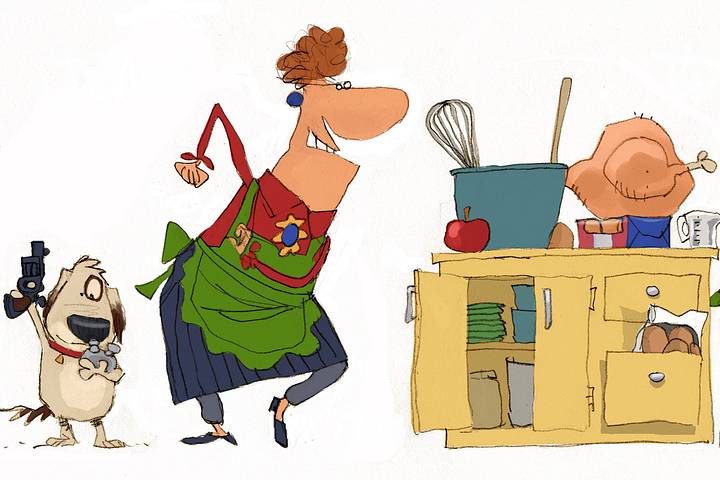
82. Why did the stuffing cross the road?
To get to the other sides.
83. What do you get when you drop a pumpkin?
Squash.
84. Why did the cranberry blush?
It saw the turkey dressing.
85. Which movie character makes the worst mashed potatoes?
Forest Lump.
86. Which food can you expect to be a troublemaker at the Thanksgiving table?
The deviled eggs.
87. Why was the Thanksgiving soup so expensive?
It had 24 carrots.
88. Why didn’t the chef season the turkey?
She ran out of thyme.
89. Where do chemistry majors sit on Thanksgiving?
At the periodic table.
90. What do you call a handsome yam?
A hot potato.
91. What did the baker say to the pumpkin?
“I only have pies for you.”
92. What did the salt say to the pepper on Thanksgiving?
“Season’s greetings!”
93. Why did the dinner roll get promoted?
It really rose to the occasion.
94. What do you call a potato on Thanksgiving break?
A couch potato.
95. What did the gravy say to the mashed potatoes?
“I’ve got you covered.”
Thanksgiving Pumpkin and Pie Jokes
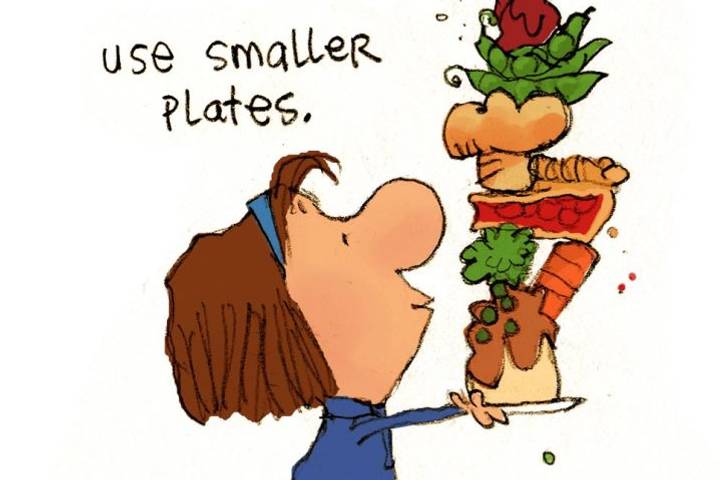
96. Why did the apple pie cry?
It got its peelings hurt.
97. What is a pumpkin’s favorite sport?
Squash.
98. How many bakers does it take to make a pie?
3.14.
99. What is the quietest dessert?
Key Mime Pie.
100. What do math teachers eat on Thanksgiving?
Pumpkin pi.
101. What famous poet and playwright was known for his yummy pies?
Bakespeare.
102. What do wrestlers have for dessert?
Grapple pie.
103. What does pumpkin pie say in a fight?
“You want a piece of me?”
104. Why did the pumpkin pie go to the dentist?
It needed a filling.
Thanksgiving Knock-Knock Jokes
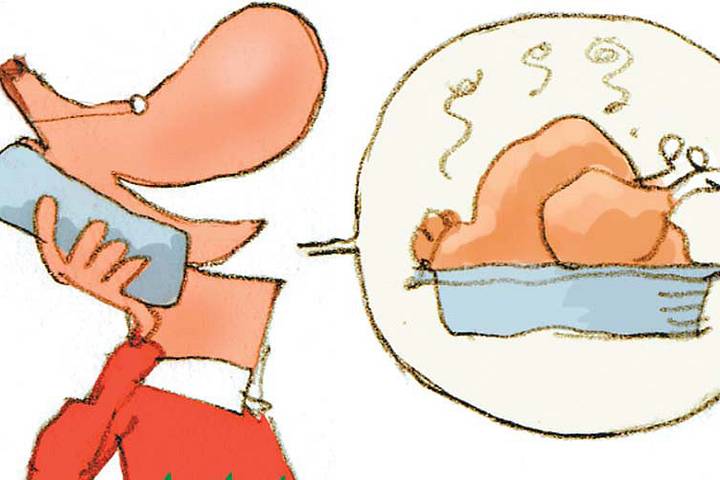
105. Knock, knock! Who’s there? Taylor.
Taylor who?
Taylor to pass the yams!
106. Knock, knock! Who’s there? Norma Lee.
Norma Lee who?
Norma Lee I don’t eat this much.
107. Knock, knock! Who’s there? Harry.
Harry who?
Harry up and pass those sides—I’m starved!
108. Knock, knock! Who’s there? Arthur.
Arthur who?
Arthur any more cranberries?
109. Knock, knock! Who’s there? Anita.
Anita who?
Anita bigger pair of pants after all that food!
110. Knock, knock! Who’s there? Tanks.
Tanks who?
Tanksgiving is here!
Read More:
•
100 Short Jokes That Will Leave You in Stitches
•
50 Riddles With Answers for a Serious Mental Workout
•
The Hardest Riddles for Adults: Can You Solve These Mind-Bending Puzzles?