
America was at a crossroads in 1999—which might explain why music fans were split between listening to sugary teen-pop and angry nu-metal.
ByKenneth Partridge|Jan 18, 2024, 12:02 PM EST
 Add us as a preferred source

In 1999, the final year of the 20th century, America was at a crossroads. While the nation was still enjoying the unprecedented peace and prosperity of the late ’90s, anxiety related to the dreaded Y2K bug had many people fearing armageddon was imminent. Nobody could tell if it was the best of times or the end of times—which might explain why sugary teen-pop and angry nu-metal were two of the biggest sounds around.
But that’s not all people were rocking out to as the millennium approached. What follows is a list of 25 songs turning 25 in 2024. It’s a testament to the wonderful weirdness of 1999, the year that gave us indelible hits by Limp Bizkit, Christina Aguilera, Macy Gray, and of course, Lou Bega.
1. Blondie // “Maria”
Blondie’s first single since 1982 was a real doozy. In the UK, where the New York City rockers had always been huge, the song reached No. 1, making Blondie the first and only American act to top that country’s charts in the ’70s, ’80s, and ’90s. “Maria” also made Blondie singer Debbie Harry, then 53, the oldest woman to have a No. 1 UK hit. (Cher had been slightly younger when she reached the summit with “Believe” the previous year.)
2. TLC // “No Scrubs”
“No Scrubs” gave TLC their third No. 1 hit on the Billboard Hot 100—and the song’s lyrics, all about broke dudes catcalling women from passing cars, put some men on the defensive. The New York City rap group Sporty Thievz even scored a Top 20 smash with their answer record, “No Pigeons.”
3. Eminem // “My Name Is”
Produced by Dr. Dre, Eminem’s tongue-in-cheek breakthrough single, “My Name Is,” samples British singer-songwriter Labi Siffre’s 1975 tune “I Got The …” Siffre refused to clear the sample until Eminem agreed to cut some of the song’s homophobic lyrics.
4. Britney Spears // “… Baby One More Time”
Although it was technically released in late 1998, Britney Spears’s world-beating debut single, “… Baby One More Time,” remained massive throughout the following year. It topped the Billboard Hot 100 in January of ’99, and Billboard later ranked it the fifth biggest song of the year. And to think, songwriter Max Martin originally intended the tune for TLC.
5. Tom Waits // “Hold On”
Despite his craggy voice and penchant for bizarre storytelling, Tom Waits can make beautiful songs when he wants to. His acclaimed 1999 album Mule Variations includes “Hold On,” an optimistic song of romantic resilience written with his wife, Kathleen Brennan. “Hold On” earned Waits a Grammy nomination for Best Male Rock Vocal Performance. He lost to Lenny Kravitz.
6. Ricky Martin // “Livin’ La Vida Loca”
The chart-topping breakthrough single for Puerto Rican heartthrob and former Menudo member Ricky Martin, which was completely inescapable in the summer of 1999, holds the distinction of being the first U.S. No. 1 hit recorded entirely with the digital audio workstation Pro Tools. That said, “Livin’ La Vida Loca” does feature some real instruments, including horns and acoustic guitar.
7. Shania Twain // “Man! I Feel Like a Woman!”
Shania Twain’s gargantuan third album, Come On Over, dropped in 1997, but it kept spinning off singles into the new millennium. The most enduring of these may be “Man! I Feel Like a Woman!”, a strutting country-rock female-empowerment jam with a chorus that’s meant to be screamed at the top of your lungs.
8. Blink-182 // “What’s My Age Again?”
Originally titled “Peter Pan Complex,” the gleefully immature breakout single for San Diego punk-rock goofballs blink-182 was born from a mistake. Bassist Mark Hoppus was trying to play Green Day’s “J.A.R.” on guitar, and he accidentally came up with the now-familiar intro riff to “What’s My Age Again?”
9. Jennifer Lopez // “If You Had My Love”
J. Lo came strong out of the gate with her debut single, “If You Had My Love,” which spent five weeks atop the Billboard Hot 100. Shortly before the song dropped, Michael Jackson heard producer Rodney Jerkins’s demo and nearly opted to record it himself. Fortunately for Lopez, the King of Pop thought it would sound better with a female singer.
10. Ja Rule // “Holla Holla”
In the early 2000s, Ja Rule became a pop-rap titan with radio-ready jams like “Livin’ It Up” and “Always on Time.” But the NYC rapper actually came on the scene with 1999’s “Holla Holla,” a last-minute addition to his debut album, Venni Vetti Vecci. Def Jam had been asking for a hit single, and Ja delivered, cracking the Top 40 and setting the stage for future triumphs.
11. Smash Mouth // “All Star”
With “All Star,” Smash Mouth avoided the curse of being a one-hit wonder (let us not forget 1997’s “Walkin’ On the Sun”) and gave the world a perennial sports anthem, which is funny, since it was written by guitarist Greg Camp, the only member of Smash Mouth not into sports. Smash Mouth even performed “All Star” at the 1999 Home Run Derby at Fenway Park.
12. Red Hot Chili Peppers // “Scar Tissue”
The lead single from the seventh Red Hot Chili Peppers album features music by guitarist John Frusciante—his first after coming back in the fold after a six-year absence. Upon hearing the guitar riff, lead singer Anthony Kiedis immediately connected with the “playful, happy-to-be-alive, phoenix-rising-from-the-ashes vibe” and penned lyrics to match. The song became the group’s first Top 10 pop hit since 1991.
13. Lit // “My Own Worst Enemy”
Lit frontman A. Jay Popoff told SPIN magazine that he sang “My Own Worst Enemy,” his band’s punky, poppy 1999 breakthrough smash, naked in the studio. This would be weirdly appropriate, given that it’s a song about getting loaded and acting a fool.
14. Santana featuring Rob Thomas // “Smooth”
When Rob Thomas sang, “Man, it’s a hot one,” the famous opening line of this Latin-rock earworm, he might as well have been talking about this song itself. “Smooth” spent 12 weeks atop the Billboard Hot 100, reignited the career of Carlos Santana, and dominated radio in the closing months of the second millennium. It’s hard to imagine anyone but Thomas singing it, but he actually co-wrote it with George Michael in mind.
15. Limp Bizkit // “Nookie”
On the strength of this brutish kissoff—perhaps the most famous song of the nu-metal era—Limp Bizkit’s 1999 sophomore album, Significant Other, reached No. 1 on the Billboard 200. It’s among the tunes the band played during their infamous Woodstock ’99 set.
16. Macy Gray // “I Try”
Macy Gray’s one and only pop hit, the deceptively perky soul-pop heartbreaker “I Try,” almost didn’t reach the mass audiences it deserved. Gray fought with her label over the song, insisting it shouldn’t be a single. Thank goodness she lost that fight.
17. Destiny’s Child // “Say My Name”
Saying the names of the members of Destiny’s Child was a little tricky circa “Say My Name,” the group’s second No. 1 hit. Though the song includes vocals from Beyoncé, Kelly Rowland, LeTavia Roberson, and LeToya Luckett, the music video features Bey, Rowland, and the two singers who replaced Roberson and Luckett: Michelle Williams and Farrah Franklin. Roberson and Luckett claimed they didn’t know they’d been fired until they saw the video.
18. Christina Aguilera // “Genie In a Bottle”
The teen-pop era reached its peak in 1999, and Christina Aguilera notched a No. 1 hit with this suggestive lead single from her self-titled debut album. But Aguilera wasn’t interested in being a typical pop star—she fought to infuse her songs with more R&B flavor—and with subsequent LPs, she inserted more of her own personality into the mix.
19. LFO // “Summer Girls”
Part nostalgic love song, part barrage of unrelated pop culture references, “Summer Girls” is a strangely sweet pop-rap confection that somehow never loses its charm. Sadly, LFO frontman Rich Cronin died of leukemia in 2010, followed by bandmate Devin Lima in 2018 and Brian Gillis in 2023.
20. Lou Bega // “Mambo No. 5 (A Little Bit Of…)”
Though tangentially related to both the ’90s swing revival and the Latin-pop boom, “Mambo No. 5” was very much its own thing. German-born singer Lou Bega based the retro-leaning smash (his lone American hit) on a sample from Cuban bandleader Pérez Prado’s 1949 chestnut “Mambo No. 5.” Bega’s big contribution was adding lyrics—most notably a hyper-catchy chorus that calls out nine different women: Pamela, Angela, Monica, Erica, Rita, Tina, Sandra, Mary, and Jessica.
21. Ol’ Dirty Bastard // “Got Your Money”
Produced by Pharrell and Chad Hugo, a.k.a. the Neptunes, “Got Your Money” became Wu-Tang Clan eccentric Ol’ Dirty Bastard’s first and only Top 40 pop hit as a lead artist. ODB gets some help on the hook from singer Kelis, later of “Milkshake” fame, who assures him that, yes, she’s got his money—no need to worry.
22. Len // “Steal My Sunshine”
Perfectly engineered for summer parties, “Steal My Sunshine” was born early one morning while Len frontman Marc Costanzo was partying at a rave in his hometown of Toronto. He wrote the lyrics on his leg and on a napkin, and if you’re of a certain age, you probably know these words by heart.
23. Dr. Dre // “Still D.R.E.”
Dr. Dre’s big 1999 comeback single features lyrics ghostwritten by none other than Jay-Z. According to Dre, it took Jay a few minutes to get into the West Coast mindset, but once he did, the Brooklyn legend wrote the whole song—including guest Snoop Dogg’s parts—in 20 minutes.
24. Backstreet Boys // “I Want It That Way”
Swedish pop songsmith Max Martin has a questionable command of the English language—hence the head-scratching lyrics of this 1999 boy-band classic—but there’s no doubting his way with a melody. Teen pop arguably never got better than this.
25. Sugar Ray // “Every Morning”
Sugar Ray gave the world a handful of perfect pop singles, and “Every Morning” might be the best of the bunch. Mark McGrath and the gang based part of the chorus on the Latin-rock band Malo’s 1972 tune “Suavecito,” a staple of lowrider car shows in Sugar Ray’s native Southern California.
Related Tags
6 Foods Families Really Ate During the Gilded Age
That lavish spread you saw in ‘The Gilded Age’? From towering aspics to sea turtle soup, high society’s favorite dishes weren’t a Hollywood creation, but actual history.
ByNitya Rao|Nov 7, 2026, 8:00 PM EST
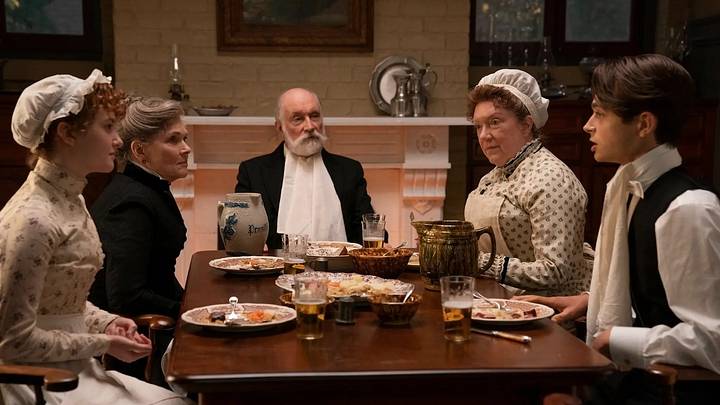
If “you are what you eat,” then you might want to rethink “eating the rich.” From our history books to the HBO series The Gilded Age, records and recreations show that the wealthiest Americans often ate foods that would make a poor man’s plate look a lot more appealing.
The Gilded Age shows that not everything that glitters is gold. This flashy period between the 1870s and 1900 was fueled by new money at the hands of tycoons like Vanderbilt and Carnegie—fortunes that embossed New York’s Fifth Avenue and Newport, Rhode Island, in glitz and gold leaf. The era was a snapshot of America’s elite that included clifftop “cottages,” lavish balls, and… tureens of turtle soup?
That’s just one of the delicacies that graced Gilded Age tables. While the servants and working class—like the show’s Mrs. Bauer and Jack Trotter—ate far simpler fare and leftovers, the upper crust’s menu was a lot more eclectic.
From oysters on the half shell to meat jelly, here are five foods families really ate during the Gilded Age that you may or may not see on season 4 of HBO’s namesake show.
Celery
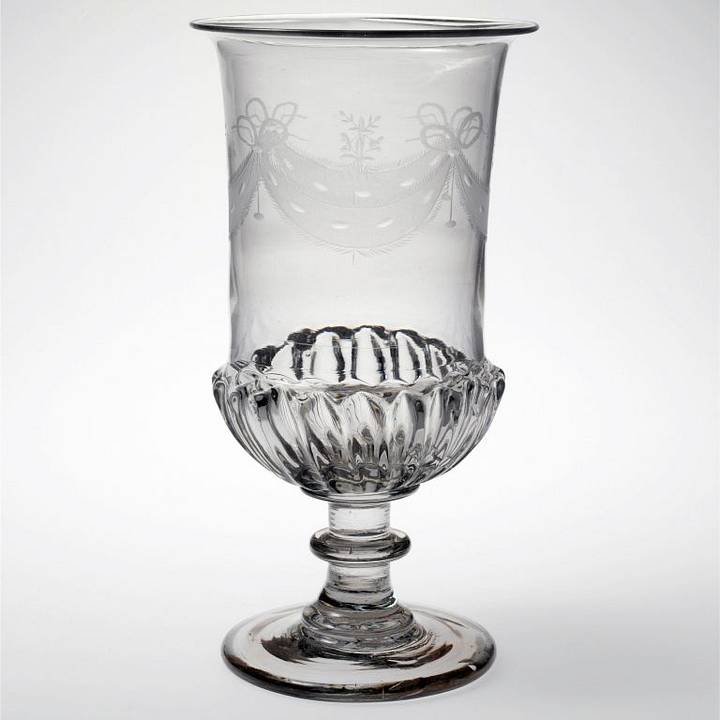
Today, we see celery as nothing more than the free side given with chicken wings. But back in the Gilded Age, this crunchy, watery vegetable was the centerpiece of the meal—literally. 19th-century aristocrats even had decorative glass “celery vases” made to hold the hard-to-grow stalks, displaying the unlikely status symbols upright for all to see. As celery production increased and its price decreased, Gilded Age chefs began experimenting with the vegetable in the kitchen—braising it, dressing it in mayo, and more.
Oysters
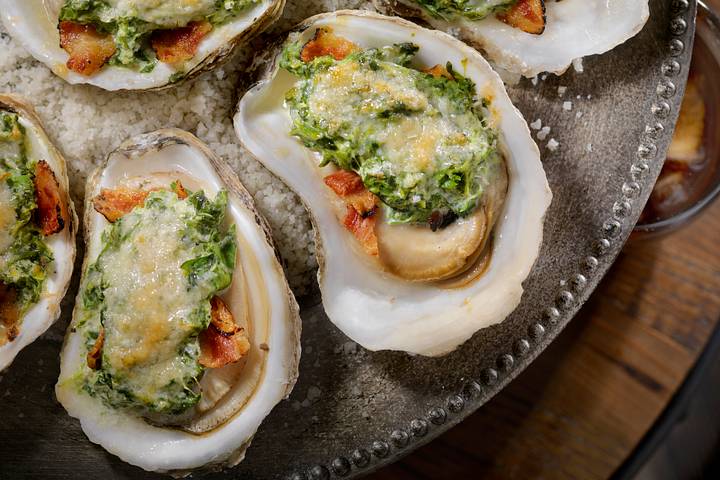
No trip to Newport is complete without stopping by Midtown Oyster Bar for a dozen on the half shell, and back in the Gilded Age, high society was just as obsessed. Much like lobster, oysters had a humble beginning as a working-class staple across 19th-century coastal cities. They were shucked and slurped down by maritimers on the streets of New York long before becoming an elegant appetizer on Gilded Age menus. From raw oysters on sparkling beds of crushed ice to decadent baked preparations like Oysters Rockefeller, the modest mollusk underwent one of the greatest glow-ups in culinary history.
Turtle Soup
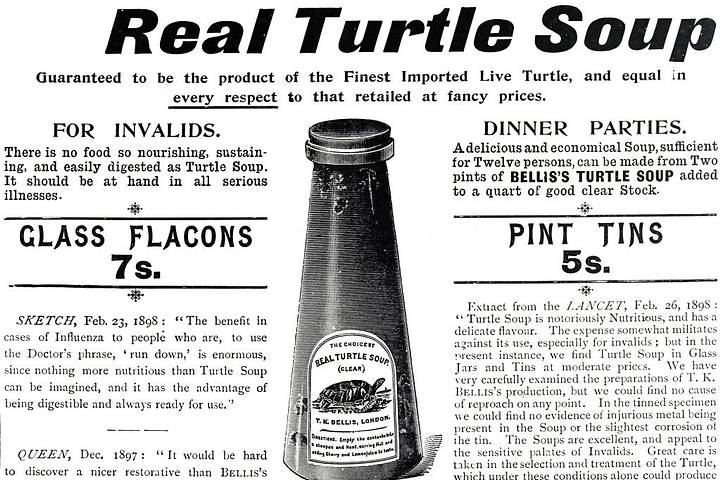
On The Gilded Age, most meals start with the clink of silver spoons against porcelain bowls. Menus from Gilded Age establishments like Delmonico’s and period etiquette magazines back up this soup starter standard. An excerpt from Godey’s Lady’s Book on how to throw a proper dinner party goes as follows: “Commence dinner with raw oysters, then a choice of one or two soups.”
The soup du jour wasn’t always lobster bisque or cream of celery, though. A luxury at the time—and a dish rarely seen today due to strict conservation protections—turtle soup was all the rage in the Gilded Age. Chefs favored the diamondback terrapin, a turtle found from Cape Cod down the Gulf Coast. Whether eating out at a fine dining establishment in the city or hosting an intimate dinner party, these turtles were boiled, chopped, and finished with a swish of sherry before landing on high-society tables in the 1880s and ’90s. That is, until overhunting almost wiped the creature out by the 1910s, sending prices soaring and pushing the dish off most menus.
Aspic
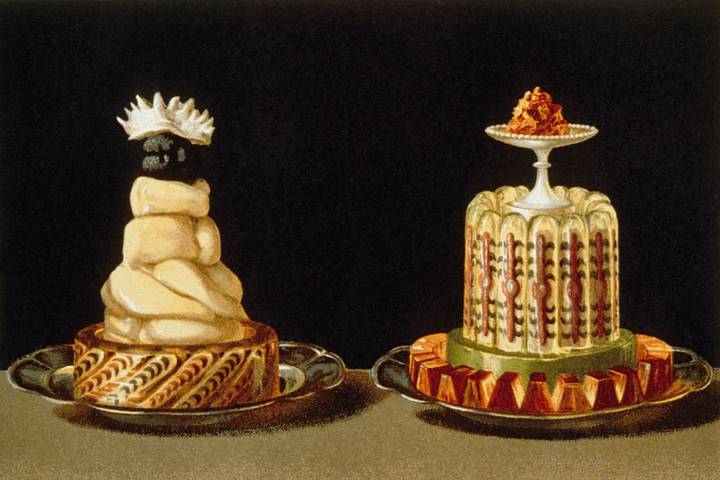
Before 1950s housewives discovered Jell-O molds, Gilded Age kitchens were constructing towering aspics that served as equal parts savory centerpiece and sign of a master chef. These edible gelatinous sculptures—which migrated from Europe and were made from boiled animal bones before powdered gelatin was popularized in the late 1800s—contained meat, fish, produce, and eggs suspended in translucent broth like an edible display case. Served midway through formal multi-course banquets, colorful aspic creations were more of an art form than the cold course they were presented as.
Charlotte Russe
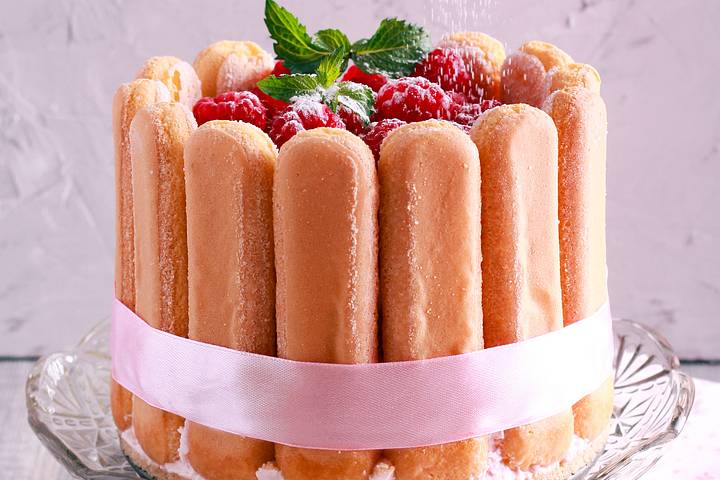
You might recognize the name from the popular 2000s women’s clothing store, but unlike the store, this sweet, berry-topped cake wasn’t always made for the masses. Concocted by French chefs in the late 18th century and said to be named in honor of Queen Charlotte, Charlotte Russe cake—a tower of ladyfingers surrounding cold Bavarian cream or custard and berries—was the creme de la creme of Gilded Age dessert spreads.
While the nouveau riche enjoyed decadent riffs, sometimes even decked out with a decorative ribbon, the treat eventually evolved past wedding breakfasts and banquets of the elite. Decades later in the 20th century, the spongy sweet shifted from the white tablecloths of Delmonico’s to the streets of Brooklyn, where pushcart vendors served simplified versions out of cardboard cups to working-class New Yorkers.
Read More:
•
6 Foods Families Really Ate During the Middle Ages
•
6 Foods Families Really Ate in the Times of ‘Little House on the Prairie’
•
What Did People Eat for Breakfast in Colonial Williamsburg?
•
5 Foods Families Really Ate During the Black Death
How Bruce Springsteen Turned One of America’s Darkest Crimes Into a Haunting Classic
Springsteen composed and recorded his celebrated “Nebraska” by himself, in his bedroom.
ByTim Brinkhof|Jul 24, 2026, 7:00 PM EDT

Between January 21 and 29, 1958, a 19-year-old garbageman from Lincoln, Nebraska, called Charles Starkweather went on a killing spree with his 14-year-old girlfriend, Caril Ann Fugate.
Described as a “swaggering good-for-nothing in blue jeans and a black motorcycle jacket” known to yell “go to hell” at strangers, Starkweather killed 11 people—including Fugate’s mother, stepfather, and half-sister—before he was caught and sent to the electric chair.
News of the seemingly random serial killings—a prelude to the likes of Ted Bundy, John Wayne Gacy, and Jeffrey Dahmer—shocked many Americans, including singer-songwriter Bruce Springsteen.
Today, the event is best remembered through the song “Nebraska,” the first in Springsteen’s album of the same name. Though told from Starkweather’s own perspective, it never properly explains his motives—and that’s precisely the point.
How a Murder Spree Inspired a Musical Masterpiece
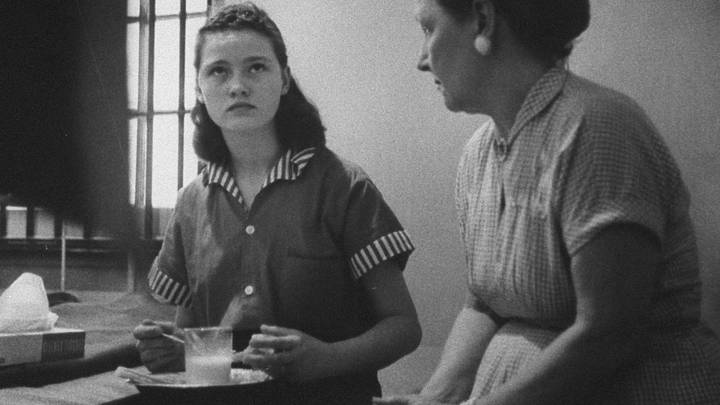
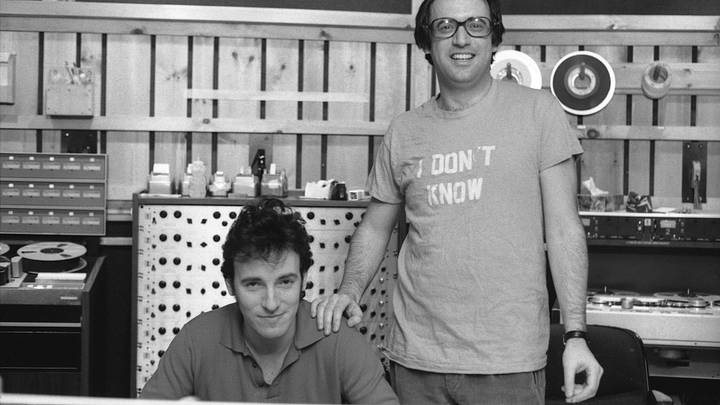
Though widely regarded as the best album in Springsteen’s long and industrious career—including by Springsteen himself—the singer-songwriter didn’t know if any of its songs would resonate with people. His doubts weren’t unreasonable. Contrary to his previous albums, which were recorded in a studio alongside his E Street band, the songs on “Nebraska” Springsteen recorded by himself, in his bedroom.
Springsteen had tried recording them with his band, but felt that the high production quality didn’t suit their dark, intimate nature. Ultimately, he decided that his own recording—originally intended to be little more than a demo—was superior.
“Nebraska” marked an important turning point in Springsteen’s career. Although dashed dreams and harsh realities had always been a prominent part of his repertoire, this new album sounded much more hopeless.
Unlike with many of the songs on “The River,” Springsteen’s focus was less on celebrating man’s resilience in the face of unyielding hardship, and more on bemoaning the seemingly cruel nature of the universe.
As he sings in the opening song, which is best listened to with the knowledge that Starkweather never gave a proper confession of his crimes: “They wanted to know why I did what I did / Well sir I guess there’s just a meanness in this world.”
Springsteen later claimed that he did not create “Nebraska” with a political agenda in mind, concentrating instead on achieving a particular sound. True or not, his music is often placed in a political context—one that continues to resonate today.
Donald Trump frequently plays Springsteen’s music at his rallies, particularly “Born in the USA.” This he does to the great chagrin of Springsteen himself, who knows better than anyone that his songs do not applaud or criticize American nationalism.
The Album That Almost Stayed a Demo
Though certainly a response to current events, “Nebraska” also came into existence because of developments in Springsteen’s own career. Having become a superstar, he wanted to close the gap between him and his fans, and avoid turning into a sellout.
“All popular artists,” Springsteen wrote in his 2016 memoir Born to Run, “get caught between making records and making music.” Once he found himself in this very spot, he chose to make music.
Despite Springsteen’s doubts, “Nebraska” became both a critical and commercial success, topping U.S. and U.K. charts and selling millions of copies. Ultimately, though, it’s remembered for closing that aforementioned gap.
As E Street guitarist Steve van Zandt later said: “An artist could never get closer to his audience than this. Not because it was done with an acoustic guitar, but because he was literally singing for himself.”