
From the truly creepy to the positively absurd, the hidden messages rumored to be inside these songs have led to a lot of fan theories.
ByRudie Obias|Sep 8, 2023, 8:00 AM EDT
 Add us as a preferred source

Some musicians like to conceal messages or images in their album covers; others prefer to leave cryptic messages behind in their album‘s liner notes (as Taylor Swift once did). Some, however, may have taken a more subtle approach: Through a recording technique known as “backmasking,” some of the most iconic bands in music history are rumored to have left secret messages inside certain songs.
With backmasking, you usually can‘t hear the hidden message unless you play the track in reverse (it works best if you use a turntable). While you might pick up on plenty of Easter eggs, sometimes it’s like an audio Rorschach test too, in that you could be hearing things that aren’t actually there.
From urban legends to accusations of devil worship and beyond, the backmasked songs featured below have given rise to all kinds of fun (and occasionally ominous) theories.
1. and 2. “Revolution 9” and “I’m So Tired” // The Beatles
There’s an infamous music conspiracy theory that Paul McCartney died in a car accident in 1966 and was replaced with a doppelgänger. Some fans point to The Beatles’ Yoko Ono-influenced, avant-garde track “Revolution 9” from the White Album as a major “clue” into the validity of this claim.
If you play the song like normal, you can hear John Lennon’s voice repeat the words “Number 9” over and over again in the intro. However, if you play it backwards, some believe they hear him saying “Turn me on, dead man” over the jumbled soundscape.
This isn’t the only track from The Beatles that supposedly includes backmasking. At the very end of the song “I’m So Tired”—which incidentally, is also from the White Album—Lennon seems to be speaking in gibberish, but if you play it in reverse, it almost sounds like he says, “Paul is a dead man, miss him, miss him, miss him.”https://www.youtube.com/embed/7cqHtGb9WYM?feature=oembed
Of course, the “Paul is Dead” rumor is just that, as the real Paul McCartney is alive and well and still making new music for fans all around the world. Still, that hasn’t stopped McCartney from addressing the urban legend directly; in 1969, he told LIFE magazine that “perhaps the [rumor] started because I haven’t been much in the press lately.”
3. “Stairway to Heaven” // Led Zeppelin
Rumors of Satanic worship have dogged Led Zeppelin for decades, thanks in large part to guitarist Jimmy Page and his well-known interest in occultism. (Page famously owned an occult bookstore in London in the early 1970s, as well as Boleskine House, the Scottish manor once occupied by Aleister Crowley, the famed British writer who was once part of Hermetic Order of the Golden Dawn, a secret society focused on mysticism.)
Although there’s no evidence that Page made a deal with the Devil, the guitarist never flat-out denied the Satanist claims, either. “I don’t really want to go on about my personal beliefs or my involvement in magic,” Page once told Rolling Stone. “I’m not interested in turning anybody on to anybody that I’m turned on to. If people want to find things, they find them themselves.”
True or not, those rumors helped fan controversy around one of the band’s most legendary songs, “Stairway to Heaven.” In 1982, televangelist Paul Crouch claimed that there were hidden messages in it about the Devil, which could only be heard by playing the song backwards. According to Crouch, you can hear lead singer Robert Plant croon out the worst of it starting around the 4:20 mark: “Here’s to my sweet Satan, the one whose little path would make me sad, whose power is Satan, he’ll give you, he’ll give you 666, there was a little tool shed where he made us suffer, sad Satan.”
The band has long denied that there was any backmasking on the track, with Plant even going on the record to debunk the claims directly. “To me it’s very sad, because ‘Stairway to Heaven’ was written with every best intention,” Plant said in a 1983 interview with Musician magazine. “And as far as reversing tapes and putting messages on the end, that’s not my idea of making music.”
4. “Nightmare/The Dreamtime” // Motörhead
Between frontman Lemmy Kilmister’s devil-may-care attitude and the English band’s blistering hard rock sound (which served as a precursor to NWOBHM, the new wave of British heavy metal), Motörhead has long had a rough-and-tumble reputation. There are even accusations that the band placed hidden messages in their songs—namely on the track “Nightmare/The Dreamtime,” off their ninth studio album, 1916.
The song kicks off with some jumbled growling from Lemmy, but if you play the song in reverse, you can hear him spit out the following message with some real ferocity: “Now tell me about your miserable little lives. I do not subscribe to your superstitious, narrow-minded flights of paranoia. I and people like me will always prevail! You will never stifle our free speech in any country in the world.”
Although the rumored backmasking on the track wasn’t officially confirmed by the band, it’s clear and noticeable—especially compared to some other songs featured in this list. Some sources suggest that the backwards verse was supposedly aimed at the Parents Resource Music Center (PMRC), which was trying to censor heavy metal and other music deemed offensive back in the 1980s. In one video clip, Lemmy compares the PMRC to McCarthyism, adding: “People are scared of them, but what no one seems to realize is if you wouldn’t be scared of them, they couldn’t do anything.”
5. “Better by You, Better than Me” // Judas Priest
Speaking of the NWOBHM, Judas Priest is another British hard rock band that technically predates it but helped inform the sound. The group has made headlines for more than just their influence in metal, however: Back in 1990, they were involved in a lawsuit where the issue of backmasking and subliminal messaging in songs was the central focus.
The suit alleged that the band and their record label, CBS, were responsible for a shooting incident that occurred in Sparks, Nevada, in December 1985, wherein two young men—18-year-old Raymond Belknap and 20-year-old James Vance—attempted death by suicide using a 12-gauge shotgun.
Belknap died instantly, but Vance survived (although he suffered from extensive facial injuries and died three years later from a drug overdose). In the suit, their families claimed that there were subliminal messages—including “Let’s be dead” and “Do it”—in the band’s cover of the 1969 Spooky Tooth song, “Better by You, Better than Me,” which is what allegedly prompted Vance and Belknap to enter into the suicide pact.
After reviewing the song (and playing it both backward and forward at varying speeds), audio engineers determined that there were no subliminal commands in it and the case was eventually dismissed. “It was absolutely ridiculous. It really was,” frontman Rob Halford later told Yahoo Music in 2015. “We love our fans. We would never put anything in our music with the intent of harming them.”
6. “Empty Spaces” // Pink Floyd
Pink Floyd is known for experimental compositions and thought-provoking lyrics, so it’s not really much of a stretch to imagine the prog-rock band might have tinkered with backmasking in songs, too. Keen-eared listeners searching for the hidden meanings in Pink Floyd songs don’t have to search too hard: Just look to the band’s 1979 rock opera, The Wall, and specifically, the track “Empty Spaces,” which fans claim features a particularly surreal secret message.
If you play it backwards, you can hear bassist Roger Waters pranking the band’s followers with: “Hello, Looker. Congratulations, you’ve just discovered the secret message. Please send your answer to Old Pink, care of the funny farm, Chalfont.” It even includes producer James Guthrie interrupting with, “Roger! Carolyne’s on the phone!” at the very end—a reference to Carolyne Christie, Roger Waters’s wife at the time of the recording.
7. “665” // Soundgarden
In 1988, Seattle grunge band Soundgarden released their debut album Ultramega OK, which poked fun at the supposed Satanic themes in rock music, namely with the backmasking on the track “665” (a parody of the number “666,” which is regarded as the “number of the beast”).
If you play the song in reverse, you can hear frontman Chris Cornell sing: “Hail Santa! I love you, baby. Oh Santa, got what I need … my Christmas king. Santa is my king! I love you, Santa baby. Got what I need.” In fact, Cornell even joked about the parody in an interview with The Guardian in 2009. “People asked—in all seriousness—‘Are you guys Satanists?,’” he quipped.
8. “Cut Up Angels” // The Used
In 2004, emo rock band The Used released their second album, In Love and Death. Heavily influenced by frontman Bert McCracken and the tragedies happening in his life at the time (his ex-girlfriend, who was also pregnant with his child, died from a drug overdose during the album’s production), the record was nonetheless a hit and went certified platinum.
In Love and Death is also notable for featuring the song called “Cut Up Angels,” which some believe backmasking at the very opening of the track. When you play it backwards, you can supposedly hear McCracken say, “Happiness is a warm gun, yes it is … ” which is a reference to yet another song from The Beatles’ White Album.
9. “300 Mhz” // At The Drive-In
Post-hardcore band At The Drive-In released Vaya in 1999, and the second-to-last track on the seven-song EP allegedly features some very creepy hidden lyrics disguised via backmasking.
Some folks who have listened to “300 Mhz” backwards claim they can hear lead vocalist Cedric Bixler-Zavala start to belt out those eerie words around the 94-second mark: “… your enamel, made no reflection in our mirror, coughing up the coffins, cotton-candy coated teeth, these pockets were clinching all filled with teeth, amnesia proletariat … in the unlikely event that sarcasm is an unfitting dress, amnesia proletariat … ”
10. “Hell Awaits” // Slayer
As one of the “Big Four” of thrash metal bands (alongside Metallica, Anthrax, and Megadeth), Slayer is definitely capable of conjuring up some real fire and brimstone in their music. But according to some listeners, it’s the title track off the band’s 1985 sophomore album, Hell Awaits, that really plays into all that Satanic Panic paranoia from the 1980s.
If you listen to it normally, the first minute or so of the song sounds garbled, almost like there’s some demonic muttering going on. When that part is played in reverse, it sounds like the phrase “Join us!” is being chanted, over and over again and with increasing intensity. You can also hear audible wails in the background, as if someone is being tortured, before it all fades out and the song officially kicks off in all of its thrash metal glory.
Related Tags
9 Slang Words From the 1980s We Still Use Today
The decade of MTV, shoulder pads, and big hair gave us some of our favorite and most expressive words.
ByLogan DeLoye|Nov 9, 2026, 6:00 PM EST
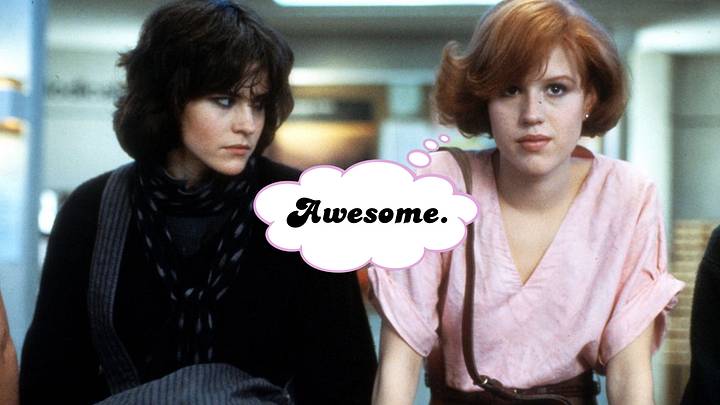
The ‘80s were tubular; each year made a bold, colorful statement in music, movies, style, and slang.
It’s hard to believe the decade of cult-classic blockbusters, big hair, MTV, and shoulder pads began almost 47 years ago, though some trends have made a comeback in the 2010s and 2020s, like high-waisted jeans and neon-colored clothing.
The ’80s are remembered for next-generation technology: the Sony Walkman, VHS tapes, boomboxes (cue John Cusack), CDs, camcorders, and the Nintendo Entertainment System.
Hair was always teased, and hairspray was a non-negotiable for men and women. Music videos took over pop culture; Michael Jackson had us dancing with Billie Jean, and Madonna invited material girls to live in a material world.
Movies that remain beloved, including Ferris Bueller’s Day Off, E.T. the Extra-Terrestrial, Back to the Future, Top Gun, The Breakfast Club (or really anything with Molly Ringwald), Ghostbusters, Raiders of the Lost Ark, and Return of the Jedi, lit up theater marquees in the ’80s.
Beyond fashion, media, and tech, the ’80s also gave us several slang terms. Some faded as soon as they arrived, while others stuck around.
According to Your Dictionary, here are nine ‘80s slang words we still use today.
CRUSING
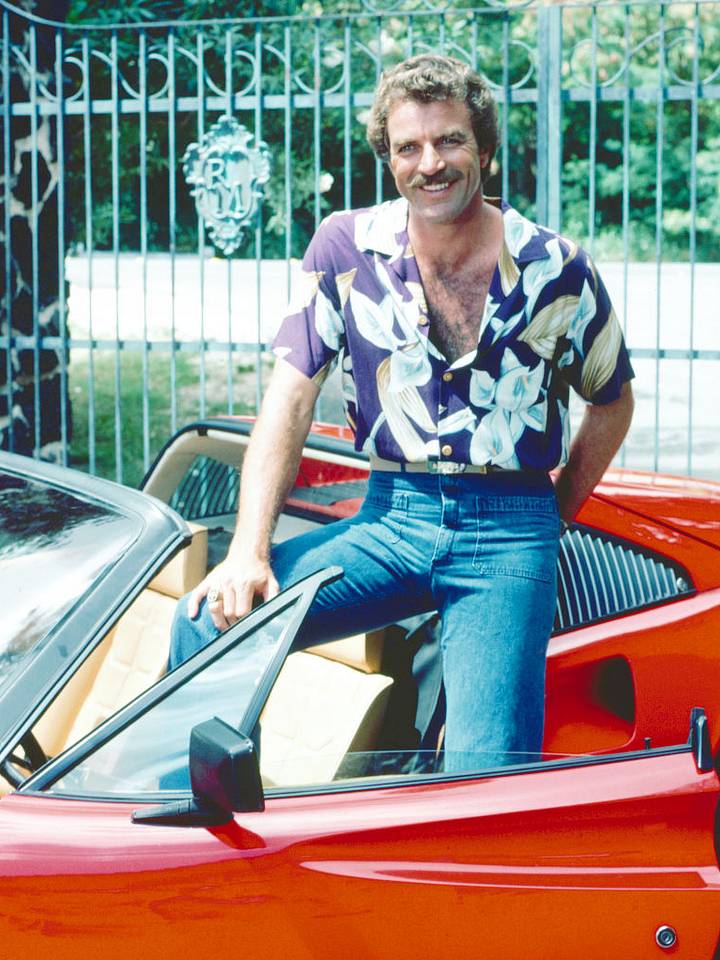
Definition: “To travel without destination or purpose.”
In a sentence: He asked if I wanted to take a drive, and we went cruising all night.
“Cruising” in the 1980s meant enjoying a long drive with nowhere specific to go. If someone invited you to “cruise” or said they were out “cruising,” you knew they were driving around aimlessly.
In 2026, “cruising” still describes a leisurely drive without a destination, just for fun.
HARSH
Definition: “Unpleasant and difficult to accept or experience, physically discomforting, overly intense.”
In a sentence: The bar was filled with smoke and the harsh smell of cigarettes.
The word “harsh” has always sounded, well, unpleasant, so it’s no surprise its meaning took on the same tone. Since the ’80s, people have used harsh to describe something uncomfortable or intense.
In 2026, we use it the same way, whether we’re talking about someone’s actions, a tough experience, or something extremely unappealing, like a bright light shining right in your face.
AWESOME
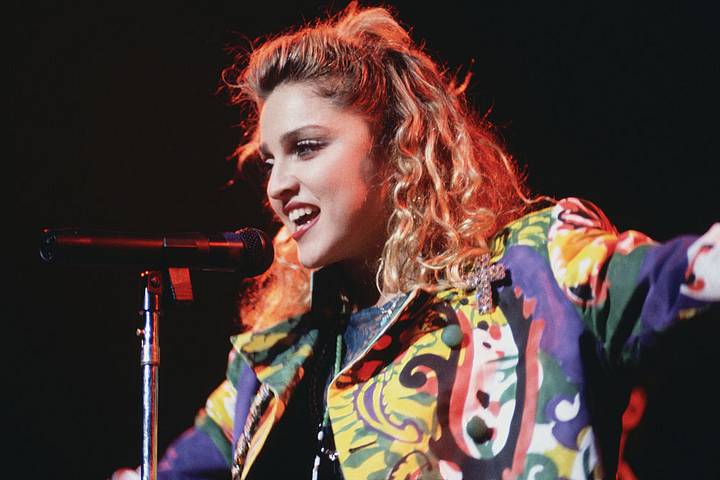
Definition: “Terrific, extraordinary.”
In a sentence: I listen to that song on repeat; it’s awesome!
Awesome is one of those words that has never lost relevance. The ’80s popularized it as the go-to way to describe something amazing or exceedingly cool.
In 2026, people of all ages still use “awesome” to express excitement about something (or someone) extraordinary.
FOR SURE
Definition: “Without doubt or question, certainly.”
In a sentence: He was the nicest person I ever met, for sure.
The slang “for sure” is another classic that has stuck around, and hopefully always will. In both the 1980s and 2026, it’s an easy way to say “of course,” often to reassure someone or dispel uncertainty. Sometimes a casual “for sure” is just what someone needs to hear in an anxious moment.
OUTRAGEOUS

Definition: “Not conventional or matter-of-fact, exceeding the limits of what is usual.”
In a sentence: People wore outrageous costumes to the concert, and don’t even get me started on the band.
Outrageous is a fun, expressive word that spices up any conversation. In the ’80s, it described something so bold or abnormal that it was actually cool. In 2026, we use it less as a compliment and more to denote something shocking, but the basic meaning remains.
BURN OUT
Definition: “Exhaustion of physical or emotional strength or motivation, usually as a result of prolonged stress or frustration.”
In a sentence: She worked so hard that she was afraid she would burn out before the Q4 meeting.
“Burn out” is so common today that we forget people used it to describe the same feeling in the ’80s. Someone who was burnt out was totally exhausted and just over it.
In 2026, we use “burn out” to describe how we feel after a long workday, or maybe a tough year that’s absolutely depleted our motivation. Anything that leaves someone feeling overly drained (work, a conversation, or a hobby) is an example of burnout.
WHOA
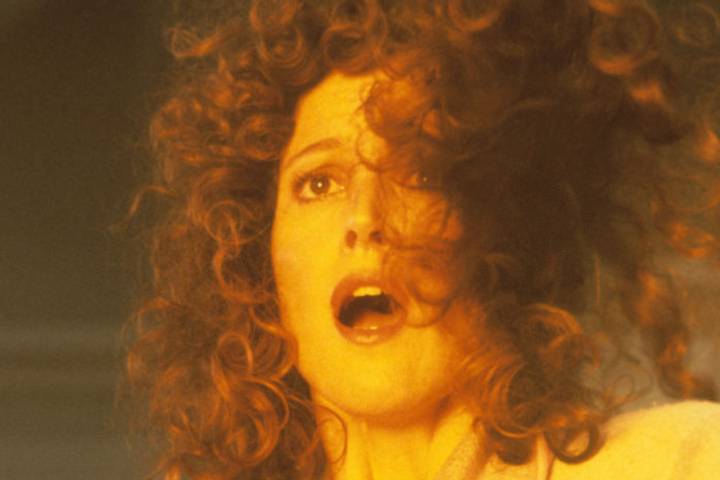
Definition: “Pause to consider or reconsider, often used to express a strong reaction.”
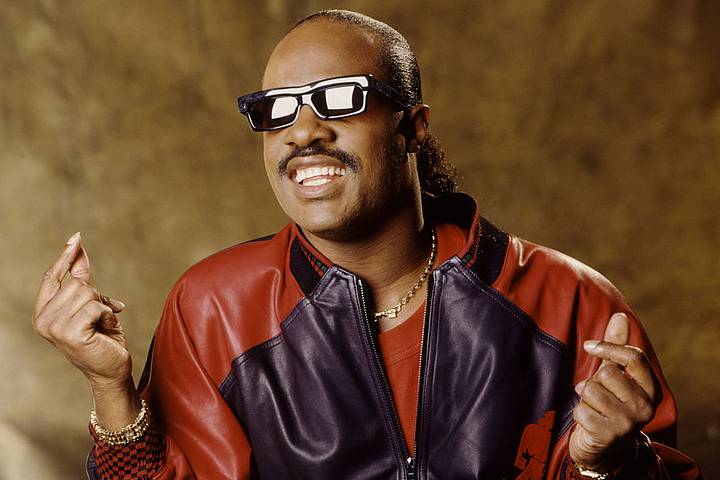
In a sentence: Whoa, that is one fun pair of sunglasses!
Whoa, like many words on this list, has definitions that couldn’t be more different. Centuries ago, people riding horseback or steering carriages used “whoa” to slow or stop the horses.
In the 1980s, “whoa” became an exclamation of surprise or intense reaction, both pleasant and unpleasant. In 2026, we say “whoa” to express excitement, surprise, or concern, depending on the instance.
CHILL
Definition: “Having a laid-back style or easy demeanor; having a relaxed style or manner.”
In a sentence: He wanted to go to the mall, but I had a long day and just wanted to chill.
“Chill” has lots of meanings, both formal and informal. In the ’80s, it broke away from its “cold” definition and became slang for someone or something calm, laid-back, or relaxing.
In 2026, we still use “chill” to describe someone who’s low-key, or to signal when we want to unwind.
EXCELLENT
Definition: “Very good of its kind: eminently good.”
In a sentence: She had an excellent taste in music, especially when it came to r&b.
According to Merriam-Webster, “excellent” may not have been invented in the ’80s, but the decade surely made it a household word. Back then, people used “excellent” to describe something very good.
In 2026, we use “excellent” when “good” or “great” doesn’t fully explain how we feel.
Read More:
•
20 Everyday Things From the ’80s and ’90s That Are Now Worth Money
•
80 Totally Awesome Facts About the ’80s
•
7 Misconceptions About the ‘80s
6 Foods Families Really Ate During the Gilded Age
That lavish spread you saw in ‘The Gilded Age’? From towering aspics to sea turtle soup, high society’s favorite dishes weren’t a Hollywood creation, but actual history.
ByNitya Rao|Nov 7, 2026, 8:00 PM EST
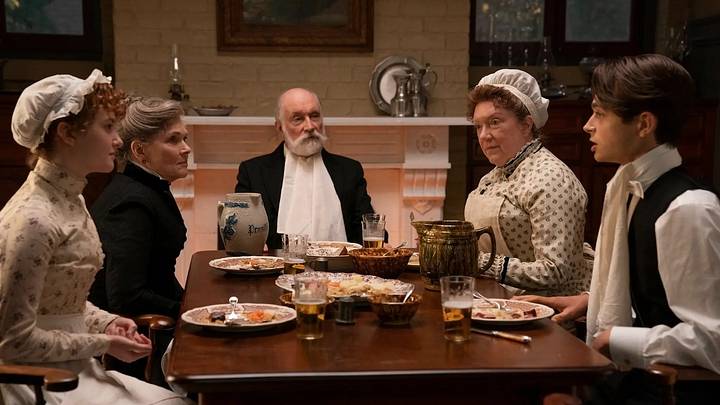
If “you are what you eat,” then you might want to rethink “eating the rich.” From our history books to the HBO series The Gilded Age, records and recreations show that the wealthiest Americans often ate foods that would make a poor man’s plate look a lot more appealing.
The Gilded Age shows that not everything that glitters is gold. This flashy period between the 1870s and 1900 was fueled by new money at the hands of tycoons like Vanderbilt and Carnegie—fortunes that embossed New York’s Fifth Avenue and Newport, Rhode Island, in glitz and gold leaf. The era was a snapshot of America’s elite that included clifftop “cottages,” lavish balls, and… tureens of turtle soup?
That’s just one of the delicacies that graced Gilded Age tables. While the servants and working class—like the show’s Mrs. Bauer and Jack Trotter—ate far simpler fare and leftovers, the upper crust’s menu was a lot more eclectic.
From oysters on the half shell to meat jelly, here are five foods families really ate during the Gilded Age that you may or may not see on season 4 of HBO’s namesake show.
Celery
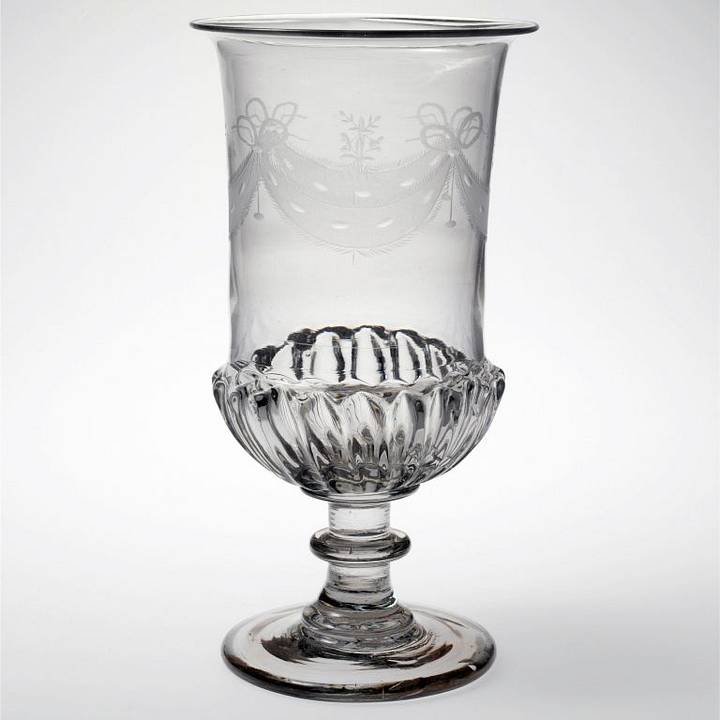
Today, we see celery as nothing more than the free side given with chicken wings. But back in the Gilded Age, this crunchy, watery vegetable was the centerpiece of the meal—literally. 19th-century aristocrats even had decorative glass “celery vases” made to hold the hard-to-grow stalks, displaying the unlikely status symbols upright for all to see. As celery production increased and its price decreased, Gilded Age chefs began experimenting with the vegetable in the kitchen—braising it, dressing it in mayo, and more.
Oysters

No trip to Newport is complete without stopping by Midtown Oyster Bar for a dozen on the half shell, and back in the Gilded Age, high society was just as obsessed. Much like lobster, oysters had a humble beginning as a working-class staple across 19th-century coastal cities. They were shucked and slurped down by maritimers on the streets of New York long before becoming an elegant appetizer on Gilded Age menus. From raw oysters on sparkling beds of crushed ice to decadent baked preparations like Oysters Rockefeller, the modest mollusk underwent one of the greatest glow-ups in culinary history.
Turtle Soup
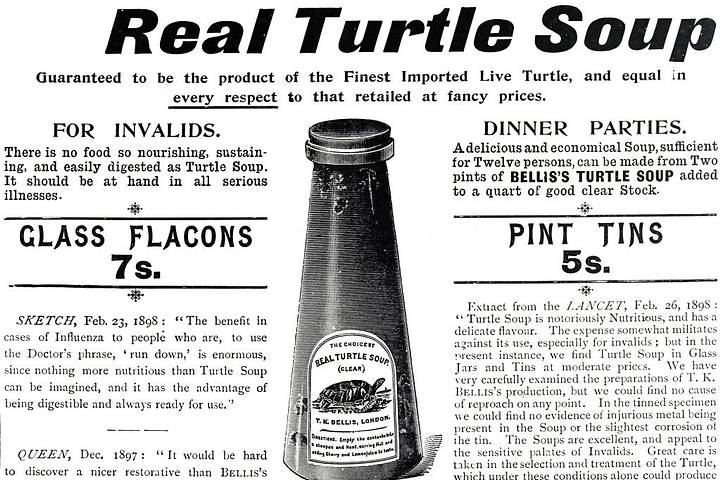
On The Gilded Age, most meals start with the clink of silver spoons against porcelain bowls. Menus from Gilded Age establishments like Delmonico’s and period etiquette magazines back up this soup starter standard. An excerpt from Godey’s Lady’s Book on how to throw a proper dinner party goes as follows: “Commence dinner with raw oysters, then a choice of one or two soups.”
The soup du jour wasn’t always lobster bisque or cream of celery, though. A luxury at the time—and a dish rarely seen today due to strict conservation protections—turtle soup was all the rage in the Gilded Age. Chefs favored the diamondback terrapin, a turtle found from Cape Cod down the Gulf Coast. Whether eating out at a fine dining establishment in the city or hosting an intimate dinner party, these turtles were boiled, chopped, and finished with a swish of sherry before landing on high-society tables in the 1880s and ’90s. That is, until overhunting almost wiped the creature out by the 1910s, sending prices soaring and pushing the dish off most menus.
Aspic
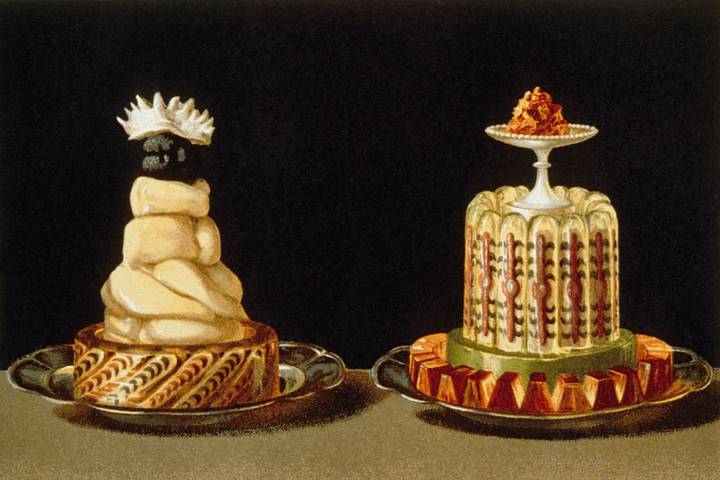
Before 1950s housewives discovered Jell-O molds, Gilded Age kitchens were constructing towering aspics that served as equal parts savory centerpiece and sign of a master chef. These edible gelatinous sculptures—which migrated from Europe and were made from boiled animal bones before powdered gelatin was popularized in the late 1800s—contained meat, fish, produce, and eggs suspended in translucent broth like an edible display case. Served midway through formal multi-course banquets, colorful aspic creations were more of an art form than the cold course they were presented as.
Charlotte Russe

You might recognize the name from the popular 2000s women’s clothing store, but unlike the store, this sweet, berry-topped cake wasn’t always made for the masses. Concocted by French chefs in the late 18th century and said to be named in honor of Queen Charlotte, Charlotte Russe cake—a tower of ladyfingers surrounding cold Bavarian cream or custard and berries—was the creme de la creme of Gilded Age dessert spreads.
While the nouveau riche enjoyed decadent riffs, sometimes even decked out with a decorative ribbon, the treat eventually evolved past wedding breakfasts and banquets of the elite. Decades later in the 20th century, the spongy sweet shifted from the white tablecloths of Delmonico’s to the streets of Brooklyn, where pushcart vendors served simplified versions out of cardboard cups to working-class New Yorkers.
Read More:
•
6 Foods Families Really Ate During the Middle Ages
•
6 Foods Families Really Ate in the Times of ‘Little House on the Prairie’
•
What Did People Eat for Breakfast in Colonial Williamsburg?
•