
ByRoger Cormier|Jun 1, 2017, 2:00 PM EDT
 Add us as a preferred source

Ten years ago, Knocked Up solidified Seth Rogen as an unconventional Hollywood leading man and helped writer/director Judd Apatow become one of the most recognizable names in comedy. The film stars Rogen as Ben Stone, an immature but well-meaning schlub who accidentally impregnates accomplished entertainment journalist Alison Scott (Katherine Heigl). The movie grossed over $215 million worldwide on a $30 million budget, and it also spawned the spin-off This is 40 (2012), focusing on Alison’s sister (Leslie Mann) and her husband (Paul Rudd). Here are 15 facts about Knocked Up, which premiered in theaters 10 years ago.
1. ANNE HATHAWAY WAS ORIGINALLY CAST AS ALISON.
Though the Knocked Up cast received plenty of praise from critics, it was originally going to look much different, as Anne Hathaway had initially agreed to play the lead role of Alison.
“Hathaway dropped out of the film because she didn’t want to allow us to use real footage of a woman giving birth to create the illusion that she is giving birth,” Judd Apatow wrote to The New York Times. According to Apatow’s wife, Leslie Mann, he was also thinking of Alison Lohman for the role, but it “didn’t work out.”
Mila Kunis auditioned for the role, too. While Apatow passed on her for Alison, she did get a consolation prize: She landed the role of Rachel Jansen in 2008’s Forgetting Sarah Marshall, which Apatow produced and Jason Segel wrote.
2. SETH ROGEN AND HIS MOVIE ROOMMATES IMPROVISED FOR APATOW.
Rogen’s character’s roommates were Jason Segel, Jay Baruchel, Martin Starr, and Jonah Hill, who all went by their real first names. Apatow had them all come over to his house to record them improvising scenes to help them all find their fictionalized versions of themselves. During one of the rehearsal days, Apatow asked how the group could be more interesting, which is when Rogen’s writing partner, Seth Goldberg, brought up the “Dirty Man Competition.”
“We’d have a bet with a guy to see how long he could go without shaving or showering or cutting his hair,” Goldberg told Apatow. Added Segel, “We thought we could chart the nine months based on Martin’s beard length.” An abandoned addition to the bit would have had Baruchel trying to maintain a Vanilla Ice-like hairstyle longer than Starr had his beard.
3. THE MORE MEMORABLE CONVERSATIONS WERE IMPROVISED.
At the first Knocked Up table read, Rogen told Baruchel about Munich, a movie he had just seen. The resulting conversation was a part of the first scene that was shot. Rogen was also responsible for Ben and Pete’s fascination with the surplus of chairs in their Las Vegas hotel room, according to Paul Rudd.
“We were getting ready to shoot the scene and Seth was like, ‘There are a lot of chairs!’ because the set designer kind of brought in a lot of spare prop chairs,” Rudd recalled. “And I was like, how do I show somebody’s on mushrooms? Let’s talk about chairs for a while!”
4. THE CONDITIONS WERE SURPRISINGLY BRUTAL.
During a week of shooting in Northridge, California, conditions were particularly brutal, with temperatures surpassing 115°F. Despite Baruchel reminding everyone to drink water, Segel didn’t listen and ended up falling ill. After Segel and Rogen shot their fight scene, they both needed oxygen.
5. JAY BARUCHEL HAD A REAL FEAR OF ROLLER COASTERS.
The roller coaster sequence was used in the final cut’s opening credits. It was shot on location at Knott’s Berry Farm, but not every member of the cast was fond of the experience.
“There’s a very funny documentary about the roller coaster sequence because Jay Baruchel didn’t want to do it because he says he gets panic attacks on roller coasters,” Apatow explained. “The documentary is about me manipulating him into doing it and you see me basically lying to him saying, ‘It’s not that bad’ and then him having a panic attack on the roller coaster. And then he won’t do it again and we have to keep doing it all day and then you see—because most people want to see this—most of our actors vomiting over and over.”
6. JOEY BUTTAFUOCO SHOWED UP UNANNOUNCED ON SET.
Joey Buttafuoco, the Long Island auto body shop owner who became infamous thanks to his affair with Amy Fisher, was working a craft services truck on set one afternoon. His surprise cameo briefly lifted the spirits of the sweltering cast and crew in Northridge.
7. IT WAS KEN JEONG’S FILM DEBUT.
Ken Jeong had appeared on some TV shows like The Office and Entourage, but the doctor/stand-up comedian made his feature film debut in Knocked Up as Dr. Kuni. He shot it during a “vacation week.” Jeong told NPR playing Dr. Kuni was his “first big break,” and that Apatow was looking for an Asian actor with medical experience.
8. BILL HADER WORKED AS A VIDEO EDITOR FOR E! BEFORE HE PLAYED A VIDEO EDITOR FOR E! IN THE MOVIE.
For Bill Hader, the movie served as a trip back to his earlier days on the E! network.
“So I was down the hall (from) where I used to work, and that was weird seeing some of the guys I used to work with,” Hader remembered. “They were like, ‘Oh, you’re Mr. Hollywood now.’”
9. RYAN SEACREST GOT INTO THE MOVIE AFTER APATOW SAW HIM GET ANNOYED AT A TARDY CELEBRITY.
Apatow and his crew visited the E! News set for research. They found an annoyed Seacrest repeatedly trying to leave, annoyed that a guest was running late. Apatow found this so funny that he decided to put it into the movie, with the late celebrity being Jessica Simpson. Not used to reading a script, Apatow instructed, “Hey, can you use a bad word and make fun of a couple people and, at the end of this whole scene, really make sure you make fun of yourself?”
10. APATOW HAD TO CONVINCE LESLIE MANN TO HIRE THEIR DAUGHTERS.

Leslie Mann was initially reluctant to let their daughters, Maude and Iris, appear in the movie. “Time passed by, and I was saying no, no. no, and then I’m like—I dunno, maybe,” Mann said. “And then it was like a week before and he said, ‘You have to tell me now.’ He would ask me when I was really busy, so I couldn’t really focus on it and then it ended up just happening. But it’s okay…”
The two girls were later featured in a much larger role in the spin-off, This is 40.
11. APATOW HAD A CONNECTION TO CIRQUE DU SOLEIL HE DIDN’T KNOW ABOUT.
Apatow had tried to incorporate Cirque du Soleil in his earlier movies, but it never survived the rewrites until Knocked Up. After having an easy shoot, the writer/director discovered that the head of PR at Cirque was Apatow’s babysitter when he was a kid.
12. THEY USED THREE DIFFERENT PREGNANCY BELLY MOLDS FOR HEIGL.
A plaster cast was made of the front side of Heigl’s torso and then sculpted into a three-month belly, a belly for six months, and finally one for nine months. They were filled with poly foam. Freckles and veins were also painted on to make it look real. Attaching and finishing the prosthetic took 45 minutes each day for the scenes when the belly was shown on screen.
It was easier to make the disgusting pool. The sides of the pool were painted green and it was filled with clean water, mixed with gallons of instant tea for density.
13. APATOW REALLY WANTED TO SHOW THE CROWNING SHOT.

Apatow explained his rationale to Collider: “So the reason that I show the crowning shot is if I don’t show it I just look like an episode of Friends, and I am trying to make you feel the pain of that experience, because it is the most intense moment in people’s lives and I had to do something that hadn’t been done before.”
His intent was to find a woman who would agree to let him film a real baby being born, but in California, “the unborn child would need a worker’s permit and I can’t get it ’til he’s born. There is a Kurt Vonnegut problem right there. So, we weren’t able to do it, so it became a prosthetic.”
14. BRIDESMAIDS GOT ITS START FROM KRISTEN WIIG’S APPEARANCE IN THE MOVIE.
Kristen Wiig played Jill, one of Heigl’s bosses at E!. It was there that she met Apatow, who later asked her to write a movie for her to star in that he would produce. When Wiig and Annie Mumolo pitched him Bridesmaids, Apatow thought it was great.
15. KATHERINE HEIGL THOUGHT THE MOVIE WAS “A LITTLE SEXIST.”
In 2008, Heigl told Vanity Fair she thought the movie was “a little sexist,” and felt it “paints the women as shrews, as humorless and uptight, and it paints the men as lovable, goofy, fun-loving guys.”
She later retracted her comments somewhat, saying she just didn’t like how her character, Alison, came across. “I just didn’t like me,” Heigl told Howard Stern. “She was kind of like, she was so judgmental and kind of uptight and controlling and all these things and I really went with it while we were doing it, and a lot of it, Judd allows everyone to be very free and improvise and whatever and afterwards, I was like, ‘Why is that where I went with this? What an a**hole she is!’ Judd and Seth were incredibly good to me on this movie, so I did not mean to sh*t on them at all.”
Did Ernest Hemingway Really Say “Write Drunk, Edit Sober”? Uncorking the Truth
Papa loved his rum, but his writing routine was strictly dry. Here’s the real, surprisingly sober story behind the famous quote.
ByNitya Rao|Jul 20, 2026, 2:57 PM EDT

Casual penman or professional wordsmith, just about everyone has heard the wacky piece of writing advice, “write drunk, edit sober.” Widely believed to be a way of life for American writer Ernest Hemingway, this famous phrase has served as a green light for wetting your whistle before the ink dries on the page for decades.
The idea is intuitive—loosen your inhibitions to let the words flow, then clean it up once the spins stop. But the backstory is anything but, especially regarding who—or even if someone—actually said it in the first place.
Hemingway’s Real-Life Writing Routine
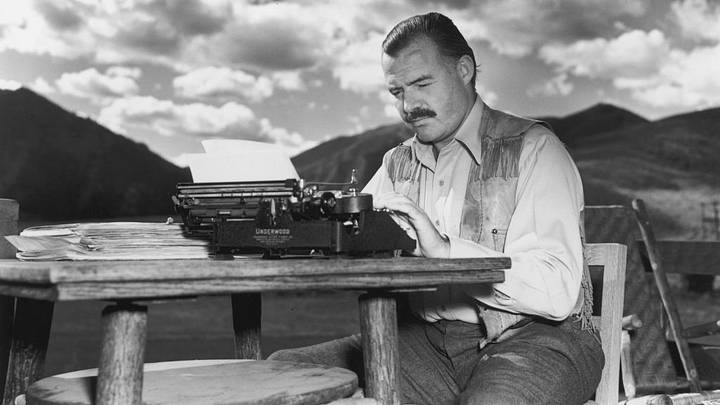
There’s no doubt that Hemingway enjoyed downing a daiquiri or two (or, according to legend, 17 in one sitting). Just as well-known as his works such as The Old Man and the Sea and The Sun Also Rises are his drinking habits, which only got worse after a series of plane and car crashes during his travels. But despite his penchant for adventure and alcohol, Papa was a staunch believer in separating the pen from the pint.
The idea that Hemingway wrote while intoxicated doesn’t hold up to the reality of his actual process. He was undeniably disciplined, waking up before dawn to write while his mind was sharp and, more importantly, sober. He saw writing as a craft that commanded all of his attention, saving his drinking for later on in the day. For Hemingway, a Papa Doble or dry martini was merely a reward once his word count for the morning was met.
His granddaughter, Mariel Hemingway, attests: “He never wrote drunk, he never wrote beyond early, early morning,” she said in an interview. If this is true, then, just how did the edgy quote get attached to his name?
The Faulkner Factor
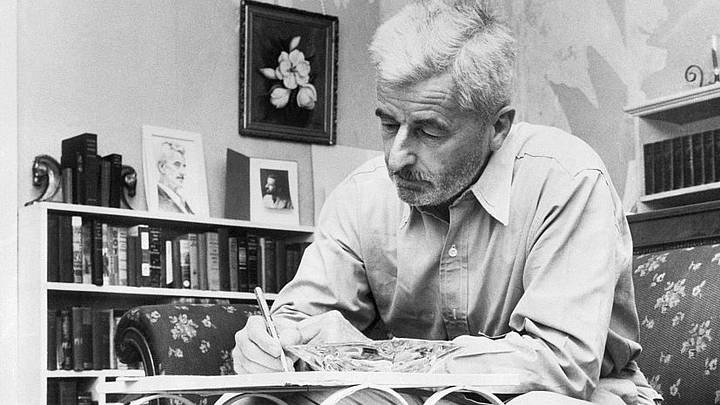
Rivalries didn’t solely reside within Hemingway’s works, but in his real life as well. Throughout his career, the Nobel Prize-winning novelist was pitted against his famous contemporary William Faulkner. The two men critiqued everything about each other, from their contrasting writing styles to their comparable heavy drinking habits.
Not only did Hemingway deny drinking and drafting, but he went so far as to deflect the blame onto his rival. In a Writer’s Digest interview published shortly after his death, Hemingway set the record straight with a sharp retort:
“You’re thinking of Faulkner. He does sometimes—and I can tell right in the middle of a page when he’s had his first one.”
Peter De Vries’ Part
Whether you’re Team Hemingway or Team Faulkner, there’s still no evidence that “write drunk, edit sober” came from either of them. The phrase’s actual roots are entirely fictional.
The quote traces back to a line of dialogue from the 1964 novel Reuben, Reuben by American author Peter De Vries. In the book, a character casually admits: “Sometimes I write drunk and revise sober, and sometimes I write sober and revise drunk.”
Stripped of its backstory, it’s not hard to see why pop culture pins these four words on the talented, albeit tipsy, literary great.
The second half of the quote lends more context to its true meaning: “But you have to have both elements in creation — the Apollonian and the Dionysian, or spontaneity and restraint, emotion and discipline.” Altogether, it’s less of a suggestion and more of an observation on how multifaceted the creative process can be.
Still, Hemingway would agree to disagree. When it came to his typewriter, he knew better than to mix business with booze. Sometimes, a saying survives not because it’s true, but because it’s simply too good a legend to let go.
Next: Join Mental Floss’s Geography Quiz Competition
More Historical Misconceptions:
•
Did Astronaut Jim Lovell Really Say “Houston, We Have a Problem?” Decoding the Real History
•
Did Marie-Antoinette Shout ”Let Them Eat Cake” During the French Revolution? (The Real Story)
•
5 Popular Quotes Commonly Misattributed to Henry David Thoreau
•
4 Popular Quotes Commonly Misattributed to Frida Kahlo
This Is the Worst Horror Movie, at Least According to Stephen King
There’s one movie that, according to the king of horror, is the worst of all time.
ByChris Wheatley|May 31, 2026, 6:00 PM EDT

When it comes to the horror genre, there can’t be too many authors more celebrated or successful than Stephen King. The master of the macabre also knows a thing or two about horror movies.
More than forty of the writer’s short stories and novels have been adapted for film or television, with King himself providing the screenplay for many. Carrie, Misery, and The Mist are just three fantastic, fear-inducing films based on King’s work.
It stands to reason, then, that when this writer picks out the horror movie he considers the worst to ever have been made, it will be a movie worth avoiding. This is the dubious accolade King bestowed on 1963’s full-length feature, Blood Feast.
The Story of Blood Feast
Blood Feast was the sixth movie made by filmmaker Herschell Gordon Lewis, a man who, over the course of his career, came to be known as “Godfather of Gore.” Horror wasn’t the only genre Lewis worked in. He also helmed a number of exploitation films—movies designed to shock, titillate, enrage, or play upon negative stereotypes.
Many of Lewis’ works fall into the sub-categories of juvenile delinquent and so-called “nudie cuties.” That latter group is pretty much self-explanatory, and Lewis’ contributions include the creatively titled Goldilocks and the Three Bares (1963) and Blast Off Girls (1967).
Within the horror genre, Lewis is sometimes viewed as something of a pioneer, thanks to his explorations of gore and unsettling onscreen visuals. Blood Feast certainly lies within this area and is credited as being among the first “splatter” movies—films with a focus on blood, blood, and more blood.
The plot of Blood Feast revolves around a series of gruesome murders in Miami. In each case, the victim has had a body part removed. Then it’s up to Detective Pete Thornton to track down the killer.
The serial killer in question, Fuad Ramses, works as a caterer by day and is a maniacal follower of the ancient Assyrian and Babylonian cult of Ishtar in his free time. His master plan is to create a special feast for unsuspecting guests that includes a stew made of human remains, which he believes will cause Ishtar to be reborn.
This is all as silly and salacious as it sounds. Actor William Kerwin (who plays Detective Thornton), a stalwart of Lewis’ movies, does about as much as he can with limited resources, as does Mal Arnold (as Fuad Ramses). Playboy Playmate Connie Mason, who stars as Suzette Fremont, Thornton’s girlfriend, adds a touch of glamour. Nothing about Blood Feast is in any way memorable apart from the gore (which is actually pretty tame by today’s standards) and a handful of lingering close-ups during Ramses’ bizarre assaults.
Nevertheless, and despite a mauling by the critics, Blood Feast grossed $4 million against its tiny $24,500 budget. Lewis even made a sequel in 2002, Blood Feast 2: All U Can Eat. The movie also received a remake in 2018.
Why Does Stephen King Hate Blood Feast?
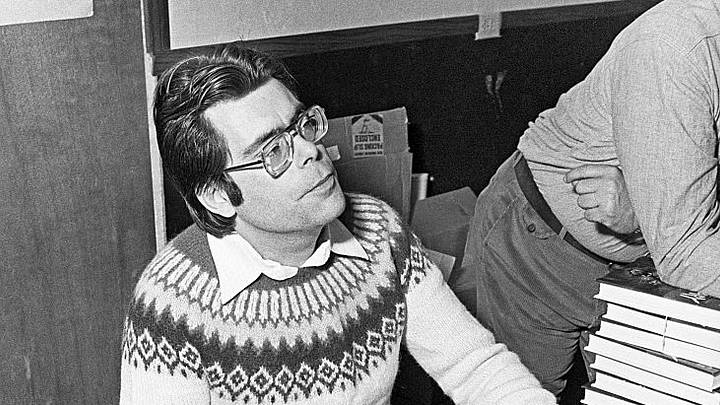
King unfortunately didn’t elaborate too much on why he dislikes the movie so much. He shared his opinions on it in a single, succinct post on X (then called Twitter). “What is the worst horror movie you ever saw? For me, BLOOD FEAST,” the writer wrote on the platform. The movie also has a 38% score on Rotten Tomatoes. King has, however, been a bit more open about the adaptations of his own work, revealing that he loves Stand By Me but dislikes the film version of The Shining.
Read More:
•
5 Stephen King Books You Can Read in a Weekend
•
Quiz: Can You Guess the Stephen King Book Based on a Synonym?
•
Stephen King’s 10 Favorite Movies of All Time Includes Only One Horror Film
•
Quiz: If You Can Name All 10 Stephen King Adaptations, You’re a True Horror Fan
•
Quiz: Can You Get a Perfect Score on This Stephen King Trivia?