The Painful Childhood Story Behind Dolly Parton’s Favorite Song


Among the thousands of songs Dolly Parton wrote during her career, one has always stood apart from the rest.
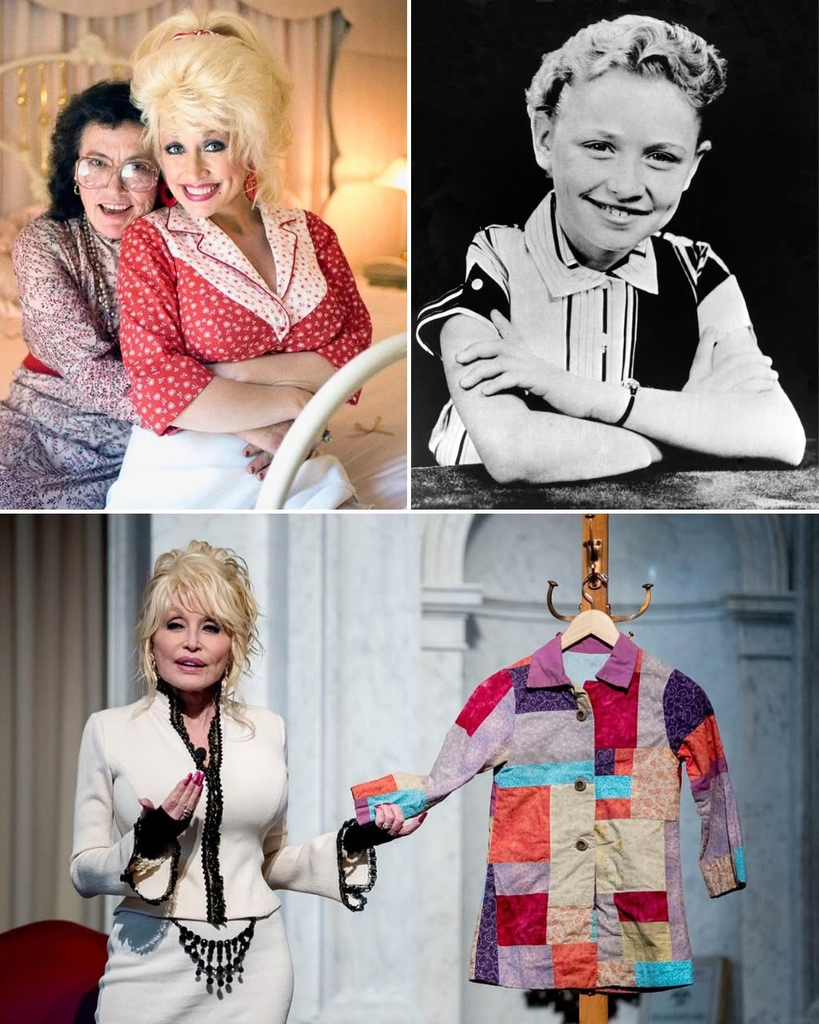
“Coat of Many Colors” is widely regarded as Parton’s favorite song of the many she wrote, and the reason has little to do with its chart success. The song takes her back to a difficult moment from childhood, when a handmade coat from her mother, Avie Lee Parton, became the target of cruel teasing at school.
For Parton, however, the story ultimately became one about something far more important than poverty or humiliation: the love of a mother and the feeling of being rich in ways money could never measure.
A coat made from scraps
Parton grew up in rural Tennessee in a large family that struggled financially. When she needed a winter coat as a child, there was no money to buy a new one.
Her mother, Avie Lee, gathered pieces of fabric and scraps available to the family and stitched them together to make a coat for her daughter. As she worked, Avie Lee told Dolly the biblical story of Joseph and his famous coat of many colors.
The story gave the homemade garment a special meaning. Rather than seeing the coat as something to be embarrassed about, young Dolly was encouraged to be proud of it.
That pride was important because the coat looked very different from the clothes worn by the other children. Dolly went to school wearing it happily, only to discover that her classmates did not see it the way she did. They laughed at her and made fun of the patched-together garment.
The experience left a much deeper mark than the simple teasing described in the song.
According to music scholar Lydia Hamessley, whose essay on the song appears in the Library of Congress’s National Recording Preservation Board materials, the children eventually took the coat from Dolly and locked her in a dark coat closet. The incident became a painful childhood memory that she carried with her for years.


Dolly didn’t fully understand how much it hurt until years later
The remarkable part of “Coat of Many Colors” is that Parton does not make the cruelty of the other children the entire point of the story.
Instead, the song centers on the love behind the coat.
Dolly remembered believing that she was fortunate because her mother had made something especially for her. The family may not have had much money, but every piece of fabric had been sewn together with care. In that sense, the coat represented a kind of wealth that could not be bought.
That distinction became the heart of the song. The children saw scraps and poverty. Dolly saw her mother’s love.
Years later, she realized that the experience had affected her more deeply than she had understood at the time. In an interview preserved by the Library of Congress, Parton explained that writing the song brought some of that buried hurt to the surface and ultimately helped ease it. She also described the song as one that had touched other people who had experienced hurt of their own.
The song was written in 1969
The childhood incident happened years before Parton put it into music.
In 1969, while traveling on a tour bus with Porter Wagoner, the memory finally became a song. Parton famously did not have a sheet of paper available when the words came to her, so she wrote them on the back of a dry-cleaning receipt from one of Wagoner’s suits.
Wagoner later had the receipt framed. It eventually became part of the collection at Dollywood’s Chasing Rainbows Museum, alongside materials connected to the song.
That detail has become part of the song’s story, but the emotional weight came from the memory itself. Parton had spent years pushing the painful experience aside before it resurfaced in a form she could finally express.
The result was a deeply personal story song about childhood, family, poverty, pride and the lasting power of a mother’s love.


From painful memory to country classic
Parton recorded “Coat of Many Colors” for her 1971 album of the same name. Released as a single in 1971, the song reached No. 4 on the Billboard country chart.
The album cover made the connection to her childhood especially clear. It featured a painted version of a childhood photograph showing Parton wearing the coat her mother had made.
The song’s message also helped explain why the story resonated far beyond Parton’s own childhood. Rather than ending with the cruelty of the classmates, it turns toward the lesson Dolly learned from her mother: material wealth is not the only measure of a person’s life.
The Country Music Hall of Fame and Museum describes the song as a straightforward account of the humiliating experience Parton endured at school, while the Library of Congress notes that its emotional power comes from the way Parton focuses on her mother’s love rather than dwelling on the bullying.
Why “Coat of Many Colors” remains so personal to Dolly
Parton has repeatedly singled out the song when discussing her favorite work.
She has explained that singing it takes her back to another time and makes her think about where she came from. In a PBS interview, she described it as one of the most tender and personal songs she had written and said its effect on listeners eventually made it even more meaningful to her.
That helps explain why the song occupies such a distinctive place in her catalog.
Songs such as “Jolene,” “9 to 5” and “I Will Always Love You” became major parts of Parton’s musical legacy, but “Coat of Many Colors” connects directly to the little girl she once was and to the mother who made her feel proud when she had every reason to feel ashamed.
Its central idea is simple: Dolly’s family had very little money, but she believed the love stitched into that coat made her rich.


A song that outlived the painful memory
More than five decades after its release, “Coat of Many Colors” remains one of Parton’s best-known and most enduring compositions.
The recording was added to the Grammy Hall of Fame in 2019, recognizing its lasting significance in American recorded music.
The song also became the basis for Parton’s 2015 television movie, Dolly Parton’s Coat of Many Colors, which dramatized her childhood and the family circumstances surrounding the story. Parton described the song as her favorite because it told a true story about a little coat her mother made for her.
At Dollywood’s Chasing Rainbows Museum, visitors can see a replica of the coat along with the handwritten lyrics and other material connected to the song. The National Recording Preservation Board’s essay on the recording specifically identifies the museum display as a replica rather than the original childhood garment.
That distinction hardly diminishes what the coat represents.
For Dolly Parton, the most important part was never the fabric itself. It was the memory of her mother taking whatever she had and turning it into something made with love.
And that is ultimately what made “Coat of Many Colors” so painful to write, and so meaningful to keep singing.
© 2026 Breaking Times • Built with GeneratePress