
16 Facts About Forrest Gump
ByGarin Pirnia|Jul 4, 2019, 8:00 PM EDT
 Add us as a preferred source

On July 6, 1994, Forrest Gump arrived in theaters and became a box office behemoth (almost $1 billion worldwide in today’s dollars). The Oscar-winning film starring Tom Hanks as a lovable lummox entered the name “Forrest Gump” into the zeitgeist, and generated the simile catchphrase, “Life is like a box of chocolates.” In honor of Forrest Gump‘s 25th birthday, here are a few things you might not have known about the Robert Zemeckis classic.
1. Forrest Gump was adapted from a Winston Groom novel, and the book’s sales skyrocketed after the movie was released.
Novelist Winston Groom published Forrest Gump the book in 1986. When it came out it sold a modest 30,000 copies in hardback, but by 1995—after the success of the film adaptation—it had sold 1.6 million copies in paperback. In 1995 Groom wrote a sequel, Gump & Co., and in 1994 The Bubba Gump Shrimp Co. Cookbook was released, with a foreword written by Groom. The cookbook existed before the restaurant chain and has no affiliation with it.
2. Tom Hanks said the movie was “a crapshoot.”
Tom Hanks spoke with USA Today for the movie’s 25th anniversary and admitted that the film really could have gone either way in terms of the audience’s acceptance of it and its main character. “It was an absolute crapshoot,” Hanks said. “It’s a really crazy, unique motion picture without a doubt. And it’s a movie in which the great moments that resonate are going to change depending on when you’re watching it.”
3. There are big differences between Forrest in the book and Forrest in the movie.
In the book, Forrest ends up going into space, smoking weed, working with Raquel Welch, confronting cannibals, running for the United States Senate (his campaign slogan is “I Got to Pee”), and playing in a chess tournament. Also, in the book Forrest is described being 6’6″ tall and weighing 240 pounds, which is why Groom wanted John Goodman to play Forrest in the movie.
4. The script planned for many more special effects to be used.
Knowing that the movie would be effects-heavy, screenwriter Eric Roth incorporated a handful of visual elements into the script that never made it to the screen. “I pushed the envelope with certain things,” Roth told Yahoo! Entertainment. I had Jenny always with angels wings, which is a little much. I had Lt. Dan always with a cloud over his head, like it’s going to rain. There were like 12 of those things. I think I just overwrote. I probably went too crazy, and Bob [Zemeckis] started taking back what he thought was too much.”
5. The movie divided critics.
The movie holds the #12 position on IMDb’s Top 250 movie chart, but many critics either loved the movie or really hated it. In his 1994 review, Roger Ebert gave Forrest Gump four stars and called it “a magical movie,” whereas Entertainment Weekly gave it a “C” rating and said it “reduced the tumult of the last few decades to a virtual-reality theme park: a baby-boomer version of Disney’s America.” In 2014, LA Weekly revisited the movie and said, “The film is so afraid to dredge up debate that when Abbie Hoffman hands Forrest the microphone at an anti-war rally, someone unplugs the speakers so we can’t hear him—fitting for a movie with nothing to say.” Ouch.
6. Billy Crystal and Robin Williams wrote some dialogue for Forrest’s anti-Vietnam rally speech.
Part of the reason for unplugging Forrest’s microphone during that anti-war rally could have been that, according to Eric Roth, Zemeckis didn’t love anything the writer was coming up with. “[Zemeckis] never liked the speech I had Forrest Gump give when he was given the microphone at that event,” Roth told Yahoo! Entertainment. “He said, ‘We need something that’s way funnier and way more important.’ Funnier I tried, and I even enlisted some comedians. I asked Billy Crystal to help me, I asked Robin [Williams], [some] other people. And nothing ever resonated. And then I tried to write some big glorious speech about patriotism and Vietnam. It was a really wonderful American speech. And that didn’t quite work. So Bob came up with the solution of he starts speaking, and they pull the plug.” (If you want to know what it was that Forrest did say during that speech, click here.)
7. There was a scene featuring Martin Luther King, Jr., which was ultimately cut for being disrespectful.
One of Forrest Gump‘s very first scenes ended up on the cutting room floor. “It was the very first day of shooting. Jenny and [Forrest] are walking along a bridge, they’re about to go to college and bemoaning the fact that she got into college but he didn’t. And they hear a bunch of noise. And they see that the Selma march is happening,” Roth explained. “It was sweet, but probably a little bit disrespect, maybe. Maybe, I don’t know. And I don’t think Tom’s accent was quite right, it was the first time he tried it. I think we felt we went a bridge too far. We wanted to honor Martin Luther King and the march and the importance of that, obviously. So I’m glad we didn’t use it.”
8. Despite grossing more than $600 million worldwide, the film failed to turn a profit by the end of 1994.
How is that possible? Well, the Los Angeles Times broke it down: Paramount had to pay $61.6 million in distribution fees to theater owners, then it had to subtract $73.5 million toward advertising and making prints of the film (today, digital is much cheaper). The budget cost Paramount $50 million. Then, Hanks and Zemeckis took about $61.8 million for their fees (they signed a back-end deal where they’d receive a share of the profits instead of a salary), and finally, theater owners took their cut of $159 million. After all was said and done, Paramount’s gross receipts were about $191 million. When the movie was released on video in 1995, it sold millions of copies.
9. Only American bands and artists are featured in the film and on the soundtrack.
With more than 30 songs on the official soundtrack and even more used in the movie—including one song from The Doors on the soundtrack and four others in the film—all of the bands featured in the film were American, and that was not a coincidence. “All the material in there is American,” Joel Sill, the film’s executive music producer, told The Los Angeles Daily News. “Bob [Zemeckis] felt strongly about it. He felt Forrest wouldn’t buy anything but American.” Though formed in England and not in the U.S., Fleetwood Mac contributed a song to the film and the 2001’s Special Collector’s Edition soundtrack. Fans liked the soundtrack so much it went on to sell 12 million copies worldwide.
10. Tom Hanks won back-to-back Best Actor Oscars—something only one other male actor has ever accomplished.
Hanks won his first Best Actor Oscar in 1994 for his performance in Philadelphia (1993), and he followed that up with another Oscar for Forrest Gump the next year. To this day, only Spencer Tracy has won two Best Actor Oscars in a row—one in 1938 for Captains Courageous and another in 1939 for Boys Town. Actress Luise Rainer was the first actor of any gender to win back-to-back Oscars (for The Great Ziegfeld in 1937 and The Good Earth in 1938), and Katharine Hepburn matched Rainer in 1968 and 1969 (for Guess Who’s Coming to Dinner and The Lion in Winter, respectively). Before Hanks won, Jason Robards was the last actor to win two consecutive Academy Awards in a row, when he won Best Supporting Actor statues for All the President’s Men in 1977 and Julia in 1978.
11. The Vietnam sequences were filmed in South Carolina.
Much of the movie was filmed in Savannah, Georgia and parts of South Carolina, including Hunting Island and Fripp Island. They were stand-ins for some of the Vietnam sequences—including where Bubba dies—because of their dense palm trees and jungle-like forests. The military film G.I. Jane was also filmed on Hunting Island.
12. Mykelti Williamson couldn’t get work after the movie came out.
“I couldn’t get a job after Forrest Gump,” Williamson told USA Today. “The industry didn’t realize that I was wearing a lip device and that I was the same guy who had appeared in 11 TV series. They thought the director had discovered some weird-looking guy and put him in front of a camera.” He eventually went on Letterman and soon after people realized he wasn’t just some “weird-looking guy.” Williamson successfully obtained roles in Con Air and Heat and had recurring roles on Justified, Chicago P.D., and Lethal Weapon.
13. The filmmakers discussed Forrest’s post-1980s fate for the film’s 20th anniversary.
In September, USA Today caught up with Forrest Gump screenwriter Eric Roth, director Robert Zemeckis, and Tom Hanks to ask them what adventures Forrest would’ve experienced later on. Roth stated that in the script for his unproduced sequel Forrest meets O.J. Simpson and Princess Diana. Hanks thinks Forrest “would have chatted up both Mark Zuckerberg and the Winklevoss twins about how it would be nice if you had a book that would show a person’s face and make a friend,” and that Forrest would’ve helped out in Hurricane Katrina. “Forrest would be the reason that the Navy SEALs find Osama bin Laden,” added Zemeckis.
14. Forrest’s investment in Apple would be worth a lot today.
In the movie, Lieutenant Dan invests Forrest’s shrimp business money in “some kind of fruit company,” which is a nod to Apple. Business Insider calculated what the investment would be worth in 1994 and 2015. Because the movie doesn’t mention just how much was invested, they used the hypothetical amount of $10,000, which would come out to $18,173 in 1994 dollars. That doesn’t seem like a lot of chocolates until you consider that if Forrest held on to that investment, today it’d be worth $2.5 million.
15. Michael Conner Humphreys, who played young Forrest, joined the Army.
Humphreys’ first of only two movie roles was depicting Forrest as a child. Instead of pursuing a Hollywood acting career, Humphreys joined the Army and did an 18-month tour of duty in Iraq. After he joined the military, he tried to conceal the fact he starred in the blockbuster film, but his platoon discovered the truth. “I definitely got a lot of it in the ear after that and the drill sergeants would really mess with me about it,” he told the Daily Mail. Another fact: Humphreys’s Alabama-inflected drawl caused Hanks to base Forrest’s voice on it. “When I was a kid I had this deep Southern accent that the director, Robert Zemeckis, quickly picked up on and Tom Hanks liked so much that he ended up copying me and building his own accent around the way I spoke,” Humphreys said.
16. Chris Pratt was discovered while working as a waiter at Bubba Gump Shrimp Company.
Long before Pratt was “Pratt-ing” dinosaurs in Jurassic World, he was a waiter at a Bubba Gump restaurant in Maui. At the age of 19, Pratt was living in a van and waiting tables. “I don’t know if you’ve ever had a dining experience at the Bubba Gump Shrimp Co., but they love a gregarious waiter who will get in your face and sing you birthday songs and do trivia,” Pratt told Entertainment Weekly. One day he waited on actress Rae Dawn Chong, who subsequently offered him a role in her short film, the never-released Cursed Part 3. “I was like, ‘You’re in the movies, right? I always wanted to be in the movies,”’ Pratt said to Chong. “She said, ‘You’re cute. Do you act?’ I was like, f–k it, ‘Goddamn right I act! Put me in a movie!” Bubba Gump opened in 1996 and now has locations all over the world, including in the Philippines and Malaysia. Ironically, there isn’t one in Alabama, where Forrest grew up.
The Original Name for ‘Sesame Street’ Wasn’t Nearly as Catchy
The beloved show’s first title was the name of an actual street in the East Village.
BySabrina Reed|Nov 10, 2026, 12:00 PM EST
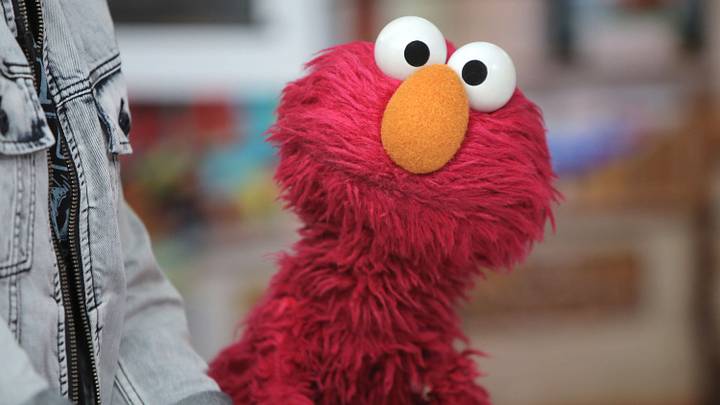
Can you imagine a world where Sesame Street is called 123 Avenue B?
Before the beloved children’s educational program was launched on November 10, 1969, that was the name co-creators Joan Ganz Cooney and Lloyd Morrisett were weighing with their team.
While the original show title doesn’t quite roll off the tongue, it is fun to say. Most importantly, it connected the series to New York City, the diverse populace Sesame Street would draw inspiration from in its design, character representation, and understanding of the world around it. But 123 Avenue B was deemed too on the nose because it’s an actual street in Alphabet City located in the East Village near the Lower East Side.
Naming the Street: From Alphabet City to Sesame
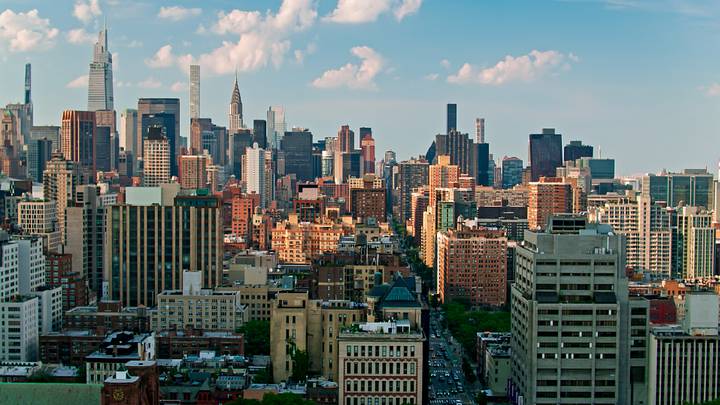
For a series sponsored by letters and numbers, Alphabet City would have been the perfect place to set the program. However, in choosing to name the show after a fictional street, a new idea took shape.
Sesame Street gets its name from “open sesame,” the phrase popularized by Antoine Galland’s translation of “Ali Baba and the Forty Thieves” from One Thousand and One Nights. In the story, the thieves use the phrase to open the secret entrance to their treasure trove. According to Sesame Workshop, the word ‘sesame’ is meant to invoke “a street where neat stuff happens,” and that’s exactly what the show has come to embody.
A Street Where Learning Happens
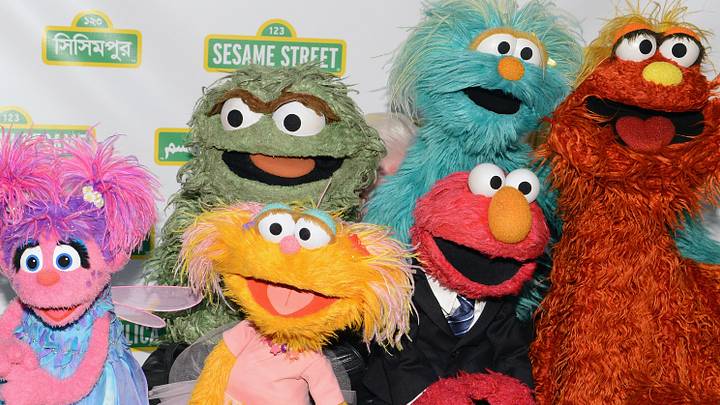
60 years ago, in 1966, the series was simply a thought based on the question of whether a television program could educate children. Cooney worked for the local PBS station, WNET THIRTEEN, as a documentarian. With the support of Morrisett, who was vice president of the Carnegie Corporation of New York, she conducted a study that spanned three months—The Potential Uses of Television in Preschool Education. Cooney interviewed early learning experts as well as children’s television producers and filmmakers to answer this question, and it became the basis for Sesame Street and the Children’s Television Workshop (now known as the Sesame Workshop).
The series is the first preschool program to blend education and entertainment to teach children basic skills through play, pretend, and storytelling. Young viewers learn and practice their alphabet and counting. They also expand their reasoning ability and strengthen their literacy through the show. Sesame Street incorporates topics on health, science, art, music, and dance. It helps parents develop their child’s social skills and healthily navigate their emotions as well.
Since 1969, the show has broadcast daily and remained committed to taking a multicultural approach to discussing and teaching about the diverse world its characters and audience live in. More than 300 PBS stations carry the program, and it’s available on Netflix and YouTube. The series has been watched by hundreds of millions of children across the world in more than 140 countries. Per Sesame Workshop, “Indigenous co-productions reflecting local languages, customs, and educational needs have since been produced for audiences in the Arab world, Israel, India, Indonesia, Bosnia, Portugal, Turkey, Germany, France, Poland, Norway, Sweden, Holland, Russia, China, South Africa, Egypt, the Philippines, Canada, Spain, and Latin America.”
Finding Sesame Street in the Real World
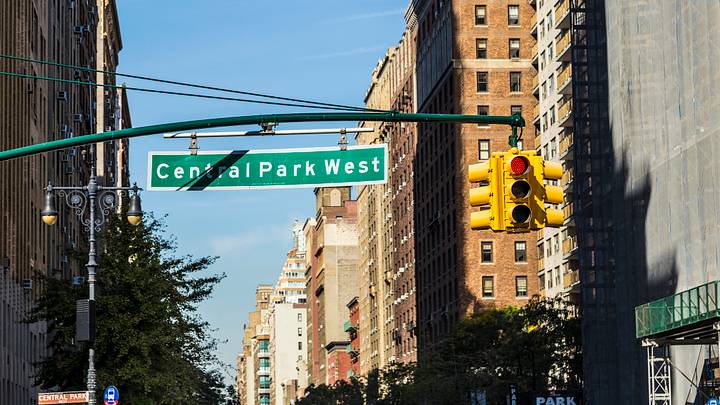
Though Sesame Street is fictional, and Alphabet City didn’t become its home, it is actually possible to visit. The show itself is filmed in Astoria, Queens, at Kaufman Astoria Studios. But if you want to take a picture beneath its sign in New York City, you’ll need to go to the block of West 63rd Street between Central Park West and Broadway in Manhattan on the Upper West Side. That’s where the official “Sesame Street” is located, right next to Sesame Workshop’s headquarters.
In 2019, Mayor Bill de Blasio bestowed the address on the series for its 50th anniversary. It’s possible to reach Sesame Street by subway, just like you can in the program. So, if anyone asks, “Can you tell me how to get to Sesame Street?” you can say yes and show them the way.
Read More:
•
Why ‘Sesame Street’s Oscar the Grouch Was Originally a Different Color
•
50 Fun Facts About ‘Sesame Street’
•
10 Bizarre Sesame Street Fan Theories
9 Slang Words From the 1980s We Still Use Today
The decade of MTV, shoulder pads, and big hair gave us some of our favorite and most expressive words.
ByLogan DeLoye|Nov 9, 2026, 6:00 PM EST
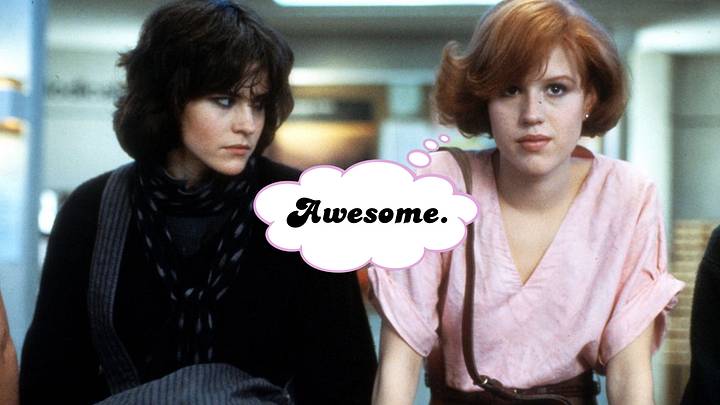
The ‘80s were tubular; each year made a bold, colorful statement in music, movies, style, and slang.
It’s hard to believe the decade of cult-classic blockbusters, big hair, MTV, and shoulder pads began almost 47 years ago, though some trends have made a comeback in the 2010s and 2020s, like high-waisted jeans and neon-colored clothing.
The ’80s are remembered for next-generation technology: the Sony Walkman, VHS tapes, boomboxes (cue John Cusack), CDs, camcorders, and the Nintendo Entertainment System.
Hair was always teased, and hairspray was a non-negotiable for men and women. Music videos took over pop culture; Michael Jackson had us dancing with Billie Jean, and Madonna invited material girls to live in a material world.
Movies that remain beloved, including Ferris Bueller’s Day Off, E.T. the Extra-Terrestrial, Back to the Future, Top Gun, The Breakfast Club (or really anything with Molly Ringwald), Ghostbusters, Raiders of the Lost Ark, and Return of the Jedi, lit up theater marquees in the ’80s.
Beyond fashion, media, and tech, the ’80s also gave us several slang terms. Some faded as soon as they arrived, while others stuck around.
According to Your Dictionary, here are nine ‘80s slang words we still use today.
CRUSING
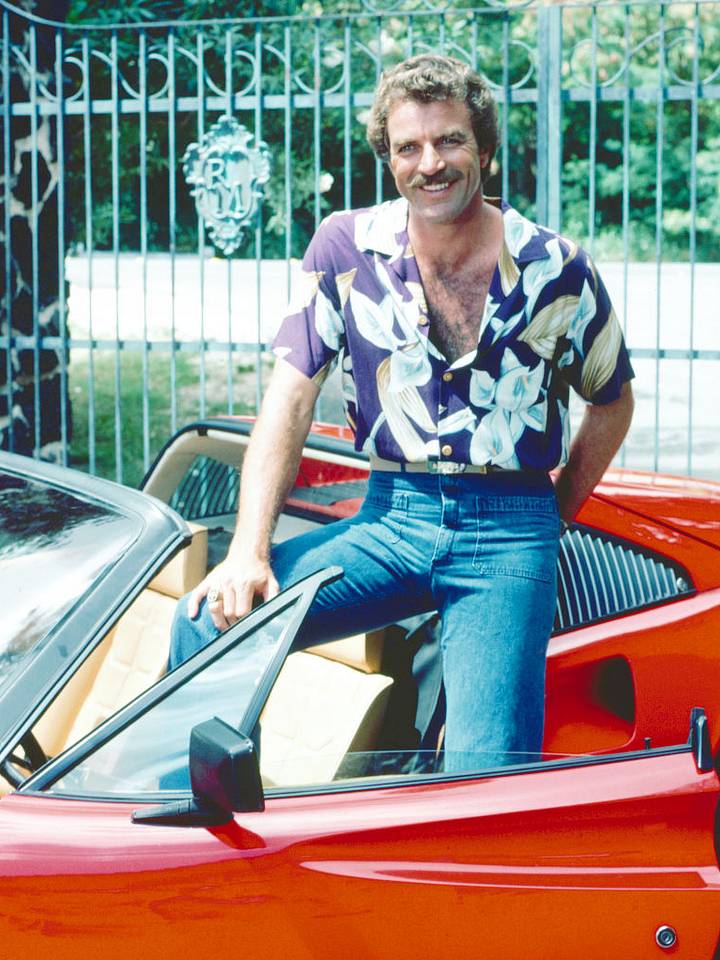
Definition: “To travel without destination or purpose.”
In a sentence: He asked if I wanted to take a drive, and we went cruising all night.
“Cruising” in the 1980s meant enjoying a long drive with nowhere specific to go. If someone invited you to “cruise” or said they were out “cruising,” you knew they were driving around aimlessly.
In 2026, “cruising” still describes a leisurely drive without a destination, just for fun.
HARSH
Definition: “Unpleasant and difficult to accept or experience, physically discomforting, overly intense.”
In a sentence: The bar was filled with smoke and the harsh smell of cigarettes.
The word “harsh” has always sounded, well, unpleasant, so it’s no surprise its meaning took on the same tone. Since the ’80s, people have used harsh to describe something uncomfortable or intense.
In 2026, we use it the same way, whether we’re talking about someone’s actions, a tough experience, or something extremely unappealing, like a bright light shining right in your face.
AWESOME
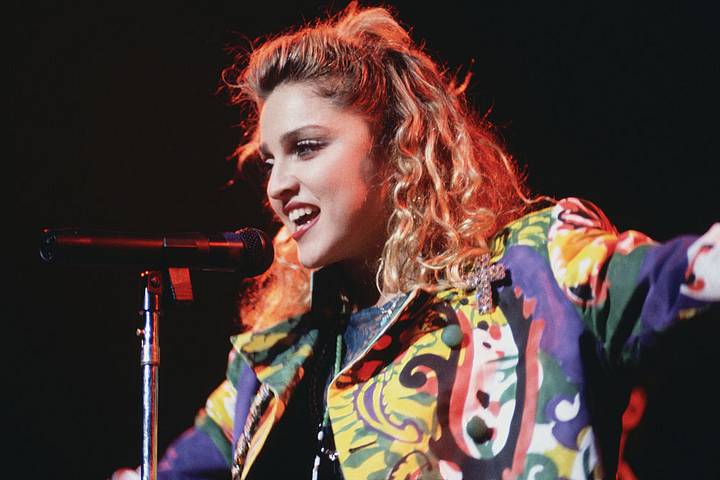
Definition: “Terrific, extraordinary.”
In a sentence: I listen to that song on repeat; it’s awesome!
Awesome is one of those words that has never lost relevance. The ’80s popularized it as the go-to way to describe something amazing or exceedingly cool.
In 2026, people of all ages still use “awesome” to express excitement about something (or someone) extraordinary.
FOR SURE
Definition: “Without doubt or question, certainly.”
In a sentence: He was the nicest person I ever met, for sure.
The slang “for sure” is another classic that has stuck around, and hopefully always will. In both the 1980s and 2026, it’s an easy way to say “of course,” often to reassure someone or dispel uncertainty. Sometimes a casual “for sure” is just what someone needs to hear in an anxious moment.
OUTRAGEOUS
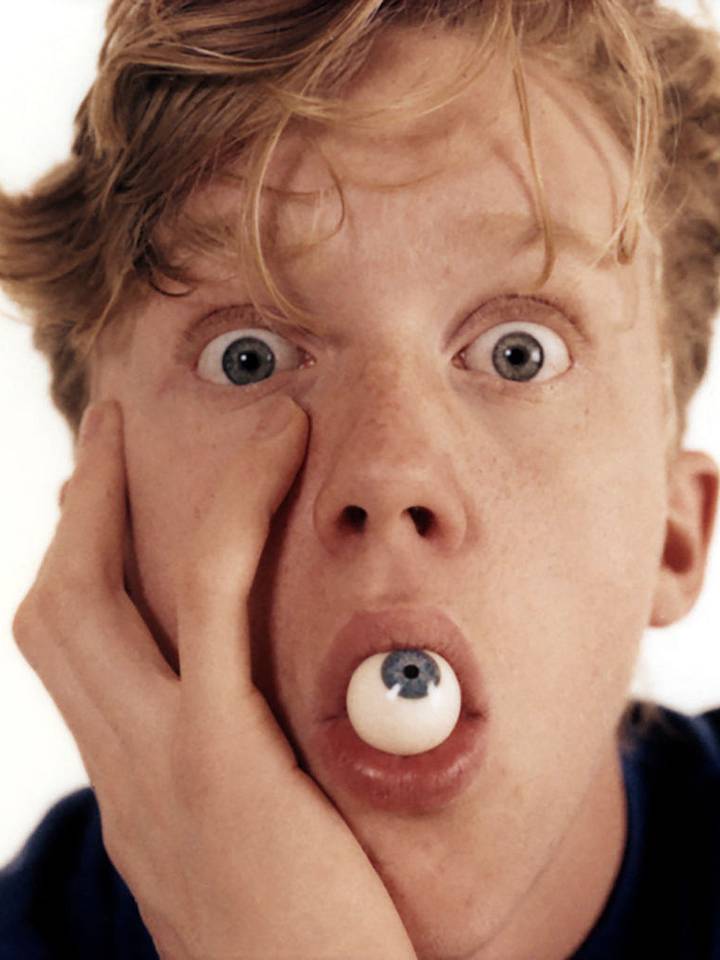
Definition: “Not conventional or matter-of-fact, exceeding the limits of what is usual.”
In a sentence: People wore outrageous costumes to the concert, and don’t even get me started on the band.
Outrageous is a fun, expressive word that spices up any conversation. In the ’80s, it described something so bold or abnormal that it was actually cool. In 2026, we use it less as a compliment and more to denote something shocking, but the basic meaning remains.
BURN OUT
Definition: “Exhaustion of physical or emotional strength or motivation, usually as a result of prolonged stress or frustration.”
In a sentence: She worked so hard that she was afraid she would burn out before the Q4 meeting.
“Burn out” is so common today that we forget people used it to describe the same feeling in the ’80s. Someone who was burnt out was totally exhausted and just over it.
In 2026, we use “burn out” to describe how we feel after a long workday, or maybe a trying year that’s absolutely depleted our motivation. Anything that leaves someone feeling overly drained (work, a conversation, or a hobby) is an example of burnout.
WHOA
Definition: “Pause to consider or reconsider, often used to express a strong reaction.”
In a sentence: Whoa, that is one fun pair of sunglasses!
Whoa, like many words on this list, has definitions that couldn’t be more different. Centuries ago, people riding horseback or steering carriages used “whoa” to slow or stop the horses.
In the 1980s, “whoa” became an exclamation of surprise or intense reaction, both pleasant and unpleasant. In 2026, we say “whoa” to express excitement, surprise, or concern, depending on the instance.
CHILL
Definition: “Having a laid-back style or easy demeanor; having a relaxed style or manner.”
In a sentence: He wanted to go to the mall, but I had a long day and just wanted to chill.
“Chill” has lots of meanings, both formal and informal. In the ’80s, it broke away from its “cold” definition and became slang for someone or something calm, laid-back, or relaxing.
In 2026, we still use “chill” to describe someone who’s low-key, or to relay when we want to unwind.
EXCELLENT
Definition: “Very good of its kind: eminently good.”
In a sentence: She had an excellent taste in music, especially when it came to R&B.
According to Merriam-Webster, “excellent” may not have been invented in the ’80s, but the decade surely made it a household word. Back then, people used “excellent” to describe something very good.
In 2026, we use “excellent” when “good” or “great” doesn’t fully explain how we feel.
Read More:
•
20 Everyday Things From the ’80s and ’90s That Are Now Worth Money
•
80 Totally Awesome Facts About the ’80s
•
7 Misconceptions About the ‘80s