
Not everyone can handle a severed ear.
ByJake Rossen|Jan 26, 2024, 12:40 PM EST
 Add us as a preferred source
The Lumière brothers were said to have caused quite a stir when their 50-second short film, The Arrival of a Train at La Ciotat, premiered in Paris in 1896. Audiences, who were unaccustomed to the sensory experience of moving footage, experienced a jolt of panic when an oncoming train seemed to be speeding directly toward them.
Over the years, the story has morphed into people fleeing from the theater entirely, though that’s not likely. Since the Lumières, however, many filmmakers have been successful in driving moviegoers out of their seats. The latest additions: Presence, a Steven Soderbergh film about a ghostly apparition that’s apparently too tense for some filmgoers. A Variety journalist observed at least two quick exits at the 2024 Sundance Film Festival, including one who said, “I cannot take this stress so late at night.”
Another Sundance audience displeaser: Sasquatch Sunset, which apparently depicts the monster of folklore moving his bowels. Twelve members of the press exited within the first half-hour.
Here are eight other films that couldn’t keep audiences in the dark for long.
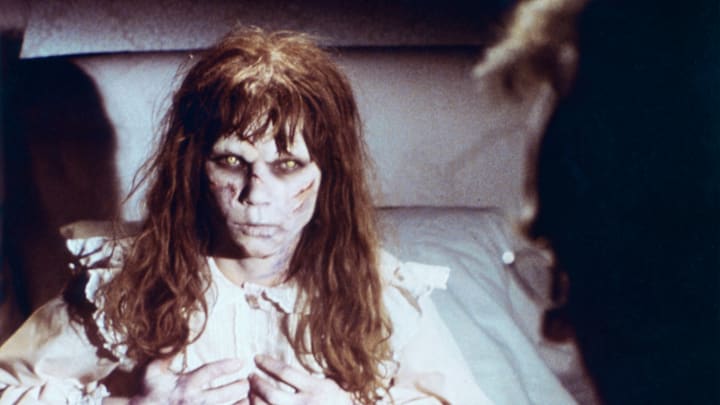
1. The Exorcist (1973)
Lines wrapped around the block for the film adaptation of William Peter Blatty’s bestselling novel about a young girl possessed by a demon. They quickly realized it was the cinematic equivalent of a hot pepper: something to be endured rather than enjoyed. News footage portrayed stricken filmgoers who had fled screening rooms out of sheer terror; one fainted in the lobby. “I just found it really horrible and had to come out,” said one audience member. “I couldn’t take it anymore.” By the time the film premiered in London, ambulances were parked outside.
2. The Blair Witch Project (1998)
Launching the found-footage genre with an economical story about filmmakers threatened by an unseen supernatural force, The Blair Witch Project was a sizable box office hit and remains one of the most profitable films ever ($22,000 budget, $240 million gross). But the documentary-style format, with actors jogging or falling over with a camera in hand, prompted waves of people getting motion sickness in aisles, lobbies, and bathrooms. Atlanta-area theaters were reported on puke patrol for most of opening weekend. “Someone threw up in the men’s restroom, the women’s restroom, and in the hallway,” said a theater manager. “It’s not pleasant to clean up.” In Cambridge, Massachusetts, another theater manager made announcements before screenings to please vomit outside of the screening room.
By the time Cloverfield‘s (2008) handheld photography was churning stomachs a decade later, theaters wisely posted signs warning of a “roller coaster” effect. Instead of barf bags, theaters handed out refunds.
3. 127 Hours (2010)
From the get-what-you-pay-for department: Audiences that streamed in for director Danny Boyle’s account of hiker Aron Ralston, who got himself wedged in a cave and had to amputate his own arm with a pocketknife, found themselves bearing witness to James Franco wedged in a cave and amputating his own arm with a pocketknife. Many, many people fainted; some vomited; one person fainted, was hauled away in an ambulance, and returned to the theater to declare the film “excellent.”
4. Reservoir Dogs (1992)
It’s not necessarily shocking that the unflinching violence of a Quentin Tarantino movie would prompt audience evacuations: 1994’s Pulp Fiction lost patrons when Uma Thurman got a shot of adrenaline in her heart. But Reservoir Dogs is notable for the people it pulled from their seats. When Michael Madsen’s character began an unsolicited ear amputation of a hostage during an industry screening, the late Wes Craven (creator of The Last House on the Left and A Nightmare on Elm Street) reportedly fled the theater.
5. Freaks (1932)
Tod Browning’s infamous portrayal of a circus sideshow with revenge in mind was a harrowing experience for filmgoers. Not strictly a horror film, its large cast of “actual” circus performers was unsettling. Freaks suffered mass walkouts upon release, as viewers were unnerved by missing limbs; MGM insisted on editing the film after a woman claimed she was so aggrieved during a screening that she suffered a miscarriage.
6. Irréversible (2002)
Panned for its depiction of a brutal assault, this revenge film from director Gaspar Noé prompted viewers to head for the exits—but not necessarily because of what was shown onscreen. Noé admitted to using a 27 hertz frequency of bass that can’t be picked up by the human ear during the movie’s first 30 minutes. Known as infrasound, it’s been known to induce panic and anxiety in a manner similar to vibrations created by earthquakes. Paranormal Activity (2007) used a similar technique.
7. The Lion King (1994)
In the proud Disney tradition of maiming parents came The Lion King, where tiny Simba learns to fend for himself after his father is trampled during a stampede. The animated tragedy proved so intense for younger viewers—Disney’s key demographic—that they had to be temporarily relocated to the lobby until they calmed down.
8. The Walk (2015)
In the 2008 documentary Man on Wire, modern audiences met Philippe Petit, a rope walker who caused a stir in 1974 New York for traipsing between the Twin Towers. In 2015, director Robert Zemeckis (Back to the Future) dramatized the feat with The Walk, starring Joseph Gordon-Levitt as Petit. Unlike the documentary, which relied mainly on still photos and reenactments, Zemeckis used digital artistry to put the viewer on the rope with Petit—in IMAX, no less. The result was so dizzying that audience members prone to vertigo suffered anxiety and even vomiting.
A version of this article was originally published in 2015; it has been updated for 2024.
Related Tags
9 Slang Words From the 1980s We Still Use Today
The decade of MTV, shoulder pads, and big hair gave us some of our favorite and most expressive words.
ByLogan DeLoye|Nov 9, 2026, 6:00 PM EST
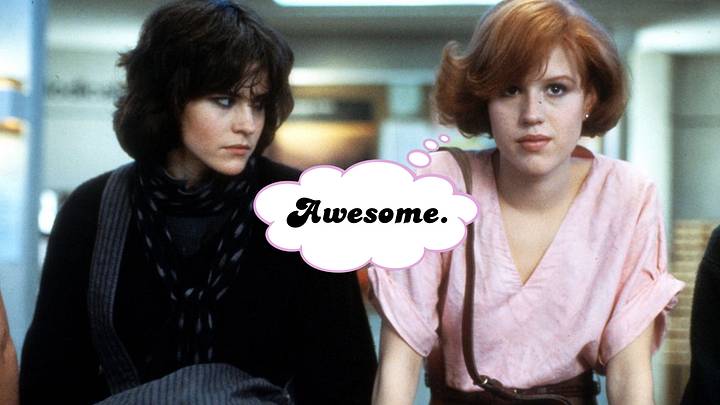
The ‘80s were tubular; each year made a bold, colorful statement in music, movies, style, and slang.
It’s hard to believe the decade of cult-classic blockbusters, big hair, MTV, and shoulder pads began almost 47 years ago, though some trends have made a comeback in the 2010s and 2020s, like high-waisted jeans and neon-colored clothing.
The ’80s are remembered for next-generation technology: the Sony Walkman, VHS tapes, boomboxes (cue John Cusack), CDs, camcorders, and the Nintendo Entertainment System.
Hair was always teased, and hairspray was a non-negotiable for men and women. Music videos took over pop culture; Michael Jackson had us dancing with Billie Jean, and Madonna invited material girls to live in a material world.
Movies that remain beloved, including Ferris Bueller’s Day Off, E.T. the Extra-Terrestrial, Back to the Future, Top Gun, The Breakfast Club (or really anything with Molly Ringwald), Ghostbusters, Raiders of the Lost Ark, and Return of the Jedi, lit up theater marquees in the ’80s.
Beyond fashion, media, and tech, the ’80s also gave us several slang terms. Some faded as soon as they arrived, while others stuck around.
According to Your Dictionary, here are nine ‘80s slang words we still use today.
CRUSING
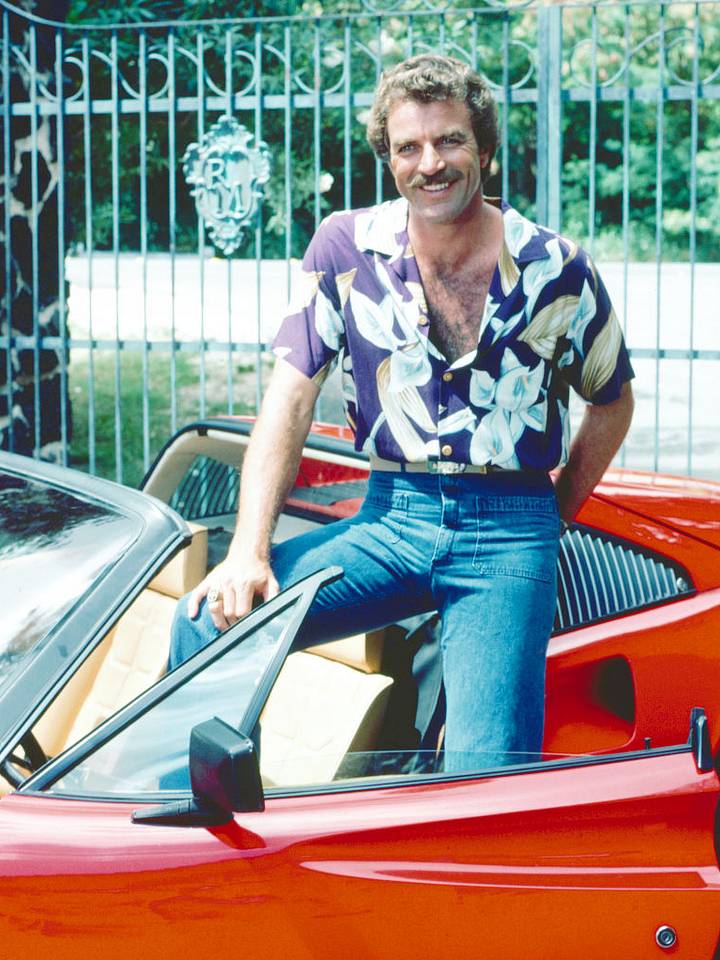
Definition: “To travel without destination or purpose.”
In a sentence: He asked if I wanted to take a drive, and we went cruising all night.
“Cruising” in the 1980s meant enjoying a long drive with nowhere specific to go. If someone invited you to “cruise” or said they were out “cruising,” you knew they were driving around aimlessly.
In 2026, “cruising” still describes a leisurely drive without a destination, just for fun.
HARSH
Definition: “Unpleasant and difficult to accept or experience, physically discomforting, overly intense.”
In a sentence: The bar was filled with smoke and the harsh smell of cigarettes.
The word “harsh” has always sounded, well, unpleasant, so it’s no surprise its meaning took on the same tone. Since the ’80s, people have used harsh to describe something uncomfortable or intense.
In 2026, we use it the same way, whether we’re talking about someone’s actions, a tough experience, or something extremely unappealing, like a bright light shining right in your face.
AWESOME
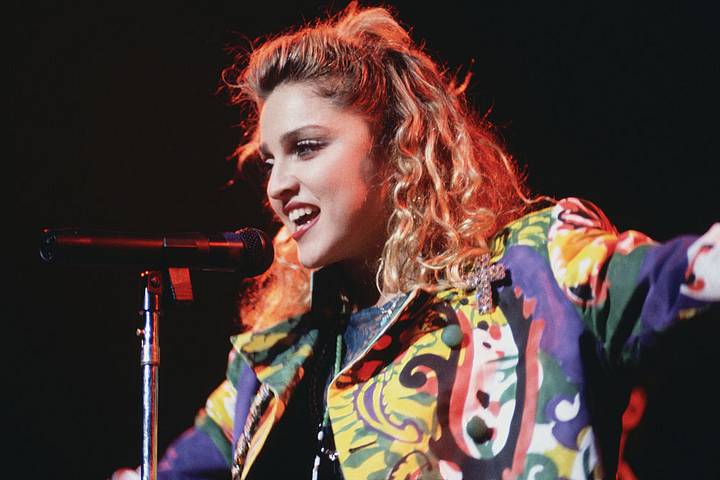
Definition: “Terrific, extraordinary.”
In a sentence: I listen to that song on repeat; it’s awesome!
Awesome is one of those words that has never lost relevance. The ’80s popularized it as the go-to way to describe something amazing or exceedingly cool.
In 2026, people of all ages still use “awesome” to express excitement about something (or someone) extraordinary.
FOR SURE
Definition: “Without doubt or question, certainly.”
In a sentence: He was the nicest person I ever met, for sure.
The slang “for sure” is another classic that has stuck around, and hopefully always will. In both the 1980s and 2026, it’s an easy way to say “of course,” often to reassure someone or dispel uncertainty. Sometimes a casual “for sure” is just what someone needs to hear in an anxious moment.
OUTRAGEOUS
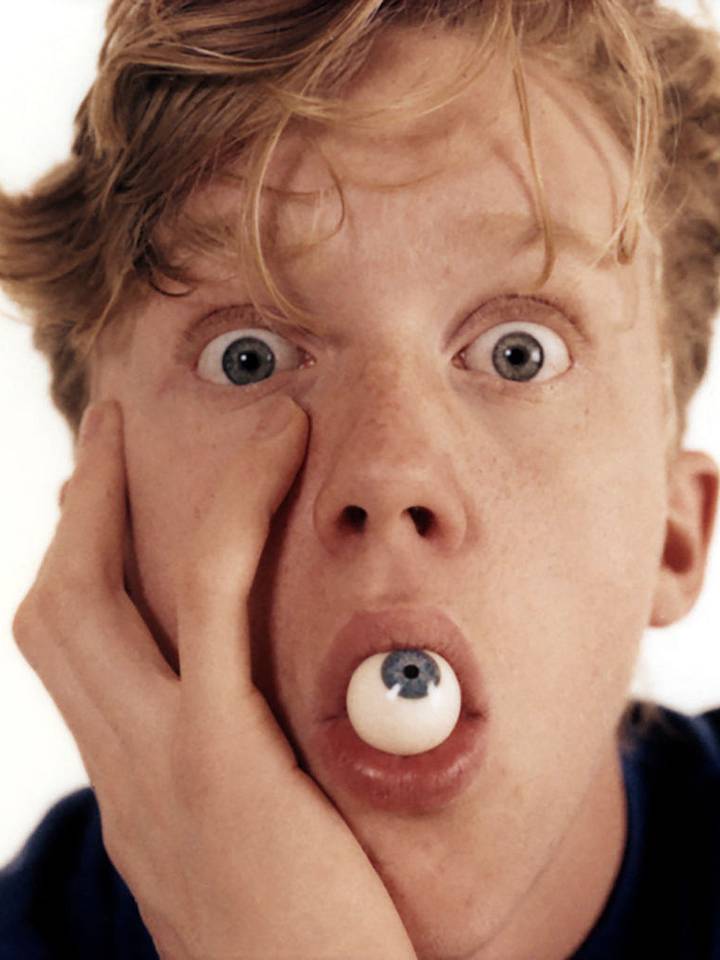
Definition: “Not conventional or matter-of-fact, exceeding the limits of what is usual.”
In a sentence: People wore outrageous costumes to the concert, and don’t even get me started on the band.
Outrageous is a fun, expressive word that spices up any conversation. In the ’80s, it described something so bold or abnormal that it was actually cool. In 2026, we use it less as a compliment and more to denote something shocking, but the basic meaning remains.
BURN OUT
Definition: “Exhaustion of physical or emotional strength or motivation, usually as a result of prolonged stress or frustration.”
In a sentence: She worked so hard that she was afraid she would burn out before the Q4 meeting.
“Burn out” is so common today that we forget people used it to describe the same feeling in the ’80s. Someone who was burnt out was totally exhausted and just over it.
In 2026, we use “burn out” to describe how we feel after a long workday, or maybe a trying year that’s absolutely depleted our motivation. Anything that leaves someone feeling overly drained (work, a conversation, or a hobby) is an example of burnout.
WHOA
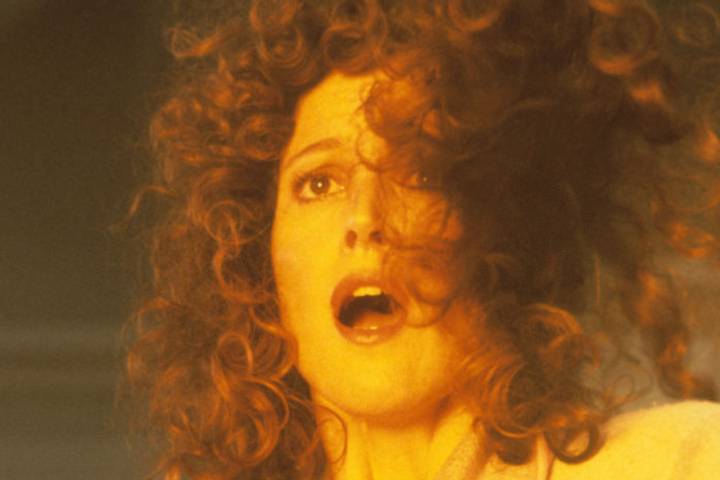
Definition: “Pause to consider or reconsider, often used to express a strong reaction.”
In a sentence: Whoa, that is one fun pair of sunglasses!
Whoa, like many words on this list, has definitions that couldn’t be more different. Centuries ago, people riding horseback or steering carriages used “whoa” to slow or stop the horses.
In the 1980s, “whoa” became an exclamation of surprise or intense reaction, both pleasant and unpleasant. In 2026, we say “whoa” to express excitement, surprise, or concern, depending on the instance.
CHILL
Definition: “Having a laid-back style or easy demeanor; having a relaxed style or manner.”
In a sentence: He wanted to go to the mall, but I had a long day and just wanted to chill.
“Chill” has lots of meanings, both formal and informal. In the ’80s, it broke away from its “cold” definition and became slang for someone or something calm, laid-back, or relaxing.
In 2026, we still use “chill” to describe someone who’s low-key, or to relay when we want to unwind.
EXCELLENT
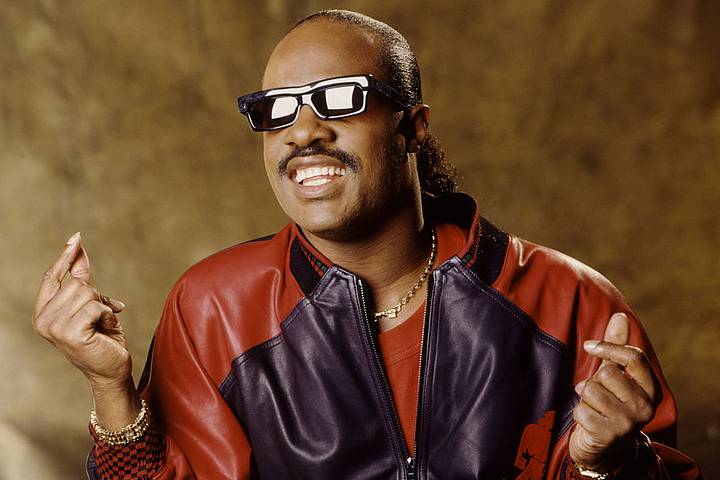
Definition: “Very good of its kind: eminently good.”
In a sentence: She had an excellent taste in music, especially when it came to R&B.
According to Merriam-Webster, “excellent” may not have been invented in the ’80s, but the decade surely made it a household word. Back then, people used “excellent” to describe something very good.
In 2026, we use “excellent” when “good” or “great” doesn’t fully explain how we feel.
Read More:
•
20 Everyday Things From the ’80s and ’90s That Are Now Worth Money
•
80 Totally Awesome Facts About the ’80s
•
7 Misconceptions About the ‘80s
Did Ernest Hemingway Really Say “Write Drunk, Edit Sober”? Uncorking the Truth
Papa loved his rum, but his writing routine was strictly dry. Here’s the real, surprisingly sober story behind the famous quote.
ByNitya Rao|Jul 20, 2026, 2:57 PM EDT

Casual penman or professional wordsmith, just about everyone has heard the wacky piece of writing advice, “write drunk, edit sober.” Widely believed to be a way of life for American writer Ernest Hemingway, this famous phrase has served as a green light for wetting your whistle before the ink dries on the page for decades.
The idea is intuitive—loosen your inhibitions to let the words flow, then clean it up once the spins stop. But the backstory is anything but, especially regarding who—or even if someone—actually said it in the first place.
Hemingway’s Real-Life Writing Routine
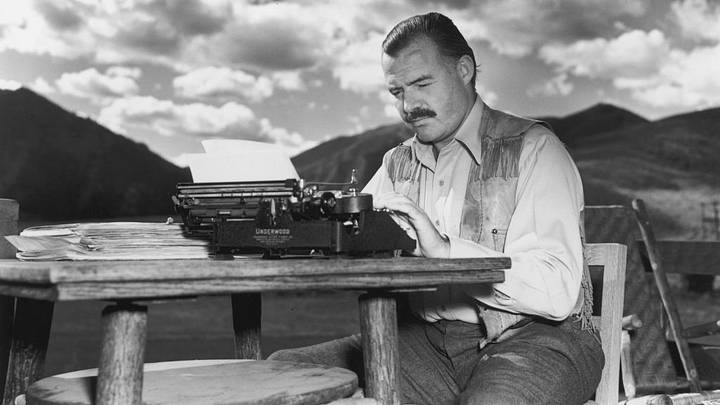
There’s no doubt that Hemingway enjoyed downing a daiquiri or two (or, according to legend, 17 in one sitting). Just as well-known as his works such as The Old Man and the Sea and The Sun Also Rises are his drinking habits, which only got worse after a series of plane and car crashes during his travels. But despite his penchant for adventure and alcohol, Papa was a staunch believer in separating the pen from the pint.
The idea that Hemingway wrote while intoxicated doesn’t hold up to the reality of his actual process. He was undeniably disciplined, waking up before dawn to write while his mind was sharp and, more importantly, sober. He saw writing as a craft that commanded all of his attention, saving his drinking for later on in the day. For Hemingway, a Papa Doble or dry martini was merely a reward once his word count for the morning was met.
His granddaughter, Mariel Hemingway, attests: “He never wrote drunk, he never wrote beyond early, early morning,” she said in an interview. If this is true, then, just how did the edgy quote get attached to his name?
The Faulkner Factor

Rivalries didn’t solely reside within Hemingway’s works, but in his real life as well. Throughout his career, the Nobel Prize-winning novelist was pitted against his famous contemporary William Faulkner. The two men critiqued everything about each other, from their contrasting writing styles to their comparable heavy drinking habits.
Not only did Hemingway deny drinking and drafting, but he went so far as to deflect the blame onto his rival. In a Writer’s Digest interview published shortly after his death, Hemingway set the record straight with a sharp retort:
“You’re thinking of Faulkner. He does sometimes—and I can tell right in the middle of a page when he’s had his first one.”
Peter De Vries’ Part
Whether you’re Team Hemingway or Team Faulkner, there’s still no evidence that “write drunk, edit sober” came from either of them. The phrase’s actual roots are entirely fictional.
The quote traces back to a line of dialogue from the 1964 novel Reuben, Reuben by American author Peter De Vries. In the book, a character casually admits: “Sometimes I write drunk and revise sober, and sometimes I write sober and revise drunk.”
Stripped of its backstory, it’s not hard to see why pop culture pins these four words on the talented, albeit tipsy, literary great.
The second half of the quote lends more context to its true meaning: “But you have to have both elements in creation — the Apollonian and the Dionysian, or spontaneity and restraint, emotion and discipline.” Altogether, it’s less of a suggestion and more of an observation on how multifaceted the creative process can be.
Still, Hemingway would agree to disagree. When it came to his typewriter, he knew better than to mix business with booze. Sometimes, a saying survives not because it’s true, but because it’s simply too good a legend to let go.
Next: Join Mental Floss’s Geography Quiz Competition
More Historical Misconceptions:
•
Did Astronaut Jim Lovell Really Say “Houston, We Have a Problem?” Decoding the Real History
•
Did Marie-Antoinette Shout ”Let Them Eat Cake” During the French Revolution? (The Real Story)
•
5 Popular Quotes Commonly Misattributed to Henry David Thoreau
•
4 Popular Quotes Commonly Misattributed to Frida Kahlo