
ByRudie Obias|Sep 1, 2017, 8:00 AM EDT
 Add us as a preferred source
It might be hard to imagine a world where Taylor Swift’s “Shake It Off” wasn’t on your gym playlist, but if the country star-turned-pop princess’ label had gotten their way, the song would never have made it to the airwaves. Ever. Swift is hardly alone in the near-miss hits department. From Marvin Gaye to Metallica, here are 10 hit songs that almost never saw the light of day.
1. “KISS” // PRINCE
Prince originally wrote the song “Kiss” for the Minneapolis funk band Mazarati. After he and the band collaborated on the song, Prince ended up releasing it as the lead single from his 1986 album Parade. (“It’s too good for you guys,” The Purple One told Mazarati’s producer—and Prince’s engineer—David Z. “I’m taking it back.”) Prince’s record label didn’t like the song because it was so minimal, but Prince insisted that the song was going to be a hit: “That’s the single and you’re not getting another one until you put it out,'” David Z recalled Prince saying at the time, according to Sound on Sound. “Kiss” went on to the #1 spot on the Billboard Hot 100 and would later receive a Grammy Award.
2. “SHAKE IT OFF” // TAYLOR SWIFT
Before 2014, Taylor Swift was primarily a country music star. For her fifth album, 1989, she went in a much different, much poppier direction—one that her label, Big Machine, was not exactly thrilled with. “Everybody was really scared for me to change up the formula,” Taylor Swift told MTV in 2014. “From the way people at my label would see it was, ‘Why are you messing with that?'” According to MTV, the label even went as far as trying to block 1989—including its catchy first single, “Shake It Off”—from release.
But Swift insisted that pop was the direction she wanted to go in. Still, even after winning that fight (and fights about the cover art and the album name), Big Machine tried to convince Swift to put a few country songs on 1989, so her fans wouldn’t be alienated by her transition from country to pop. Swift refused: “If you throw things on the album that don’t belong on this album, people will see right through it because people are not stupid—especially music fans,” she said.
“Shake It Off” debuted at #1 on the Billboard Hot 100 and stayed on the chart for 50 consecutive weeks, which makes it Swift’s biggest single to date.
3. “(I CAN’T GET NO) SATISFACTION” // THE ROLLING STONES
In 1965, Keith Richards was recording a guitar track in the middle of the night when he fell asleep. When he listened to the tape later, he heard two minutes of acoustic guitar riffs and “then me snoring for the next forty minutes,” he wrote in Keith Richards: In His Own Words. He brought one of the riffs to Mick Jagger, and the pair began to compose a song with it. That riff eventually became “(I Can’t Get No) Satisfaction”—and, if Richards had had his way, it never would have seen the light of day.
Richards hated pretty much everything about “Satisfaction”: He thought it sounded too much like a folk song and too closely resembled “Dancing In The Street” by Martha & the Vandellas, which was a big hit at the time. He considered the recording an unfinished demo and didn’t want to release it.
Fortunately, the other members of the Rolling Stones, along with their manager and the sound engineer, felt the song was a hit. “(I Can’t Get No) Satisfaction” went on to reach #1 on the U.S. Billboard Hot 100 and UK Singles in 1965.
4. JIMMY MACK // MARTHA & THE VANDELLAS
One of Martha & the Vandellas’ later hits, “Jimmy Mack” should have been released much earlier. Originally recorded in June 1964, this song was about a woman hoping her man returns before she falls in love with another potential suitor. Motown’s Quality Control quashed it, though, and the song spent the next two years gathering dust on some shelf. Why the song was nixed isn’t clear, although some have speculated that it was because the song sounded too similar to The Supremes; others believe it was quashed because of concerns that the escalating Vietnam War would give the song an unwanted political dimension.
In 1966, the song was finally released on the album Watchout! and started to get traction on local radio stations. According to legend, Motown founder Berry Gordy, Jr. heard the song and exclaimed, “get this thing ready to go out right away, this is a damn hit record.”
It was released as a single in 1967, and got to #10 on the U.S. Billboard Hot 100. Many music historians feel its success could be tied to the same thing that may have stopped its release: the Vietnam War. As Billboard said when they voted it the 82nd best girl group song of all time, “the song took on special resonance [in the late 1960s], as girls across the country were pleading for their own Jimmy Macks to hurry back from overseas, before fates a lot worse than romantic betrayal befell them.”
5. “SMELLS LIKE TEEN SPIRIT” // NIRVANA
In 1991, When Kurt Cobain first played the now-iconic opening riff for “Smells Like Teen Spirit” for bassist Krist Novoselic and drummer Dave Grohl, Novoselic thought it was “so ridiculous” and Grohl didn’t like it at all. The band tooled around the riff to make it something everyone liked, but Grohl remained unconvinced. “I really remember thinking, ‘That is such a Pixies rip,’” Grohl said in a BBC documentary in 2011. “It was almost thrown away at one point because it just seemed too much like the Pixies.” After weeks of working on the song, Nirvana recorded and released it as the lead-off track of Nevermind in late 1991. It became an instant hit, peaking at #6 on the Billboard Hot 100 and becoming an anthem of a new generation and music movement during the early ’90s.
6. “NOTHING ELSE MATTERS” // METALLICA
Originally, Metallica’s “Nothing Else Matters” was not intended to be released. It was a very personal song that lead singer and guitarist James Hetfield wrote in the early ’90s for his then-girlfriend, and he would play the song for her over the phone while he was on tour. When drummer Lars Ulrich overheard it, he wanted to release it as a Metallica song.
“That was the song that I thought was least Metallica, least likely to ever played by us, the last song anyone would really want to hear. It was a song for myself in my room on tour when I was bumming out about being away from home,” Hetfield told the Village Voice. “I’m grateful that the guys forced me to take it out of my tape player and make it Metallica.”
7. “WHAT’S GOING ON” // MARVIN GAYE
After witnessing police brutality and violence during an anti-war protest in People’s Park in Berkeley, California, songwriters Al Cleveland and Renaldo “Obie” Benson wrote the protest song “What’s Going On.” Though it was originally intended for Benson’s group the Four Tops, they turned it down because of its subject matter.
The pair later offered “What’s Going On” to Marvin Gaye, who jumped at the chance to record the song, despite Berry Gordy Jr.’s protests. Gordy famously said, “Marvin, don’t be ridiculous. That’s taking things too far.” Undeterred, Gaye re-worked and recorded “What’s Going On” and presented it to Gordy, who said it was “the worst thing I ever heard in my life.” He didn’t want to release it. Gaye threatened to never record another song for Motown unless they released the song; the record label eventually released it under the subsidiary Tamla Records.
“What’s Going On” would go on to be a hit song on the U.S. Billboard Hot 100; in 2011, Rolling Stone ranked it #4 on the 500 Greatest Songs of All-Time list.
8. “WHERE THE STREETS HAVE NO NAME” // U2
According to Rolling Stone, as U2 was working on their album The Joshua Tree, the Edge decided to compose “the ultimate U2 live song,” emerging with the idea of “Where the Streets Have No Name.”
Or at least parts of it.
According to bassist Adam Clayton, the Edge “had the beginning and the end but he didn’t really have the bit in the middle, so we would spend interminable hours figuring out chord changes to get the two bits to join up.” And those hours started to weigh heavily on producer Brian Eno.
Eno decided that everyone would be best served if an “accident” was arranged that erased the tapes of the song, although relevant parties have suggested different motivations for the action. Rolling Stone quotes fellow producer Daniel Lanois as saying that “Brian thought if he could just erase it from the tapes we could stop working on it … I’m sure they would have just come up with another song.”
Meanwhile, Eno has said that he felt fixing up the song would go much faster if they could restart work with a completely blank slate. Either way, he wasn’t successful in erasing the tapes (some witnesses claimed that Eno “almost had to be restrained, forcibly, by the tape op”), and the eventual music video would go on to win a Grammy and the song became a live performance classic.
9. “LIKE A ROLLING STONE” // BOB DYLAN
In 2011, Rolling Stone named Bob Dylan’s “Like a Rolling Stone” the greatest song of all time, and it is one of the most influential parts of a legendary opus that garnered Dylan a Nobel Prize in Literature. But writing in the The New York Times, Shaun Considine, then-coordinator of new releases at Columbia, said it was almost shelved.
According to Considine, the song was a hit among the artists and repertoire department and promotion department, but the sales and marketing department had a different view. On one level they objected to rock ’n’ roll, although the stated problem was with the six-minute runtime, so the executives wanted to cut the song in half.
This was a period of upheaval at Columbia, so Considine explains that “the single was to be moved from an ‘immediate special’ to an ‘unassigned release.’ Translated, it was in limbo, soon to be dropped, no doubt, into the dark graveyard of canceled releases.”
Considine then takes credit for saving it, saying he took the studio cut acetate to a trendy Manhattan club where everyone immediately loved it. At the club were two of the most powerful radio figures in New York, who demanded the record. Columbia obliged—splitting it in two, three minutes on one side of the 45, three minutes on the other. DJs responded by splicing the two sides together, and the complete song was broadcast to the world. When the single was released soon after it was the full version, and a music revolution had begun.
10. “SOMEBODY THAT I USED TO KNOW” // GOTYE FEATURING KIMBRA
According to Australian singer/songwriter Gotye, “Somebody That I Used To Know” was a tough song to write and record. He hit a roadblock when he was penning it—he couldn’t figure out how to finish the story about a bad breakup he was trying to tell in the song. “I wrote the first verse, the second verse and I’d got to the end of the first chorus and for the first time ever I thought, ’There’s no interesting way to add to this guy’s story,’” Gotye—whose real name is Wouter De Backer—told the Herald Sun. “It felt weak.”
But he powered through—only to run into another roadblock during recording. The original “high-profile” female vocalist he booked for the recording session backed out at the last minute and he couldn’t find a suitable replacement. He even tried his girlfriend for the second vocal, but they couldn’t capture the bitterness the song required. “I was so close to putting [the song] in the too hard basket,” he said. “I thought maybe it wasn’t meant to be, that the album was pretty good without it.”
On his producer’s recommendation, Gotye brought on New Zealand singer Kimbra to record the song, which went on to be a massive worldwide hit for Gotye: It sold more than 7.9 million copies in the United States alone.
9 Slang Words From the 1980s We Still Use Today
The decade of MTV, shoulder pads, and big hair gave us some of our favorite and most expressive words.
ByLogan DeLoye|Nov 9, 2026, 6:00 PM EST
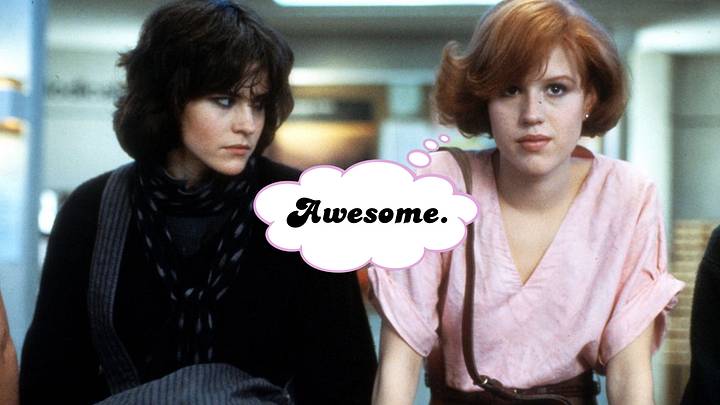
The ‘80s were tubular; each year made a bold, colorful statement in music, movies, style, and slang.
It’s hard to believe the decade of cult-classic blockbusters, big hair, MTV, and shoulder pads began almost 47 years ago, though some trends have made a comeback in the 2010s and 2020s, like high-waisted jeans and neon-colored clothing.
The ’80s are remembered for next-generation technology: the Sony Walkman, VHS tapes, boomboxes (cue John Cusack), CDs, camcorders, and the Nintendo Entertainment System.
Hair was always teased, and hairspray was a non-negotiable for men and women. Music videos took over pop culture; Michael Jackson had us dancing with Billie Jean, and Madonna invited material girls to live in a material world.
Movies that remain beloved, including Ferris Bueller’s Day Off, E.T. the Extra-Terrestrial, Back to the Future, Top Gun, The Breakfast Club (or really anything with Molly Ringwald), Ghostbusters, Raiders of the Lost Ark, and Return of the Jedi, lit up theater marquees in the ’80s.
Beyond fashion, media, and tech, the ’80s also gave us several slang terms. Some faded as soon as they arrived, while others stuck around.
According to Your Dictionary, here are nine ‘80s slang words we still use today.
CRUSING
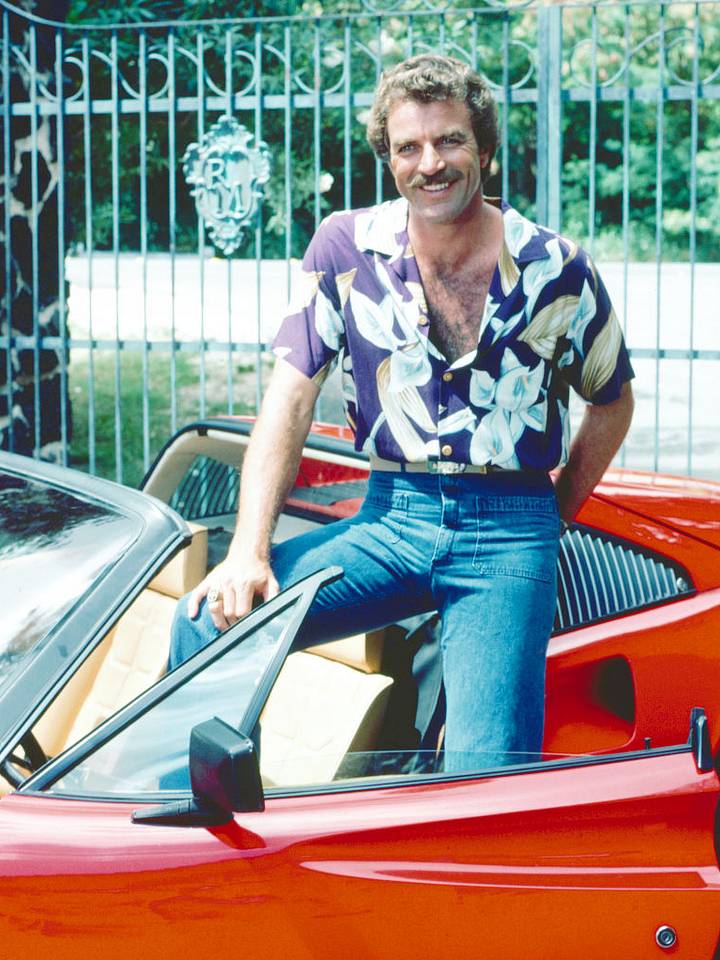
Definition: “To travel without destination or purpose.”
In a sentence: He asked if I wanted to take a drive, and we went cruising all night.
“Cruising” in the 1980s meant enjoying a long drive with nowhere specific to go. If someone invited you to “cruise” or said they were out “cruising,” you knew they were driving around aimlessly.
In 2026, “cruising” still describes a leisurely drive without a destination, just for fun.
HARSH
Definition: “Unpleasant and difficult to accept or experience, physically discomforting, overly intense.”
In a sentence: The bar was filled with smoke and the harsh smell of cigarettes.
The word “harsh” has always sounded, well, unpleasant, so it’s no surprise its meaning took on the same tone. Since the ’80s, people have used harsh to describe something uncomfortable or intense.
In 2026, we use it the same way, whether we’re talking about someone’s actions, a tough experience, or something extremely unappealing, like a bright light shining right in your face.
AWESOME
Definition: “Terrific, extraordinary.”
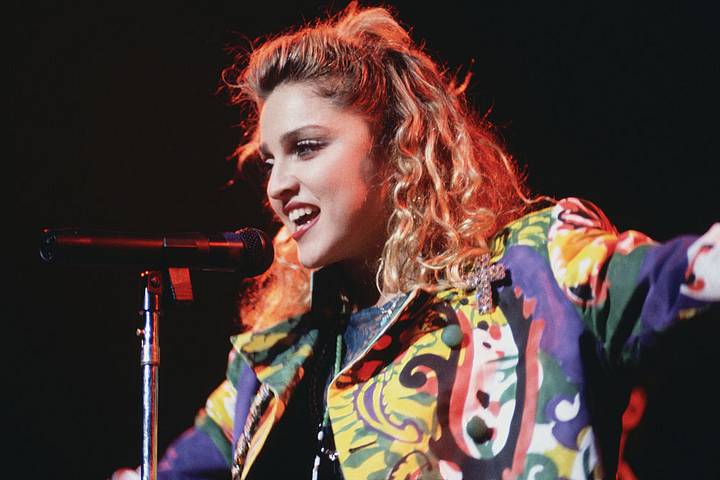
In a sentence: I listen to that song on repeat; it’s awesome!
Awesome is one of those words that has never lost relevance. The ’80s popularized it as the go-to way to describe something amazing or exceedingly cool.
In 2026, people of all ages still use “awesome” to express excitement about something (or someone) extraordinary.
FOR SURE
Definition: “Without doubt or question, certainly.”
In a sentence: He was the nicest person I ever met, for sure.
The slang “for sure” is another classic that has stuck around, and hopefully always will. In both the 1980s and 2026, it’s an easy way to say “of course,” often to reassure someone or dispel uncertainty. Sometimes a casual “for sure” is just what someone needs to hear in an anxious moment.
OUTRAGEOUS
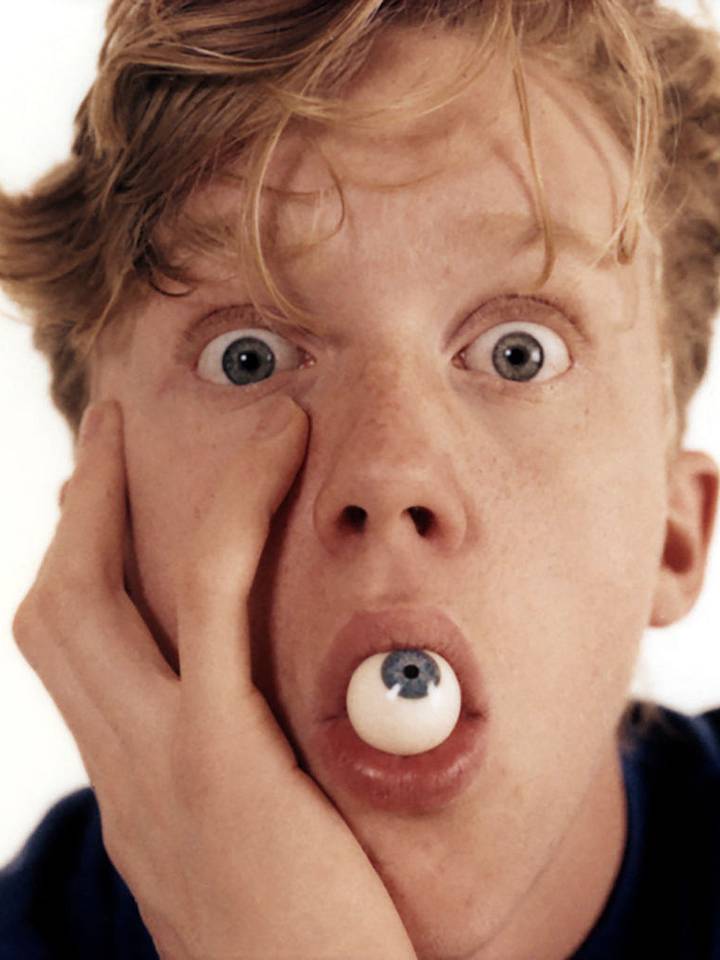
Definition: “Not conventional or matter-of-fact, exceeding the limits of what is usual.”
In a sentence: People wore outrageous costumes to the concert, and don’t even get me started on the band.
Outrageous is a fun, expressive word that spices up any conversation. In the ’80s, it described something so bold or abnormal that it was actually cool. In 2026, we use it less as a compliment and more to denote something shocking, but the basic meaning remains.
BURN OUT
Definition: “Exhaustion of physical or emotional strength or motivation, usually as a result of prolonged stress or frustration.”
In a sentence: She worked so hard that she was afraid she would burn out before the Q4 meeting.
“Burn out” is so common today that we forget people used it to describe the same feeling in the ’80s. Someone who was burnt out was totally exhausted and just over it.
In 2026, we use “burn out” to describe how we feel after a long workday, or maybe a trying year that’s absolutely depleted our motivation. Anything that leaves someone feeling overly drained (work, a conversation, or a hobby) is an example of burnout.
WHOA
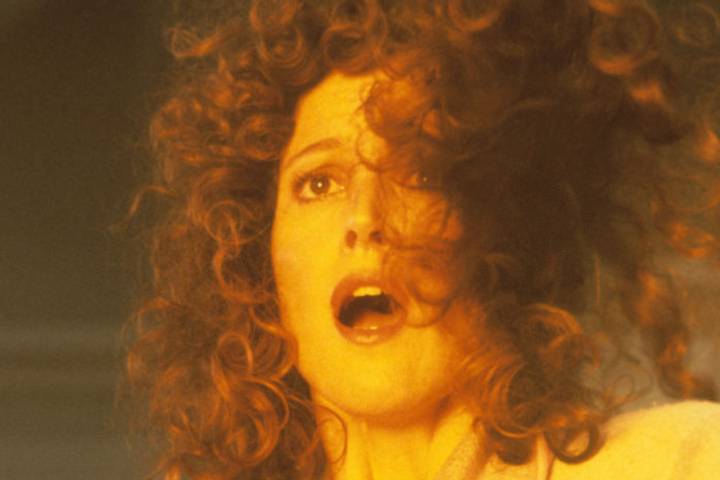
Definition: “Pause to consider or reconsider, often used to express a strong reaction.”
In a sentence: Whoa, that is one fun pair of sunglasses!
Whoa, like many words on this list, has definitions that couldn’t be more different. Centuries ago, people riding horseback or steering carriages used “whoa” to slow or stop the horses.
In the 1980s, “whoa” became an exclamation of surprise or intense reaction, both pleasant and unpleasant. In 2026, we say “whoa” to express excitement, surprise, or concern, depending on the instance.
CHILL
Definition: “Having a laid-back style or easy demeanor; having a relaxed style or manner.”
In a sentence: He wanted to go to the mall, but I had a long day and just wanted to chill.
“Chill” has lots of meanings, both formal and informal. In the ’80s, it broke away from its “cold” definition and became slang for someone or something calm, laid-back, or relaxing.
In 2026, we still use “chill” to describe someone who’s low-key, or to relay when we want to unwind.
EXCELLENT
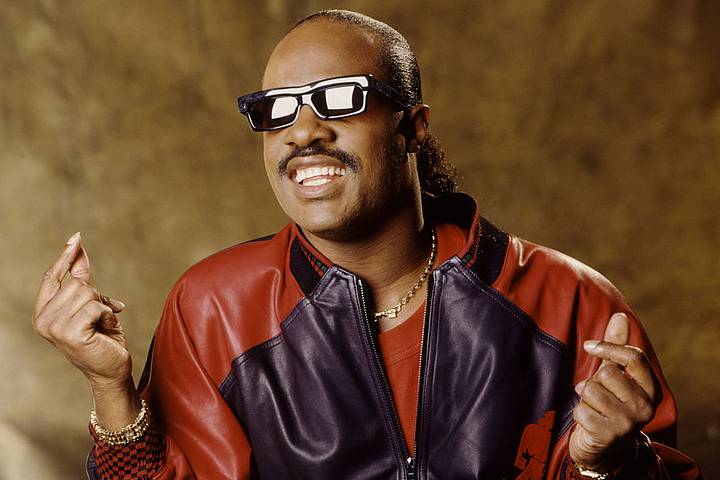
Definition: “Very good of its kind: eminently good.”
In a sentence: She had an excellent taste in music, especially when it came to R&B.
According to Merriam-Webster, “excellent” may not have been invented in the ’80s, but the decade surely made it a household word. Back then, people used “excellent” to describe something very good.
In 2026, we use “excellent” when “good” or “great” doesn’t fully explain how we feel.
Read More:
manual.
The Books Kurt Vonnegut Considered His Best—and Worst
He graded his own books in 1981, but the lowest mark went to the closest thing he ever wrote to an autobiography.
ByMatt Hoffman|Nov 10, 2026, 8:00 PM EST
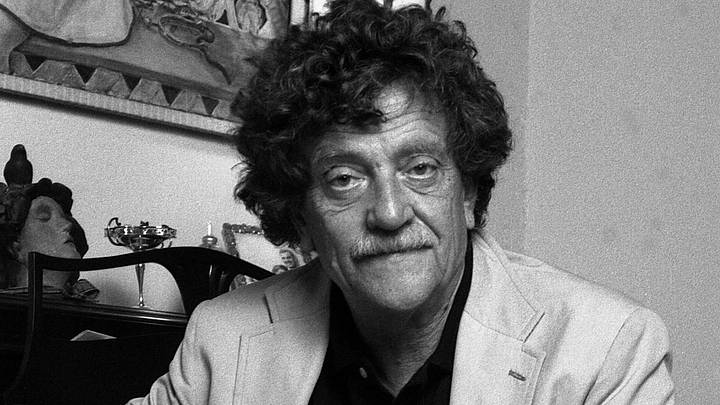
In 1981, Kurt Vonnegut published Palm Sunday, a grab bag of speeches, essays, letters, and odds and ends that he subtitled An Autobiographical Collage, and partway through it he did something few novelists would risk in print: he gave himself a report card. Mental Floss has run the full list of grades before, in a piece about one of the two books at the top of it. The list alone doesn’t show the rule he graded by or why one novel landed at the bottom, and it stops before he did.
Comparing Himself With Himself
Vonnegut set out the rules in a short preamble. “I have graded my separate works from A to D,” he wrote. “The grades I hand out to myself do not place me in literary history. I am comparing myself with myself.” That, he explained, was how he could give himself an A-plus for Cat’s Cradle while knowing “that there was a writer named William Shakespeare.” The list runs in order of publication, so readers could “plot my rise and fall on graph paper, if you like.”
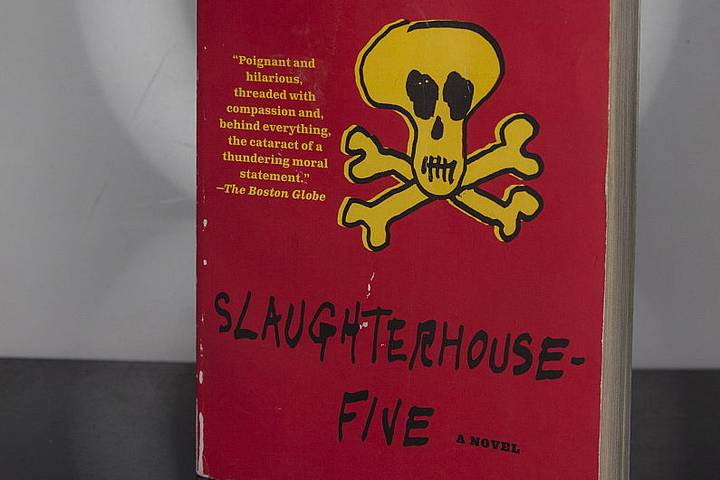
The rise came first. Player Piano, his 1952 debut, got a B. The Sirens of Titan, Mother Night, and God Bless You, Mr. Rosewater each got an A, and Cat’s Cradle (1963) and Slaughterhouse-Five (1969) got the only two A-pluses. The fall came after that: a B-minus for the story collection Welcome to the Monkey House, a C for Breakfast of Champions, and another C for the essay collection Wampeters, Foma & Granfalloons. Jailbird, his newest novel, pulled him back up to an A in 1979, and Palm Sunday earned a C, meaning the book you were holding while you read the grades was graded below Player Piano.
The D That Stung
Two works got a D. One was his play Happy Birthday, Wanda June, and the other was Slapstick, the 1976 novel about a pair of giant, freakish twins who are geniuses together and dull apart. It was also the one he’d tied most closely to his own life: “This is the closest I will ever come to writing an autobiography,” its prologue begins, and the twins were modeled on Vonnegut and his sister Alice, who died of cancer in 1958.
The critics hated it. Greil Marcus, reviewing it for Rolling Stone in October 1976, called the novel “cute, contrived, demeaning, devoid of real feeling,” and the reviews in The New York Times and The Village Voice were just as rough. When WNYC’s Walter James Miller sat down with Vonnegut that month, he invited the author to answer them. Five years later, Vonnegut more or less agreed with them on paper, though by Open Culture’s account he later told Charlie Rose he’d been too hard on the book.
After the Report Card
The grades stop at Palm Sunday, and Vonnegut kept going: Deadeye Dick in 1982, Galápagos in 1985, Bluebeard in 1987, Hocus Pocus in 1990, and Timequake , and none of them is on the list. The closest thing to a later verdict turned up in 1992, when the critic Michael Mason, reviewing Vonnegut’s second collage, Fates Worse Than Death, for the London Review of Books, noted that the author had recently called Galápagos his “best book.” Mason also went back to the old report card and the grade at the bottom of it: “D is, it must be said, a very low mark – and nothing short of abject when you give it to yourself.”
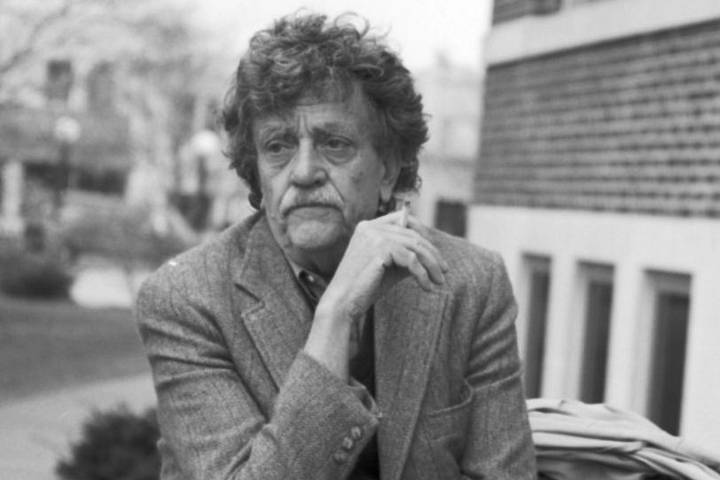
Vonnegut read the review and sent the London Review of Books a two-sentence letter, which ran that August: “Only this morning did I read your essay (LRB, 26 March) about my work. For this relief much thanks; ’tis bitter cold etc.” The line he was quoting comes from the opening scene of Hamlet, and the part he left off with “etc.” is “And I am sick at heart.”
Read More:
. feed