
ByGarin Pirnia|Nov 1, 2022, 12:28 AM EDT
 Add us as a preferred source

On March 29, 1985, Orion Pictures released Desperately Seeking Susan, a film about a bored New Jersey housewife named Roberta (Rosanna Arquette), who follows the life of hip New Yorker Susan (Madonna), “a very free-spirited, adventurous femme fatale,” via the classified ads she and her boyfriend exchange. When Roberta gets amnesia, she and Susan briefly switch lives.
At the time, and even somewhat by today’s standards, Desperately Seeking Susan was revolutionary in that it featured two female leads and was written, produced, and directed by women. Ultimately, it was also a woman—Barbara Boyle, Orion’s then-senior vice president of worldwide production—who convinced the male studio heads to greenlight the project.
The movie is notable for marking the acting debut of Madonna, who was an up-and-coming star when shooting began and a household name by the time movie was released. Arquette, meanwhile, won a BAFTA for her performance.
More than 35 years later, Desperately Seeking Susan still packs a powerful feminist punch. Speaking about the film’s legacy in 2015, director Susan Seidelman told Yahoo! that the movie conveyed the powerful message that “you can be a woman filmmaker and make a commercial movie … [and] have female leads in a movie and that men would see it.”
1. A French film influenced the screenplay for Desperately Seeking Susan.
Leora Barish, who wrote the script for Desperately Seeking Susan, told Yahoo! that the screenplay was influenced by Jacques Rivette’s 1974 film Celine and Julie Go Boating. “I liked the way [the Rivette film] plays with reality in an offhanded, barely perceptible way,” Barish said. “[In Susan] the two women from different realms are curious about each other … Each is drawn to look beyond her own world and experience the world of the other.”
2. The filmmakers considered Diane Keaton and Goldie Hawn to play Susan and Roberta, respectively.
“When I first got involved, the characters were of a different generation,” Seidelman told Yahoo!. “Susan was more of a hippie traveler—Diane Keaton in an embroidered shirt. The downtown Susan story, pyramid jacket, and Nefertiti earrings came later.” However, when the producers decided to reimagine Susan as a NewWave/punk figure, they first considered Melanie Griffith, Jennifer Jason Leigh, Ellen Barkin, and Kelly McGillis.
3. Susan Seidelman convinced the studio to cast Madonna.

“I pulled for Madonna—I knew her from living downtown,” Seidelman told Yahoo!. “Studio execs had never heard of her, so [director of photography] Ed Lachman and I went to Union Square to shoot her audition reel. I remember someone walking by, pointing at her and saying, ‘That’s Cyndi Lauper.’” Based on Orion liking the audition tape and the co-founder of Orion’s son seeing Madonna on MTV and thinking “she was cute,” Madonna got the part.
4. The original script had a different ending.
The film ends (SPOILER!) with Roberta staying with Dez, played by Aidan Quinn, and Susan with Jim, played by Robert Joy. “The original ending was that they didn’t go off with the guys—they go off together on an adventure, and you see them on camels in the desert, in the Sahara. “Without the guys,” Arquette told Vulture. “I think that ending is such a better ending and I wish they would’ve kept it. Especially nowadays! That’s what Roberta was trying to get away from—the stereotype. It wasn’t happily ever after in the original script. I fell in love with that idea and I was very disappointed when they cut that out.”
5. Seidelman directed Madonna and Rosanna Arquette differently.
“I deal with Rosanna as an actress and Madonna as a personality,” Seidelman explained of her different directing styles for the two leads. “With Rosanna, I discuss character—and she expands on it. With Madonna, it’s about trying to get her not to act, but to be.”
6. Madonna became a superstar before filming wrapped.
Sire Records released Like a Virgin in November 1984, just a couple of weeks before Desperately Seeking Susan finished filming. “It was like watching a skyrocket,” Seidelman told Variety. “[Madonna] was on the cover of Rolling Stone magazine and watching that rise so quickly was fascinating. By the time we were in our last week of shooting, there was security and all the things that are needed when you shoot with stars on the street.”
7. The studio wasn’t sure if Madonna’s newfound fame was a good thing.
Seidelman told the Los Angeles Times that the studio didn’t know whether Madonna’s newfound fame would help or hurt the film. “Would it work for us or against us? Ultimately, the movie had to stand up for itself. I think for whatever reason, it caught the zeitgeist of the time. I think that is what people responded to.”
8. The filmmakers only had a few months to edit the movie.
Filming wrapped around Thanksgiving 1984. “There was almost no post-production time,” unit publicist Reid Rosefelt told Yahoo!. “Orion wanted a March opening because people there thought Madonna’s career might be over by the time it came out.” Little did they know that Madonna was just getting started.
9. “Into the Groove” doesn’t appear on the film’s soundtrack.
Madonna had written the dancey “Into the Groove” for her friend Mark Kamins and even recorded a demo. However, she decided not to give him the song and instead contributed it to film. Despite the song playing at the end of the film, it doesn’t appear on the soundtrack, which features a score composed by Thomas Newman. On July 15, 1985, “Into the Groove” was released as a single, and it appeared on the 1985 re-issue of Like a Virgin.
10. The studio didn’t know how to design the movie poster.
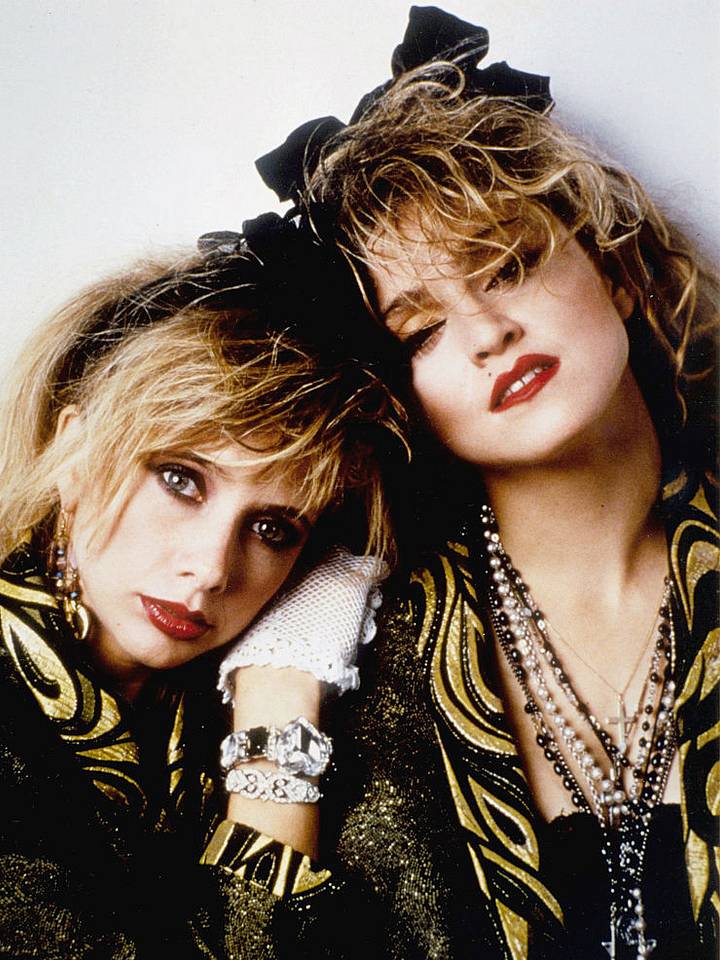
“Orion’s idea for posters included one with Madonna standing in front of a brick wall and Rosanna peeping over it,” co-producer Midge Sanford told Yahoo!. “Another had Madonna’s face reflected on a toaster and Rosanna’s on a piece of toast popping out. ‘We didn’t make Mr. Mom,’ I said. All the people in the room were middle-aged men who didn’t get the movie. What about those pictures Herb Ritts took of Madonna and Rosanna? A marketing guy looked at the slide and said, ‘If you put two women on a poster, people will think it’s a lesbian movie.’” Eventually, they used the now-iconic Ritts photo.
11. Desperately Seeking Susan was adapted into a short-lived musical.

On November 15, 2007, a stage musical version of Desperately Seeking Susan premiered at London’s Novello Theatre, with Blondie’s back catalogue used for the music. Due to a lack of ticket sales, the show closed one month later.
12. Mark Blum died from COVID complications.
Mark Blum, who played Roberta’s husband Gary Glass, a.k.a. “The Spa King of New Jersey,” died from COVID complications in March 2020. “He was a kind, gentle, wonderful actor with a great sense of humor and just the kindest soul,” Arquette told HuffPost shortly after his passing.
Looking for a new movie to watch, or at least a movie that’s new to you? Mental Floss’s new book, The Curious Movie Buff: A Miscellany of Fantastic Films from the Past 50 Years, offers behind-the-scenes details and amazing facts about some of the greatest movies of the past half-century. And it’s available now at your favorite place to buy books, or online right here.
Related Tags
Quiz: How Quickly Can You Match the 1920s Speakeasy Slang to the Meaning?
Prove you’re Prohibition proof by plugging and chugging all five synonyms for being sloshed.
ByNitya Rao|Nov 13, 2026, 6:00 PM EST
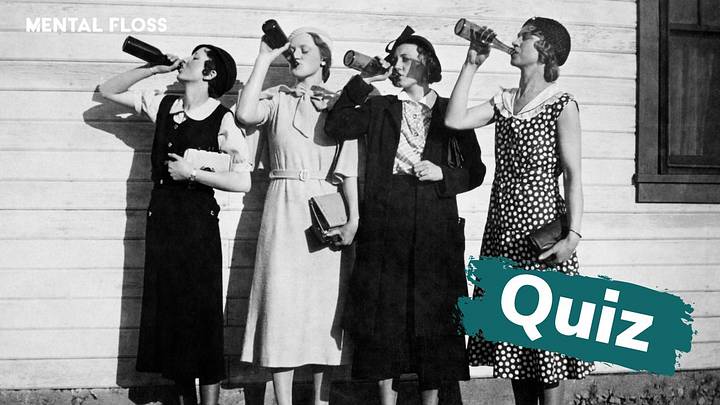
In the 2020s, speakeasies are but a curated novelty and slang a generational status symbol of sorts. But back in the 1920s, the secret lives and language of Americans were a necessity. With beer banned and whiskey barrels bolted shut, hidden watering holes and hooch were the difference between being stone cold sober and splifficated. If you can guess what that means, we’ve got a quiz that will determine once and for all if your Prohibition vocabulary is the bee’s knees.https://www.sporcle.com/framed/?v=10&pm&gid=1Q7c0c533t&fid=6af600b5b342c
Did you score a perfect 100% on this ’20s slang test? Or are you currently wondering if you qualify as a wet blanket? If you nailed all 23, there’s a good chance you could’ve fit into the era of Art Deco, fringed dresses, and bathtub gin. On the other hand, if you found yourself confused after the fifth booze-related word popped up, don’t worry, you just might need a little refresher. Share your score with your fellow flappers and see who really keeps up with the times, both old and new.
More Language Quizzes:
•
Quiz: How Quickly Can You Match the Modern Slang Word to the Meaning?
•
Quiz: Do You Remember All 7 Of These Slang Words From the 2000s?
•
Quiz: Can You Crack the Backstories Behind These Famous Book Titles? Most People Fumble the Classics
Boozy Buzzwords of the ’20s
By the 1920s, “99 Bottles of Beer on the Wall” had just about as many synonyms for the state you’d be in after drinking them all. Decades before the Jazz Age, English speakers already had a colorful habit of concocting euphemisms for intoxication.
Benjamin Franklin famously compiled more than 200 of them in “The Drinker’s Dictionary,” published in the Pennsylvania Gazette in 1737. Then came Prohibition in 1920, which put a cork in the sale and production of alcohol. It also stopped Americans from getting hammerish, at least legally. That’s when speakeasies took over, bringing a whole new wave of slang with them.
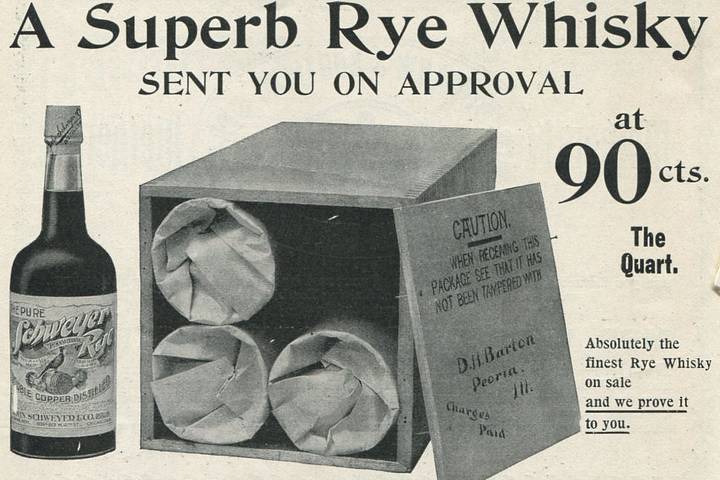
You might have reached “sloshed” or “shmacked” status once or twice, but back then, people weren’t just drunk: they were zozzled, ossified, and beyond blotto. Being zozzled—a Roaring Twenties riff on the late-19th-century British slang sozzled—meant you were extremely intoxicated. If someone was ossified, they had consumed so much bootleg booze that they were stiff as stone, or literally “turned to bone.”
Moving away from the bar, colorful terms like fried and canned borrowed from the kitchen. An easy way to tell if a friend was fried was if they were pie-eyed: yet another Prohibition-era word for drunk that plays on the glassy, wide eyes resulting from one too many swigs of foot juice (cheap wine) at a juice joint (the secret storefront that supplied it).
The outlawing of alcohol may have been inconvenient to Americans at the time, but it certainly spiced up our lexicon. If you love testing your history and pop culture knowledge with a side of trivia, you’ll want to check out the Mental Floss quiz page for daily quizzes for a brain buzz without the booze.
More Slang Reads:
•
From ‘Dollar Princess’ to ‘The Four Hundred,’ Decoding the Gilded Age’s High-Society Slang
•
The Top 24 Gen Alpha Slang Terms of 2026
•
7 Australian Slang Terms the Whole World Should Start Using
•
9 Slang Words From the 1980s We Still Use Today
6 Things Every American Video Store Had in the 1990s
“Be kind, rewind.”
ByChelsea Thatcher|Nov 14, 2026, 5:00 PM EST
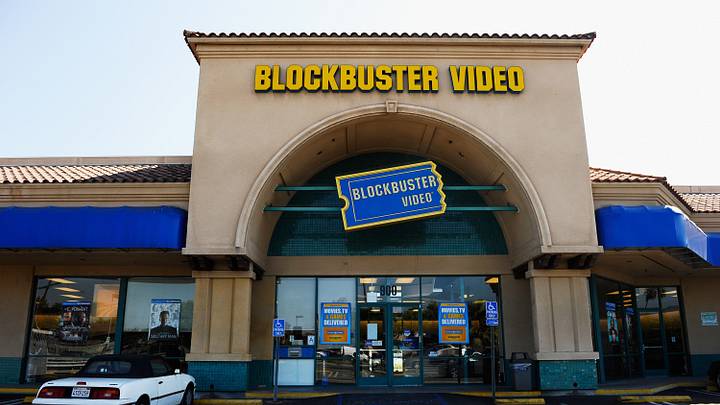
Blockbuster, Hollywood Video, and even small, local video stores were some of the most popular places to be on a Friday night in the 1990s. Whether you wanted to check out a new release, rewatch a classic, or just pick a movie at random, the video stores had it all covered. The trip itself was an enjoyable experience, giving us endorphins that scrolling on streaming services can’t.
Despite minor differences in inventory and store policies, video stores in the ’90s all had a few things in common. It didn’t matter which store you went to; you would find these features at every one of them. That’s what makes this list so nostalgic because whatever video store you frequented, each of these things will trigger those movie night memories.
- Clamshell Cases
- “Be Kind, Rewind” Stickers
- Popcorn and Candy
- Membership Cards
- Late Fees
- Deceptive Shelves
Clamshell Cases
Before DVDs were a thing, VHS tapes were everywhere. There were usually two different types of cases for these tapes: a cardboard sleeve and a plastic “clamshell” case. Video stores in the ’90s had both, but started making their own store-branded clamshell cases. This was to prevent people from forgetting to return the videos or stealing them. The clamshell case became synonymous with video rentals, and in the late 1990s, they even had locking mechanisms to keep the tape inside until someone actually rented it.
“Be Kind, Rewind” Stickers
Another remnant of the time before DVDs is the “Be Kind, Rewind” sticker. Video stores put these stickers on their rental VHS tapes as a reminder to customers to wind the film inside the tape back to the beginning. And before any younger generations ask, we did not do this manually, but had a “Rewind” button on the VCR. Some video stores even charged a fee for tapes brought back without rewinding them. Not rewinding was akin to leaving your shopping cart in the middle of the parking lot.
Popcorn and Candy
At the front of each store, right next to the checkout line, were movie theater-type concessions and snacks. The candy was so tempting to make it a “true” movie night, but our parents rarely gave in. Popcorn was also sold, most often as a packaged, microwaveable bag or tub. That was one thing that put small video stores above the big corporations: freshly popped popcorn. But even without popped popcorn, all video stores seemed to smell of popcorn butter.
Membership Cards
Millennials and Gen X could still have their video store membership card hiding in an old wallet or purse right now. The cards allowed you to earn points and get perks, but most importantly, they were the key to accessing rentals. You couldn’t rent a movie without a membership, and the physical card was the easiest way of proving you had an account. Some stores would look up your account in their system if you didn’t bring your card with you, but it was always best to have it on hand.
Late Fees
Video stores made most of their money not through the rentals themselves, but through the late fees incurred. By 2000, Blockbuster was earning $800 million in late fees, much to the chagrin of its customers. They charged $1 per day for late returns. Hollywood Video had more lenient terms, and small video stores had different policies, but everyone charged late fees as a way of “encouraging” patrons to return the videos.