
Rod Serling’s groundbreaking anthology series The Twilight Zone introduced some enduring science-fiction themes and one of the most iconic title sequences in TV history—not to mention a slew of famous guest stars.
1. William Shatner
A fresh-faced, soon-to-be Captain James T. Kirk stars in one of the classic episodes of the series, 1963’s “Nightmare at 20,000 Feet,” as an unhinged airline passenger trying to convince everyone else that a monster is destroying the plane (an episode that was remade with John Lithgow for Twilight Zone: The Movie).
“The particular script by Dick Matheson was really inventive and very much a one-man show, really,” Shatner told Entertainment Weekly earlier this year. “This young actor was pleased with that, to get all that attention and screen-time … [The episode] touches another universal in the human psyche, and that is the fear of flying. Buried somewhere in all of us when the going gets rough up there is: If God meant us to fly, we’d have wings. Why are we up here? … That’s the only explanation I can come up with that makes that particular episode as popular as it is.”
Just as creepy is his role as a newlywed who comes undone by superstition, thanks to a fortune-telling machine in a small town diner in the 1960 episode “Nick of Time.”
2. Cloris Leachman
With a near-70-year career, Cloris Leachman was one of Hollywood’s grand dames of drama. She played Mrs. Fremont in the classic 1961 Twilight Zone episode “It’s a Good Life,” which depicts a malevolent child with terrifying powers that are merely hinted at until his temper erupts. It was the inspiration for a segment in Twilight Zone: The Movie and got a semi-official sequel in 2003 with “It’s Still a Good Life,” which ran as part of the Twilight Zone reboot series.
3. George Takei
Two years before he joined forces with Shatner on Star Trek, Takei played an out-of-work gardener named Arthur Takamori whose mysterious past is brought to the forefront over a shared beer with a neighbor—and World War II vet—to whom he has offered his landscaping services in “The Encounter.” “This particular episode, however, gained some kind of notoriety,” Takei recalled to the Archive of American Television in 2011. The episode’s racial overtones and allusions to Pearl Harbor caused a bit of an uproar, particularly amongst “Japanese-American and Asian-American civil liberties and advocacy groups,” according to Takei. “So for that reason, CBS pulled that episode. And it has a unique distinction of being the only Twilight Zone [episode] that was aired only once. It’s never been re-aired. It’s never enjoyed a re-run. And shucks darn, I missed out on my residuals on that one.”
4. Roddy McDowall
Before he charmed the world as the lovable Cornelius in the Planet of the Apes franchise (1968-1973) and horror TV host Peter Vincent in Fright Night (1988), McDowall was Sam Conrad, a biologist on a mission to Mars who discovers that the Martian people are not so different from us in “People Are Alike All Over,” which aired on March 25, 1960.
5. Robert Redford
When attempting to imagine what the Grim Reaper might look like, Redford’s face probably isn’t the one you’d picture. But anything goes on The Twilight Zone and in 1962, just two years into his career, the future Oscar-winner played the incarnation of Death in season three’s “Nothing in the Dark” episode.
6. Burgess Meredith
Depending on your age, you might remember Meredith as either Rocky’s surrogate father and trainer Mickey in the film franchise’s first three installments, or the dastardly Penguin to Adam West’s TV Batman from 1966 to 1968. But before those roles, he appeared in a number of Twilight Zone episodes, beginning with “Time Enough At Last”—about Harry Bemis, the last man on Earth—in 1959, followed by “Mr. Dingle, the Strong” (1961), “The Obsolete Man” (1961), and “Printer’s Devil” (1963). He also narrated Twilight Zone: The Movie.
7. Don Rickles
With a storied career in TV, movies, and comedy long before he gave Mr. Potato Head a voice in the Toy Story series, Rickles joined Burgess Meredith in the 1961 episode “Mr. Dingle, The Strong,” in which an alien race bestows the strength of 300 men on a humble vacuum cleaner salesman.
8. Jack Klugman
The boozy, unkempt Oscar Madison to Tony Randall’s Felix Unger in TV’s The Odd Couple, and the crusading, crime-fighting doctor Quincy, ME, Klugman popped up in several episodes of The Twilight Zone, including 1961’s “A Game of Pool” (with Jonathan Winters) and “In Praise of Pip” and “Death Ship” (both 1963). But none were more melancholy than his first appearance, in 1960’s “A Passage for Trumpet,” where he plays a depressed musician who finds himself in a Twilight Zone world where everybody is frozen apart from him—and his far superior musical rival.
9. Elizabeth Montgomery
In the 1961 episode “Two,” Montgomery played half of a male/female duo who approach each other with suspicion and fear in the ruined landscape of an apocalyptic battle that seems to have wiped out the rest of humanity. (Her male counterpart? Charles Bronson.) A couple of years later, she took the role in another series about strange powers and the supernatural that would make her name famous: Samantha in Bewitched.
10. Kevin McCarthy
Most famous for running down the streets of a small Californian town yelling “You’re next!” to warn us about the pod people in Invasion of the Body Snatchers (1956), McCarthy stars as an immortal being named Walter Jameson who’s found out in the first-season episode “Long Live Walter Jameson.” As an extra treat, he later appeared in Twilight Zone: The Movie (1983) in a remake of the episode “It’s a Good Life.”
11. Peter Falk
A decade before he assumed the role of the beloved shaggy detective Columbo, Falk turned in a delightfully campy performance as Central American dictator Ramos Clemente, a tyrant who finally cements his position but is then driven mad with paranoia by a magical mirror that reveals the traitors all around him, in the 1961 episode “The Mirror.”
12. Lee Marvin
A longtime tough guy from Hollywood’s Golden Age, Marvin features in two episodes. First is the haunting and scary “The Grave” (1961), in which a cowboy arrives in a frontier town to visit the grave of his fallen enemy, but meets destiny in the process. And there might be something familiar-sounding about 1963’s “Steel,” which depicts a future where humans control robotic boxers after the sport is outlawed; it was the basis for the 2011 Hugh Jackman hit Real Steel.
13. Carol Burnett
Five years before her eponymous variety show kicked off its 11-season run, Burnett played a down-on-her luck city girl who is trying to put her life in order with the help of an equally flighty guardian angel, only to realize that the life she has—flawed as it may be—isn’t so bad. It’s hardly surprising that the 1962 episode, titled “Cavender is Coming,” was meant to be a comedic one, and as such is the only installment of The Twilight Zone to feature a laugh track. It was also intended to serve as a backdoor pilot for a new series revolving around Harmon Cavender, Burnett’s hapless guardian angel (though it never took off).
14. Rod Taylor
Taylor was no stranger to the fantastic when he starred in The Time Machine (1960) and The Birds (1963). In 1959’s “And When the Sky Was Opened,” he played Colonel Clegg Forbes, an astronaut whose trip into space might just have rendered both him and his crewmates out of existence.
15. Russell Johnson
A science geek long before it was cool, Gilligan’s Island‘s Professor starred in two Twilight Zone episodes about time travel. In the 1961 episode “Back There,” he plays a young man who goes from discussing the realities of time travel with some of his cohorts to finding himself at Ford’s Theatre on the night of Abraham Lincoln’s assassination. In 1960’s “Execution,” Johnson is a scientist (and professor) who mistakenly brings a convicted 19th-century murderer into the present while attempting to perfect time travel technology
16. Vera Miles
Just as her movie star status began rising in Hollywood because of hits like Psycho and The Man Who Shot Liberty Valance, Miles starred in the 1960 Twilight Zone episode “Mirror Image.” She played a woman a little too in touch with her delusions when she imagines she’s being haunted by her own doppelgänger.
17. Dennis Hopper
In 1963’s “He’s Alive,” Dennis Hopper plays the leader of a floundering neo-Nazi group whose spirit is reenergized when he begins receiving visits and guidance from a shadowy figure who may very well be Der Führer.
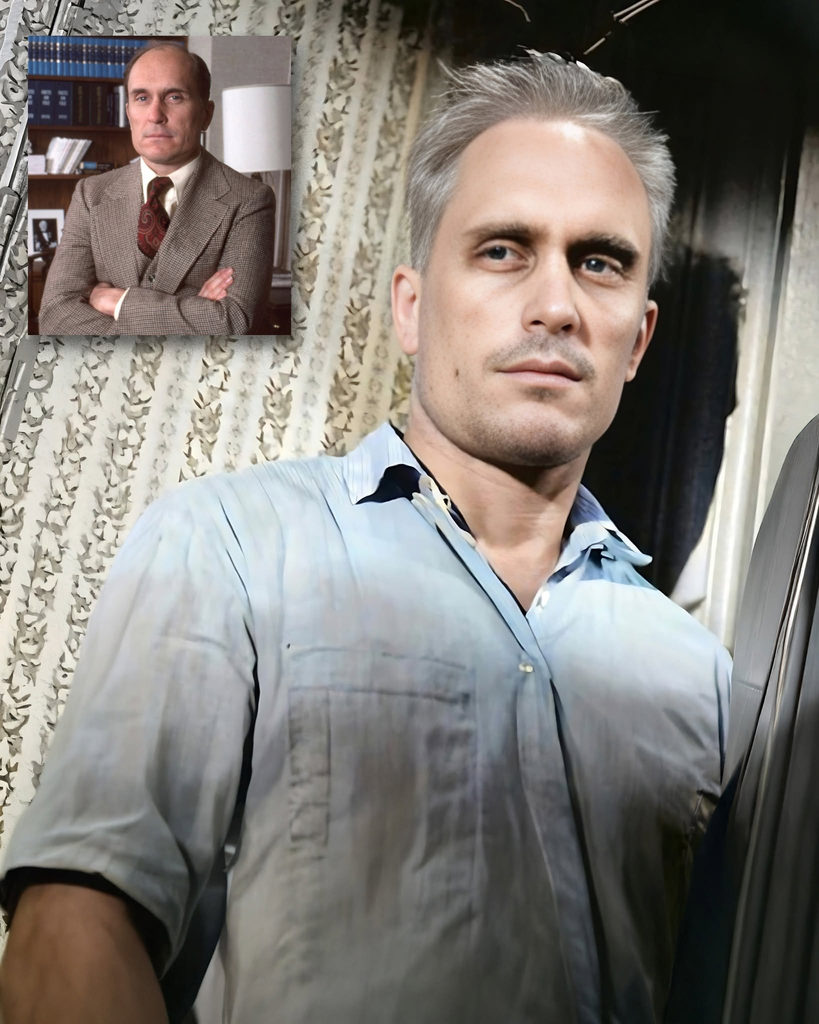
18. Robert Duvall
In “Miniature,” Duvall plays Charley Parkes, a man convinced that there are actual people living in a tiny museum dollhouse—a belief that eventually gets him institutionalized. But when Charley is nowhere to be found on the night of his release from the psychiatric hospital, his friends and family surmise that he has gone back to look at the dollhouse—only to discover something far more surprising. A lawsuit surrounding the episode caused it not to be released again until 1984, more than two decades after its debut.
Related Tags
6 Things Every American Video Store Had in the 1990s
“Be kind, rewind.”
ByChelsea Thatcher|Nov 14, 2026, 5:00 PM EST
 Add us as a preferred source
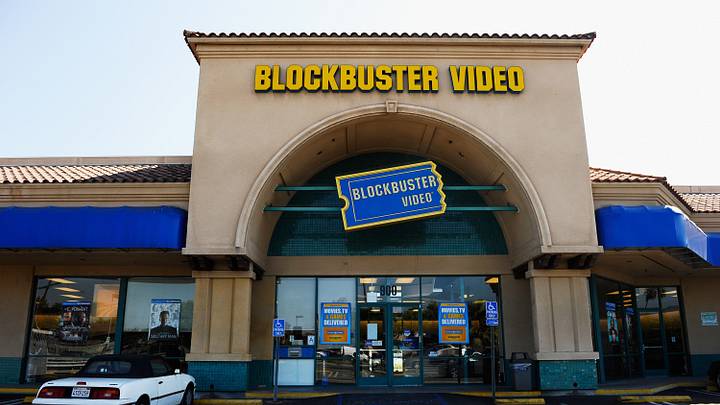
Blockbuster, Hollywood Video, and even small, local video stores were some of the most popular places to be on a Friday night in the 1990s. Whether you wanted to check out a new release, rewatch a classic, or just pick a movie at random, the video stores had it all covered. The trip itself was an enjoyable experience, giving us endorphins that scrolling on streaming services can’t.
Despite minor differences in inventory and store policies, video stores in the ’90s all had a few things in common. It didn’t matter which store you went to; you would find these features at every one of them. That’s what makes this list so nostalgic because whatever video store you frequented, each of these things will trigger those movie night memories.
- Clamshell Cases
- “Be Kind, Rewind” Stickers
- Popcorn and Candy
- Membership Cards
- Late Fees
- Deceptive Shelves
Clamshell Cases
Before DVDs were a thing, VHS tapes were everywhere. There were usually two different types of cases for these tapes: a cardboard sleeve and a plastic “clamshell” case. Video stores in the ’90s had both, but started making their own store-branded clamshell cases. This was to prevent people from forgetting to return the videos or stealing them. The clamshell case became synonymous with video rentals, and in the late 1990s, they even had locking mechanisms to keep the tape inside until someone actually rented it.
“Be Kind, Rewind” Stickers
Another remnant of the time before DVDs is the “Be Kind, Rewind” sticker. Video stores put these stickers on their rental VHS tapes as a reminder to customers to wind the film inside the tape back to the beginning. And before any younger generations ask, we did not do this manually, but had a “Rewind” button on the VCR. Some video stores even charged a fee for tapes brought back without rewinding them. Not rewinding was akin to leaving your shopping cart in the middle of the parking lot.
Popcorn and Candy
At the front of each store, right next to the checkout line, were movie theater-type concessions and snacks. The candy was so tempting to make it a “true” movie night, but our parents rarely gave in. Popcorn was also sold, most often as a packaged, microwaveable bag or tub. That was one thing that put small video stores above the big corporations: freshly popped popcorn. But even without popped popcorn, all video stores seemed to smell of popcorn butter.
Membership Cards
Millennials and Gen X could still have their video store membership card hiding in an old wallet or purse right now. The cards allowed you to earn points and get perks, but most importantly, they were the key to accessing rentals. You couldn’t rent a movie without a membership, and the physical card was the easiest way of proving you had an account. Some stores would look up your account in their system if you didn’t bring your card with you, but it was always best to have it on hand.
Late Fees
Video stores made most of their money not through the rentals themselves, but through the late fees incurred. By 2000, Blockbuster was earning $800 million in late fees, much to the chagrin of its customers. They charged $1 per day for late returns. Hollywood Video had more lenient terms, and small video stores had different policies, but everyone charged late fees as a way of “encouraging” patrons to return the videos.
Deceptive Shelves
There was nothing worse than arriving at the video store with a specific movie in mind, making a beeline for the shelf, getting your hopes up when you saw its case, and then having those hopes dashed when you saw the case was empty. It felt like a cruel joke that the stores would play, taunting customers with the case of a video that should be there, but all copies were already checked out. It was a common feeling though, especially if you were looking for a major hit or new release.
Read More:
•
6 Things Every American Video Store Had in the 1990s
•
20 Things That Were Considered Luxuries in the 1970s
•
75 Holiday Jokes That Are So Funny, You’ll Want to Share Them With Everyone
•
20 One-Hit Wonders From the 1970s You Still Know Every Word To
•