
Brigitte Bardot was once the embodiment of freedom, beauty, and rebellion. In the late 1950s and 1960s, she wasn’t just a movie star—she was a cultural earthquake.
With her tousled blonde hair, unapologetic sensuality, and refusal to conform to social expectations, Bardot became the face of a new kind of woman: independent, defiant, and gloriously untamed.
To millions, she symbolized liberation. But behind the flashing cameras and breathless admiration lay a far more troubled reality—one defined by emotional turmoil, regret, and a deeply fractured relationship with the only child she ever had.
That child was Nicolas-Jacques Charrier.
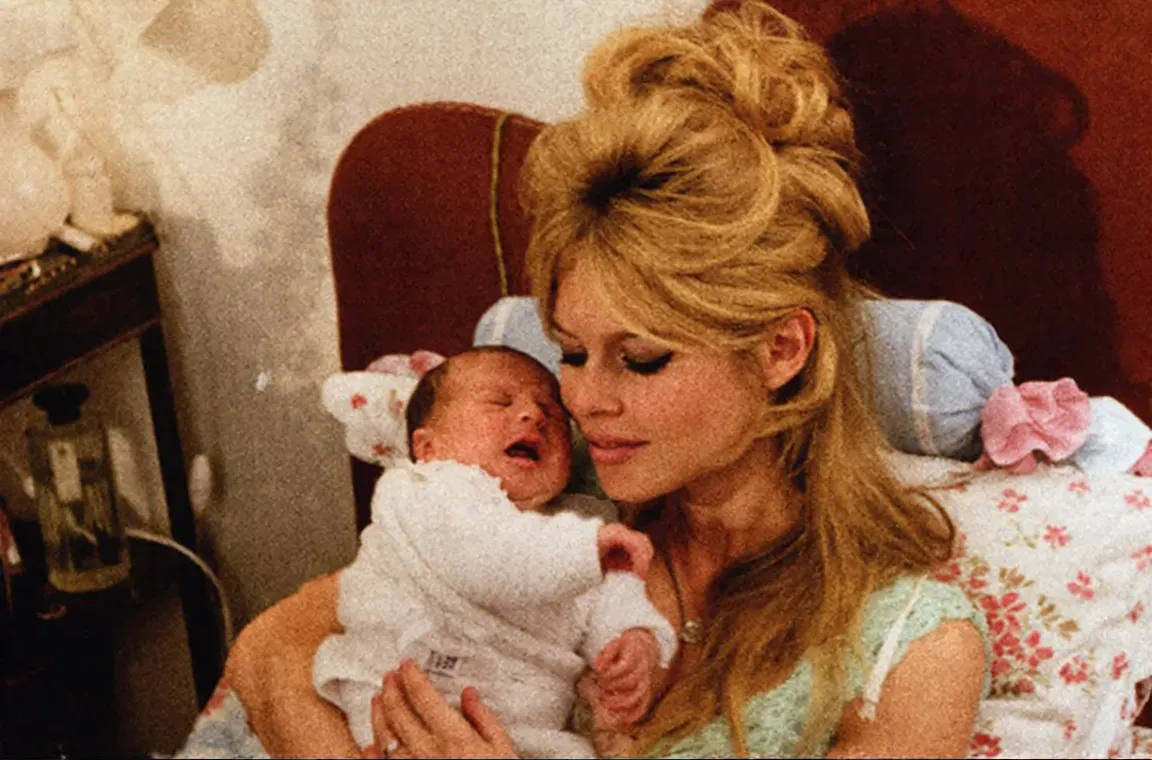
Born on January 11, 1960, in Paris, Nicolas arrived during one of the most chaotic periods of Bardot’s life. She was married at the time to actor Jacques Charrier, but the marriage was already unraveling.
Bardot was at the height of her fame, relentlessly pursued by paparazzi, fans, and filmmakers. Privacy was nonexistent, and the pressures of celebrity weighed heavily on her fragile mental health.
According to The New York Times, Nicolas was born at the couple’s apartment and weighed just over seven pounds—a detail that contrasts starkly with the emotional weight that would follow his arrival.
From the very beginning, motherhood did not come naturally to Bardot.
In her controversial memoir Initiales B.B., published decades later, she admitted something almost unheard of for a public figure, especially one of her stature: “I’m not made to be a mother.
I’m not adult enough to take care of a child.” The honesty of that confession stunned readers. It cut against deeply ingrained ideas about motherhood, femininity, and responsibility—and it would haunt both Bardot and her son for the rest of their lives.

After Bardot and Charrier divorced in 1962, custody of Nicolas was granted to his father. Bardot stepped away from daily motherhood, leaving Nicolas to be raised largely by his paternal grandparents.
While she continued to dominate magazine covers, film posters, and public imagination, her son grew up far from the spotlight that followed her everywhere.
Bardot later explained her absence with a disarming frankness. “I didn’t bring up Nicolas because I needed roots,” she said. “I couldn’t be his roots. I was lost in that crazy world.”
To many, the statement sounded cold. To others, it was a painfully honest admission from a woman overwhelmed by fame, expectation, and her own inner chaos.
For years, the public knew very little about Nicolas. He grew up quietly, shielded from media attention as much as possible. But the fragile balance between past and present shattered in 1997 with the publication of Initiales B.B.
The memoir was explosive—unfiltered, raw, and deeply personal. Bardot wrote about her pregnancy in stark, disturbing terms, comparing it to having “a tumor growing inside of me.” Even more shocking, she referred to her son as “the object of my misfortune.”
The reaction was immediate and fierce.

Before the book’s release, Nicolas and his father attempted to block its publication, arguing that it violated their privacy and inflicted emotional harm. Their efforts were unsuccessful.
Once the book hit shelves, headlines erupted across France and beyond. Critics accused Bardot of cruelty and narcissism. Supporters argued that she was simply telling her truth in a society that demanded maternal perfection from women.
The controversy soon entered the courtroom. A French court ruled that Bardot had crossed a legal boundary, ordering her to pay approximately $40,000 in damages for invasion of privacy. It was one of the most public reckonings of her career—a moment when her legendary candor collided with legal and moral limits.
That same year, Jacques Charrier broke his long silence by publishing his own book, My Response to Brigitte Bardot. In it, he offered a very different narrative.
Charrier claimed that Bardot’s private letters revealed a woman who loved her son but was deeply conflicted, emotionally unstable, and crushed by the pressures of her fame. According to him, her memoir presented only part of the truth.

Charrier suggested that Bardot’s emotional distance was not rooted in indifference, but in fear—fear of responsibility, of losing herself, and of being trapped in a role she never wanted.
His account added complexity to a story that had been reduced by many to simple blame.
Charrier passed away in 2025, leaving behind a legacy forever intertwined with Bardot’s—two people bound by love, resentment, and a shared past neither could fully escape.
Despite decades of tension and emotional distance, Bardot and Nicolas never completely severed ties. Their relationship remained fragile but existent.
In 1992, when Bardot married Bernard d’Ormale in Norway, she personally called Nicolas beforehand, hoping he would meet her future husband. The gesture suggested an attempt, however imperfect, to maintain some form of connection.
Through Nicolas, Bardot eventually became both a grandmother and a great-grandmother—roles she has deliberately kept private. Unlike her own life, which unfolded in full public view, she chose silence and distance when it came to her descendants.

In a rare interview in June 2024, Bardot addressed the subject with restraint. Asked why she no longer spoke publicly about her son, she replied simply: “I promised him I wouldn’t.”
That promise, perhaps, speaks louder than any memoir ever could.
Brigitte Bardot will forever be remembered as a cinematic legend, a symbol of sexual liberation, and later, a fiercely devoted animal rights activist. Her influence on fashion, film, and culture remains undeniable. Yet her story as a mother is one of the most complicated and painful chapters of her life.
It is a story shaped by contradictions: freedom versus responsibility, honesty versus harm, fame versus intimacy. Bardot refused to romanticize herself as a mother, even when the truth invited harsh judgment.
And at the center of it all stands Nicolas-Jacques Charrier—the son who grew up in the shadow of a legend, carrying a legacy defined not only by brilliance and rebellion, but also by absence, controversy, and unresolved love.
In the end, Bardot’s life reminds us that icons are still human—and that even the most liberated women can struggle profoundly with roles society assumes should come naturally.