Few figures in Hollywood history have left a visual legacy as enduring as Marilyn Monroe. Every shimmer of fabric she wore, every perfectly styled curl, every pose before the camera became an indelible mark on pop culture.
Yet behind the glamour and legend of her most famous outfits lies a web of private stories — of artistic decisions, personal tensions, and the quiet, sometimes painful humanity of a woman the world refused to see as anything less than perfect.
Here are the seven unforgettable looks that shaped Monroe’s image — and the hidden truths stitched into their seams.
1. The Seven Year Itch (1955)
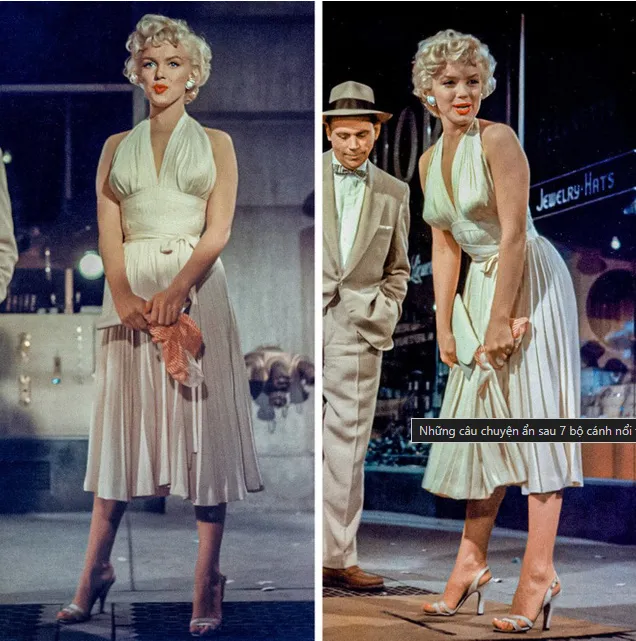
It’s one of the most iconic moments ever captured on film: Marilyn Monroe, laughing as her white halter dress billows upward above a subway grate. The scene became a symbol of mid-century sensuality, but it also marked the beginning of deep personal turmoil.
At the time, Monroe was married to baseball star Joe DiMaggio, whose traditional values clashed sharply with the Hollywood world she inhabited. According to reports, DiMaggio was furious when he saw hundreds of male onlookers cheering as Marilyn filmed the scene in New York.
To appease him, she reportedly wore two pairs of undergarments, hoping to make the moment seem less revealing.
But the damage was done — within weeks, their marriage collapsed. Ironically, the very dress that helped shatter her relationship went on to become one of cinema’s most recognizable artifacts, later selling at auction for a staggering $5.52 million.
2. Some Like It Hot (1959)
On the surface, Some Like It Hot is pure comedy: two musicians disguised as women, a jazz band, and Monroe as the sultry singer Sugar Kane. But behind her sparkle and wit was exhaustion — and a secret she carried quietly.
During production, Monroe was reportedly pregnant, a fact she concealed while filming. Yet she still appeared in some of the most daring costumes of her career, shimmering in sequins and silk that accentuated every curve.
Some theaters initially refused to screen the film, claiming her gowns were “too suggestive.”
But Monroe’s performance was magical — vulnerable, funny, and radiant. Some Like It Hot went on to become one of the most beloved films in American cinema, and Monroe’s image in her glittering dresses remains one of Hollywood’s most enduring silhouettes.

3. The Prince and the Showgirl (1957)
Filming The Prince and the Showgirl was a demanding experience for both Monroe and those around her. Starring opposite Laurence Olivier, she faced constant scrutiny — both for her performance and for her appearance.
The costumes were designed by British designer Beatrice Dawson, who soon realized she had an unusual challenge: Marilyn’s weight fluctuated dramatically throughout the shoot.
To accommodate the changes, Dawson had to create multiple identical versions of each gown in different sizes — each tailored to perfection.
The result was stunning. On screen, Monroe radiated effortless grace in satin, chiffon, and lace — but off-screen, the production was fraught with tension.
Yet, as always, the final image was pure magic: the luminous showgirl whose charm could melt even the stiffest aristocrat’s heart.

4. Something’s Got to Give (1962)
This film, tragically, was never completed. It was to be Monroe’s comeback — a romantic comedy about a woman returning home after being lost at sea. She wore a delicate floral silk gown designed by Jean Louis, a master of understated sensuality.
But as production dragged on, tensions rose. Monroe’s health faltered, and she was dismissed from the studio. When producers later tried to rehire her, it was too late — she had died at just 36 years old.
The film remains unfinished, and the dress — sometimes called “the cursed gown” — later sold at auction for $358,000. Today, it stands as a haunting symbol of the talent, beauty, and tragedy that defined Marilyn’s final chapter.

5. Gentlemen Prefer Blondes (1953) — The Orange Beaded Gown
Before diamonds were her “best friend,” Marilyn dazzled audiences as Lorelei Lee in Gentlemen Prefer Blondes, wearing a fiery orange beaded gown that hugged her every curve. The costume was created by her close friend and frequent collaborator, William Travilla, who designed many of her most famous looks.
Monroe loved the gown so much that she asked Travilla to make a duplicate in a different color for her personal wardrobe. A subtle nude lining was sewn into the neckline to help her feel more comfortable — a small, human touch amid all the glamour.

6. Gentlemen Prefer Blondes (1953) — The Lost Yellow Dress
In the same film, Travilla also created a stunning yellow pleated gown for Monroe — a dress that was ultimately deemed too revealing for the era. Almost every scene featuring it was cut from the final film, except for a brief ten-second shot from behind.
Despite this, Monroe adored the gown and insisted on wearing it to the Photoplay Awards in 1953, determined to show it off to the public. That decision cemented its place in fashion legend — a garment too daring for Hollywood but perfect for Monroe’s fearless sense of style.

7. The “Happy Birthday, Mr. President” Dress (1962)
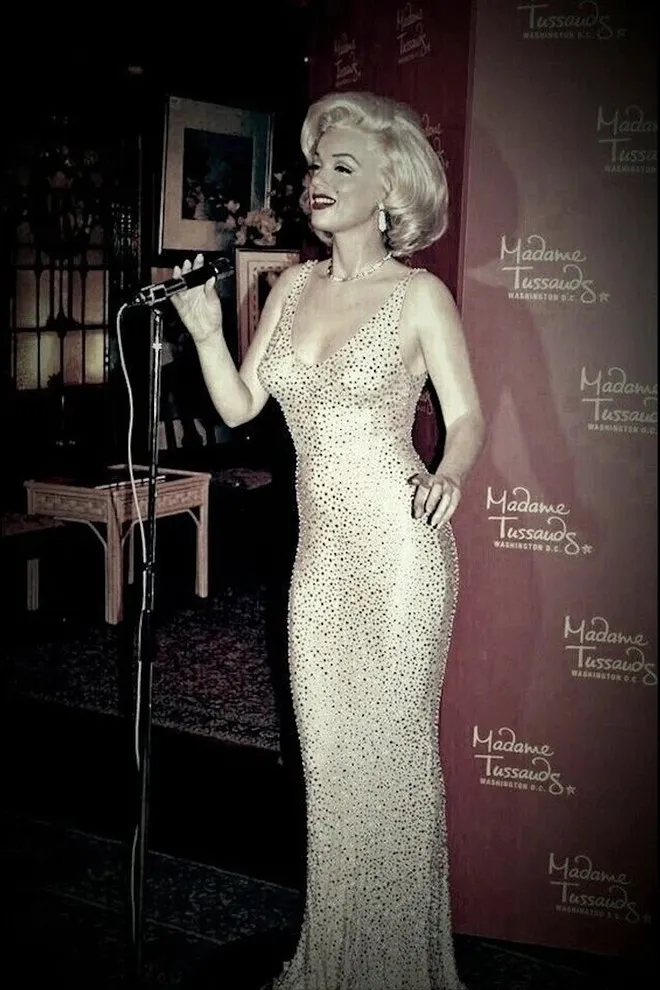
No list of Marilyn Monroe’s iconic looks would be complete without the legendary nude, crystal-studded gown she wore to sing “Happy Birthday” to President John F. Kennedy. Designed by Jean Louis, the dress was made from sheer fabric and hand-stitched with more than 2,500 rhinestones.
When Monroe commissioned it, she told Jean Louis:
“I want you to design a truly historic dress — something dazzling, one of a kind, that only Marilyn Monroe could wear.”
The finished gown fit her so perfectly that she wore nothing beneath it. Before the event, she told organizers she’d be wearing a modest, high-neck outfit — only to remove her white fur coat on stage and reveal the glittering illusion dress that stunned the world.
The moment became one of the most unforgettable in pop culture — a blend of glamour, seduction, and showmanship that only Monroe could embody.

A Legacy Sewn in Stardust
Every dress Marilyn Monroe wore told a story — not just of Hollywood glamour, but of strength, vulnerability, and self-expression. Behind the rhinestones and silk were long hours of work, complex emotions, and a woman constantly navigating the expectations placed upon her.
Even today, these seven dresses remind the world that Monroe was more than a beauty icon. She was an artist who understood the power of image — and how a single outfit could capture a century’s imagination.
Her legacy isn’t just in what she wore, but in how she wore it: with grace, courage, and the unmistakable shimmer of a woman who knew exactly who she was.