
ByApril Snellings|Sep 9, 2021, 2:00 PM EDT
 Add us as a preferred source

Since it was released to scathing reviews and box office embarrassment in September 2009, Jennifer’s Body has enjoyed a dramatic reappraisal. The Diablo Cody-scripted horror-comedy about a teenage girl who goes on a boy-eating spree after she’s possessed by a demon, and the best friend who tries to stop her, gained a cult following over the years, but something bigger happened around 2018, when the #MeToo movement coincided with the movie’s impending 10th anniversary. The film’s defenders finally went on the offensive, taking 20th Century Fox to task for the way it doomed Jennifer’s Body by aiming it squarely at horny teenage boys rather than the young women Cody and director Karyn Kusama had in mind. “That movie was very much about the issues that women face and about the feeling of being powerless and … wanting to turn the tables,” Cody told Vox in 2018.
Whether you’re a longtime fan or someone who’s looking at the movie with fresh eyes, here are 10 things you might not know about Jennifer’s Body.
1. Diablo Cody wrote Jennifer’s Body before Juno made her a sensation.

Cody’s life changed dramatically in 2008, when Juno became distributor Fox Searchlight’s first film to surpass $100 million at the box office and netted the first-time screenwriter an Oscar for Best Original Screenplay. While Juno’s success made it relatively easy to get Jennifer’s Body made, Cody had actually written the screenplay in 2006—the year before Juno was filmed.
2. Jennifer’s Body was originally intended to be much darker.
According to her comments during a press conference at Comic-Con before the film’s release, Cody said she originally meant for Jennifer’s Body to be “very dark” and “very brooding.” But Cody’s trademark brand of quippy, sardonic humor eventually found its way into the script, and she realized it wasn’t going to be the “traditional slasher movie” she thought she was writing. “I always knew it was going to have darkly comedic elements, but it definitely ended up being campier than I thought,” Cody told BuzzFeed News in 2018.
3. Diablo Cody took the title Jennifer’s Body from a Hole song.
“Jennifer’s Body” is a song from Hole’s 1994 album Live Through This. The song was conceived by Hole frontwoman Courtney Love and drummer Patty Schemel, and written by Love and guitarist Eric Erlandson. As far as anyone can tell, it’s about a woman who is abducted, held captive, and eventually killed and dismembered; it may or may not be based on the horrific real-life kidnapping and abuse of Colleen Stan. It’s not Hole’s only contribution to Jennifer’s Body; their song “Violet” plays over the revenge sequence at the end of the film.
4. Karyn Kusama set the tone for Jennifer’s Body by screening Evil Dead 2 for the cast.
Kusama and Cody, both lifelong horror fans, found inspiration in a variety of classic genre titles, from the gory 1970s films of Dario Argento to ’80s fare such as The Howling and An American Werewolf in London. “They didn’t have the gloss that horror films have today,” Cody told Variety in 2019, “and I think we were trying to emulate that vintage feel.” To set the mood for Jennifer’s Body, Kusama invited cast members to her hotel room to watch Sam Raimi’s 1987 splatter comedy Evil Dead 2.
5. A number of now-famous actresses were considered for the role of Anita “Needy” Lesnicki in Jennifer’s Body.

While casting the role that eventually went to Amanda Seyfried, Kusama and Cody auditioned a number of then-up-and-coming actresses, including Emma Stone, Amanda Bynes, Lizzy Caplan, and Brie Larson. Kusama told Variety that the pair ultimately selected Seyfried because she “had this complete wide-eyed wonder about the world in her audition and it traveled through her whole performance.”
The filmmakers have insisted that Megan Fox was always their Jennifer, but some sources report that Fox was offered the role after Blake Lively turned it down due to a scheduling conflict.
6. Filming Jennifer’s Body’s sacrifice scene left Megan Fox and Karyn Kusama badly shaken.
While much of Jennifer’s Body is played for laughs, the pivotal scene where Megan Fox’s character is sacrificed to Satan by members of the indie rock band Low Shoulder in hopes of boosting their careers is famously unsettling. “I remember being deeply upset by it,” Kusama said at Beyond Fest in 2019. “I find it really difficult to watch.”
Not only was the scene physically grueling for Fox—she spent take after take bound to a rock in a wintry Vancouver forest, at night—but it also had disturbingly personal connotations. “[T]hat scene represented my relationship with the movie studios at the time,” she told the crowd at Beyond Fest. “I felt like I was being sacrificed for their gain with almost no concern for my physical wellbeing.”
7. The studio thought Karyn Kusama’s preferred version of Jennifer’s Body was too sad.
Kusama ultimately produced two versions of Jennifer’s Body: a 102-minute theatrical edit that she calls “the studio cut” and a 107-minute director’s cut that included additional emotional beats and character development. “My original cut spent more time focusing on the fact that these boys were actually really people, and that their deaths were meaningful,” Kusama told Australian film magazine 4:3 in 2018. But according to the filmmaker, the studio (Fox Atomic, a now-defunct genre branch of 20th Century Fox) thought her version was “a little too sad; too emotionally real.”
Cody’s script delved even deeper into the community’s response to the boys’ deaths, including a scene where the police officer played by Chris Pratt must deliver the worst imaginable news to a victim’s mother. “[T]he whole story, the whole screenplay, had been conceived to not just be about Jennifer and Needy,” Kusama said, “but about a world that gets turned upside down by this possession.”
8. The studio wanted Megan Fox to promote Jennifer’s Body on amateur adult entertainment sites.

Jennifer’s Body is well known as a movie marketing horror story; though it’s widely regarded as a feminist horror film, it was test-screened largely to young men, and the filmmakers were presented with focus group feedback such as “needs moar bewbs [sic].” Still, it’s hard to overstate just how awful some of the studio’s proposals were. According to Kusama, the marketing department suggested that Fox promote the movie by doing live chats on amateur porn sites—an idea that Kusama begged the studio not to broach with the actress.
9. Jennifer’s Body inspired an unauthorized musical.
Television writer/producer Jordan Ross Schindler has made a habit of adapting ’90s movies into stage productions; he’s responsible for I Know What You Did Last Summer: The Unauthorized Musical and Cruel Intentions: The ’90s Musical, and he’s currently developing Scream: The Musical. In 2018 he turned his attention to the late aughts and unveiled Jennifer’s Body: The Unauthorized Musical, which premiered in Los Angeles with a cast that included Pitch Perfect’s Shelley Regner and Glee’s Lindsay Pearce. (Cody has also entertained the idea of adapting Jennifer’s Body for the stage.)
10. Diablo Cody has tried to gin up interest in a Jennifer’s Body TV series.
During a 2019 exchange for ETOnline, Cody told Fox that she tried to sell producers on a Jennifer’s Body television series several years ago, but they were so uninterested that she “couldn’t even get to the pitch stage.” In the wake of the film’s reevaluation, that might have changed; Cody said she’s gotten calls about a possible series. Fox has also expressed interest in a Jennifer’s Body series or sequel, and Kusama hasn’t nixed the idea; back in 2009, she told FEARNet she’d consider returning to the world of Jennifer’s Body “if there was a way to make a sequel that was as fascinating and strange as the first movie.”
The Real-Life Serial Killer That Might’ve Inspired ‘Dexter’s Dark Passenger
Brazil’s most notorious killer of killers has been called the real Dexter for years, but ‘Dexter’s’ creator tells a different origin story.
ByMatt Hoffman|Oct 30, 2026, 9:00 PM EDT
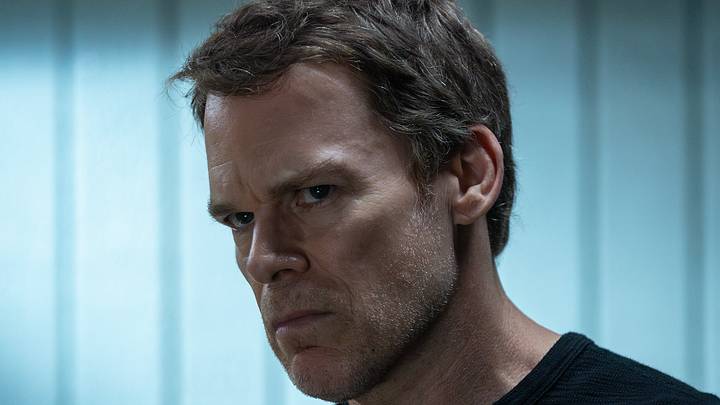
Back in July 2004, Jeff Lindsay introduced readers to Dexter Morgan, a Miami police blood-spatter analyst who kills only people who deserve it, egged on by a voice in his head he calls the “Dark Passenger.” Two years later, Showtime turned Darkly Dreaming Dexter into a hit series with Michael C. Hall.
Somewhere along the way, the internet decided Dexter had a real-life model: Pedro Rodrigues Filho, a Brazilian who claimed to have killed more than 100 people, most of them criminals. Entertainment sites now call him “the Brazilian Dexter,” and ScreenRant describes the show as loosely based on his crimes. No quote from Lindsay or the show’s producers backs that up, but the similarities are hard to miss.
The Boy Who Settled Scores
Filho was born in 1954 on a farm in Santa Rita do Sapucaí, in the Brazilian state of Minas Gerais, with an injured skull: his father, he said, had kicked his pregnant mother during a fight. He told the magazine Época in 2003 that he first wanted to kill at 13, when he shoved an older cousin into a sugarcane press. A year later, after his father lost his job as a school guard over accusations that he was stealing school lunches, Filho shot the official who had fired him, then shot the guard he believed was the real thief. (Accounts disagree on who that first victim was: some Brazilian outlets say the mayor of his hometown, others the deputy mayor of Alfenas, also in Minas Gerais.)
He fled to Mogi das Cruzes, outside São Paulo, where he robbed drug dens, killed traffickers, and took over a dead drug boss’s business. When his pregnant girlfriend was shot dead, he went looking for the man who ordered it and, with four friends, hit a wedding party, leaving seven dead and 16 wounded, according to Época. He was arrested shortly after turning 18 and entered prison on May 24, 1973; in the van on the way there, he killed a fellow prisoner he said was a rapist.
Where the Comparison Holds
Like Dexter, Filho had a code, or said he did. He told Época he killed only people who were no good, and that he never killed children, women, or family men. He also had a father story to rival Harry Morgan’s, though a much darker one: Filho claimed he killed his own father in prison, in revenge for his mother’s stabbing, and chewed a piece of his heart. (Época noted that he gave a psychiatrist a completely different account of how his father died.)
The resemblance mostly ends there. Dexter’s code, as Mental Floss has laid out before, includes “don’t get caught,” and Filho spent roughly four decades behind bars, much of it bragging. He had “Mato por prazer” (“I kill for pleasure”) tattooed on his left arm. He claimed 47 victims inside prison alone, though Época found just 18 charges against him on file in 2003; by his death, Brazilian outlets counted 71 homicides on his record.
What Dexter’s Creator Actually Said
Lindsay has told his origin story many times, and it starts nowhere near Brazil: at a Kiwanis Club lunch where he sat at the head table waiting to speak and, as he told BookPage in 2005, “the idea just popped into my head that sometimes serial murder isn’t a bad thing.” He then built the character out of research: he collected books on sociopaths and murderers, interviewed psychologists and crime scene investigators, and got cop friends to turn him loose in their dead-files room. He also rejects the very label that made Filho famous: “Dexter’s not a vigilante,” he told Middlebury Magazine in 2011. “Vigilantes are trying to perform an act of justice. Dexter just likes to kill people.”
The Ending Dexter Survived
Filho walked out of prison in 2007, went back in 2011 for crimes committed during his sentence, and was released for good in 2018. Within months, he had reinvented himself as a YouTube personality who commented on crimes in the news and lectured about his past. On the morning of March 5, 2023, he was on a sidewalk in Mogi das Cruzes holding a small child when men in a black car opened fire, according to the news site G1. The child was unhurt, but according to the police report, one of the attackers stabbed Filho in the throat as he lay on the ground. He was 68.
Read More:
•
•